
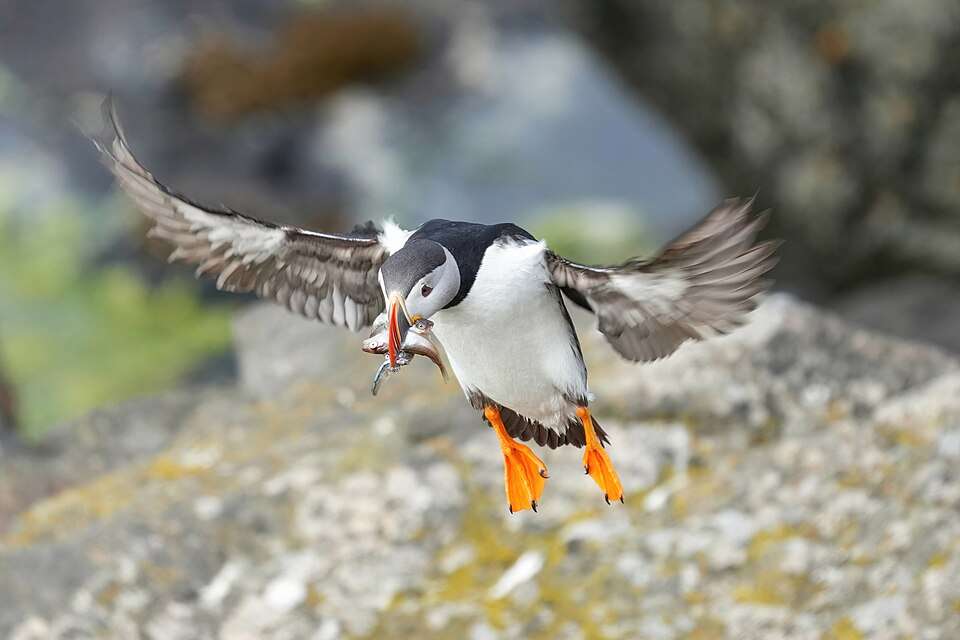
The rugged coastline of Maine—a dramatic convergence of granite cliffs, spruce-fir forests, and the cold, nutrient-rich waters of the Gulf of Maine—is arguably the premier destination in the contiguous United States for observing Atlantic seabirds. While the state is renowned for its lighthouses and lobster boats, for bird enthusiasts, Maine offers a chance to witness avian life usually reserved for the high Arctic: the charismatic Atlantic Puffin (Fratercula arctica). The presence of this iconic bird, alongside a spectacular diversity of other auks, gulls, and wading birds, makes the Maine coast, particularly its offshore islands, a critical and thrilling ecological treasure.
The King of the Cliffs: The Atlantic Puffin
The Atlantic Puffin, often dubbed the "sea parrot" due to its brightly colored, triangular bill during the breeding season, is the undisputed star of Maine's seabird show. Their population along the Maine coast represents the southernmost breeding colony of this species in North America.
A Triumphant Return
The puffin's presence here is a monumental conservation victory. By the late 1800s, uncontrolled hunting for meat and eggs, combined with habitat destruction, had nearly extirpated the puffin from Maine’s islands. By 1901, only one pair was thought to remain on Matinicus Rock.
The comeback began in 1973 with the launch of the Project Puffin conservation effort by the National Audubon Society. Led by ornithologist Dr. Stephen Kress, the project employed innovative techniques to restore puffin colonies:

Translocation: Hundreds of young puffins, called "pufflings," were moved from Newfoundland (a large, healthy colony) to islands in Maine, such as Eastern Egg Rock.
Social Attraction: Life-sized puffin decoys and recorded puffin calls were used to trick the young, migratory birds into believing a colony already existed, encouraging them to stay and breed.
This landmark project proved successful, and today, five key islands host thriving puffin colonies: Eastern Egg Rock, Machias Seal Island, Matinicus Rock, Petit Manan Island, and Seal Island National Wildlife Refuge.
Life on the Colony
Puffins arrive on the islands in late April and May. They are burrow-nesters, excavating tunnels in the soil or nesting beneath rock crevices. They are remarkably awkward on land, walking with a waddling gait, but are masters of the sea. Their small wings are used as powerful propellers underwater, allowing them to "fly" through the water to hunt small fish like herring and sandlance. A successful returning parent often holds a perfect, symmetrical line of fish crosswise in its bright bill—a sight birders travel from around the world to witness.
Other Auks of the Atlantic
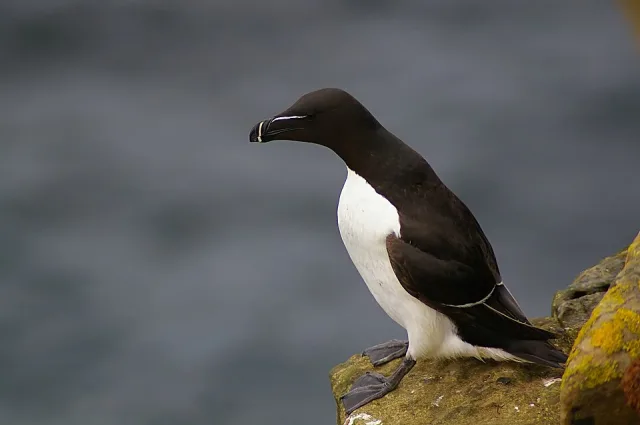
Puffins belong to the family Alcidae, or auks, a group of seabirds highly adapted to diving and swimming. Maine’s cliffs and waters provide critical habitat for several other auk species:
Razorbill (Alca torda): These are the closest living relatives to the extinct Great Auk. Distinguished by their glossy black backs, clean white fronts, and thick, blunt black bills marked with a vertical white line. They often nest alongside puffins on the rocky ledges of Matinicus Rock and Machias Seal Island.
Black Guillemot (Cepphus grylle): A stunning bird found closer to the coast, often near harbours. In summer, they are entirely sooty black, punctuated by brilliant white wing patches and striking, clown-red legs and feet. Their winter plumage is mostly white.
Diverse Seabirds and Wading Birds
Beyond the auks, Maine's coast supports a spectacular diversity of marine life, including large numbers of gulls, terns, and nesting wading birds.
Terns
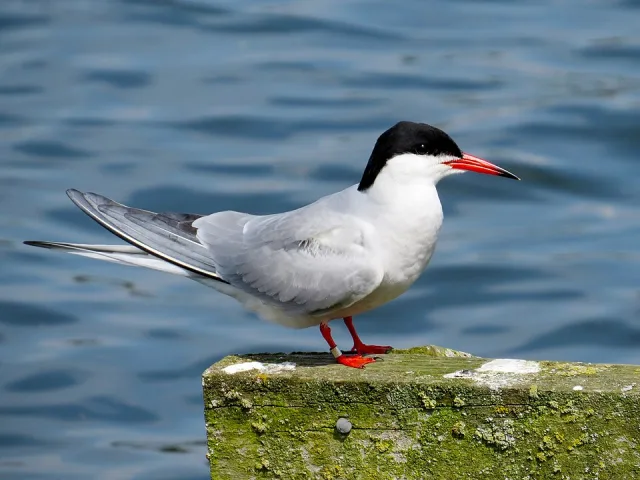
Terns are smaller, lighter, and more graceful than gulls, known for their pointed wings and dramatic plunge-diving fishing technique.
Common Tern (Sterna hirundo): These slender birds dominate the nesting colonies, recognizable by their black caps, gray bodies, and orange-red bills tipped in black.
Arctic Tern (Sterna paradisaea): Famous for undertaking the longest migration of any animal, flying nearly pole-to-pole. They briefly nest in Maine, particularly Machias Seal Island, and are extremely territorial, dive-bombing intruders (human or otherwise) with fierce determination.
Gulls and Cormorants
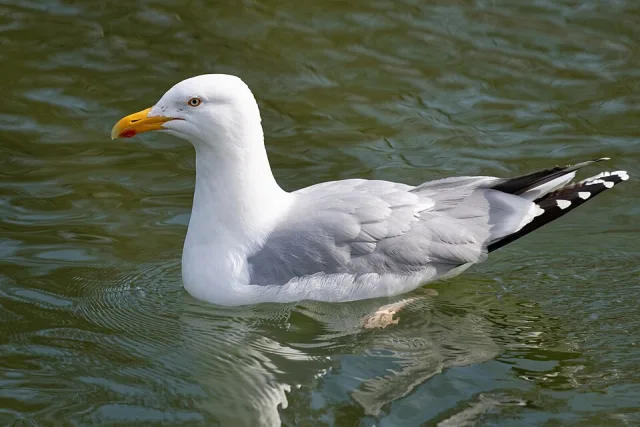
Herring Gull (Larus argentatus) and Great Black-backed Gull (Larus marinus): These large, abundant gulls are fixtures of the coastal environment. The Black-backed Gull is the largest gull in the world, an imposing predator in the colonies.
Double-crested Cormorant (Phalacrocorax auritus): Commonly seen perched on navigational buoys and rocky outcrops, these large, dark birds dive deep to pursue fish. Because their feathers are not entirely waterproof, they often hold their wings out to dry in the sun—a distinctive pose.
Key Viewing Locations and Logistics
Viewing seabirds requires planning, as the critical nesting sites are all located on offshore islands, and most are protected as refuges where landing is strictly prohibited. Access is via dedicated boat tours.
Eastern Egg Rock (Project Puffin): Located near Muscongus Bay, tours leave from Port Clyde and New Harbor. This island features the largest and most accessible puffin colony.
Machias Seal Island: Further north, near the Canadian border, this is the only island where landing is permitted (with extreme limits and specific regulations) in the US/Canada. Permits are highly controlled and limited, but allow for ground-level photography of puffins, razorbills, and Arctic Terns. Tours leave from Cutler, ME.
Matinicus Rock: An extremely rugged, remote island that hosts a large diversity of auks, requiring longer boat rides from places like Rockland.

Timing
The optimal time for viewing the full spectacle is the late spring and early summer (late May through July), when the adult birds are actively raising chicks and are constantly flying back and forth to the colony with fish. By mid-August, most puffins and auks have fledged their young and returned to the open ocean for the rest of the year.
The Maine coast is more than just beautiful scenery; it is a critical, living ecosystem, and the presence of the Atlantic Puffin is a testament to what dedicated conservation efforts can achieve. The journey to the outer islands to witness the bold blues and striking blacks of these magnificent seabirds is an unforgettable experience for any nature lover.
