
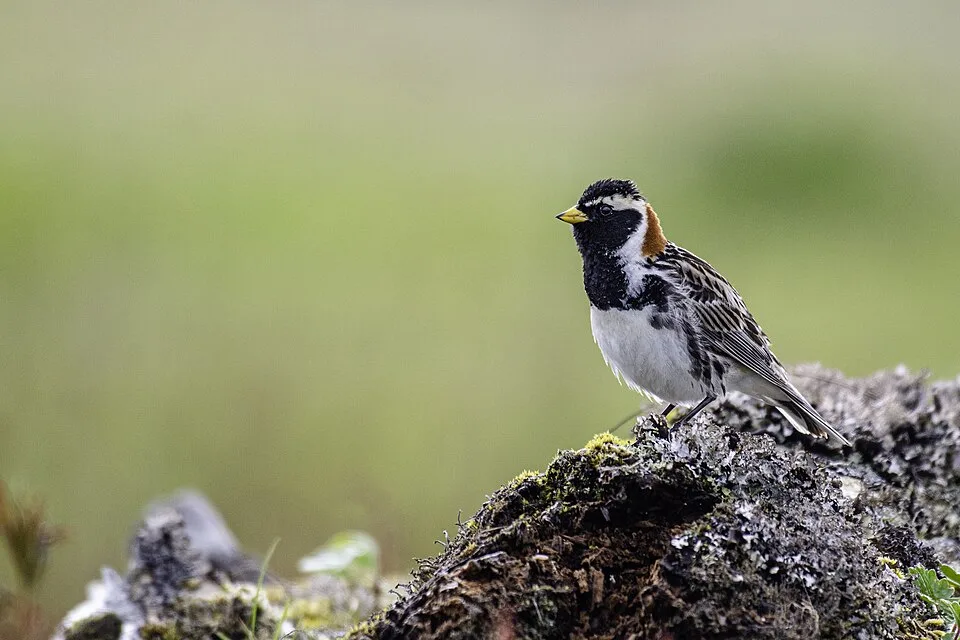
The Longspurs are a fascinating, often overlooked group of birds that embody the spirit of the North American grasslands and tundra. Named for the unusually long hind claw on each foot—an adaptation that helps them walk across open ground and dense grass—these four U.S. species are celebrated by birders for their subtle beauty, complex social behaviors, and the spectacular, high-altitude display flights performed by the males during the breeding season.
These songbirds, once classified as members of the finch family (Fringillidae), are now recognized as belonging to their own family, Calcariidae, alongside the Snow Bunting. The four species that inhabit the United States are the Lapland Longspur, the Smith’s Longspur, the Thick-billed Longspur (formerly McCown’s), and the Chestnut-collared Longspur. While they spend their summers breeding in the far north of the continent, they descend upon the vast prairies and agricultural fields of the central U.S. during the winter, often forming massive, mixed-species flocks that challenge even the most experienced birders.
The Winter Wanderers: Lapland Longspur (Calcarius lapponicus)
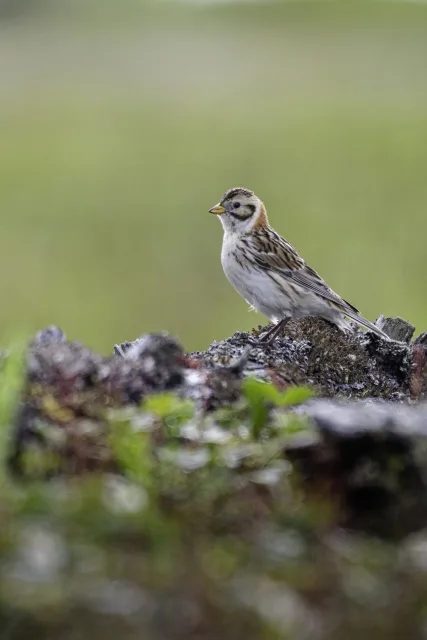
The Lapland Longspur (also known as the Lapland Bunting) is the most numerous and widespread of the group. Its sheer abundance and massive migratory movements make it the most likely longspur species to be encountered by birders across the U.S.
Range and Habitat
The Lapland Longspur is truly a bird of the northern extremes. It breeds across the high Arctic tundra of Alaska and Canada, as well as northern Europe and Asia. When winter arrives, these birds undertake a massive southward migration, settling across the central and eastern United United States. They favor open habitats, especially large agricultural fields (particularly stubble fields and fields planted with winter wheat), short-grass prairies, and coastal dunes.
Identification and Behavior
In winter plumage, the Lapland Longspur can be a frustratingly dull, brownish-streaked bird, often blending seamlessly with the dry grass and dirt. However, a close look will reveal key field marks:
The Longspur Mark: The namesake long hind claw and the black central tail feathers framed by white outer feathers are diagnostic.
Winter Look: The face often shows a subtle buffy-yellow wash, and the breast has a dark, somewhat streaked patch.
Summer Look: Males in breeding plumage are stunning, featuring a black face and throat bordered by a sharp white line running down the neck, and a rich rufous (chestnut) nape.
Behavior: They are notorious for walking rather than hopping and flushing only at the last minute, often flying low in tight, swirling flocks. Their characteristic flight call is a dry, rolling rattle, often the only way to detect them in a large mixed flock of Horned Larks and Snow Buntings.
The Prairies’ Endemics: Chestnut-collared Longspur (C. ornatus)

The Chestnut-collared Longspur is the most colorful of the group and is a flagship species of the short-grass and mixed-grass prairies of the Great Plains.
Range and Habitat
This species’ breeding range is centered on the grasslands of the northern Great Plains, from southern Canada down into the Dakotas and Montana. In winter, they move south to the southern Plains, including Texas, Oklahoma, and Arizona, where they frequent grazing lands and arid grasslands.
Status and Identification
The Chestnut-collared Longspur is of significant conservation concern, having experienced massive population declines (over 80%) due to the conversion of native prairie to croplands.
Summer Male: This bird is an avian masterpiece. The male sports a brilliant chestnut nape (collar), a black face and belly, and a stark white throat. In flight, their tail pattern is unmistakable: a mostly white tail with a black central triangle.
Winter Look: While much duller in winter, the chestnut collar is often still visible, and the white belly is usually clean.
Display Flight: The males perform a spectacular "flight song" during courtship, spiraling up to 200 feet, fluttering slowly while singing a melodic, bubbling warble, before parachuting back down to the ground. This flight is a quintessential sound and sight of the intact North American prairie.
The Eastern Rarity: Smith’s Longspur (C. smithii)
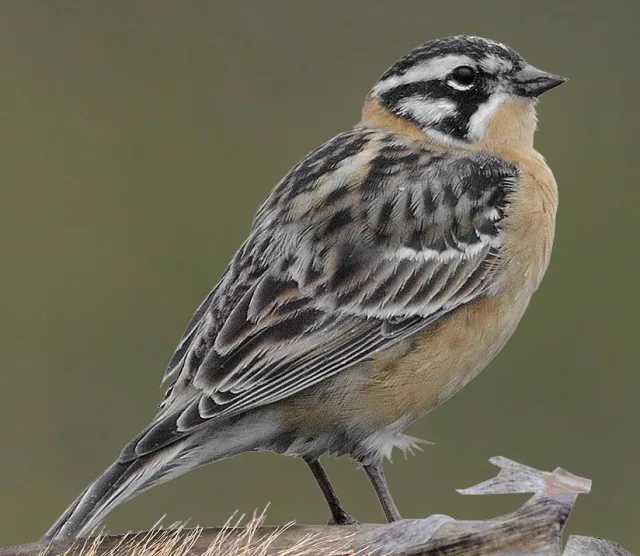
The Smith’s Longspur is perhaps the most difficult longspur for U.S. birders to find and identify, primarily because of its very restricted wintering habitat and its shy, cryptic nature.
Range and Habitat
Smith’s Longspur breeds across the far northern tundra east of the Rocky Mountains, predominantly in the Yukon and Northwest Territories of Canada. In winter, it travels to a narrow band of unplowed, short-grass prairie and grasslands that stretch from eastern Oklahoma and Texas through Arkansas and western Louisiana. Crucially, they avoid bare ground and feed almost exclusively in relatively tall, dense, but short-statured grass—a habitat that is increasingly rare.
https://lovethebirds.com/american-anhinga/
Identification and Behavior
Identification: The defining field mark of the Smith’s Longspur in all plumages is the long, creamy-white or buffy supercilium (eyebrow) contrasting with a black line below it, and prominent buffy auriculars (ear patch). Males in breeding plumage have a complex black, white, and rufous pattern.
Behavior: They are famous for being incredibly reluctant to flush, often waiting until a birder is nearly on top of them before taking flight. When they do flush, their flight is direct and low, and they drop back down into the grass quickly, making them extremely challenging to observe well.
The Mountain Steppe Bird: Thick-billed Longspur (Rhynchophanes mccownii)
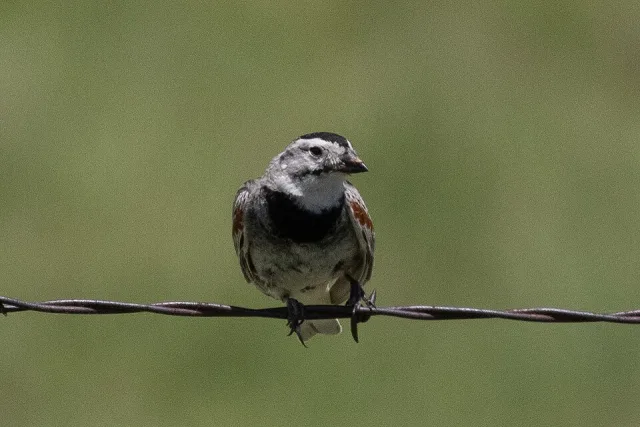
The Thick-billed Longspur (formerly known as McCown's Longspur) is the most geographically restricted longspur in the U.S., associated almost entirely with the dry, arid western short-grass steppe.
Range and Habitat
This longspur breeds in the high, dry plains and plateaus of the central and western U.S., including areas of Montana, Wyoming, and Colorado. In winter, they move to the grasslands of Arizona, New Mexico, and the deserts of Mexico. They are the longspur most tolerant of arid, sparsely vegetated habitat.
Identification and Taxonomy
Bill Shape: It is named for its conspicuously thick, cone-shaped bill, which is noticeably deeper and shorter than the bills of other longspurs.
Tail Pattern: The tail is a critical ID feature in flight: it is mostly white with a distinctive inverted black "T" shape at the tip.
Summer Male: Breeding males have a black cap, a gray face, and a distinct black crescent across the breast.
Taxonomy: In a recent taxonomic revision, the Thick-billed Longspur was moved into its own genus (Rhynchophanes) due to genetic divergence from the Calcarius group, reflecting its unique evolutionary path.
Conservation: An Endangered Grassland Heritage
The fate of the U.S. longspurs is inextricably linked to the health of North America's native grasslands. All four species are under conservation threat, with the Chestnut-collared Longspur and Smith's Longspur showing the most dramatic and alarming declines due to habitat loss. The continuous conversion of native prairie to monoculture crops and the unsustainable use of grazing lands directly removes the shallow nesting cups and sparse vegetation these birds require.
For birders, finding these species is not just a personal triumph; it is a vital reminder of the disappearing world of the Great Plains. Their movements—from the Arctic tundra to the Texas steppe—underscore the need for coordinated, hemispheric conservation efforts focused on restoring and maintaining intact, functional grasslands. The longspurs, in their subtle colors and complex lives, are truly the ghosts of the American prairie, and their continued survival depends entirely on the protection of the open spaces they call home.
