

The sky, an endless expanse of blue, serves as the stage for one of nature's most epic dramas: bird migration. Every year, billions of birds take to the air, navigating by instinct, stars, and the Earth's magnetic field to travel thousands of miles between their breeding and wintering grounds.
This annual pilgrimage is a testament to incredible endurance, navigation, and survival. While many birds undertake impressive journeys, some species are true champions, pushing the boundaries of what is possible and completing migrations that are almost incomprehensible in their scale.
This article explores the birds that have the longest migrations, revealing the challenges they face and the astonishing adaptations that make their journeys possible.
The Undisputed Champion: The Arctic Tern
At the pinnacle of long-distance migration is the Arctic Tern (Sterna paradisaea). No other creature in the animal kingdom is known to travel as far on an annual basis. This small, graceful seabird, weighing no more than a few ounces, undertakes a remarkable journey from its Arctic and sub-Arctic breeding grounds to the coast of Antarctica, and then back again.

Estimates of its annual round-trip distance vary, but recent studies using geolocators have revealed routes far more convoluted than a simple straight line. Birds from Greenland and Iceland, for instance, have been found to travel an average of around 71,000 km (44,100 miles) in a single year, with some individuals covering up to 81,600 km (50,700 miles). This is not just a direct flight; the terns follow a meandering path to take advantage of prevailing winds, making a journey that is more than double the length of a direct route between the poles.
The purpose of this extraordinary odyssey is simple: to chase the summer. By breeding in the Arctic summer and then flying to the Antarctic summer, the Arctic Tern experiences two seasons of abundant daylight and food. Over a typical 30-year lifespan, an Arctic Tern can fly an estimated 2.4 million km (1.5 million miles), a distance equivalent to three round trips to the moon. This incredible feat of endurance is made possible by their lightweight bodies, long wings, and an innate ability to navigate the globe with precision.
The Non-Stop Marathoner: The Bar-tailed Godwit

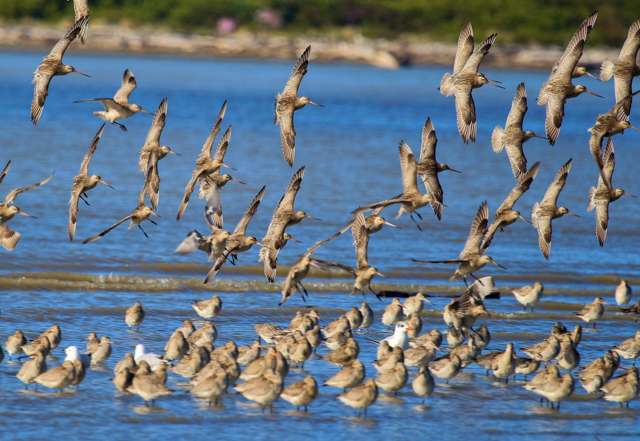
While the Arctic Tern's annual journey is the longest overall, another bird holds the record for the longest non-stop flight: the Bar-tailed Godwit (Limosa lapponica). The subspecies Limosa lapponica baueri, which breeds in Alaska, undertakes an epic flight across the Pacific Ocean to its wintering grounds in Australia and New Zealand.
This monumental journey is a continuous flight of over 11,000 km (about 6,800 miles) without stopping to rest or feed. To prepare for this marathon, the godwits undergo a remarkable physiological transformation. They gorge on food, building up immense fat reserves that can account for more than 50% of their body weight. They also shrink their internal organs, such as their stomach and intestines, to reduce weight and make room for more fat. This preparation is critical, as they must complete the journey on these energy reserves alone. The flight can take up to eight or nine days, a testament to the sheer will and endurance of these birds.
The journey is not without risk. They must contend with storms, wind shifts, and the immense physical toll of constant flight. Yet, they complete this incredible feat year after year, guided by an internal compass that allows them to navigate across a vast, featureless ocean to a tiny island nation thousands of miles away.
The Oceanic Wanderer: The Sooty Shearwater
The world's oceans are home to some of the most impressive long-distance migrants, and the Sooty Shearwater (Ardenna grisea) is a prime example. This medium-sized seabird, which breeds in the Southern Hemisphere, undertakes a trans-equatorial migration that is truly global in its scope.
From their breeding grounds in New Zealand and Chile, Sooty Shearwaters embark on a vast figure-eight pattern across the Pacific Ocean. They travel north to the feeding grounds in the North Pacific, off the coasts of Alaska, Japan, and California, and then return south. This annual migration can cover more than 64,000 km (40,000 miles), making it one of the longest known migrations in the animal kingdom, rivaling even the Arctic Tern.
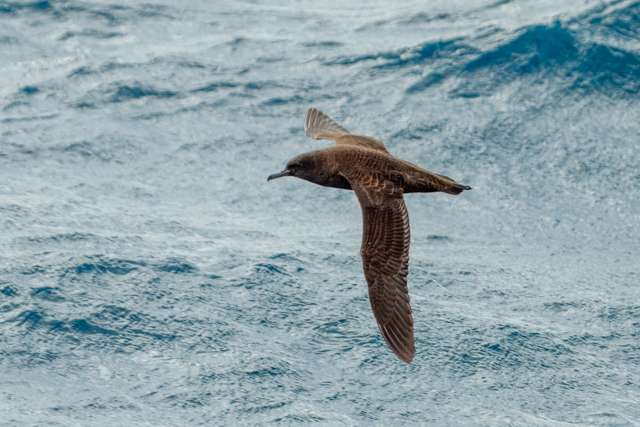
The Sooty Shearwater's journey highlights the interconnectedness of global ecosystems. These birds travel across vast expanses of water, relying on abundant food sources that exist in different parts of the ocean at different times of the year. Their ability to navigate and find food across such a wide range is a marvel of evolutionary adaptation.
Other Long-Distance Migrants
While the Arctic Tern, Bar-tailed Godwit, and Sooty Shearwater hold the top spots, a host of other birds are also masters of long-distance migration, each with its own incredible story.
The Red Knot (Calidris canutus)

This small shorebird, with its cinnamon-colored plumage, makes one of the longest migrations in the Western Hemisphere. The subspecies rufa travels up to 19,000 miles annually, from its wintering grounds in Tierra del Fuego at the southern tip of South America to its Arctic breeding grounds in Canada. This journey depends on a network of critical stopover sites, such as Delaware Bay, where the birds refuel on horseshoe crab eggs. The conservation of these sites is crucial for the survival of the species.

The Amur Falcon (Falco amurensis)
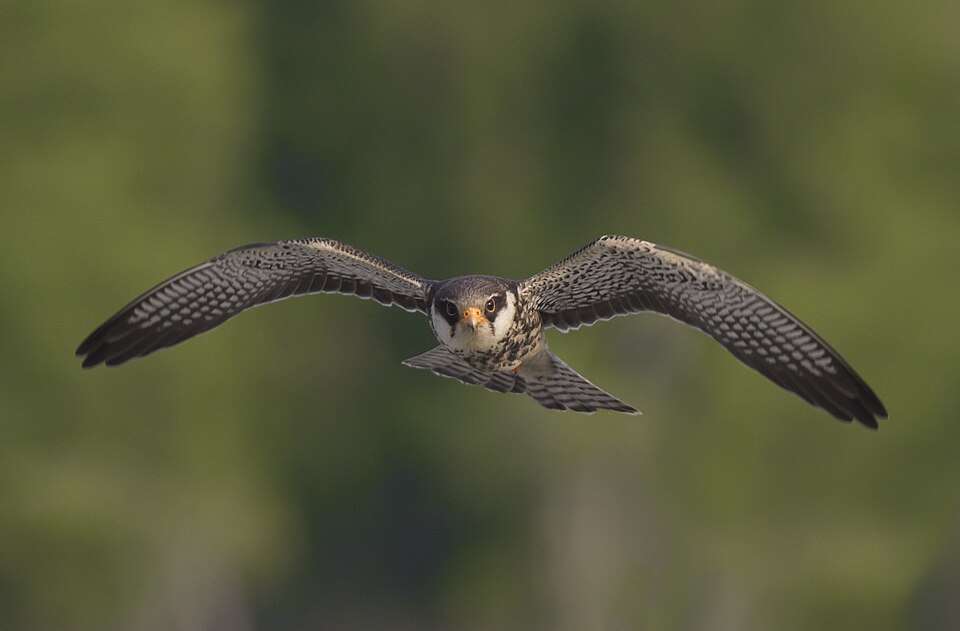
This small raptor undertakes a 22,000 km (14,000 mile) journey from its breeding grounds in eastern Asia to its wintering home in southern Africa. A particularly remarkable part of this migration is a non-stop, 3,500 km flight over the Arabian Sea, the longest known sea-crossing of any raptor. They time their flight to take advantage of mass termite emergences in northeastern India, providing them with the necessary energy for the journey.
The Barn Swallow (Hirundo rustica)
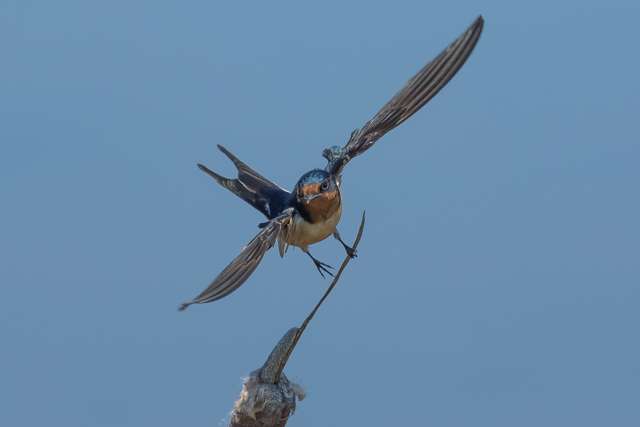
For a small bird, the Barn Swallow's migration is a staggering achievement. Many of these insectivores, breeding in Europe and North America, make a journey of up to 10,000 km (6,200 miles) to their wintering grounds in southern Africa and South America. They are a classic example of a long-distance migratory passerine, showcasing incredible endurance on their journey across continents.
The Common Cuckoo (Cuculus canorus)
Known for its brood-parasitic behavior, the Common Cuckoo also undertakes a long-distance migration from Europe and Asia to sub-Saharan Africa. What is particularly fascinating about their journey is that the adults depart for Africa long before the chicks they have left in other birds' nests have fledged. The young cuckoos, therefore, must navigate the entire journey to Africa on their own, guided solely by instinct.

The Osprey (Pandion haliaetus)
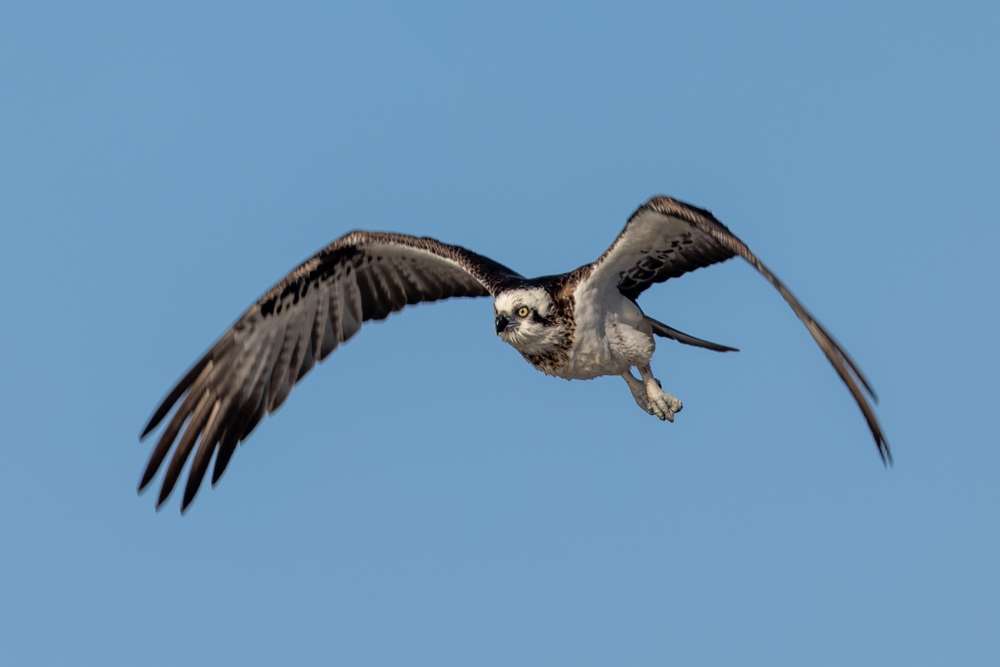
A majestic fish-eating raptor, the Osprey is a long-distance migrant, with populations in North America traveling to wintering grounds as far south as Argentina. Some individuals cover up to 11,000 km (7,000 miles) from their breeding sites in Alaska and Canada, a journey that can take weeks.
The Perils and Purpose of Migration
The incredible feats of these avian marathoners are not without immense risk. They face a gauntlet of dangers, from adverse weather and storms to exhaustion, predation, and the loss of critical habitats. Human-induced threats, such as habitat destruction, climate change, and pollution, pose additional challenges to their survival.
The purpose of these epic migrations is to capitalize on seasonal food availability and to find a safe place to breed and raise young. By moving from one part of the globe to another, these birds can access the most abundant resources year-round, ensuring their survival and the continuation of their species.
Wrapping Up
The study of long-distance bird migration is an ongoing field of research, with new technologies like satellite tracking and geolocators revealing the intricate and previously unknown routes these birds take. The more we learn about these incredible journeys, the more we appreciate the resilience and remarkable abilities of the world's longest-distance flyers. They are a powerful reminder of the intricate and interconnected web of life on our planet, and their survival depends on our commitment to protecting the habitats and flyways they rely on.
Find out which birds migrate across the Gulf.
