

Across cultures and continents, the Common Raven (Corvus corax) holds a prominent, often sacred, place in mythology, folklore, and religion. Unlike many creatures depicted simply as messengers or symbols, the raven frequently assumes the role of a powerful deity, creator, trickster, or prophet. Its intelligence, jet-black plumage, mournful call, and association with both death and wisdom have cemented its status as the "Apex Corvid" in the human imagination.
Raven in North American Indigenous Cultures: The Creator and Trickster
Among the Indigenous peoples of the Pacific Northwest Coast, Alaska, and the Arctic, the Raven is arguably the most central figure, known by names such as Yéil (Tlingit) and We-gyet (Haida). In these traditions, the Raven is simultaneously a great culture hero and a mischievous, self-serving trickster.
Stealing the Sun and Stars: The most enduring myth describes the world as originally being cold and dark. Raven, using his immense cunning, is said to have stolen the sun, moon, and stars from a selfish old man who kept them locked in boxes. By releasing these celestial bodies, Raven brought light and life to the world.

Common Raven Shaping the World: He is credited with creating land masses, filling rivers, and distributing fish and game. He acts as a transformer, shaping the world into its current form through a series of accidental or selfish actions that ultimately benefit humanity.
The Black Color: Many stories explain why the Raven is black. Some accounts suggest he was once white, but was scorched black while carrying the sun out of the sky through a smoke hole.

Celtic and Norse Mythology: War, Prophecy, and Wisdom
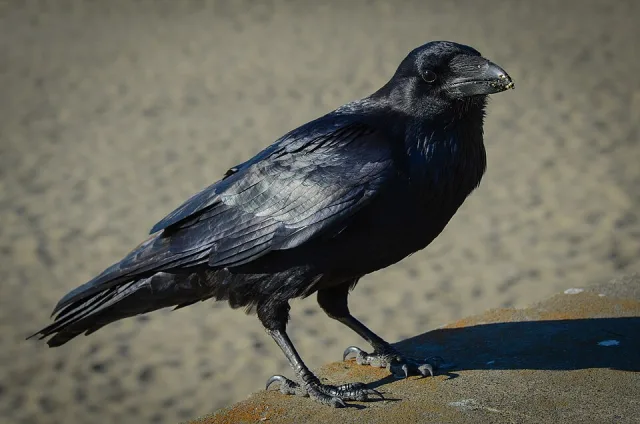
In the mythologies of Northern Europe, the raven is often associated with battlefield carnage, sovereignty, and divine counsel.
Celtic Goddesses: In Irish and Welsh mythology, the raven is linked to the formidable goddess of war, death, and sovereignty, The Mórrígan. She often appears on the battlefield in the form of a raven or crow, sitting upon the dead, symbolizing the cycle of life and death.
Norse Mythology - Huginn and Muninn: The most famous ravens in Germanic and Norse mythology are Huginn (Thought) and Muninn (Memory). These two ravens are companions to the Allfather god, Odin. Every morning, Odin sends the pair out to fly over all nine worlds to gather news and knowledge. They return each evening to whisper everything they have seen into his ears, making Odin the wisest of the gods.
Biblical and Roman Traditions: Messenger and Omen

The raven also holds places in major Western historical and religious narratives, albeit often with mixed symbolism.
The Flood: In the biblical book of Genesis, the raven is the first bird sent out by Noah from the Ark to find dry land. Unlike the dove, which returns, the raven is often depicted as failing its mission by stopping to feast on carrion, cementing its image as an opportunistic scavenger.
Roman Omens: In ancient Rome, ravens were considered birds of ill omen because their calls (caws) were interpreted as the Latin word cras, meaning "tomorrow." While this might simply mean procrastination, it also associated them with the uncertainty and inevitability of the future, leading to their role as prophets or harbingers.
From the trickster who stole the sun to the spy who whispers the world's secrets to Odin, the Common Raven remains a powerful and captivating creature whose mythological significance mirrors its real-world intelligence and adaptability.
