
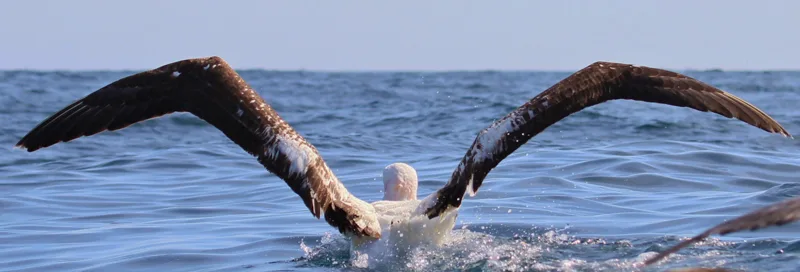
In the world of aviation, engineers strive for the highest possible aspect ratio—the relationship between an aircraft’s wingspan and its chord (width). In the avian world, nature has perfected this same principle, producing birds with extraordinary wings that allow for maximum lift and efficiency with minimal effort. While the Wandering Albatross boasts the largest absolute wingspan, measuring over 11 feet, this article profiles the true aerial champions: the birds whose wings are the largest in proportion to their body size and mass.
These are the masters of the air, utilizing their disproportionately large wings to achieve feats of flight others can only dream of—from soaring across oceans without a single flap to hovering with astonishing precision. Their evolutionary strategy is a testament to aerodynamics, balancing the need for strength and lightness with the vast surface area required for effortless flight.
The Need for Aspect Ratio: Efficiency in the Air
For a bird, the reason to possess a high aspect ratio is twofold:
- Reduced Drag: Long, narrow wings—characteristic of a high aspect ratio—minimize induced drag, the drag created by the production of lift. This is critical for long-distance flyers.
- Increased Lift-to-Drag Ratio (L/D): A higher L/D means the bird can travel farther for every unit of energy expended, allowing them to exploit environmental energy sources like rising air currents (thermals) and wind (dynamic soaring).
The ultimate beneficiaries of this adaptation are the birds that spend almost their entire lives in the air.
1. The Albatrosses: Kings of the Sea Breeze
While the Wandering Albatross is famous for its absolute span, the entire family of albatrosses represents the pinnacle of proportional wing size among large birds. Their bodies are relatively compact and heavy, but their wings are immense, stiff, and narrow—the avian equivalent of a glider wing.
The Wandering Albatross (Diomedea exulans)
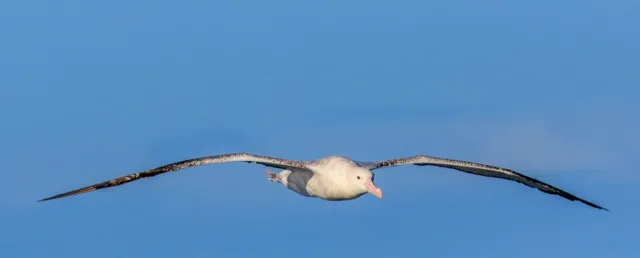
- Wingspan to Body Length Ratio: Approximately 4:1 or more.
- Adaptation: Dynamic Soaring. The albatross spends over 90% of its life flying over the tempestuous waters of the Southern Ocean. Its proportional wingspan allows it to execute dynamic soaring: gaining energy by repeatedly gliding downwind close to the surface and then turning into the wind to climb back up. This maneuver is almost entirely powered by wind shear, allowing the bird to circumnavigate the globe with almost no flapping.
- Fun Fact: An albatross has a unique "shoulder lock" mechanism that mechanically locks the wing when fully extended, significantly reducing the muscle energy needed to hold the massive wings out during long glides.
The Laysan Albatross (Phoebastria immutabilis)
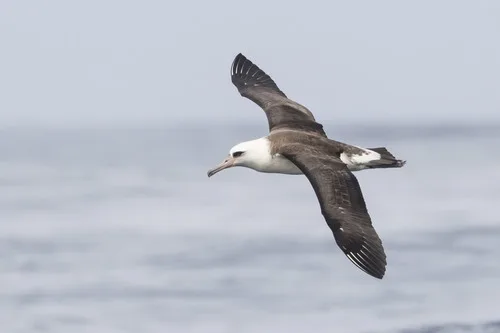
- Adaptation: While smaller than its Wandering cousin, the Laysan Albatross still exhibits an extremely high aspect ratio, perfectly suited for long-distance foraging flights over the Pacific Ocean. Their reliance on efficient gliding allows them to travel thousands of miles to feed and return to their remote nesting sites.
2. The Frigatebirds: Masters of Maneuver and Theft
Frigatebirds are perhaps the best example of extreme lightness combined with disproportionate wingspan, making them appear like aerial kites. They are highly pneumatic (filled with air sacs) and possess exceptionally long, slender, angled wings.
The Magnificent Frigatebird (Fregata magnificens)
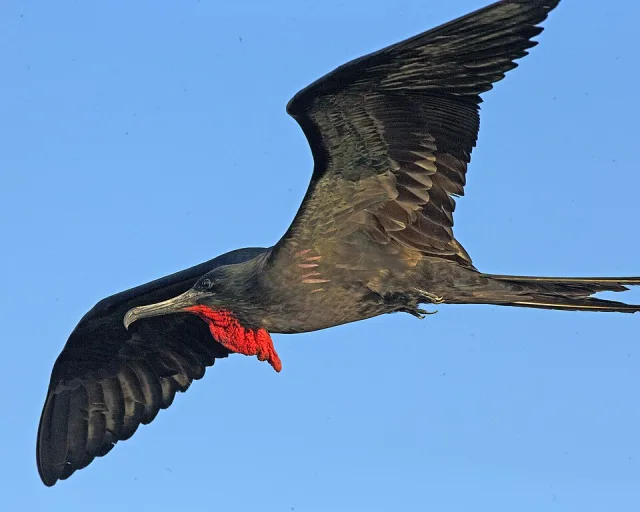
- Wingspan to Body Weight Ratio: One of the highest among all birds. While its wingspan reaches about 7.5 feet, its body weight rarely exceeds 4 pounds (1.8 kg). This low wing loading (weight divided by wing area) is key to its proportional dominance.
- Adaptation: Low Wing Loading and Kleptoparasitism. Their huge, light wings allow them to soar effortlessly for hours on the smallest thermals and lift with explosive speed. This agility is used not primarily for fishing, but for kleptoparasitism (stealing food), where they harass other seabirds (like boobies and gulls) until they drop their catch, which the frigatebird then snatches in mid-air.
- Unique Feature: Frigatebirds have exceptionally small, weak legs and cannot walk well or swim, making their vast proportional wings an absolute necessity for survival.
3. The Condors and Vultures: Soaring Giants
Large soaring raptors, while possessing thicker wings than the albatrosses, still have a remarkably high wingspan relative to their heavy bodies. This is a crucial adaptation for exploiting thermals while searching for carrion.
The Andean Condor (Vultur gryphus)
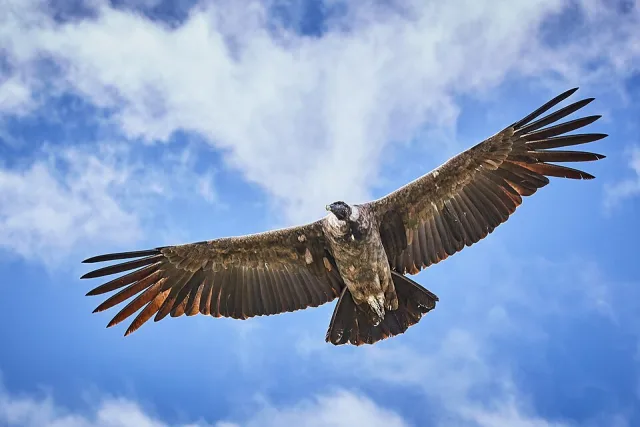
- Wingspan: Up to 10.5 feet.
- Adaptation: Thermal Hunting. As one of the world's heaviest flying birds (up to 33 pounds), the Andean Condor needs every inch of its span to achieve and maintain flight. It uses its vast wingspan and specialized flight feathers to effectively catch and ride rising columns of warm air (thermals) high above the Andes Mountains. Their large proportional wings allow them to achieve flight with minimal effort once airborne, conserving the energy needed for their infrequent and massive feedings.
The California Condor (Gymnogyps californianus)
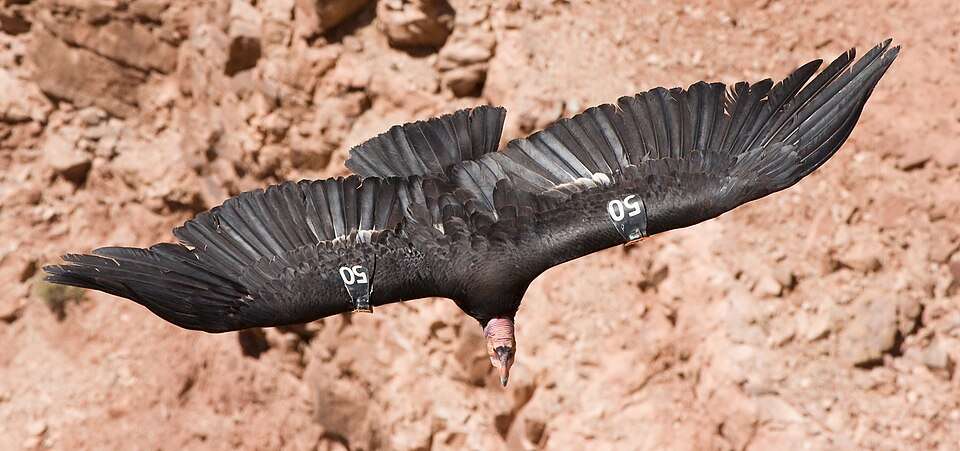
- Adaptation: Similar to its Andean cousin, the California Condor's nearly 10-foot span relative to its body weight of about 20 pounds is necessary for crossing the vast, open landscapes of the Western U.S. in search of widely dispersed carrion.
4. The Swifts: Speed and Efficiency
At the smaller end of the spectrum, swifts, though not traditionally thought of as having "large" wings, possess perhaps the most efficient wings in proportion to their aerodynamic needs—wings built for speed and continuous flight.
The Common Swift (Apus apus)

- Wingspan: Up to 17 inches.
- Adaptation: Continuous Flight. Swifts are airborne experts, sometimes spending years without landing. Their wings are long, narrow, and stiffly swept back, resembling a crescent or boomerang. This high-aspect ratio structure, combined with their extremely streamlined bodies, makes them incredibly efficient flyers, able to maintain high speeds with a minimal energy budget. They sleep, mate, and forage entirely on the wing.
5. The Specialized Long-Wings: Terns and Gulls
The long, pointed, and proportionally large wings seen in pelagic birds like terns and gulls allow them to achieve long-distance migration and efficient foraging over water.
The Arctic Tern (Sterna paradisaea)
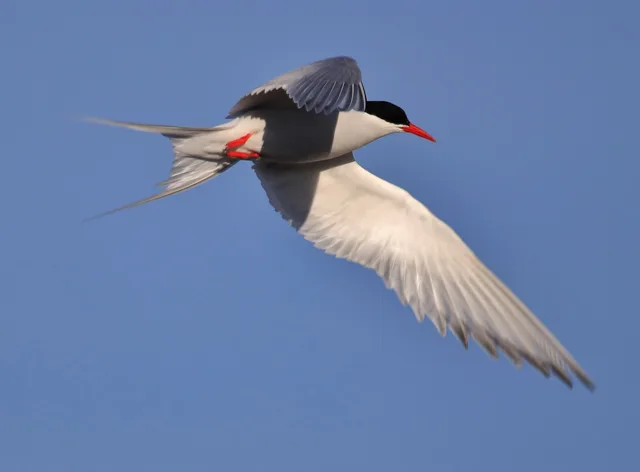
- Adaptation: The Marathoner. The Arctic Tern undertakes the longest migration of any animal, flying between the Arctic breeding grounds and the Antarctic waters—a round trip of nearly 50,000 miles. This feat is possible only because of its very high aspect ratio wings, which allow it to exploit the available air currents and glide for vast distances, minimizing the need for strenuous flapping. Its body is light, and its wings are pointed and thin, built for pure endurance.
Proportionality as an Evolutionary Success
The birds with the largest wings in proportion to their bodies are not merely large; they are masters of energy conservation. Their long, slender wings represent a trade-off: they are more difficult to initiate flight with (requiring high jumps or running takeoffs) but once airborne, they are unbeatable.
From the Frigatebird's graceful, weightless soaring to the Albatross's globe-trotting efficiency, these avian champions demonstrate that in the rigorous world of natural selection, sometimes being the biggest isn't enough—being the best-proportioned is the key to conquering the sky.
The Gauntlet in the Sky: Unveiling the Perils of Bird Migration
