

The Ivory-billed Woodpecker (Campephilus principalis) is more than just a bird; it’s a ghost. A creature whose confirmed presence has vanished from the swamps and forests of the American South and Cuba, yet whose specter continues to fuel one of the most passionate and prolonged debates in modern ornithology. Described by John James Audubon as the “Great chieftain of the woodpecker tribe,” this majestic species, also known by the evocative moniker "Lord God Bird" for the stunned reaction it inspired, represents a cautionary tale of habitat destruction and the desperate hope for what has been lost.
A Bird of Legend: Description and Ecology
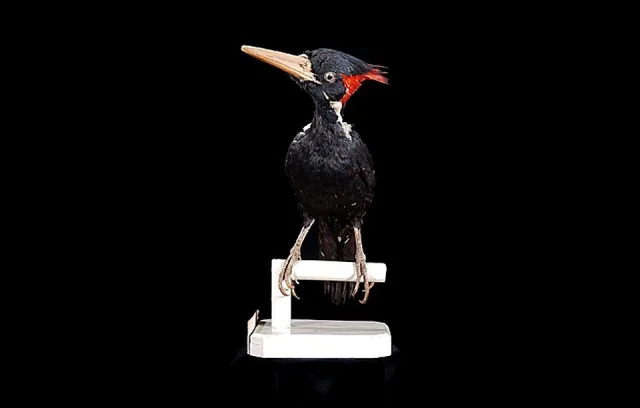
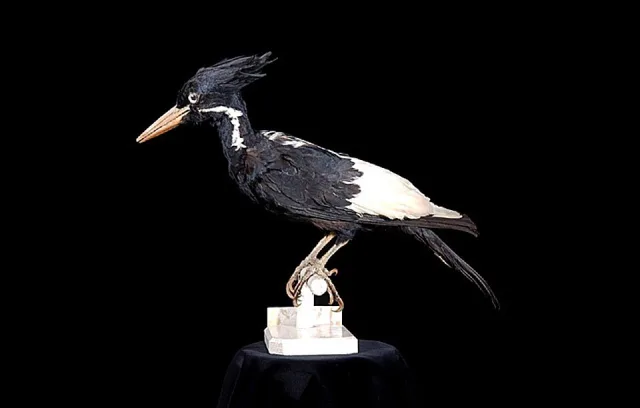
The Ivory-billed Woodpecker was, and perhaps still is, the largest woodpecker north of Mexico and the third largest in the world. It was a striking, magnificent bird, measuring about 20 inches (51 cm) long with a wingspan of up to 30 inches (76 cm). Its plumage was a sleek, glossy black and white, featuring a distinctive pattern: a wide white stripe running down the neck and back, and large white patches on the secondary flight feathers that were visible in flight. The male sported a brilliant, deep-red crest, while the female's crest was black. The feature that gave the bird its common name was its massive, chisel-tipped bill, which was the color of old ivory.
Its vocalizations were equally distinct. The primary call was a nasal, toylike "kent" or "hant," often repeated in a series. More famously, the bird produced a characteristic double rap—two closely spaced, powerful strikes on a tree, likely used for territorial signaling, which sounds remarkably different from the drumming of other woodpeckers.
Habitat and Diet
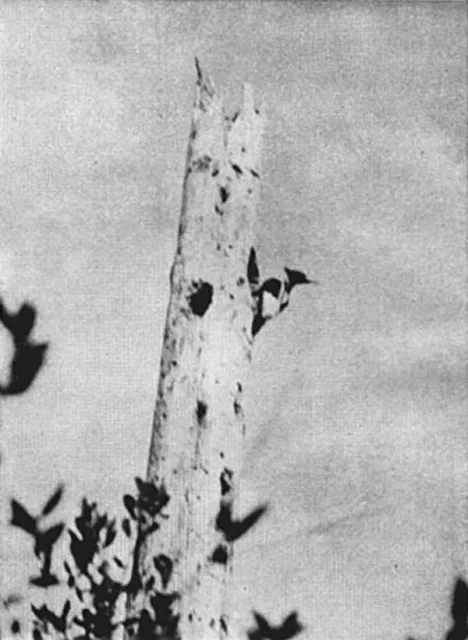
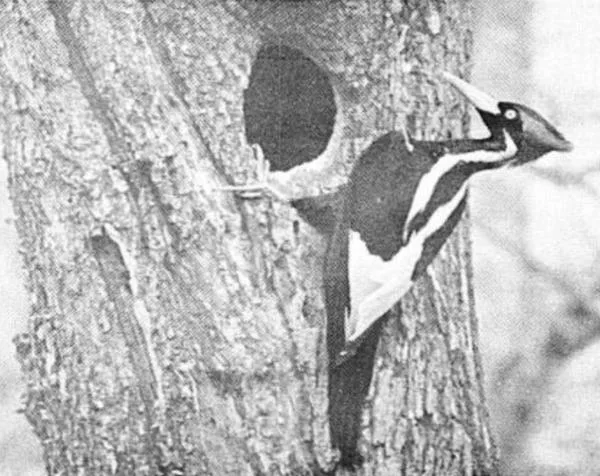
The Ivory-bill was an obligate species of old-growth forests—specifically, the vast, mature bottomland hardwood forests, or "Big Woods," of the southeastern U.S. and the mountainous temperate coniferous forests of Cuba. It required large tracts of undisturbed, decadent timber to thrive. Its primary food source was the larvae of large beetles that tunnel under the bark of recently dead or dying trees. The woodpecker employed its formidable bill not just to tap but to peel bark away in large, ragged strips to expose its prey, leaving behind distinctive foraging marks that searchers still look for today. This specialized need for old-growth timber, where dying trees were plentiful, would ultimately seal its fate.
The Path to Presumed Extinction
The demise of the Ivory-billed Woodpecker is a classic, tragic case of conflict between nature and commercial exploitation.
The Era of Decline
Before European settlement, the Ivory-bill ranged across much of the southeastern United States, from the Carolinas to East Texas and north to Illinois. However, the bird was historically rare due to its dependence on mature forest conditions. Its population was already dwindling in the 1800s, driven by two main factors: habitat destruction and collecting/hunting.
The ivory bill itself was a valuable commodity. Native Americans prized the bills for decoration, and a thriving trade saw bills distributed far outside the bird's natural range. Later, as the species became rarer, it became highly desirable for private collectors and museums, leading to intense pressure on the last remaining individuals.
The Timber Catastrophe
The catastrophic decline accelerated in the late 19th and early 20th centuries. The seemingly endless tracts of old-growth forests—the bird's exclusive home—were rapidly and systematically cleared for lumber and agriculture. The vast river swamps and bottomlands of the Mississippi River Delta, once a haven for the Ivory-bill, were converted to cotton and soybean fields. The bird's specialized lifestyle meant it could not adapt to secondary growth or fragmented forests.
The Final Sightings
By the 1930s, the species was reduced to a tiny, precarious population. The most significant final stronghold in the United States was the Singer Tract in Louisiana, a magnificent tract of old-growth forest along the Tensas River.
Ornithologist James Tanner conducted the definitive study of the Ivory-bill in the late 1930s, estimating that only about 22 to 24 individuals remained across the entire U.S. The last universally accepted, substantiated sighting in the U.S. occurred in the Singer Tract in April 1944, when scientific illustrator Don Eckelberry observed a lone female. Despite pleas from conservationists, the Singer Sewing Machine Company, which owned the land, proceeded with intensive logging, effectively destroying the bird’s final known American refuge.
The Cuban subspecies (C. p. bairdii) fared a similar fate due to deforestation. The last confirmed Cuban sighting was in 1986. Following the loss of its habitat, the Ivory-billed Woodpecker was widely presumed to be extinct in the U.S. by the 1950s.
The Ghost Bird’s Resurrection: The Arkansas Rediscovery
The story of the Ivory-bill did not end with the last logger’s saw. It entered a new phase, becoming a figure of persistent hope and intense, sometimes acrimonious, scientific dispute.
The 2004 "Rediscovery"
For decades, there were numerous tantalizing but unconfirmed reports. However, in February 2004, a kayaker, Gene Sparling, reported seeing a bird fitting the Ivory-bill's description in the Cache River National Wildlife Refuge in eastern Arkansas's "Big Woods." This led to a secretive, multi-institutional expedition led by the Cornell Lab of Ornithology.
On April 28, 2005, the team officially announced the rediscovery of the Ivory-billed Woodpecker in North America, electrifying the conservation world. The primary evidence presented was a brief, grainy four-second video clip from February 2004 and a number of sight reports and audio recordings of the distinct double rap. The paper, published in Science, argued that the evidence was strong enough to confirm the bird’s persistence.
Controversy and The Great Search
The announcement spurred enormous efforts and financial investment. Millions of dollars in federal and state funding were allocated for searches and habitat protection. Communities near the sightings, like Brinkley, Arkansas, embraced the "Ghost Bird," opening themed stores and inns.
However, the "rediscovery" was immediately and heavily disputed by many ornithologists. Critics argued that the video was ambiguous and could have been a Pileated Woodpecker (Dryocopus pileatus), a large, common species with which the Ivory-bill is often confused. The audio evidence was also inconclusive. Despite hundreds of thousands of hours spent searching across the southeastern U.S. from 2004 to 2021, and the deployment of modern surveillance technology, no universally accepted, definitive, clear photograph or video has been produced to date.
The Current Status
The scientific consensus remains divided, with the weight of evidence leaning toward extinction due to the lack of unassailable proof. In September 2021, the U.S. Fish and Wildlife Service (USFWS) formally proposed that the Ivory-billed Woodpecker be declared extinct.
The Ivory-billed Woodpecker's history encapsulates the complex relationship between human development and the natural world. It is a symbol of both the devastating finality of extinction driven by unrestrained industry and the tenacious, perhaps irrational, hope that sometimes a lost wonder can return. Whether its double rap echoes through the Southern swamps or only in the halls of history, the search for the Lord God Bird remains one of the greatest enduring mysteries of American wildlife.
