
The state of Iowa is synonymous with corn and endless rows of soybeans, a landscape of immense agricultural productivity. Yet, this rolling, fertile ground was once the heart of the North American tallgrass prairie—a vast, complex ecosystem stretching across 170 million acres. The story of Iowa’s prairie is a chronicle of rapid loss, a sobering ecological wake-up call, and a current movement of passionate restoration driven primarily by the urgent need to save the region’s most threatened avian community: the grassland birds.
The Great Vanishing: Iowa's Ecological Debt
At the time of Euro-American settlement, approximately 85% of Iowa’s land, or over 30 million acres, was covered by tallgrass prairie. This landscape was defined by grasses like Big Bluestem and Indian Grass, with roots plunging up to 15 feet deep, creating the incredibly rich, black soil (Mollisols) that would eventually make Iowa famous for farming. The prairie was a biological marvel, supporting immense herds of bison, elk, and a dizzying array of insects, plants, and specialized wildlife.
The rich soil that took millennia to build was simultaneously the prairie’s greatest asset and its ultimate undoing. The invention of the steel plow allowed settlers to finally break the dense sod, and conversion to cropland was swift. Within a few decades, by the turn of the 20th century, the tallgrass prairie was functionally gone. Today, less than one-tenth of one percent (or sometimes cited as less than 0.02%) of Iowa's original prairie remains—a staggering loss that makes it one of the most altered states in the nation. The few remaining native tracts, called remnants, are often confined to inaccessible areas, railroad rights-of-way, and the steep slopes of the Loess Hills in the west.
The Cry of the Grasslands: Declining Bird Populations
The destruction of the prairie had a catastrophic impact on the species that evolved to rely on this open, treeless ecosystem. Grassland birds are now the fastest-declining group of birds in North America. Since 1970, their populations have seen a decline estimated at over 50%. These birds need large, contiguous patches of grassland for nesting, brooding, and cover—habitat that simply vanished across the Midwest.
The major species facing this crisis in Iowa include:
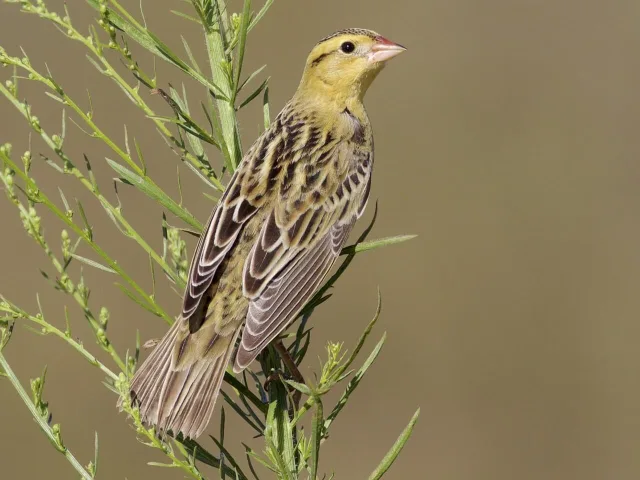
The Bobolink (Dolichonyx oryzivorus): Known for the male's complex, bubbling song, the Bobolink requires dense, native grasses to construct its nest on the ground.
The Dickcissel (Spiza americana): A small bird resembling a miniature meadowlark, it thrives in slightly taller, mixed grass and forb habitats, often nesting in prairie and hay fields.
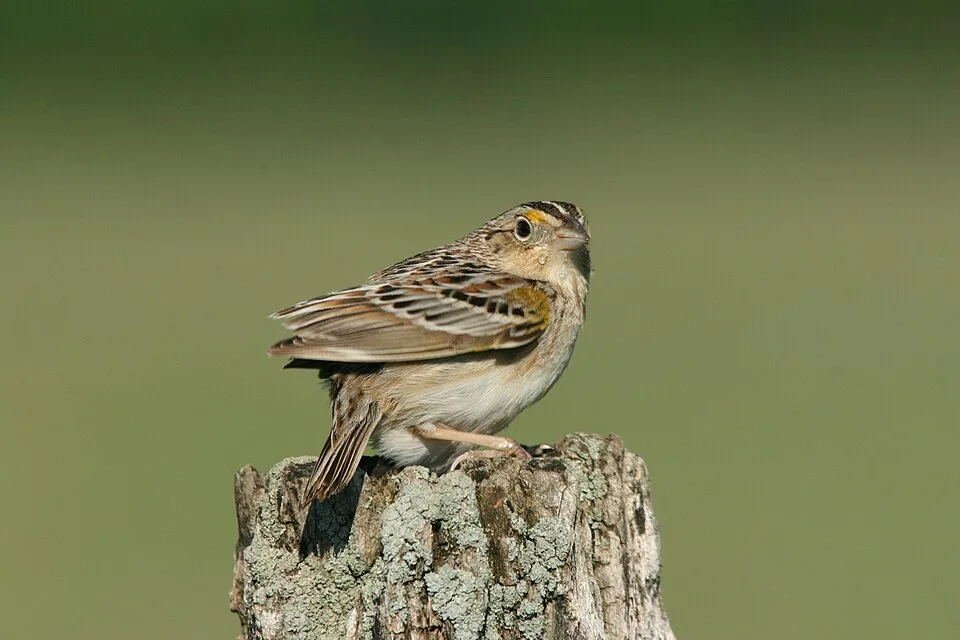
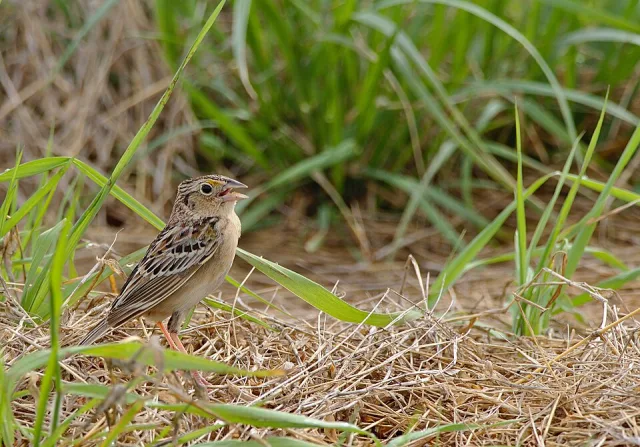
The Grasshopper Sparrow (Ammodramus savannarum): A secretive species named for its insect-like song, it requires short, sparse grasses and is sensitive to habitat fragmentation.
The Eastern and Western Meadowlarks (Sturnella magna and S. neglecta): Iconic prairie songsters, their populations are often indicators of grassland health.
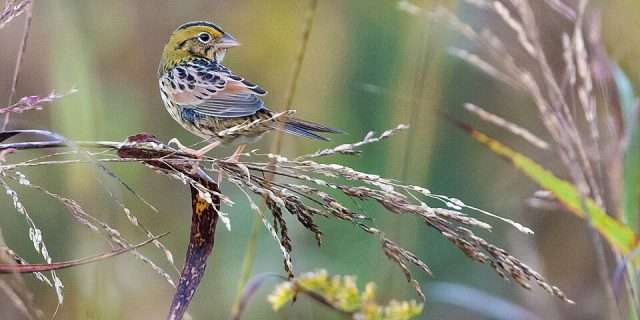
The Henslow's Sparrow (Ammodramus henslowii): A species of high conservation need, it requires dense, undisturbed, tall-grass habitat, making it particularly vulnerable to haying and grazing schedules.

Henslow's Sparrow
Restoration: A Commitment to an Ancient Landscape
Faced with this ecological crisis, Iowa has become a leader in the arduous, long-term process of prairie restoration and reconstruction. The goal of restoration is not simply to plant a few native flowers, but to re-establish the biological complexity, soil structure, and hydrological function of the original ecosystem.
Key restoration initiatives include:
Bird Conservation Areas (BCAs): Established by the Iowa DNR, BCAs are landscape-scale conservation zones (at least 10,000 acres) designed to prioritize habitat for declining species. These areas, such as the Kellerton Grasslands BCA, mandate that a significant portion of the land (around 25–30%) be managed as key grassland habitat.
Neal Smith National Wildlife Refuge: Located near Prairie City, this refuge is perhaps Iowa’s most ambitious restoration project. Since 1992, staff have been actively converting former cropland into thousands of acres of reconstructed tallgrass prairie and oak savanna, successfully demonstrating an increase in breeding pairs of target species like the Bobolink and Henslow's Sparrow.
Prairie Strips: A groundbreaking practice developed at Iowa State University, prairie strips involve planting narrow, strategically placed strips of native grasses and forbs within conventional corn and soybean fields. Studies show that fields with prairie strips can have significantly higher densities of grassland birds (such as Dickcissels and Meadowlarks) compared to control fields, while also drastically improving soil health and water quality.
The Long Road Back
Prairie restoration is not a quick fix. Because the bulk of the prairie's life is in its root system, it often takes three to five years for a restored site to mature enough to provide adequate nesting cover and resources. Furthermore, reconstructed prairies require constant, active management, primarily through prescribed burns and grazing (often with reintroduced bison or elk, as seen at Broken Kettle Grasslands), which mimic the historical processes that kept the original ecosystem healthy and prevented forest encroachment.
The efforts in Iowa are a testament to the idea that conservation can coexist with a productive agricultural economy. By investing in the restoration of its ancestral landscape, Iowa is not just saving threatened bird species; it is securing cleaner water, building healthier soil, and ensuring that the whirr of the Grasshopper Sparrow remains a fundamental sound of the Midwestern summer.
