
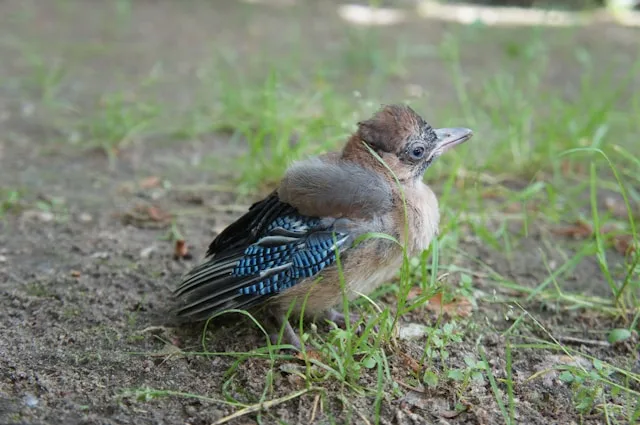
Spring and summer are prime birding seasons, offering brilliant breeding plumages and the familiar sounds of adults staking their territories. But as summer wanes and fall migration begins, birdwatchers face a new, often frustrating challenge: identifying juvenile birds. These youngsters, fresh out of the nest, wear complex, temporary plumages that often bear little resemblance to their parents, turning easy identifications into genuine puzzles. Mastering the art of spotting a juvenile bird is key to expanding your birding skills and accurately tracking autumn migration.
Identifying juveniles isn't about memorizing every possible immature pattern; it’s about understanding the key structural, behavioral, and plumage cues that distinguish them from adults.
Why Juveniles Look Different
The main reason young birds don't look like their parents is a matter of survival. Juvenal plumage, the first set of feathers after down, is built for camouflage. It often features streaking, barring, or mottled patterns designed to break up the bird's silhouette, helping them hide from predators while they are still learning to fly and forage.
This first coat is usually worn for only a few weeks to months before the birds begin their first pre-basic molt, transitioning into an immature or first-winter plumage. However, during the late summer and early fall, these true juveniles are everywhere, and knowing what to look for is crucial.
Key Identifier 1: Plumage Clues (The Fuzzy Details)
While the overall color may be confusing, specific plumage details can instantly flag a bird as a juvenile.
Streaking and Spots
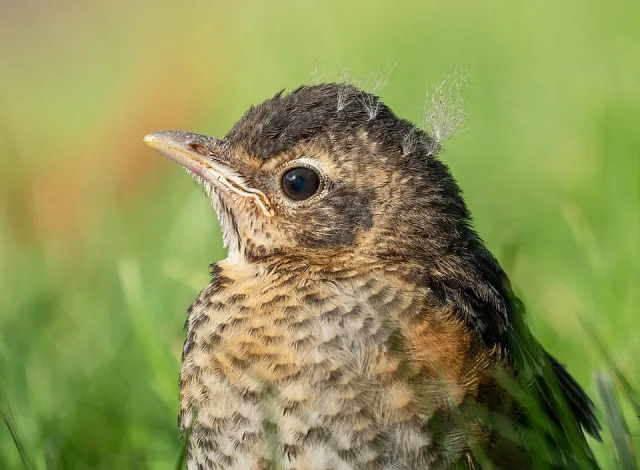
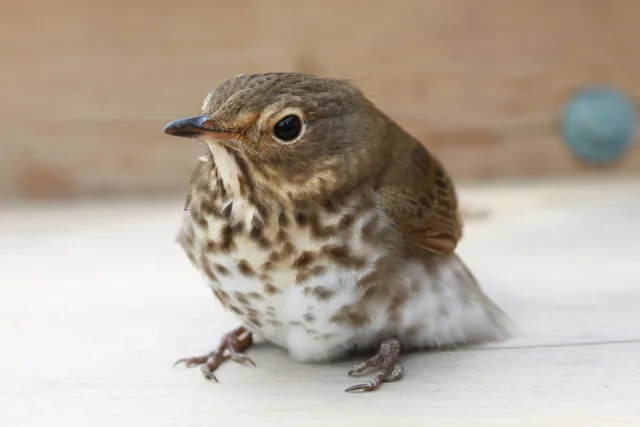
Many species that are plain-breasted as adults, such as robins, thrushes, and even some sparrows, display heavy streaking or spotting on their breasts and flanks as juveniles. This is the most common camouflage pattern. For example, a juvenile American Robin has a spotted breast, reminiscent of the pattern found on its close relatives, the Wood Thrush and Hermit Thrush. This spotting is a throwback to ancient avian camouflage.
Feather Edges
Look closely at the back, wing, and tail feathers. Juvenile feathers are typically softer, looser, and less durable than adult feathers. In many songbirds, the feathers, particularly on the back and wings, may have thin, pale or buff-colored edging. This gives the back a slightly scaled or "scaly" appearance that adults lack. These edges also fade quickly, giving the bird a worn or messy look even when brand new.
Fauvism (The Yellow Gape)
One of the most reliable visual clues to a very young bird is the yellow gape or fleshy flange around the base of the bill. This bright color is designed to guide parents’ food deliveries and fades quickly once the bird is independent. If you see a small passerine with a prominent yellow ring around its mouth, it is almost certainly a recent fledgling.
Key Identifier 2: Structural and Soft Part Cues
Beyond the feathers, a juvenile’s body structure, bill, and eyes often provide the definitive clues.
Bill and Beak
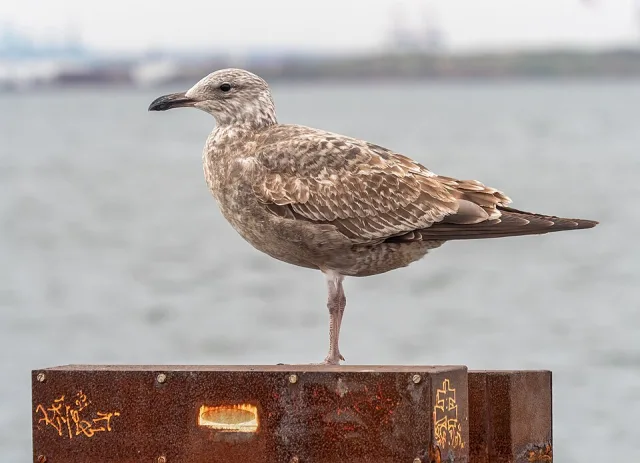
The bill of a juvenile can sometimes be different in shape or color from an adult’s. A notable example is the juvenile Gull. Juvenile gulls often have dark or black bills, whereas the adults may have bright yellow bills with a distinct red spot (like the Herring Gull). In smaller birds, the bill may appear slightly larger or out of proportion to the head, giving the bird a "baby" look.
Eyes and Stare
An adult bird often has a clear, intense, or bright eye color. Juveniles, however, often have eyes that appear dull, grayish, or dark. More importantly, they often lack the piercing, wary gaze of an adult. When viewed closely, a juvenile may appear to be looking at the world with a bewildered or wide-eyed stare.
Head Shape
In raptors, the difference can be dramatic. The head of a juvenile raptor, such as a Red-tailed Hawk, can look relatively smaller compared to its body than an adult’s. This is often because their primary wing feathers haven't finished growing yet, making the body look larger, and their flight feathers are typically longer than an adult’s. The overall look is often "lankier" or "less filled out" than a mature bird.

Key Identifier 3: Behavior and Location Cues
Juvenile behavior is frequently what gives them away, often making them easier to find, but harder to study quietly.
Clumsiness and Inexperience
Juveniles are notoriously clumsy. Watch their flight; it’s often short, fluttering, or wobbly. When perching, they may land awkwardly, teeter, or struggle to balance. Their foraging techniques are also unrefined: a juvenile warbler may aggressively flit about, striking repeatedly at a branch where an adult would dispatch a bug with a single, precise movement.
Begging and Chasing
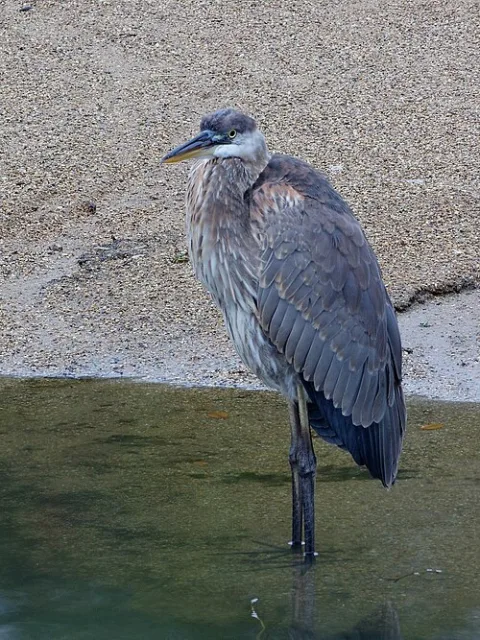
The ultimate behavioral clue is begging. A juvenile that has recently left the nest but is still being fed by a parent will engage in unmistakable behavior: fluttering its wings rapidly, adopting a low, crouching posture, and letting out incessant, high-pitched calls. You might even see a juvenile Great Blue Heron chasing an adult, demanding food. Seeing a bird with adult plumage being aggressively pursued by a messy-looking clone is a sure sign of a family unit.
Late-Season Residents
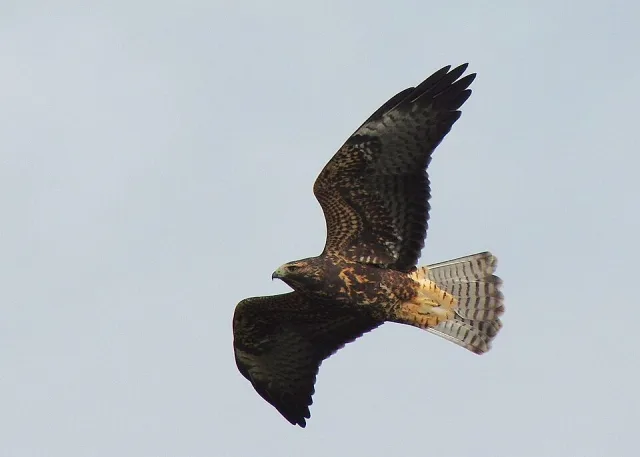
If you are birding in an area during the summer or early fall where a species is not known to breed (for example, a Swainson's Hawk in a developed suburban area), a sighting is likely an adult passing through. However, if you see a bird that should have migrated by now, or one that is well south of its breeding grounds but is clearly a juvenile, you're tracking a young bird that is simply following its instincts on an early, slightly disorganized migration route.
Focusing on Challenging Groups
Certain families of birds present the biggest identification headaches when it comes to juveniles.
Shorebirds (Waders)
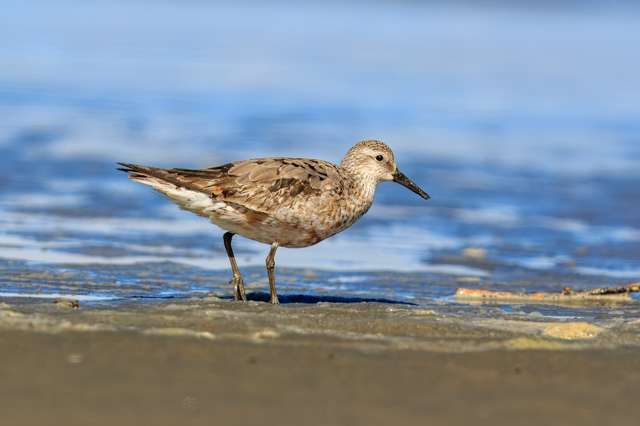
Juvenile shorebirds are notoriously challenging. For most sandpipers and plovers, the juvenile plumage is often the most colorful they will wear. While the adults have already molted into drab basic (winter) plumage, the juveniles often arrive with fresh, heavily scaled or patterned feathers, especially on the back. For example, a juvenile Red Knot has bright rufous (rusty) coloring on its back and scapulars, which the adult lacks in both winter and summer plumage. Look for the crispness of these back feathers—if they look fresh and clean, they are likely juveniles.

Warblers and Sparrows
In late summer, freshly molted juvenile sparrows and finches are often difficult to identify because they all look like plain, brown-streaked birds. In warblers, the stunning colors of the male (e.g., the bright blue of a male Black-throated Blue Warbler) are replaced by drab, often yellowish-green tones. Focus less on color and more on the bird's structure (tail length, primary projection) and vocalization (the juvenile may practice incomplete or garbled versions of the adult song).
Summary: A Checklist for Success
To successfully identify a puzzling young bird, follow this quick checklist:
- Look for Fuzz/Worn Feathers: Does the plumage look looser or messier than a typical adult? Look for faded, thin, buffy feather edges.
- Check the Mouth: Is there a prominent yellow fleshy area (gape) at the base of the bill?
- Note the Behavior: Is the bird clumsy, begging, or making repetitive, high-pitched contact calls while fluttering its wings?
- Confirm the Location: Is this bird lingering in a breeding area later than expected, or is it a rare visitor that is known to wander on its first migration?
By shifting your focus from color and familiar patterns to texture, structure, and behavior, you’ll unlock the identity of countless young birds and transform one of birding’s greatest seasonal challenges into a rewarding masterclass in observation. Recognizing a juvenile is recognizing the future of the species, and it's one of the most satisfying achievements a U.S. birder can make.
Unlocking the Secrets of Bird Identification: The 5 S's for Birdwatching
