
The high desert of southwestern Idaho, dominated by the winding path of the Snake River, is home to one of the most remarkable ecological spectacles in North America: the Snake River Birds of Prey National Conservation Area (NCA). Established in 1993, this protected expanse of over 485,000 acres is dedicated to preserving a uniquely concentrated nesting and foraging habitat for raptors. It is here that the interplay of geology, climate, and ecology has created the perfect conditions for the world's densest concentration of nesting falcons, eagles, hawks, and owls.
A Landscape Forged by Fire and Water
The dramatic setting of the NCA is defined by the Snake River Canyon. The river has cut a deep gorge through layers of volcanic rock, primarily basalt. These sheer, vertical cliffs and deep fissures were created by massive lava flows that occurred millions of years ago, providing hundreds of miles of perfect, ready-made nesting sites—natural ledges, potholes, and small caves—that are inaccessible to most terrestrial predators.
The geography of the area supports two critical components for the raptors:
Nesting Sites: The rugged, unbroken basalt cliffs offer safe, protected perches for nesting pairs.
A Rich Food Base: The surrounding vast plateau of sagebrush steppe and introduced annual grasslands supports a dense population of small mammals, primarily the Spermophilus (ground squirrel) and the Pygmy Rabbit (Brachylagus idahoensis).
The combination of secure housing (the cliffs) and an abundant, easily hunted food source (the plateau) is the key to the NCA's extraordinary density of birds of prey.
Raptors in Record Numbers
The NCA boasts an unparalleled concentration of breeding raptors, with estimates of up to 800 nesting pairs across 15 different species utilizing the canyon's cliffs during the spring and summer. The area is particularly crucial for several iconic North American birds of prey:
Key Species
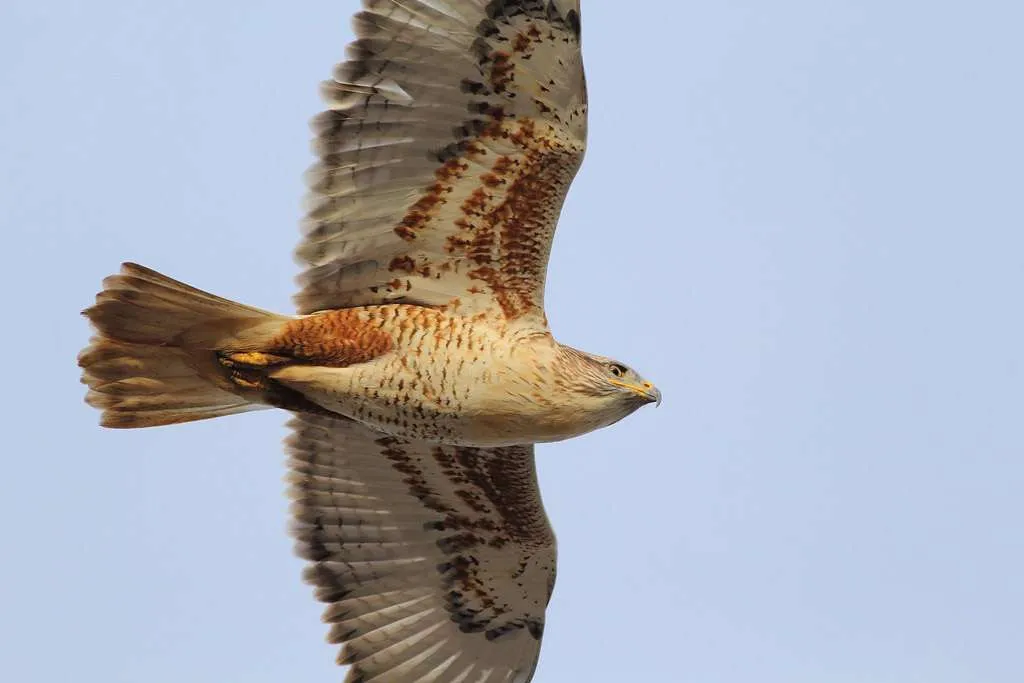
Ferruginous Hawk (Buteo regalis): The largest hawk in North America, this species is a specialist of the open shrub-steppe and relies heavily on ground squirrels. The NCA is a vital breeding stronghold.
Prairie Falcon (Falco mexicanus): Perfectly suited to the arid western environment, the Prairie Falcon nests almost exclusively in the canyon cliffs and relies on its speed to hunt birds and small mammals across the plateau.
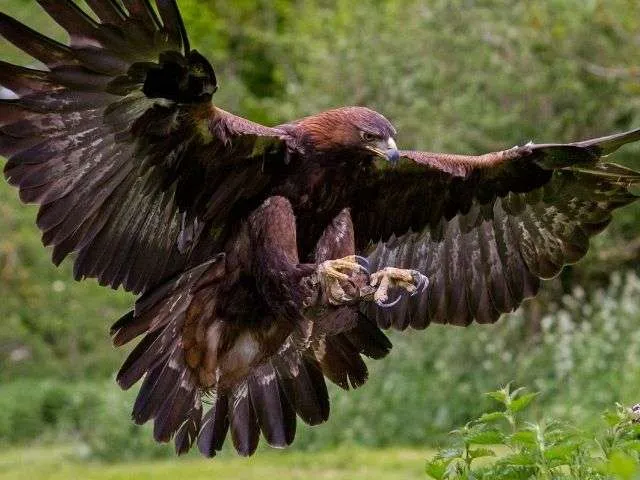
Golden Eagle (Aquila chrysaetos): With a preference for high, inaccessible ledges, these majestic birds dominate the larger prey category, feeding on rabbits and larger ground squirrels.
Red-tailed Hawk (Buteo jamaicensis): The most widespread raptor in North America, the Red-tail is abundant here, utilizing a variety of nesting sites, including both cliffs and the occasional solitary tree.
The diversity also includes several owl species, such as the Great Horned Owl and the Barn Owl, as well as the common American Kestrel.

The Critical Ground Squirrel Link
The stability of the NCA ecosystem rests almost entirely on the abundance of prey, specifically the Townsend's Ground Squirrel (Urocitellus townsendii).
These squirrels emerge from hibernation in late winter, perfectly timing their activity with the arrival of the migratory raptors in early spring. The ground squirrels are active throughout the early nesting period, providing a continuous, easy-to-capture food source for the adults and their nestlings. The sheer density of the squirrel population translates directly to high nesting success rates for the raptors; a single pair of large raptors, like the Ferruginous Hawk, may consume hundreds of squirrels during the nesting season.
However, the ground squirrel population itself is vulnerable to shifts in vegetation. The native sagebrush steppe habitat is increasingly threatened by invasive annual grasses, such as Cheatgrass (Bromus tectorum). Cheatgrass, which thrives in disturbed soil, dries out quickly in the spring, increasing the frequency and intensity of wildfires. These fires destroy the native bunchgrasses and forbs that the ground squirrels rely on, thereby jeopardizing the entire avian food web.
Conservation Challenges and Management
The primary mission of the NCA, managed by the Bureau of Land Management (BLM), is to balance the preservation of the raptors with the inevitable pressures of human use in the surrounding region.
The central challenge is habitat management. Efforts focus on:
Fire Suppression and Rehabilitation: Fighting wildfires, which are a constant threat due to Cheatgrass, and reseeding burned areas with native plants to stabilize the food base.
Controlling Invasive Species: Actively managing and trying to suppress the spread of Cheatgrass to restore the native sagebrush steppe.
Regulating Human Activity: Managing recreational uses (like hiking and camping) and agricultural practices near the canyon rim to minimize disturbance to nesting raptors, especially during the critical spring breeding season.
The NCA remains a globally significant site for the study of predator-prey dynamics and high-desert ecology. It is a powerful example of how a unique geological feature, combined with a particular prey base, can sustain an astonishing concentration of life, making the Snake River Canyon a true North American natural wonder and a vital sanctuary for the kings and queens of the sky.
Visiting Snake River
The best time to visit the Snake River Birds of Prey National Conservation Area (NCA) to observe the greatest concentration of nesting raptors is during the spring and early summer, specifically from late February through July.
This window captures the entire breeding cycle, from the arrival of the migratory raptors to the fledging of the young.
Peak Viewing Season Breakdown
Late Winter to Early Spring (Late February – Early April)
This is the crucial period for arrival and nesting.
Raptor Arrival: Migratory species like the Ferruginous Hawk and Prairie Falcon arrive to reclaim their territories.
Courtship and Nest Building: Birds engage in spectacular aerial courtship displays and begin refurbishing old nests or constructing new ones on the basalt cliffs.
Prey Emergence: The Townsend's Ground Squirrels, the raptors' primary food source, emerge from hibernation, providing the necessary energy for egg laying.
Viewing Tip: While eggs are being laid, the raptors may be slightly more secretive. However, this is the best time to witness territorial battles and courting flights over the canyon.
Idaho’s Airborne Sovereigns: Why the Gem State is the World’s Raptor Mecca

Mid-Spring to Early Summer (Late April – Early June)
This is the period of incubation and hatching, offering the best opportunities to see adults actively hunting and bringing prey back to the nests.
Hatching: The eggs hatch, and the nestlings grow rapidly. The adults' hunting activity dramatically increases to meet the high demands of feeding the young.
Best Time for Observation: This is arguably the most rewarding time for visitors. You'll see frequent flights into and out of the canyon as parents bring back ground squirrels, and you may observe the young nestlings on the ledges (though they will still be small).
Vegetation: The desert wildflowers bloom, and the annual grasses (including Cheatgrass) are still green, before the intense summer heat sets in.
Mid-Summer (Late June – July)
This is the period of fledging and dispersal.
Fledging: The young raptors are fully feathered and begin taking their first tentative flights from the cliffs. They remain near the nest, still dependent on the parents for a short period.
Raptor Density is High: The total number of raptors in the area is at its annual peak, consisting of both adults and newly fledged young.
Dispersal: By late July and August, the families begin to disperse, and the adults may migrate away from the canyon as the ground squirrels become less active and retreat underground for the hot summer months.

Important Considerations for Visiting
Access: Much of the NCA is managed by the Bureau of Land Management (BLM). Access is primarily via unimproved dirt roads, which can become impassable after heavy rain or snow. Always check road conditions before visiting.
Weather: Expect extreme weather. Early spring can be cold and windy, while summer is intensely hot and dry.
Ethics: Never disturb the nesting raptors. Use binoculars or a spotting scope to view nests from a safe distance along the canyon rim. Disturbing a nest can cause the adults to abandon their young, especially during the early incubation phase. The BLM maintains viewing areas designed to provide good sightlines without causing disturbance.
Lookout Points: The Dedication Point Overlook and the Swan Falls Dam area offer excellent, easily accessible viewing points along the canyon rim.
