
The United States, a land of vast ecological diversity, is home to a magnificent array of avian wonders. Among the most enchanting are the hummingbirds—tiny, iridescent dynamos that embody nature's artistry and engineering prowess. Known for their astonishing aerial acrobatics, lightning-fast wingbeats, and vibrant, metallic plumage, these "flying jewels" hold a unique place in the hearts of American nature lovers. While the vast majority of the world's over 360 hummingbird species reside in the tropics, approximately 20 species have been documented within the US, ranging from common breeders to rare vagrants that wander north from Mexico.
The distribution of these species is sharply divided across the continent, offering a stark contrast between the Eastern and Western United States.
The Eastern Monarchy: The Ruby-throated Hummingbird
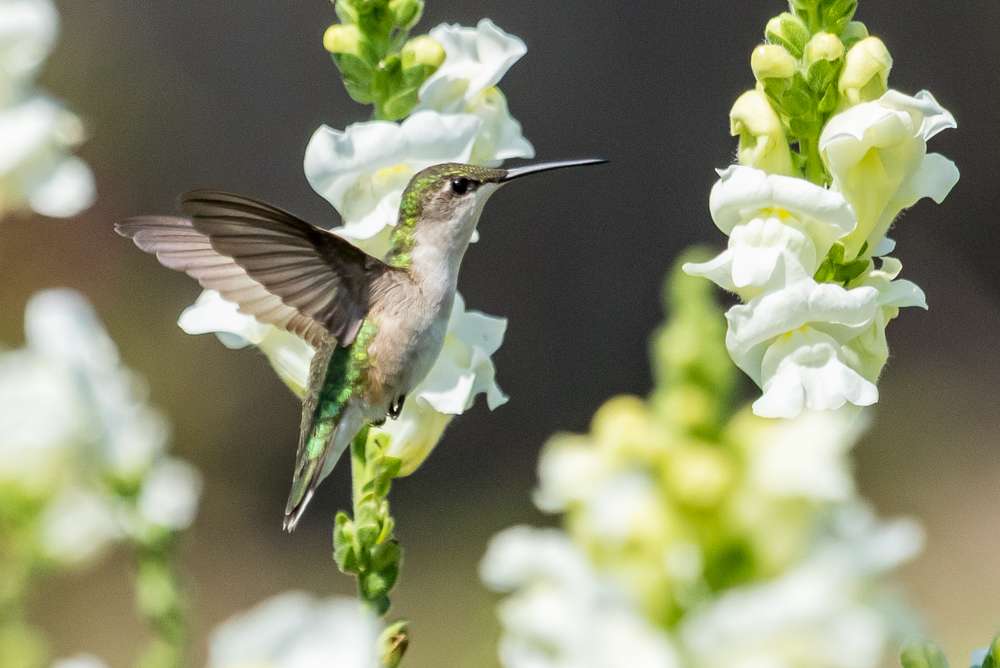
East of the Mississippi River, the hummingbird landscape is predominantly ruled by a single, iconic species: the Ruby-throated Hummingbird (Archilochus colubris).
This species is the only hummingbird known to breed reliably across the entire eastern half of the United States and Canada, from the Gulf Coast up to the Great Lakes and Maine. With an estimated population of around 34 million, it is, by far, the most common hummingbird in North America.

The adult male is instantly recognizable by his iridescent ruby-red throat patch (gorget), which can appear black in poor light, contrasting with his bright emerald-green back. The females and juveniles lack the vibrant gorget, possessing a plain white throat.
Perhaps the most astonishing characteristic of the Ruby-throated Hummingbird is its epic migration. These tiny birds make an annual, solo journey of thousands of miles, including a non-stop flight of over 500 miles across the Gulf of Mexico to their wintering grounds in Central America. This feat of endurance, often completed in 18 to 22 hours, is a powerful testament to their metabolic and physiological excellence.
The Western Kaleidoscope: A Haven for Diversity
In stark contrast to the East, the Western United States is a veritable hotspot for hummingbird diversity. The mountain ranges, deserts, and riparian corridors of the West—particularly the Southwestern states bordering Mexico—create a mosaic of habitats that attract numerous resident and migratory species. Arizona, in particular, stands out as the hummingbird capital of the US, with over a dozen species recorded annually, thanks to the confluence of several major biogeographic regions, including the Rocky Mountains, the Sierra Madre, and the Sonoran and Chihuahuan Deserts.
The most common and characteristic species in the West include:
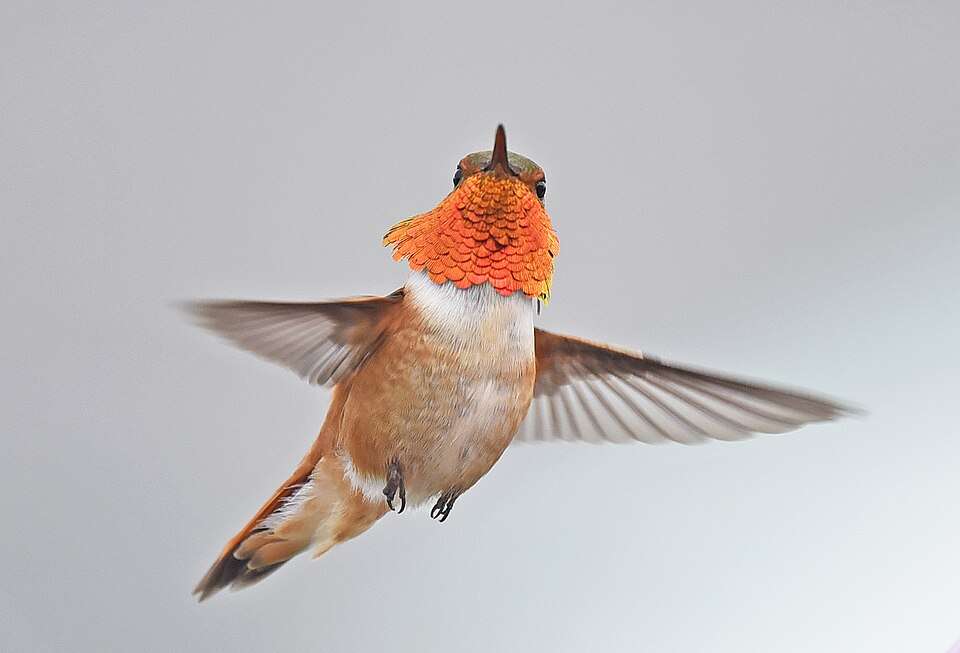
- Rufous Hummingbird (Selasphorus rufus): With a population of about 19 million, the Rufous is the second most common species. It is a champion migrant, covering over 3,000 miles from its breeding grounds in the Pacific Northwest and Alaska—the northernmost breeding range of any hummingbird—to its wintering grounds in Mexico. The male's glowing, all-orange back and gorget make it unmistakable. It's also known for being exceptionally pugnacious and territorial, frequently dominating feeders and flowers much larger than itself.

Rufous_Hummingbird - Anna's Hummingbird (Calypte anna): A stockier, medium-sized hummingbird, the Anna's is a year-round resident along much of the Pacific Coast, from Baja California up to Washington. The male's head and gorget are a stunning, shimmering fuchsia or rose-red, which can look dull brown until it catches the sun. Uniquely, the male Anna's is the only hummingbird in the US that produces a recognizable vocal song outside of mating calls.

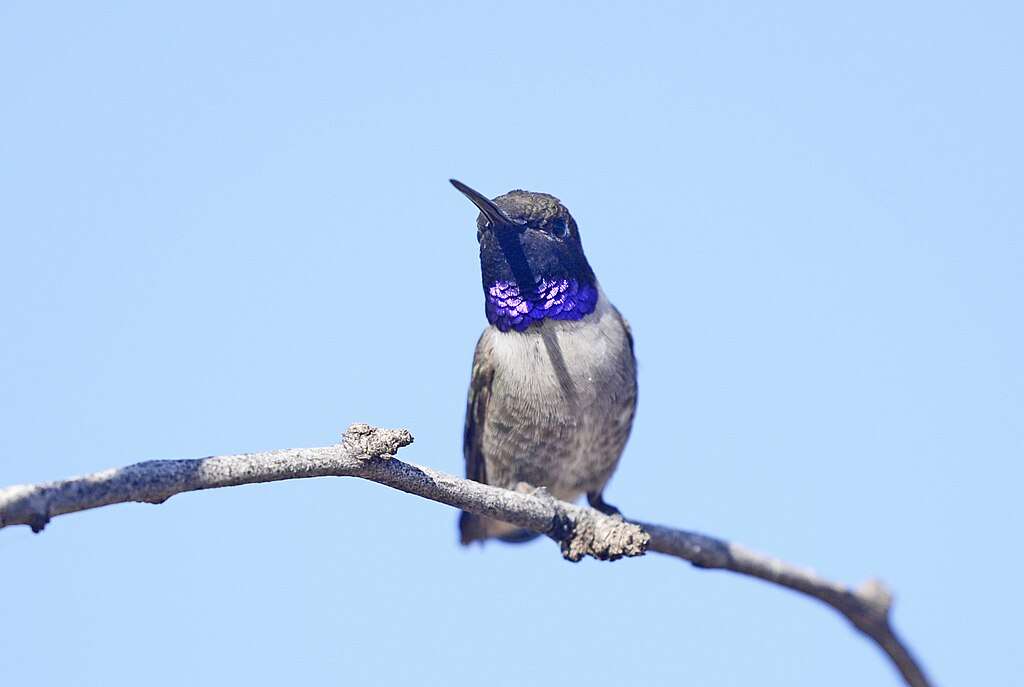
Anna's Hummingbird - Black-chinned Hummingbird (Archilochus alexandri): The western counterpart to the Ruby-throated, the male Black-chinned has a velvety black gorget with a thin, iridescent purple band at the bottom. It's a common summer breeder in a wide range of Western habitats, from desert canyons to mountain woodlands, before migrating to Mexico for the winter.

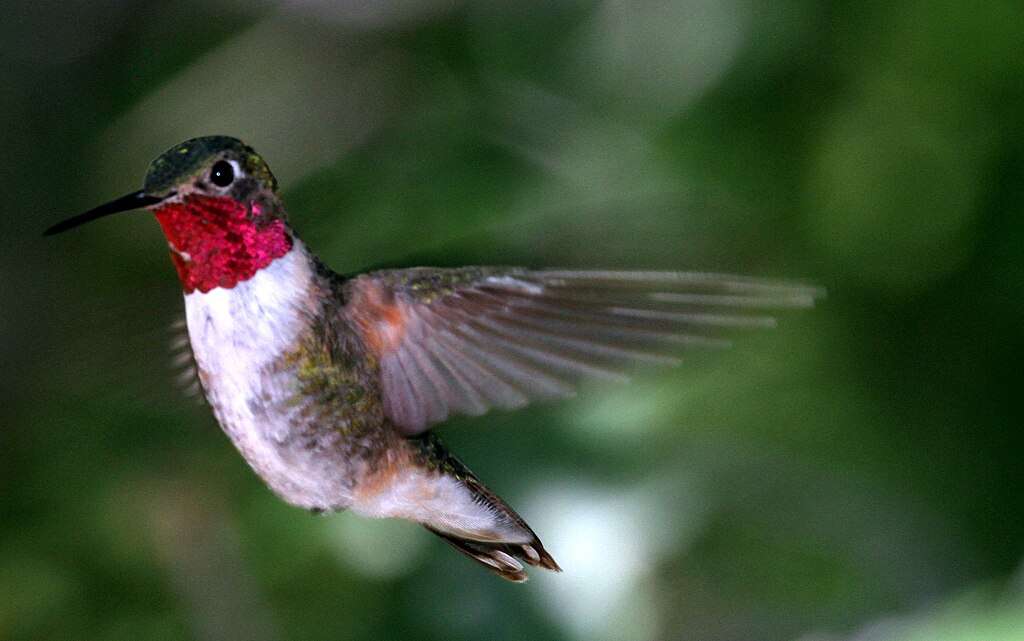
Black-chinned Hummingbird - Broad-tailed Hummingbird (Selasphorus platycercus): Predominantly a Rocky Mountain species, the male has a rose-red gorget and is famous for the distinctive, loud, metallic "whistle" or "trill" its wings produce in flight, particularly during breeding season.

Broad-tailed Hummingbird

The Miniatures and the Mountain Gems
The West also hosts the smallest and some of the most specialized hummingbirds in the country.
The Calliope Hummingbird: North America's Smallest
The Calliope Hummingbird (Selasphorus calliope) is the smallest bird in all of North America, weighing in at a mere —less than the weight of a penny . The male's gorget features striking, elongated magenta or rosy-pink streaks that flare out on the side of his neck like a shaggy beard.
This tiny titan is also the smallest long-distance avian migrant in the world, traveling over 5,000 miles annually. It breeds in high-elevation mountain meadows of the Northwest and Rockies, a testament to its remarkable ability to endure chilly summer nights by entering a state of torpor—a temporary, deep, sleep-like hibernation that conserves metabolic energy.

Desert Specialists and Borderland Treasures
The arid and mountainous regions of the Southwest are home to unique, less-common species whose ranges barely extend into the US from Mexico.
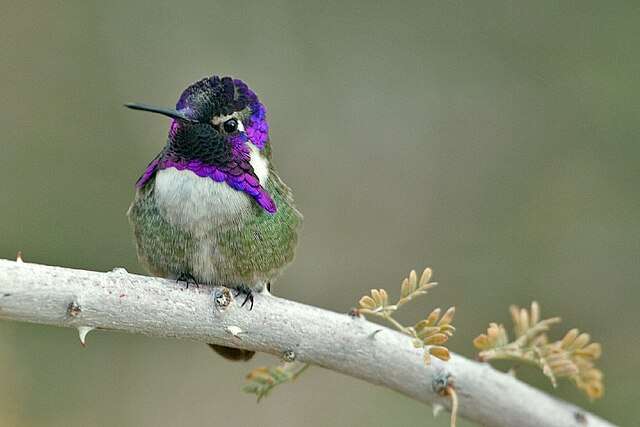
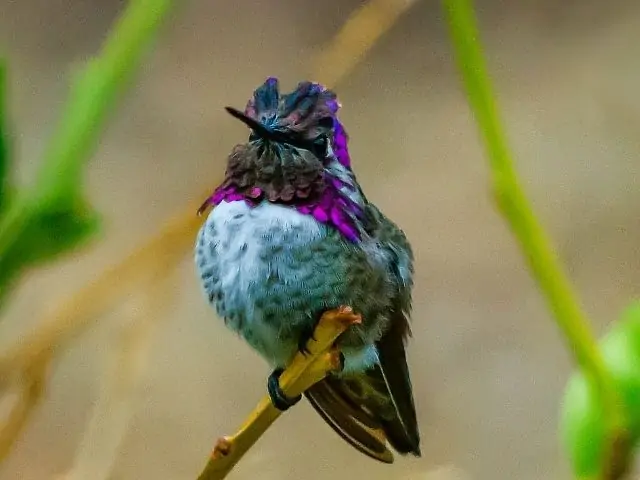
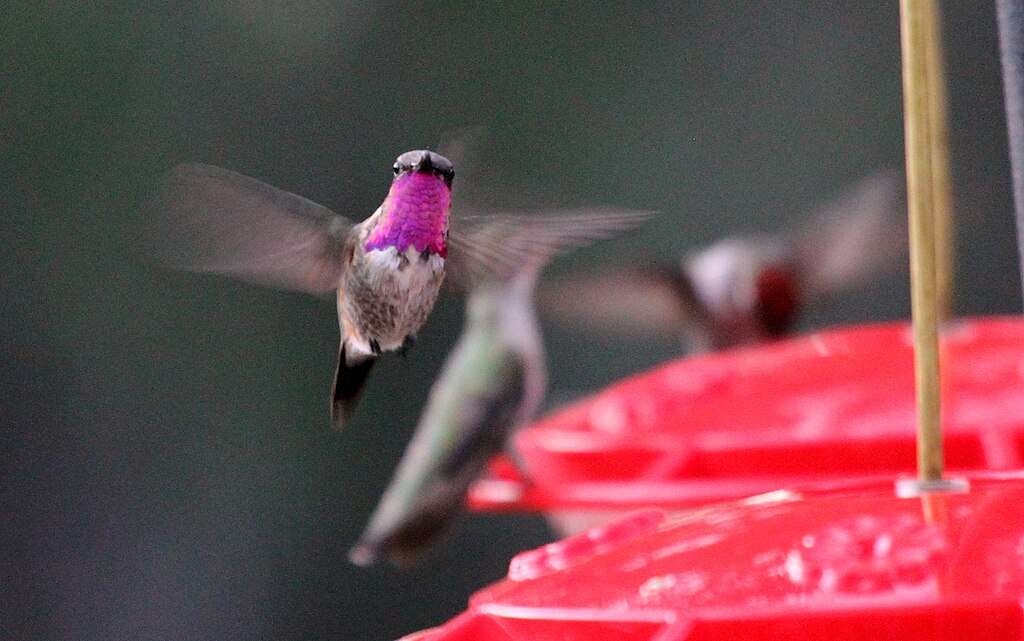
- Costa's Hummingbird (Calypte costae): This is often considered the most arid-adapted hummingbird in the US, inhabiting the desert scrub communities of Southern California, Arizona, and Nevada, dominated by cactus, ocotillo, and chuparosa. The male's gorget is a spectacular, iridescent deep violet or purple, extending back into a long, flared "mustache" on the sides of his head.

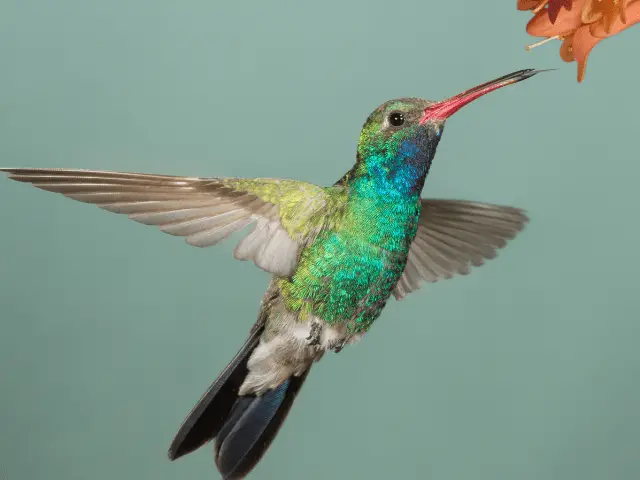
Costa’s Hummingbird - Broad-billed Hummingbird (Cynanthus latirostris): A frequent visitor to the US, breeding regularly in the mountain canyons and riparian areas of Southern Arizona and New Mexico. The male is a shimmering, metallic green with a vivid blue throat and a distinguishing feature: a bright red bill with a black tip .
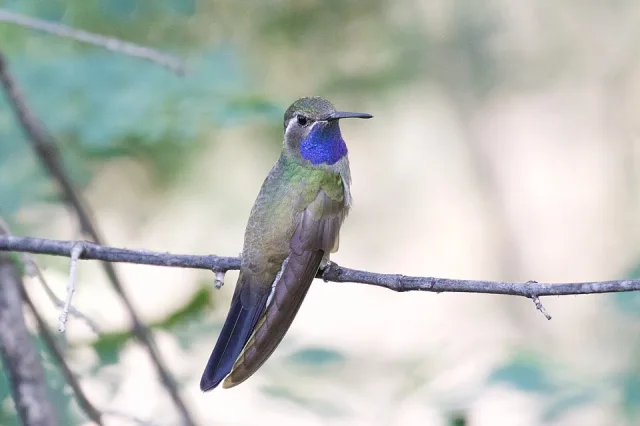
Broad-billed Hummingbird - Blue-throated Mountain-gem (Lampornis clemenciae): Formerly known as the Blue-throated Hummingbird, this is the largest hummingbird species that regularly nests in the US, found in the high-elevation mountain canyons of Arizona, New Mexico, and Texas. The males possess a distinctive blue gorget and prominent white stripes above and behind the eyes.

Blue-throated Mountain-gem - Lucifer Hummingbird (Calothorax lucifer): A rare, striking species found in the desert mountain ranges of Arizona, New Mexico, and Texas. The male has a unique, deeply forked tail and a long, curving bill that is highly adapted for feeding on desert plants like the Century Plant.
Lucifer Hummingbird
The Hummingbird Lifestyle: Feats of Flight and Metabolism
All hummingbirds, regardless of species, share a set of incredible characteristics that define their existence. They are members of the family Trochilidae, unique to the Americas, and are the only birds capable of sustained hovering and flying backward, thanks to their specialized shoulder joint that allows their wings to rotate .
Their small size belies an incredible power and speed. A flying hummingbird's heart can beat over 1,200 times per minute, and its wings can flap between 50 and 80 times per second, creating the characteristic "humming" sound that gives the bird its name.
This high-octane lifestyle demands constant fuel. Hummingbirds must consume roughly half their body weight in nectar and small insects each day. They are crucial pollinators, primarily targeting red or orange tubular flowers whose nectar is high in sugar, a perfect energy source for their demanding metabolism. They also rely on excellent spatial memory (aided by a large hippocampus in their brain) to remember the exact location and peak bloom times of flowers and feeders year after year.
The Future of the Flying Jewels
Hummingbirds in the US face challenges, primarily linked to habitat loss in their breeding and wintering grounds, and the impacts of a changing climate that can disrupt the critical timing of their long migrations and the availability of their food sources.
Conservation efforts are often centered in the Western states, where the concentration of species is highest. Bird enthusiasts play a vital role in supporting these birds by planting native, tubular flowers (like Penstemon, Salvia, and Agastache) and maintaining clean feeders.
From the familiar ruby flash in an eastern backyard to the diverse array of violet, rose, and orange gorgets flitting among the desert canyons of the West, hummingbirds are one of the US's most cherished natural treasures. Their presence is a reminder of the wild beauty and astonishing biological feats that unfold in the skies above us every day.
