
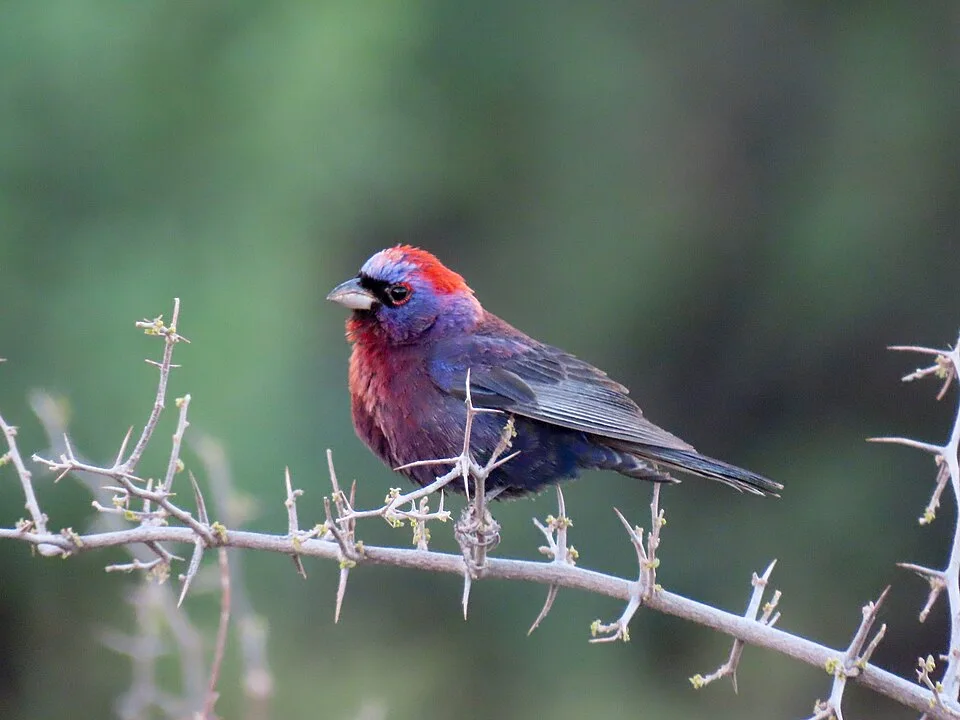
Birdwatchers, photographers, and even casual observers have all experienced the phenomenon: a bird glimpsed in one light appears dull and unassuming, only to explode with vibrant, almost unbelievable color when viewed from a different angle or under a different sky. This isn't magic; it's the intricate science of light interaction with the specialized structures of bird feathers. The apparent color of a bird's plumage is not static; it's a dynamic interplay between the pigments embedded in the feathers and the structural properties of the feathers themselves, all mediated by the nature of the light source and the angle of observation. Understanding this relationship is key to truly appreciating the kaleidoscopic beauty of avian life.
The Two Pillars of Bird Color: Pigments vs. Structure
Before diving into light's influence, it's crucial to distinguish between the two fundamental ways birds produce color:
- Pigmentary Colors: These are colors produced by chemical compounds (pigments) deposited within the feather cells.
- Melanins: Produce blacks, grays, browns, and some yellows/reds. These are the most common pigments and are structurally strong.
- Carotenoids: Produce reds, oranges, yellows, and some purples. Birds obtain these pigments through their diet, often from plants or insects.
- Porphyrins: Produce magentas, browns, and reds. These are less common and easily degraded by sunlight.
- How light interacts: Pigmentary colors are relatively stable. A red cardinal will look red regardless of the angle, though its intensity can vary with light quality. They absorb certain wavelengths of light and reflect others.
- Structural Colors: These are colors produced by the microscopic structure of the feather barbs and barbules, which interfere with light waves. They work like tiny prisms or diffraction gratings.
- Iridescence: The most dramatic structural color, appearing to change color depending on the viewing angle (e.g., hummingbirds, peacocks, many starlings). Caused by thin layers of keratin and melanin that interfere with light waves, similar to how an oil slick creates colors.
- Non-iridescent Structural Colors (e.g., blues, some greens): Produced by the scattering of blue light by nano-sized air pockets within the feather's keratin structure (Rayleigh scattering), similar to why the sky is blue. These colors are generally less angle-dependent than iridescence but still heavily influenced by light.
- How light interacts: Structural colors are highly dynamic. Without light, they are invisible. Their appearance is dictated by the precise angle at which light hits the feather and reflects to the observer's eye.
The Variables of Light: Shaping Perception
Several aspects of light fundamentally alter how we perceive bird plumage:
1. Angle of Incident Light and Viewing Angle
This is the most critical factor for structural colors, especially iridescence.
- Iridescence (Angle-Dependent): Imagine holding a CD. You see different colors as you tilt it. Bird feathers with iridescent qualities (like a hummingbird's gorget or a grackle's head) behave similarly. As the bird moves, or as you change your perspective, the tiny structures on the feathers reflect different wavelengths of light back to your eye. A hummingbird might flash brilliant emerald green one moment, then fiery ruby red the next, simply by turning its head a fraction of an inch. Without the direct, precise angle of light hitting those structures, the color might appear dull, black, or even brownish.
Example:
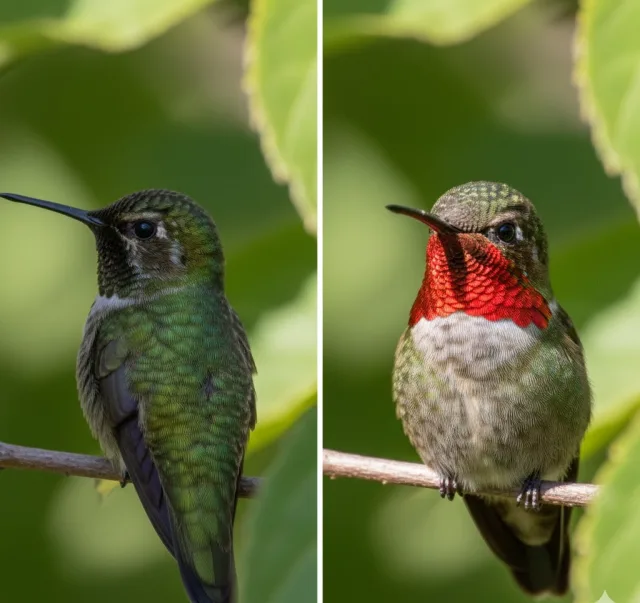
(Image: Two side-by-side photos of a Ruby-throated Hummingbird. The left photo shows the bird from an angle where the gorget appears dull black or dark green. The right photo shows the same bird, slightly turned, with its gorget blazing vibrant ruby red.)
- Non-Iridescent Structural Colors (Less Angle-Dependent, but still influenced): Blues, like those on a Blue Jay or Eastern Bluebird, are also structural but less dramatically angle-dependent than iridescence. They rely on scattering blue light. However, if the light is flat, indirect, or coming from an unusual angle, the vividness of the blue can be muted, appearing duller or even grayish-blue. The clarity of the blue is maximized when light hits it directly and brightly.
2. Intensity and Direction of Light (Front-lighting vs. Back-lighting)
The strength and source of light dramatically affect how colors are perceived.
- Front-lighting (Light source behind the observer, shining directly on the bird): This is generally considered ideal for viewing and photographing birds, as it illuminates both pigmentary and structural colors to their fullest potential. Colors appear rich, saturated, and true. Iridescent patches will "fire" (show their brilliant colors) when properly front-lit.
Example:

- Back-lighting (Light source behind the bird, facing the observer): This creates a silhouette effect, often obscuring colors entirely. The bird appears dark, and detail is lost. While visually dramatic in photography, back-lighting is terrible for identifying bird colors. Even the brightest pigmentary colors will appear dull or black. Structural colors will often disappear entirely, or if the light manages to catch specific angles, can create an unexpected, fleeting glow.
- Side-lighting: Can create interesting textures and highlights but may leave one side of the bird in shadow, making color assessment challenging.
3. Quality and Color Temperature of Light (Warm vs. Cool Light)
The color temperature of the light source itself can subtly but significantly alter perceived colors.
- Warm Light (Golden Hour - sunrise/sunset): Sunlight closer to sunrise or sunset has a warmer, more reddish-yellow hue. This can enhance reds, oranges, and yellows in bird plumage, making them appear richer and more saturated. It can also add a beautiful glow to white or pale feathers.
- Cool Light (Overcast days, midday blue sky): Light on overcast days or in the middle of a clear day often has a cooler, bluer cast. This can mute warm colors but might enhance blues and greens, making them appear crisper. However, very diffuse, overcast light can also flatten colors overall, reducing their vibrancy.
Example:
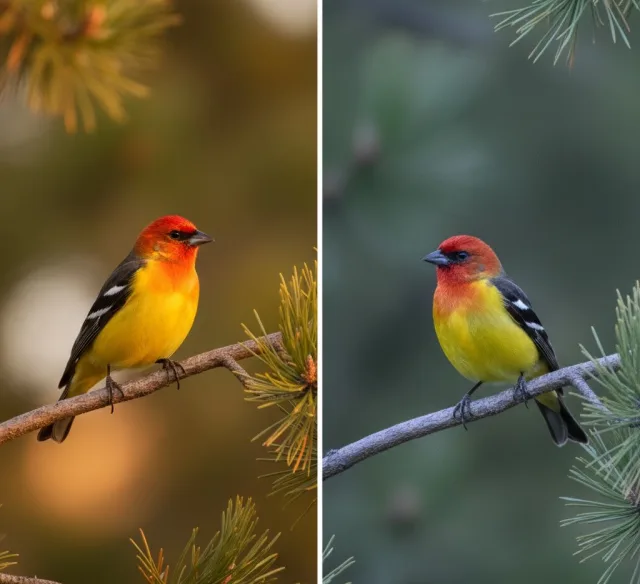
(Image: Two side-by-side photos of a Western Tanager. The left photo shows the bird in warm, golden hour light, making its red head and yellow body appear more intense and glowing against a warm background. The right photo shows the same bird in cooler, overcast light, where the colors are still present but appear less vibrant and more subdued against a muted background.)
4. Amount of Light (Brightness vs. Shadow)
- Bright, Direct Sunlight: Maximizes both pigmentary and structural colors. Structural colors, especially iridescence, need strong, direct light to "fire."
- Shade and Shadow: Reduces the intensity of all colors. In deep shadow, even brightly colored birds can appear dull or muted. Structural colors will often be completely absent, making iridescent patches look dark. This is why a Common Grackle's iridescent head might look black in the shade but flash purple and green in the sun.
Implications for Birdwatchers and Photographers
Understanding the relationship between light and plumage has several practical implications:
- For Birdwatchers: If a bird looks dull, try to reposition yourself to change the angle of light or your viewing angle. A bird that appears to be a "plain brown job" might reveal dazzling iridescent patches with a slight shift in perspective. Don't rely solely on field guide images, which are often taken in ideal light; be prepared for variations.
- For Photographers: "Good light" is paramount. Aim for front-lighting, especially during the "golden hours" of sunrise and sunset, to capture the richest colors. Experiment with angles to make iridescent patches glow. Diffused light on overcast days can be excellent for capturing even, soft colors without harsh shadows, though iridescence may be less dramatic.
- For Conservation: The stunning beauty of bird plumage, so dependent on light, is a powerful tool for engaging the public and inspiring conservation efforts. Capturing and sharing the dynamic color changes can highlight the incredible biological artistry at risk.
The colors on a bird's plumage are a masterpiece painted not just by nature, but also by light itself. By understanding how light interacts with feathers, we gain a deeper appreciation for the complex beauty and ever-changing artistry of the avian world, transforming every sighting into a dynamic and captivating experience.
