
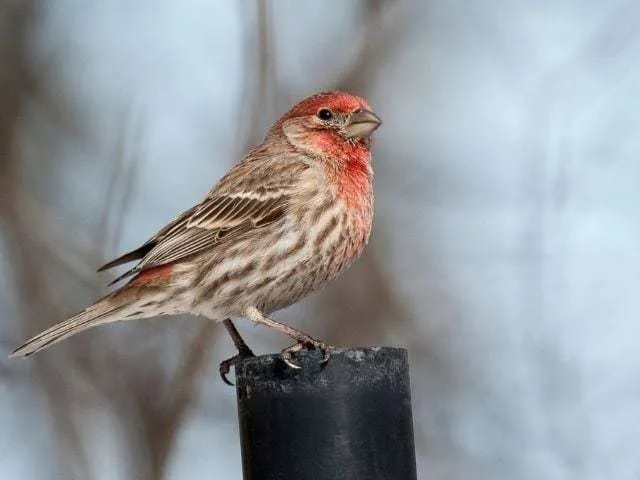
The House Finch (Haemorhous mexicanus), a small, adaptable songbird, is a fixture of backyards, urban parks, and suburban developments across North America. Easily recognized by the male's rosy-red plumage and the cheerful, rambling song, this species has one of the most remarkable stories of range expansion in modern ornithology. Originally native only to the American West and Mexico, a twist of fate in 1940 launched the House Finch into an accidental empire that now spans the entire continental United States.
An Intriguing Introduction and Explosive Spread
The House Finch’s native range extended from southern British Columbia south through California and into Mexico, preferring open woodlands, arid scrub, and brushy canyons. This western population still thrives today. The bird's widespread presence east of the Rocky Mountains, however, is entirely due to human intervention.
In the early 1940s, a few dozen House Finches, which had been illegally trapped in California and sold as "Hollywood Finches" in pet shops, were released in Long Island, New York, to avoid prosecution under the Migratory Bird Treaty Act. This small, captive-bred group became the founder population for the entire eastern North American range.
The birds thrived in the human-altered landscapes of the East, finding an abundance of food from gardens and feeders, and safe nesting sites on buildings. The expansion was astonishingly rapid:
- By 1961, the population was mostly confined to New York.
- By 1981, it covered New England and the Mid-Atlantic states.
- By 1990, it had reached the Great Plains.
Today, the eastern and western populations have largely merged across the continent, with the House Finch now a common year-round resident in almost every US state, a testament to its incredible adaptability to human settlements.
Appearance, Song, and Diet
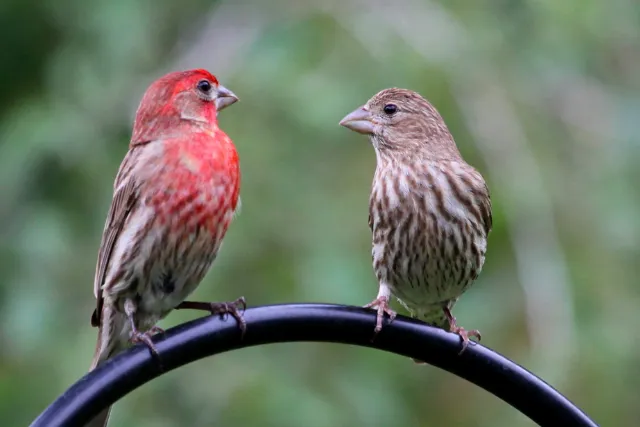
The House Finch is about the size of a sparrow, measuring 5 to 6 inches long. It exhibits clear sexual dimorphism:
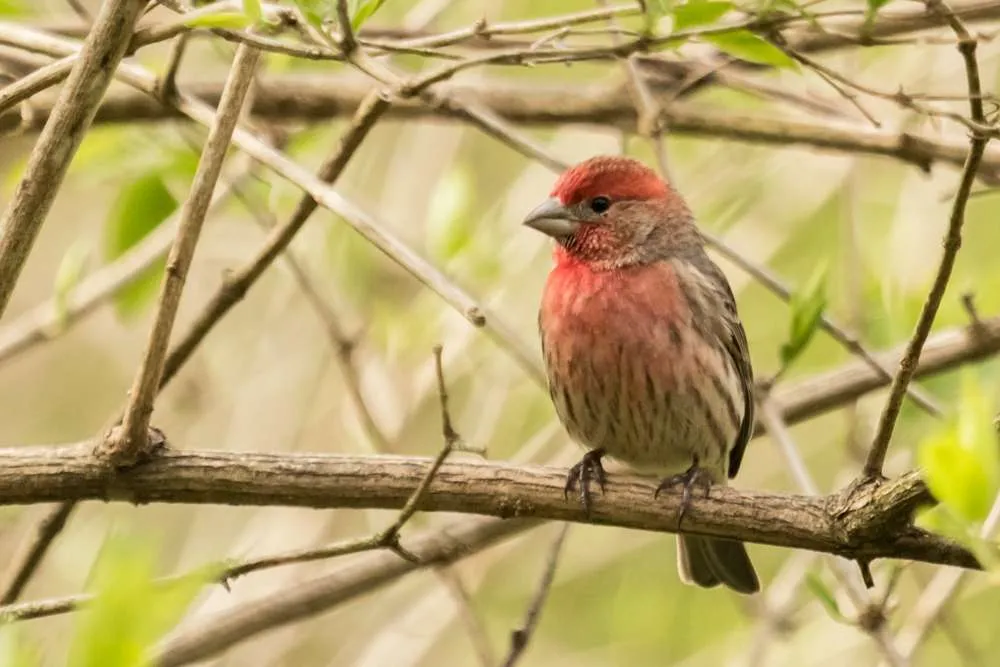
- Males are a mix of brown and streaky feathers but boast a distinguishing wash of red, orange, or yellow on the forehead, throat, and rump. This coloration is diet-dependent, coming from carotenoid pigments in the food they eat; the brighter the color, the more attractive the male is to females, as it signals a superior foraging ability.
- Females are a plain, streaky brown-gray overall, without any bright head or breast coloring.
The male's presence is often announced by his enthusiastic song: a long, high-pitched, jumbled warbling of short notes, often described as "canary-like" but without the musical trills, that typically ends in an upward or downward slur. They sing throughout the year, usually from a high perch like a treetop or antenna. The primary call is a simple, loud cheep or beep.
The House Finch's foraging strategy and diet are key to its success. It is an almost exclusively vegetarian bird, a rarity in the finch family, with seeds, buds, and fruits comprising about 86% of its diet. Unlike most other songbirds, even nestlings are fed a diet of regurgitated seeds and vegetable matter, not insects. Favorite foods include weed seeds (like thistle and dandelion), berries, and flower parts. At feeders, they readily consume black oil sunflower seeds and thistle (nyjer) seed. They are highly social, typically foraging in noisy flocks on the ground or at feeders, especially during non-breeding seasons.
Nesting and Reproductive Behavior
The House Finch is a prolific breeder. Courting males perform a "butterfly flight" display, fluttering up with slow wingbeats while singing, and engage in courtship feeding with the female, who flutters her wings like a nestling to receive food. Females often show a strong preference for the reddest males.
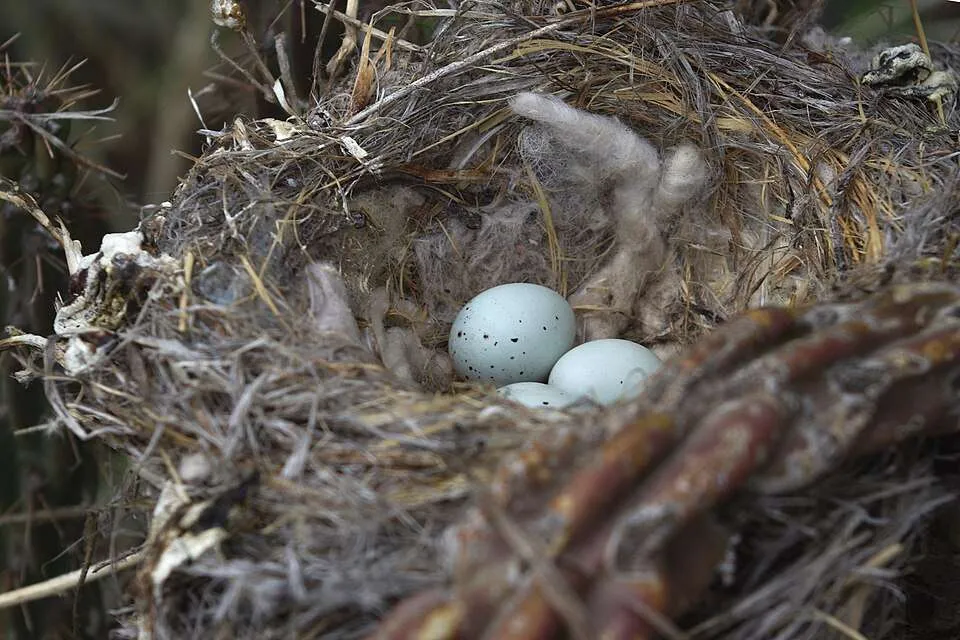
Nesting begins as early as March. The female constructs a cup-shaped nest of fine plant matter, grass, wool, and feathers. A remarkable characteristic of the House Finch is its flexibility in choosing a nest site, which is a major factor in its ubiquity:
- In their native West, nests are found in cacti, rock ledges, and tree cavities.
- In urban and suburban areas, they use a wide variety of human-made structures, including ledges on buildings, streetlights, hanging planters, window sills, and even abandoned nests of other species.
A clutch typically contains 4-5 pale blue or white eggs speckled with black and lavender. The female incubates the eggs for 12-14 days. Both parents feed the young, who fledge, or leave the nest, within two weeks of hatching. This species can raise two to three broods, and sometimes even up to six, in a single breeding season, allowing its population to rebound quickly and expand its range rapidly.
Conservation Status and Disease Threat
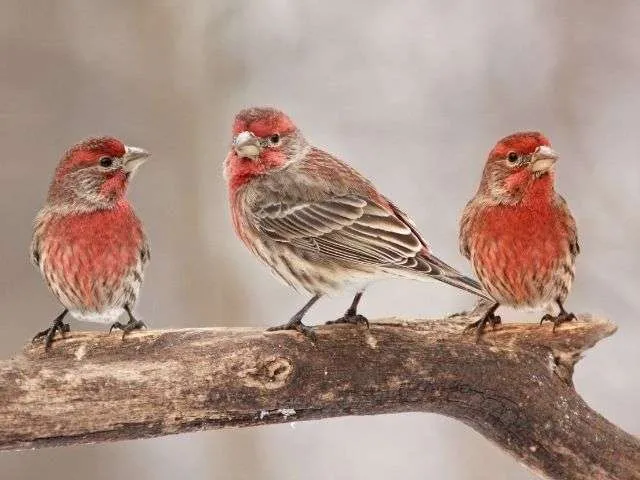
The House Finch is not considered endangered and has a stable population overall. It is protected under the Migratory Bird Treaty Act. However, the species faces a significant health threat: House Finch Conjunctivitis (HFC), also known as Mycoplasmal Conjunctivitis.
HFC is a bacterial infection caused by Mycoplasma gallisepticum. It primarily affects House Finches but can also spread to other finches and allies like American Goldfinches.
- Symptoms include red, swollen, and crusty eyelids, often resulting in temporary or permanent blindness.
- Consequence of blindness, infected birds struggle to fly or forage, leading to death from starvation, exposure, or predation.
- Transmission occurs through direct contact between birds, especially at crowded feeding and roosting sites, and via contaminated surfaces like tube-style bird feeders.
First detected in the mid-1990s, the disease led to sharp population declines in the eastern House Finch population, although the population has since stabilized. The vulnerability of the eastern population is speculated to be a result of a lack of genetic diversity stemming from the small number of founder birds released in 1940.
To help mitigate the spread of HFC, wildlife officials recommend that backyard bird enthusiasts regularly clean and disinfect feeders and birdbaths with a 10% bleach solution and temporarily remove feeders during an outbreak. HFC is generally not considered a threat to human health.
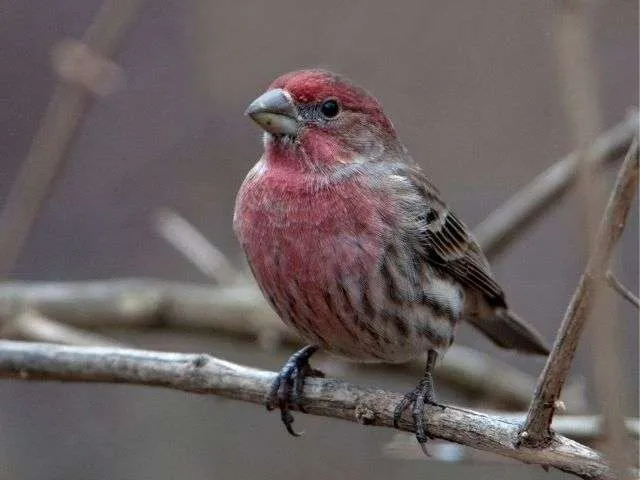
The House Finch, with its brilliant colors and pervasive song, is a living lesson in ecological opportunism. From a few caged birds on Long Island to a coastal-to-coastal phenomenon, its history and ongoing struggles with disease underscore the intricate, and often unpredictable, dynamics of nature in the human world.
The video below offers an example of the kind of sounds these birds make in a backyard setting. What Does House Finches Sound Like? - House Finch Call - Sound Effects - YouTube

