
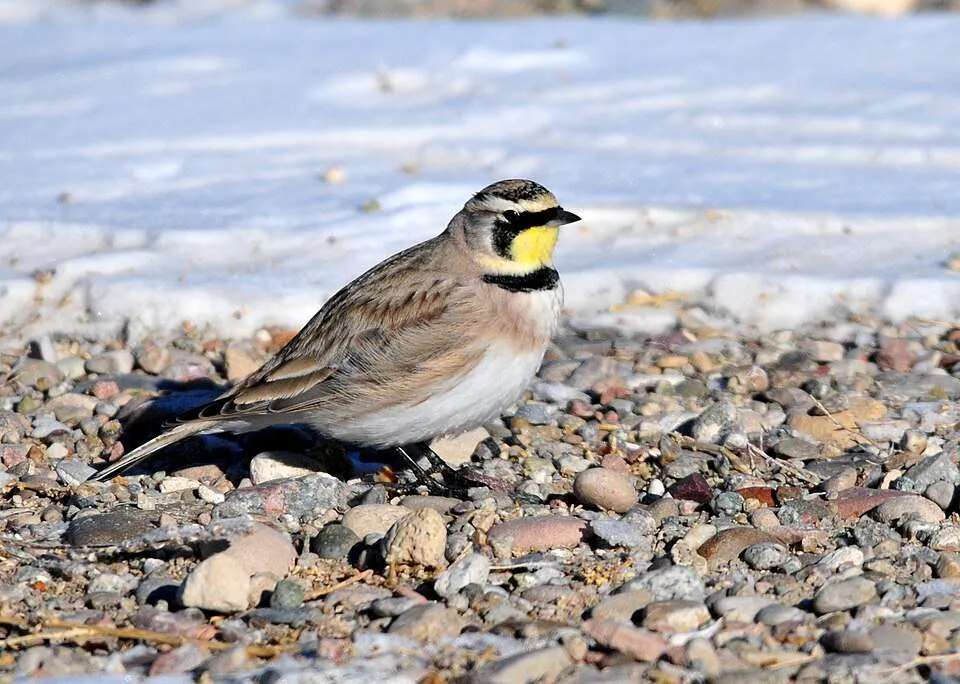
The Horned Lark is a bird of space, light, and wind. Unlike many songbirds that depend on trees or shrubs, this hardy species thrives where the land lies open—on windswept plains, alpine tundra, deserts, beaches, airfields, and frozen winter fields. Found across much of the Northern Hemisphere, the Horned Lark (Eremophila alpestris) is one of the most widespread and adaptable birds in North America, yet its subtle beauty and resilient nature often go unnoticed.
Identification and Appearance
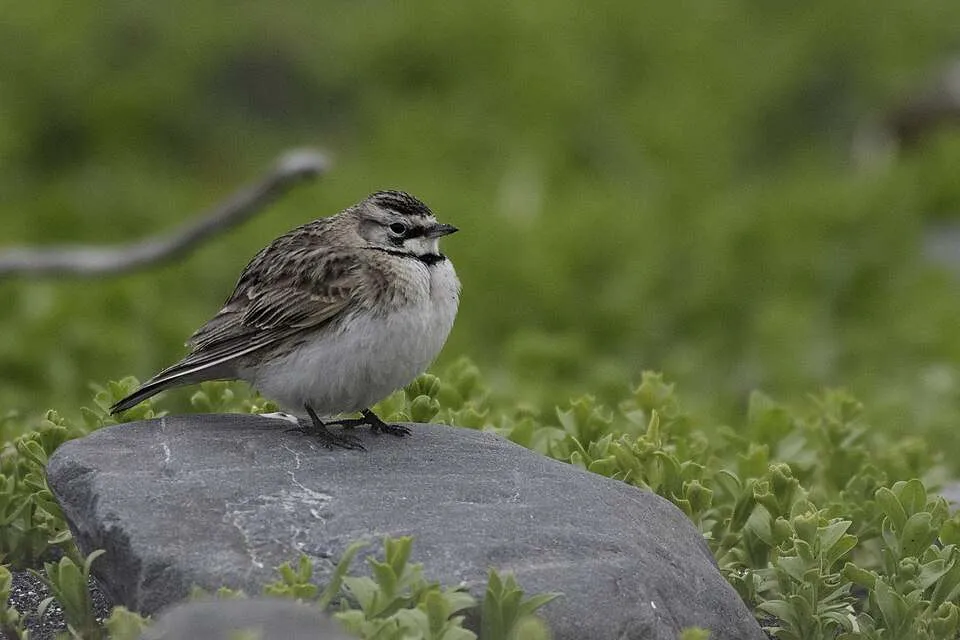
At first glance, the Horned Lark appears understated: a small, ground-dwelling songbird with sandy-brown upperparts and pale underparts that blend perfectly into bare earth and short grass. Closer inspection reveals its defining features. Adult males in breeding plumage sport a striking black facial mask, a black breast band, and the namesake “horns”—tiny black feather tufts on the crown that can be raised or flattened depending on mood. Females and winter birds are duller, with softer facial markings and reduced contrast, but still retain the bird’s sleek, streamlined shape.
Size-wise, Horned Larks are compact, measuring about 6–8 inches (15–20 cm) long. Their long wings and relatively short tail give them a purposeful, direct flight style, well suited to life in open landscapes.
Habitat: Living Where Few Birds Can
Few birds exploit open terrain as successfully as the Horned Lark. It prefers areas with minimal vegetation, where visibility is high and predators can be spotted from afar. Native habitats include prairies, tundra, and desert flats, but the species has readily adapted to human-altered landscapes. Agricultural fields, overgrazed pastures, road edges, and even airport runways now serve as substitute habitats.
This adaptability has allowed the Horned Lark to maintain an enormous range, from the Arctic tundra to the southern United States, and across Europe and Asia. In North America alone, more than 40 subspecies have been described, reflecting local adaptations in size, coloration, and behavior.

Behavior and Feeding
Horned Larks are ground specialists. They forage almost entirely on foot, walking or running rather than hopping, and often crouch low when alarmed. Their diet shifts with the seasons. In summer, they consume insects such as beetles, grasshoppers, and caterpillars, providing valuable pest control. In winter, when insects are scarce, they switch to seeds and grain, often forming flocks that sweep across snowy fields.
Unlike many songbirds, Horned Larks are remarkably cold-tolerant. They are among the earliest breeders in northern climates and are frequently seen in winter conditions that drive other species south. In some regions, they may even nest while snow still covers the ground.
Song and Display
The Horned Lark’s song is delicate, tinkling, and surprisingly sweet for a bird of such stark environments. It is often delivered during a flight display, with the male spiraling upward and then floating back down while singing continuously. These aerial songs can last several minutes and are one of the most distinctive features of the species during the breeding season.
On the ground, males also perform short chases and postures to defend territories and attract mates, raising their “horns” and spreading their wings in subtle but expressive displays.
Nesting and Reproduction
Nesting takes place directly on the ground—a risky strategy made viable by camouflage and careful site selection. The female constructs a shallow cup nest, often placed beside a clump of grass, a small stone, or even a cow hoof print for shelter from wind. In some cases, she creates a “doorstep” of pebbles or plant material leading to the nest, a unique feature thought to aid drainage or temperature regulation.
Clutches typically contain 2–5 eggs, and in many regions, Horned Larks raise multiple broods each year. The young develop quickly, an adaptation to short breeding seasons and exposed nesting sites.
Migration and Seasonal Movements
Horned Larks exhibit flexible migration patterns. Northern populations migrate south in winter, sometimes traveling hundreds of miles, while southern populations may be largely resident. Winter flocks can number in the hundreds or thousands and often include other open-country species such as Snow Buntings and Lapland Longspurs.
Because they favor open ground, Horned Larks are often among the first birds seen in early spring and the last to remain in late autumn, making them familiar companions to birders during transitional seasons.
Conservation Status and Challenges
Despite their wide distribution, Horned Lark populations have declined significantly in parts of North America. Changes in agricultural practices, increased pesticide use, habitat loss, and urban development have reduced suitable breeding and foraging areas. Ironically, the same human-altered landscapes that once benefited the species can become ecological traps when mowing, spraying, or heavy traffic disrupt nesting.
Currently, the Horned Lark is listed as a species of concern in several regions, highlighting the need for open-habitat conservation and bird-friendly land management.

A Symbol of Resilience
The Horned Lark embodies endurance. It survives where few songbirds can, enduring cold, wind, heat, and exposure with quiet determination. For birders, spotting one is a reminder to look down as well as up, to appreciate subtlety, and to recognize that some of the most remarkable birds are those that thrive in the harshest, most overlooked places.
In a world that grows increasingly crowded and enclosed, the Horned Lark remains a voice of the open land—softly singing beneath vast skies.
The Great Escape: Why Birds Migrate and Why Staying Put Isn't an Option
