

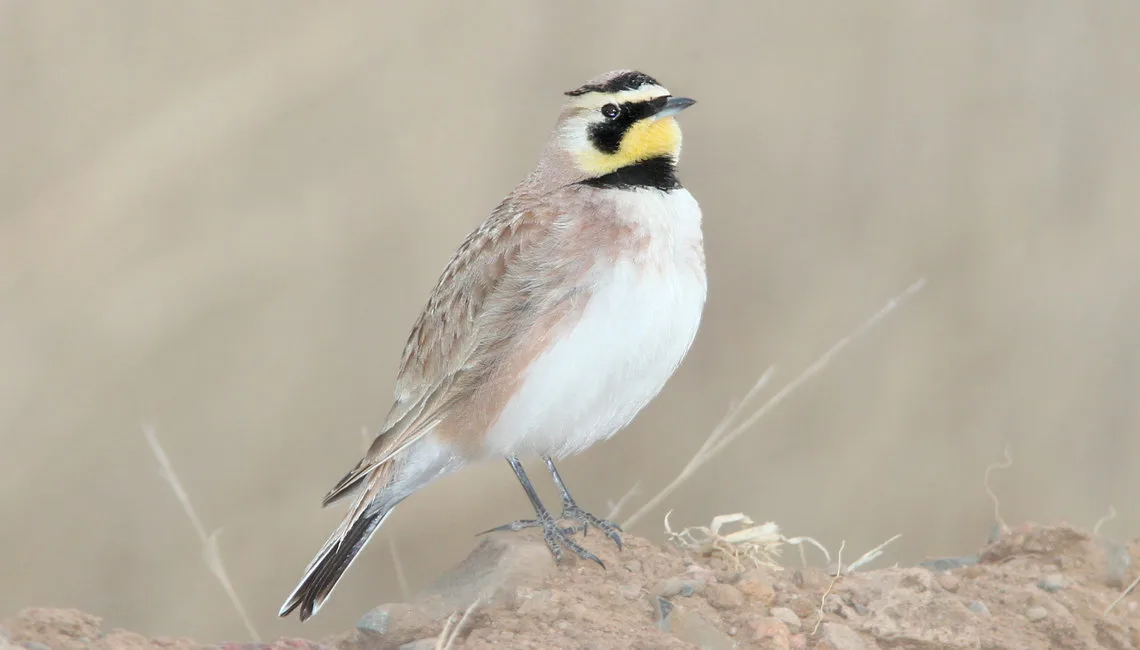
The selection of the Horned Lark (Eremophila alpestris) as the American Birding Association’s 2026 Bird of the Year has brought a long-overdue spotlight to a bird that many birders simply "check off" and move on from. But to view the Horned Lark as a single, uniform entity is to miss one of the most fascinating stories of evolution and adaptation in North America.
Across the continent, there are 21 recognized subspecies of the Horned Lark (and over 40 worldwide). Because these birds are highly "philopatric"—meaning they return to the exact same breeding grounds year after year—they have evolved to match the specific color of the soil and the unique demands of their local environments. From the "Streaked" rarities of the Pacific Northwest to the "Prairie" pioneers of the East, here is an overview of the diverse subspecies that make this bird a true continental masterpiece.
1. The Streaked Horned Lark (E. a. strigata): The Rarest of the Rare
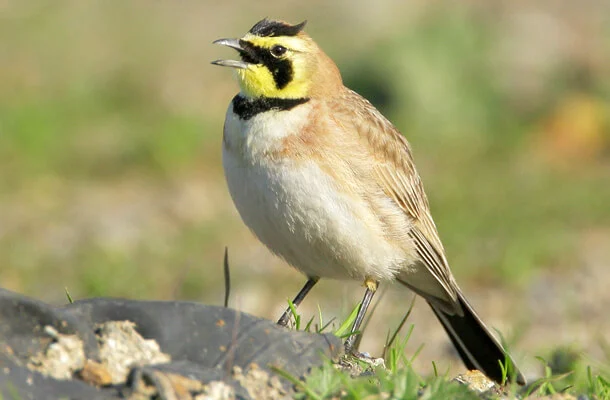
If there is a "celebrity" subspecies among the group, it is the Streaked Horned Lark. Restricted to the Pacific coastal plains of Washington, Oregon, and a tiny portion of British Columbia, this bird is currently listed as Federally Threatened in the U.S. and Endangered in Canada.
Identification: It is smaller and noticeably yellower than other subspecies. Its back is a much darker, richer brown with heavy "streaking" (hence the name).
Habitat: They are specialists of the rare Garry Oak ecosystems and sandy coastal spits. Today, they are often found nesting on the mowed grass of airports or dredge-spoil islands in the Columbia River because their natural prairies have vanished.
Conservation Note: There are estimated to be fewer than 1,600 individuals left in the world.
2. The Prairie Horned Lark (E. a. praticola): The Great Expansionist
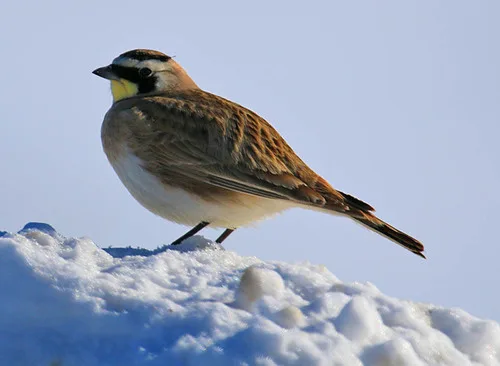
Historically, Horned Larks were birds of the western short-grass prairies. However, as European settlers cleared the forests of the East for agriculture in the 19th century, the Prairie Horned Lark saw an opportunity.
The West-to-East Journey: This subspecies famously expanded its range from the Midwest all the way to the Atlantic coast by the early 1900s. It was the first "true" lark to breed in states like Massachusetts and Connecticut.
Appearance: It is paler and more grayish-brown than the "Northern" variety, with a white or very pale yellow throat.
Current Status: Interestingly, as New England's abandoned farmlands have returned to forest, the Prairie Horned Lark is now retreating from the very areas it conquered a century ago.
3. The Island Horned Lark (E. a. insularis): The Isolated Specialist
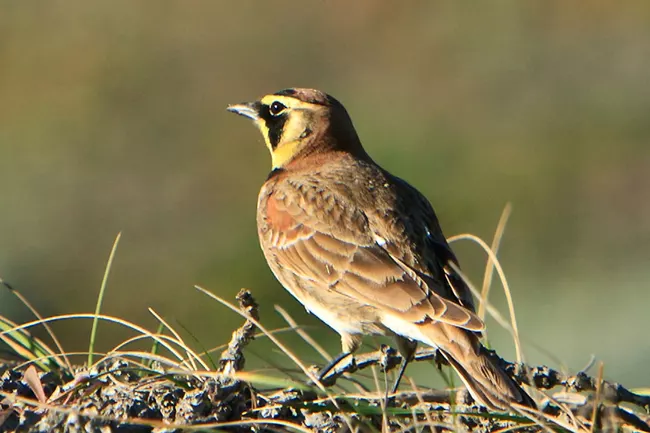
Living on the Channel Islands off the coast of Southern California, this subspecies is a textbook example of "island evolution." Because they are isolated from mainland populations, they have developed distinct physical traits.
Distinctive Features: The Island Horned Lark has a noticeably longer and broader bill, longer toes for navigating island scrub, and shorter wings and tails (since they don't need to perform long-distance migrations).
Coloration: They are significantly darker and sootier than their mainland cousins, helping them blend into the volcanic soils of the islands.
4. The Northern Horned Lark (E. a. alpestris): The Arctic Nomad
This is the "type" subspecies of the Horned Lark and the one most often associated with the name "Shore Lark" in the East.
Breeding Grounds: They spend their summers in the high Arctic tundra of Northern Canada and Labrador.
Winter Visitors: During the winter, they migrate south in large, "tinkling" flocks. This is the bird you are most likely to see on the snowy beaches of New Jersey or the fallow fields of the Great Lakes in January.
Identification: They are larger and more "yellow-faced" than the Prairie subspecies, with a deep ochre-colored back.
5. The Desert Specialists: The Paler Tribes
In the arid Southwest, several subspecies have adapted to the heat and the pale sands of the Mojave and Sonoran deserts.
The Pallid Horned Lark (E. a. leucolaema): Often found in the Great Basin and the Rockies, this subspecies is extremely pale—almost "bleached" out—to match the light-colored alkaline flats of the desert.
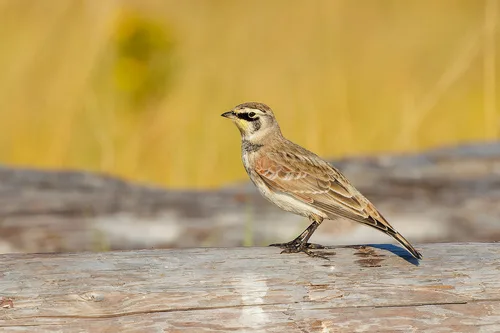
The Sonora Horned Lark (E. a. adusta): Found in the "sky islands" of Southern Arizona, these birds have a unique reddish or "rufous" tint to their backs, matching the reddish-brown volcanic soils of the region.
Summary Table: Subspecies at a Glance
| Subspecies | Common Name | Region | Primary Identifying Feature |
| strigata | Streaked Horned Lark | Pacific NW | Small, dark back, very yellow belly. |
| praticola | Prairie Horned Lark | Midwest/East | Pale grayish back, white throat. |
| alpestris | Northern Horned Lark | Arctic/NE Winter | Large, deep yellow face, ochre back. |
| insularis | Island Horned Lark | Channel Islands | Long bill, dark/sooty plumage. |
| leucolaema | Pallid Horned Lark | Great Basin | Very pale, "bleached" appearance. |
Why Subspecies Matter for 2026
The Horned Lark was chosen as Bird of the Year precisely because of this diversity. It represents the idea that protection must be local. Protecting the Horned Lark as a species doesn't mean much if we lose the specialized "Streaked" population of the West or the unique "Island" population of California.
Each subspecies is a unique thread in the tapestry of American biodiversity. As you go out birding this year in celebration of our 2026 winner, don't just look for "a" Horned Lark. Look at the color of its back, the tint of its throat, and the habitat it calls home. You aren't just looking at a bird; you are looking at thousands of years of adaptation to the American landscape.
