

To the casual observer, a great white bird standing motionless in a marsh might simply be a “crane.” But to the birder and naturalist, the question is much more nuanced: is it a heron or an egret? The truth, surprising to many, is that egrets are simply a specific type of heron. All egrets are herons, but not all herons are egrets. Both terms refer to birds belonging to the family Ardeidae, known broadly as the herons.
The primary distinction is based on plumage and, historically, by a human-imposed convention. Egret is the common name typically given to the species of herons that are predominately white or light-colored and develop specialized, delicate breeding plumes, called aigrettes, which were once highly prized in the millinery (hat-making) trade.
The real challenge for identification in the field, therefore, isn't separating herons from egrets, but knowing the full array of herons (including the "egrets") found across the diverse wetlands of the United States.
The Taxonomy Truth: Egrets are Herons
The family Ardeidae contains approximately 64 species worldwide, and around 18 species are regularly found in the U.S. The group includes not only herons and egrets, but also bitterns (shorter-necked, more secretive marsh dwellers) and night-herons (crepuscular feeders).
The common names heron and egret do not correspond to any formal scientific grouping (genus) today. For instance, the stately Great Egret is scientifically classified in the genus Ardea, along with the Great Blue Heron and the Great White Heron (a color morph of the Great Blue Heron). Conversely, the Snowy Egret belongs to the genus Egretta, which also includes the dark-colored Little Blue Heron.

In essence: The difference is historical and descriptive, not biological. Egrets are simply the white members of the heron family.
Key Distinctions in the Field
While the biological line is blurred, in the North American field, the terms heron and egret do help categorize the waders into two general groups based on color and appearance:
The Egrets (White Plumage Dominant)

Egrets are defined by their pristine white plumage, which often makes their legs, feet, and bills the critical identification marks.
- Plumage: Pure white, especially the body and wings.
- Breeding Plumes (Aigrettes): Historically, the defining feature was the development of long, elegant plumes during breeding season. These plumes, especially those of the Great Egret, led to their near-extinction in the late 19th and early 20th centuries.
- Behavior: Generally active waders and stalkers in open marshes and shallow water.
The Herons (Dark or Colored Plumage Dominant)
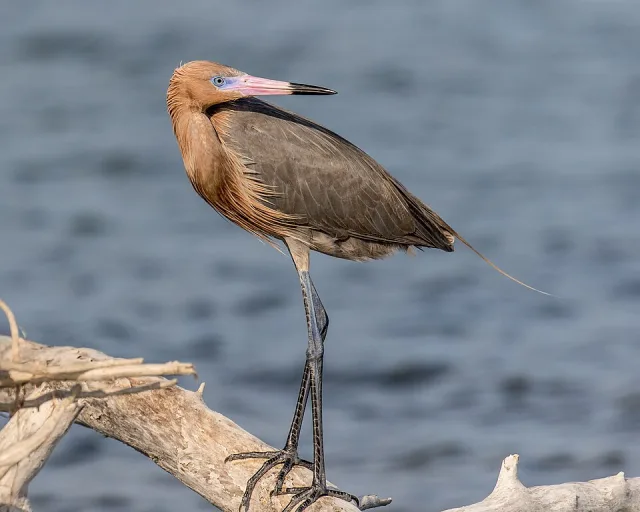
Herons (outside of the egrets) exhibit a wide array of colors, from the slaty-blue of the Great Blue to the deep rusty-red of the Reddish Egret (often considered an egret but displays a dark neck/chest).
- Plumage: Typically shades of gray, blue, brown, or complex patterns of color.
- Feathers: They may have crests or specialized feathers, but not the long, lacy aigrettes of the true egrets.
- Behavior: Often more patient, utilizing a "stand-and-wait" strategy, or hunting from dense cover.
The Ardeidae Species of the U.S.
To truly understand the group, one must recognize all the major species present in the United States, categorized here by their common descriptive names:
I. The "True" Egrets (Primarily White)
These are the species most commonly and consistently referred to as egrets:
- Great Egret (Ardea alba): The largest white egret. Identified by its size, yellow bill, and black legs/feet. Widespread across the lower 48.

Great White Egret - Snowy Egret (Egretta thula): Smaller and more active than the Great Egret. Diagnostic features are the black bill, black legs, and brilliant yellow feet ("golden slippers"). Found mostly along coasts and southern wetlands.
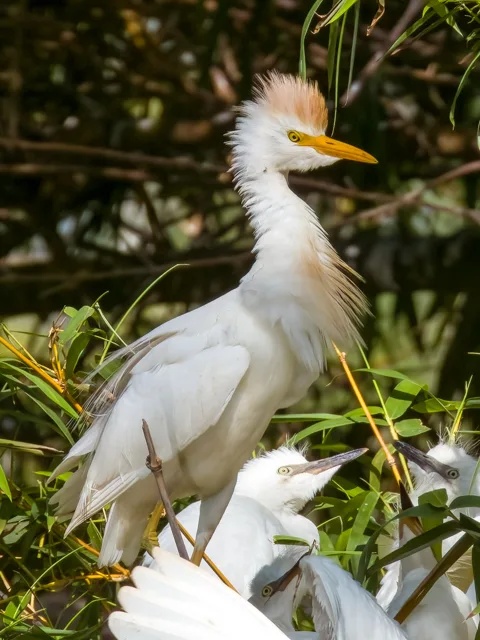
Snowy Egret - Cattle Egret (Bubulcus ibis): The smallest and stockiest egret. Identified by its habitat (often dry fields near livestock), short yellow bill, and duller yellow-green legs. Develops buff/rusty plumes in breeding season.

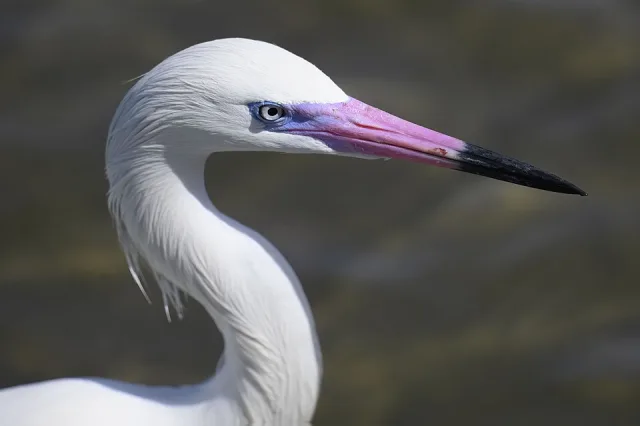
Western Cattle Egret - Reddish Egret (Egretta rufescens): A spectacular bird of the coastal mudflats, primarily in the Gulf Coast and Florida. It has a rare white morph that can be confused with the Snowy Egret, but the reddish egret is taller and possesses a unique pink bill with a black tip. The common dark morph is easily identified by its slate-gray body and rusty-red head/neck.

Reddish Egret


II. The Large and Blue Herons (The Classic Herons)
These are the signature large, dark waders.
- Great Blue Heron (Ardea herodias): The largest and most widespread heron in North America. Its blue-gray plumage, massive size, and patient hunting style make it unmistakable. The Great White Heron color morph is found almost exclusively in South Florida and is a white version of the Great Blue.
Great Blue Heron - Green Heron (Butorides virescens): A small, stocky heron with a short neck, often hunched over. It is known for its metallic dark-green back and crest, and is a famous tool user, sometimes dropping objects onto the water to lure fish.

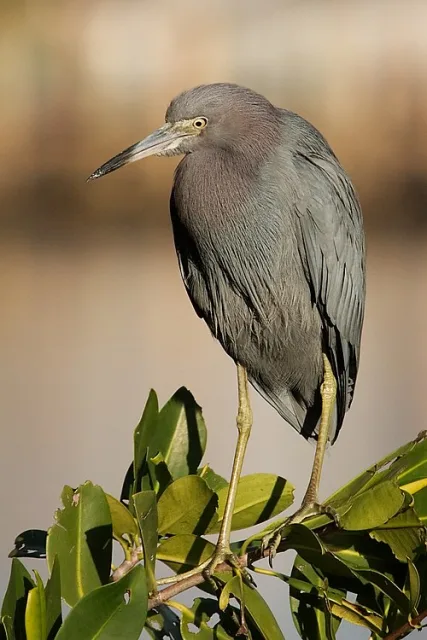
Green Heron - Little Blue Heron (Egretta caerulea): A medium-sized heron found in the Southeast. Adults are uniform slate-blue/purple. Critically, juveniles are pure white and often mistaken for Snowy Egrets, but they have duller, greener legs and a two-toned bill (gray tip, blue base).

Little Blue Heron


III. The Night Herons and Allies
These herons specialize in feeding during the twilight hours or utilize dense cover.
- Black-crowned Night-Heron (Nycticorax nycticorax): Stocky body, thick neck, and prominent black cap and back. Widespread, often found roosting communally in trees during the day.

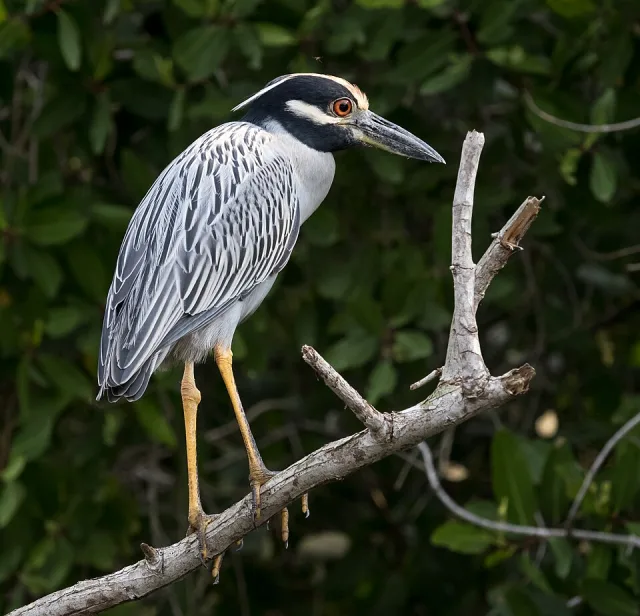
Black-crowned Night Heron - Yellow-crowned Night-Heron (Nyctanassa violacea): Found primarily in coastal and southeastern marshes. More slender than the Black-crowned, with a delicate yellow/white crown patch and a preference for crustaceans (crabs) in its diet.

Yellow-crowned Night Heron

IV. The Bitterns (Hidden Herons)
The most secretive members of the family, characterized by their camouflaged plumage and tendency to "freeze" with their bill pointed skyward when threatened.
- American Bittern (Botaurus lentiginosus): Large, brown, and heavily streaked. Famous for its cryptic camouflage and its loud, booming territorial call, described as "pumping" or "stake-driving."
American Bittern - Least Bittern (Ixobrychus exilis): The smallest heron in the world. It is highly secretive and confined to dense cattail marshes.
Least Bittern


In Flight and At Rest: Identifying Herons and Egrets
Regardless of color, all members of the Ardeidae family share two crucial physical and behavioral traits that distinguish them from other long-legged waders (like cranes, ibises, and storks):
- The Neck Curve: Both herons and egrets fly with their neck retracted into an "S" shape. The head is held close to the shoulders. This is the most definitive field mark to distinguish them from cranes and storks, which fly with their necks fully extended.
- The Bill Strike: They are stalk-and-strike predators. They patiently stalk or stand motionless, then strike rapidly with their dagger-like bill to seize prey. Cranes and ibises have different feeding motions (pecking or probing).

When you see a large, slender wading bird in a U.S. wetland, remember the biological relationship: whether it's the blue-gray of a Great Blue Heron or the dazzling white of a Snowy Egret, you are looking at two elegant members of the same ancient family, distinguished not by taxonomy, but by the beauty of their color and their specialized ornamental plumes.
