
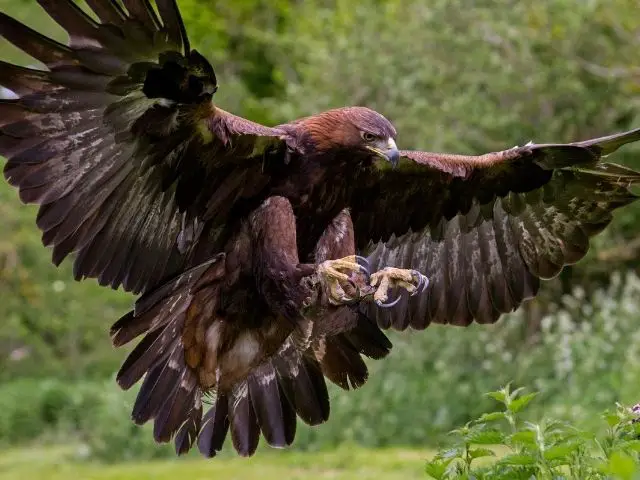
The sight of a large raptor circling overhead is one of nature's most majestic spectacles. Often, the challenge lies in distinguishing one magnificent hunter from another. In the United States, two groups of birds of prey dominate the skies: hawks and eagles. Both belong to the order Accipitriformes and the family Accipitridae, making them close relatives, but they possess key differences in size, morphology, hunting strategy, and ecological niche.
Understanding these differences is essential for birders, wildlife enthusiasts, and anyone looking to deepen their appreciation for North American raptors. While there are no absolute, scientifically rigid lines separating every species, common usage and biological characteristics allow for clear distinctions between the hawks (which include buzzards, kites, and falcons in broader, international terms, but primarily refer to Buteos and Accipiters in the U.S.) and the eagles (Aquila, Haliaeetus, and related genera).
1. Size and Morphology: The Defining Distinction
The most immediate and generally reliable way to distinguish an eagle from a hawk is size and build. Eagles are, without exception, the larger, heavier, and more powerfully built raptors.
Eagles: The Aerial Giants
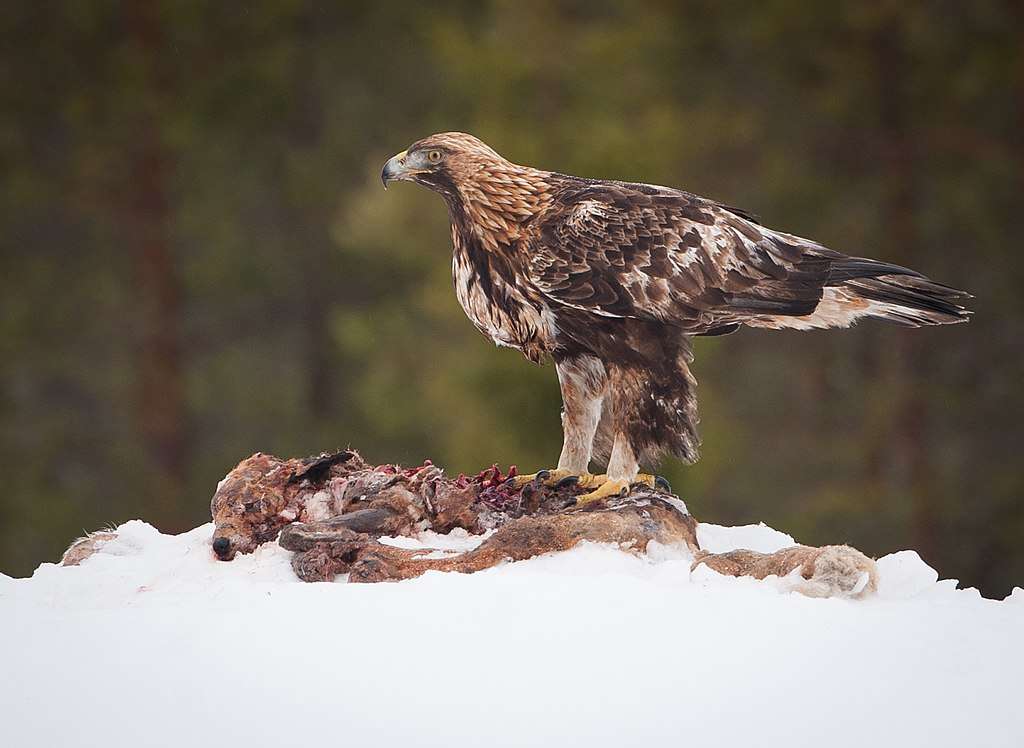
Eagles are characterized by immense size, massive heads, and deep, heavy beaks. They are built for power and tearing.
- Size and Weight: Eagles are typically much larger, with lengths ranging from 28 to 40 inches and impressive wingspans of 6 to 8 feet (up to 2.5 meters). They are also significantly heavier, often weighing between 7 and 14 pounds.
- Beak and Talons: Eagles possess an extraordinarily deep, heavy beak designed to tear into large prey or carrion. Their talons are massive and powerfully muscled, built to crush bone and secure heavy prey like fish, large rodents, or small deer.
- Legs and Feet: North American eagles generally exhibit two distinct leg structures:
- Bald Eagle (Haliaeetus leucocephalus): Has bare legs and feet adapted for snatching fish from the water.
- Golden Eagle (Aquila chrysaetos): Has legs feathered all the way down to the toes (tarsi), an adaptation typical of eagles that hunt large terrestrial prey in colder climates.
- Flight Profile: In flight, an eagle holds its wings nearly flat or in a slight "dihedral" (shallow 'V' shape). Their wings are long and broad, giving them a stately, almost effortless soaring pattern.

Example: The Bald Eagle is the quintessential American icon. It stands out due to its immense size, dazzling white head and tail (on mature birds), and its preference for waterways, hunting fish as a primary food source. The Golden Eagle is less common but is a true 'booted' eagle of the mountains and open country, specializing in hunting rabbits, ground squirrels, and marmots.
2. Classification and Wing Shape: Identifying Subgroups
The term "hawk" in the U.S. generally refers to two primary groups that exhibit different flight characteristics, both of which are distinct from eagles.
Buteos (Broad-winged Hawks)

- Profile: These are the large, chunky, soaring hawks often seen circling high in the sky or perched on utility poles. They are built for gliding and patiently searching for prey from above.
- Wings: Broad, rounded wings and a relatively short, fanned tail. This shape is ideal for catching thermal currents to gain altitude with minimal effort.
- Hunting Style: They typically use the "perch-and-pounce" or "soar-and-drop" method, striking prey on the ground.
- Example: The Red-tailed Hawk (Buteo jamaicensis) is the most common and recognizable Buteo. It is moderately large (up to 2 feet long with a 4-foot wingspan) and known for the namesake brick-red tail of the adult. The Red-shouldered Hawk (Buteo lineatus) is slightly smaller and favors wooded, riparian areas.

Accipiters (Short-winged Hawks)

- Profile: These are the forest hunters, built for speed and high-maneuverability pursuit through dense trees.
- Wings: Short, rounded wings and a very long rudder-like tail. This allows for quick, tight turns in wooded environments.
- Hunting Style: They use a stealthy, dashing pursuit, relying on surprise and agility to catch birds and small mammals.
- Example: The Cooper's Hawk (Accipiter cooperii) is a common backyard visitor that preys on smaller birds. The Sharp-shinned Hawk (Accipiter striatus) is the smallest and fastest, specializing in catching small songbirds.

The Comparison to Eagles
Hawks, regardless of subgroup, are almost always smaller, lighter, and possess shorter bills relative to their head size compared to eagles. Their power is often substituted with speed and agility. While a large Red-tailed Hawk can overlap in size with a small eagle, the differences in wing loading, head size, and leg robustness are always apparent upon close inspection.
3. Diet, Habitat, and Hunting Niche
The distinctions in body plan translate directly into different ecological roles. Eagles require large, intact habitats and robust prey bases, while many hawks thrive closer to human development.
Eagles: Apex Predators
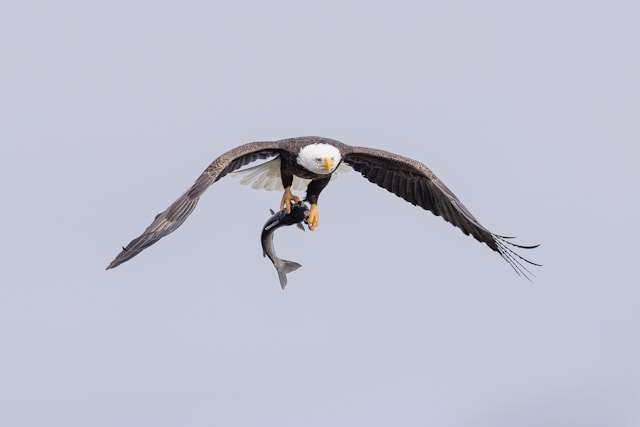
Eagles occupy the apex predator niche, targeting large prey or focusing on resource-heavy foods like fish.
- Diet: Bald Eagles are primarily piscivores (fish-eaters) but are also notorious scavengers, consuming carrion and stealing food from smaller raptors. Golden Eagles are magnificent mammal hunters, taking medium-sized prey like jackrabbits, prairie dogs, and young ungulates.
- Habitat: They require vast territories. Bald Eagles are tied to large bodies of water (coasts, rivers, and lakes), while Golden Eagles inhabit open areas like mountains, deserts, and prairie grasslands.
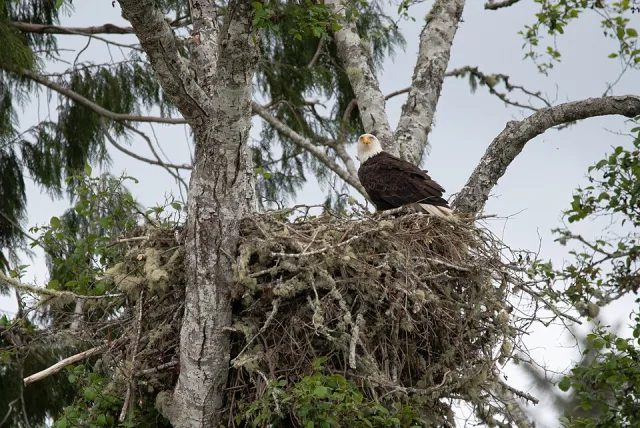
- Nesting: They build massive stick nests (eyries) high in trees or on cliff ledges, reusing and enlarging them over many years.
Hawks: Diverse Generalists

Hawks, particularly the common Buteos, tend to be more opportunistic and generalist hunters, filling the middle tier of the predator hierarchy.
- Diet: Buteos feed primarily on small mammals (mice, voles, squirrels) and reptiles (snakes). Accipiters specialize in avifauna (birds). Their smaller size allows them to subsist on a higher volume of small, common prey.
- Habitat: Highly adaptable. Red-tailed Hawks are comfortable in virtually any open habitat, including highway medians and city parks. Cooper's Hawks thrive in suburban woods, using feeders as hunting grounds.
- Nesting: They build smaller stick nests than eagles, often in the forks of trees in less isolated locations, and usually build a new nest or repair an old one each season.
4. Key Species Comparisons (U.S. Focus)
Size in Numbers:
A mature Bald Eagle stands over inches tall and weighs around pounds. The largest American hawk, the Ferruginous Hawk (Buteo regalis), might reach inches in length and weigh up to pounds. The smallest hawk, the Sharp-shinned Hawk, is barely larger than a jay, weighing less than pounds. This difference in mass is the most compelling argument for separate classification.

Conclusion
In the American sky, the difference between a hawk and an eagle is a matter of scale and specialization. The eagle embodies raw power and size, dominating the open spaces and water edges with immense wings and bone-crushing talons. The hawk, while less imposing, represents a family of diverse and highly adapted hunters, filling every niche from the thickest forest canopy (Accipiters) to the open farmland (Buteos) with agility, speed, and efficiency.
The next time you see a raptor, look beyond the hooked beak and the fierce eyes. If it is a majestic, massive silhouette holding its wings flat against the sky, you're likely viewing one of America’s eagles. If it's a smaller, quicker hunter with broad wings for soaring or short wings for dashing, you're observing one of the versatile and numerous hawks. Both are vital links in the ecological chain, but their physical and behavioral adaptations clearly separate them as unique titans of the air.
