

South Carolina's diverse landscapes, from the coastal plains to the rolling uplands, provide a rich tapestry of habitats for a variety of wildlife. Among the most impressive residents are the state's magnificent hawks—powerful birds of prey that command the skies. Whether soaring effortlessly on thermals or making a lightning-fast dive for prey, these raptors are a thrilling sight for any birdwatcher or nature enthusiast.
Here are six of the most magnificent hawks you can seek out in South Carolina:
1. Red-tailed Hawk ( )

The Red-tailed Hawk is perhaps the most common and widespread hawk in the state, and you've likely seen one perched on a telephone pole or circling over an open field. Easily identifiable by its broad wings and the namesake brick-red tail of the adult, this hawk is a master of open-country hunting.
Their diet consists primarily of small mammals like mice, rats, and rabbits, making them a crucial part of the ecosystem for controlling rodent populations.
2. Red-shouldered Hawk ( )
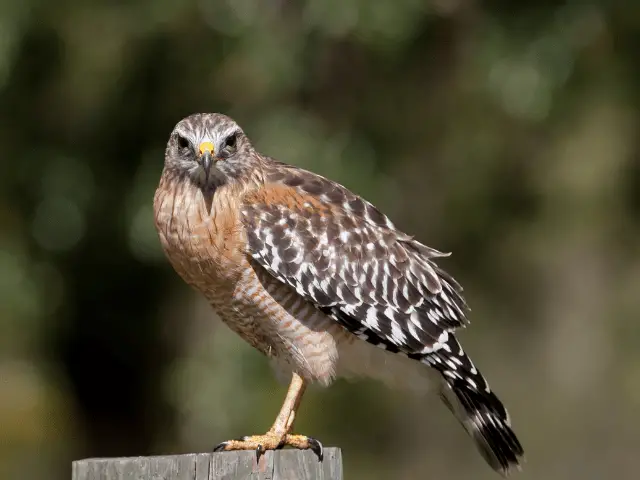
A permanent resident of South Carolina, the Red-shouldered Hawk is a bird of the woodlands, particularly favoring areas near water. You can often find them perched in trees along wooded stream sides and swamps. Adults are striking, with rich reddish-brown barring on their chests and a checkered pattern on their wings. Their distinctive, loud "kee-aah" call is a common sound in the state's forests.
3. Cooper's Hawk ( )
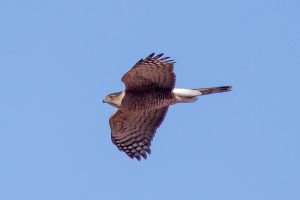
Known for its incredible agility and speed, the Cooper's Hawk is a medium-sized raptor that navigates dense forests with ease. This hawk is a stealth predator that primarily hunts other birds, often targeting backyard feeders for an easy meal. Distinguishing an adult Cooper's Hawk from its smaller relative, the Sharp-shinned Hawk, can be a challenge. Look for the Cooper's Hawk's larger size (about the size of a crow), a rounded tail, and a more blocky head.
4. Sharp-shinned Hawk ( )

The smallest hawk in North America, the Sharp-shinned Hawk is a tiny but fierce predator. Like the Cooper's Hawk, it is a specialist in navigating thickets and forests to catch small songbirds. They are often seen during migration and in winter in wooded areas. Distinguishing features include its small size (about the size of a Blue Jay), a squared-off tail, and a small head that can make it look like it's wearing a hood.
5. Broad-winged Hawk ( )

A migratory species, the Broad-winged Hawk is a welcome sight in South Carolina during the spring and fall migration seasons.23 These small, forest-dwelling hawks are known for their massive "kettles"—huge swirling flocks of hundreds, or even thousands, of hawks that soar on thermals during their journey south. Look for them in deciduous and mixed forests during the warmer months, where they feed on a varied diet of small mammals, insects, frogs, and lizards.
6. Northern Harrier ( )
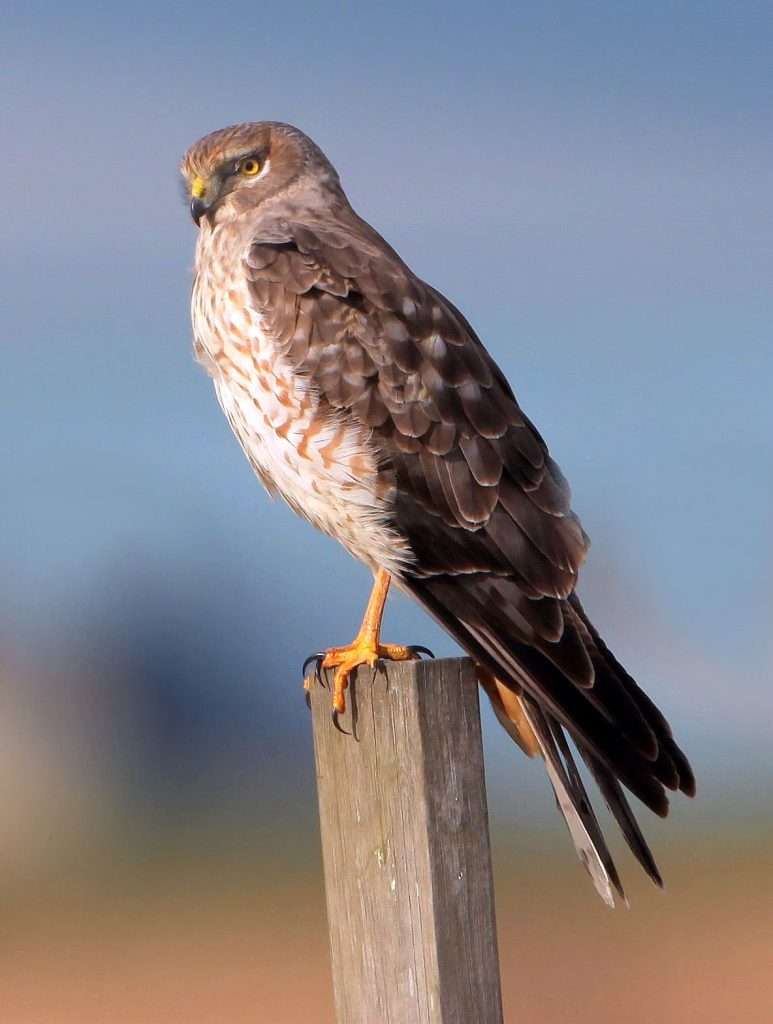
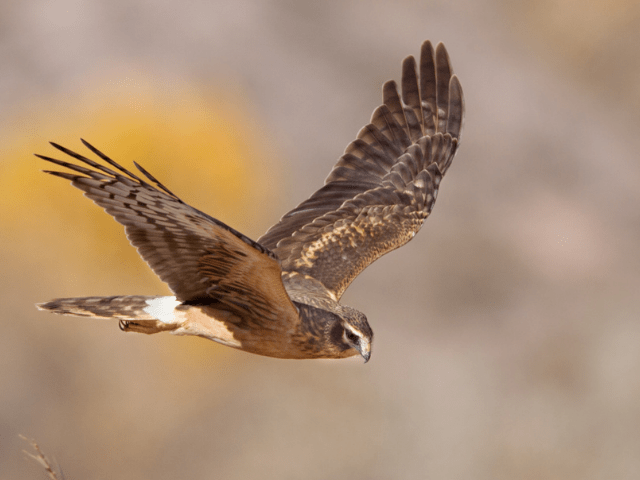
The Northern Harrier is a unique and captivating hawk that can be found in South Carolina during the winter months. Unlike many other hawks that hunt from a high perch, the harrier flies low over open fields and marshes, using its keen hearing and a distinctive, owl-like facial disk to locate prey. The white patch on its rump is a key identification feature in all plumages. Males are a striking grayish-white, while females and juveniles are warm brown.
Buteo And Accipiter
Accipiters and buteos are two distinct groups of hawks, and understanding the differences between them is key to identifying them in the wild. While both are birds of prey, their physical characteristics, hunting styles, and preferred habitats are quite different.
Physical Characteristics
Buteos: Often referred to as "soaring hawks," buteos are generally large and robust birds. They have broad, rounded wings and relatively short, wide tails. This body shape is perfectly adapted for their hunting style.
Accipiters: Known as "bird hawks," accipiters are smaller and more streamlined. They have short, rounded wings and a long, rudder-like tail. This design allows for incredible agility and maneuverability.
Flight and Hunting Style
Buteos: Buteos are masters of soaring. They use their broad wings to catch thermals, allowing them to glide effortlessly in wide circles high in the sky. From this vantage point, they scan open landscapes for prey on the ground, such as small mammals. Their wingbeats are often slow and deliberate.
Accipiters: Accipiters are built for speed and stealth. They hunt in dense forests and thickets, and their long tails and short wings allow them to weave through trees with precision. They often use a "flap, flap, flap, glide" flight pattern and ambush their prey, which is typically other birds, from a hidden perch.
Habitat and Prey
Buteos: Buteos are most commonly found in open country, such as fields, grasslands, and along roadsides. They often perch on telephone poles, fence posts, or high tree branches to watch for prey. Their diet primarily consists of small mammals like rodents and rabbits.
Accipiters: Accipiters are creatures of the forest and wooded areas. They are highly skilled at hunting in confined spaces and are known to frequent backyard bird feeders, where they can prey on unsuspecting songbirds.
Examples
Buteos: Common buteos include the Red-tailed Hawk, Red-shouldered Hawk, and Broad-winged Hawk.
Accipiters: The most common accipiters are the Cooper's Hawk and the Sharp-shinned Hawk.
In summary, if you see a large hawk soaring high in the air with broad wings and a short tail, it's likely a buteo. If you spot a smaller, agile hawk darting through the trees with a long tail and short wings, you're probably looking at an accipiter.

Frequently Asked Questions
Are hawks common in South Carolina?
Yes, hawks are quite common in South Carolina, with several species being permanent residents. The state's diverse habitats—from coastal marshes to inland forests and open farmlands—provide suitable homes for a variety of raptors.
The most common and widespread hawk in South Carolina is the Red-tailed Hawk. You can find them in every county, often perched on telephone poles or soaring over open fields and highways.
Another common permanent resident is the Red-shouldered Hawk, which prefers forested areas, especially near water. Its distinctive call is a familiar sound in the state's swamps and woodlands.
Other hawk species, while not as ubiquitous as the Red-tailed and Red-shouldered Hawks, are still regularly sighted. These include the agile Cooper's Hawk, which is a skilled hunter of other birds, and the much smaller Sharp-shinned Hawk. During migration, you can also see large numbers of Broad-winged Hawks as they pass through the state.
So, whether you're in a suburban neighborhood, a rural landscape, or a state park, you have a good chance of spotting one of South Carolina's many magnificent hawks.
Where can you find hawks in South Carolina?
Hawks are a common sight across South Carolina, but their distribution and the best places to find them depend on the specific species and the time of year. Each type of hawk has a preferred habitat and hunting style, which will dictate where you're most likely to see them.
Here's a breakdown of where you can find different hawks in South Carolina:
Red-tailed Hawks
These are the most widespread hawks in the state and can be found almost anywhere.
Open country: Look for them soaring high over fields, prairies, and agricultural land.
Roadsides: They frequently perch on telephone poles, fence posts, and large trees along highways, scanning for prey.
Suburban areas: Red-tailed Hawks are well-adapted to living near people and can often be spotted in parks and suburban woodlots.
Red-shouldered Hawks
As a species that prefers woodlands, you'll find them in different environments.
Forests and wetlands: They are particularly fond of wooded areas near water, such as swamps, river groves, and bottom-land hardwood forests.
Riparian zones: Look for them along the edges of streams and ponds, where they often perch on tree branches.

Cooper's Hawks and Sharp-shinned Hawks
These agile "bird hawks" are masters of navigating dense cover.
Wooded areas: They are most at home in forests, thickets, and woodlands.
Suburban backyards: Both species, especially the Cooper's Hawk, are known to hunt at bird feeders, using the cover of trees and bushes to ambush small birds.
Broad-winged Hawks
This species is most easily seen during migration.
Fall migration: The best place to see Broad-winged Hawks is at a "hawk watch" site during their southbound migration in September. They often travel in large swirling flocks called "kettles."
Specific locations: Caesars Head State Park in the upstate mountains is a renowned hawk watch location where thousands of migrating raptors can be seen on a good day.
Northern Harriers
These hawks are winter visitors to South Carolina.
Open habitats: Look for them in open fields, grasslands, and marshes.
Coastal areas: They are common in coastal salt marshes, where they fly low over the vegetation to hunt. The ACE Basin National Wildlife Refuge and Huntington Beach State Park are great locations to look for them.
Wrapping Up
Whether you're a seasoned birder or a casual observer, keeping an eye on the skies and the tree lines of South Carolina will reward you with a glimpse of these six magnificent predators in their natural habitats. Their power, grace, and vital role in the ecosystem make them a truly impressive part of the state's wild landscape.
To maximize your chances of spotting a hawk, visit one of South Carolina's many state parks or wildlife refuges. Locations like Congaree National Park, Huntington Beach State Park, and Caesars Head State Park offer diverse ecosystems and are known as hotspots for birding and hawk watching. Always bring a good pair of binoculars and keep an eye on both the skies and the tops of trees.
