
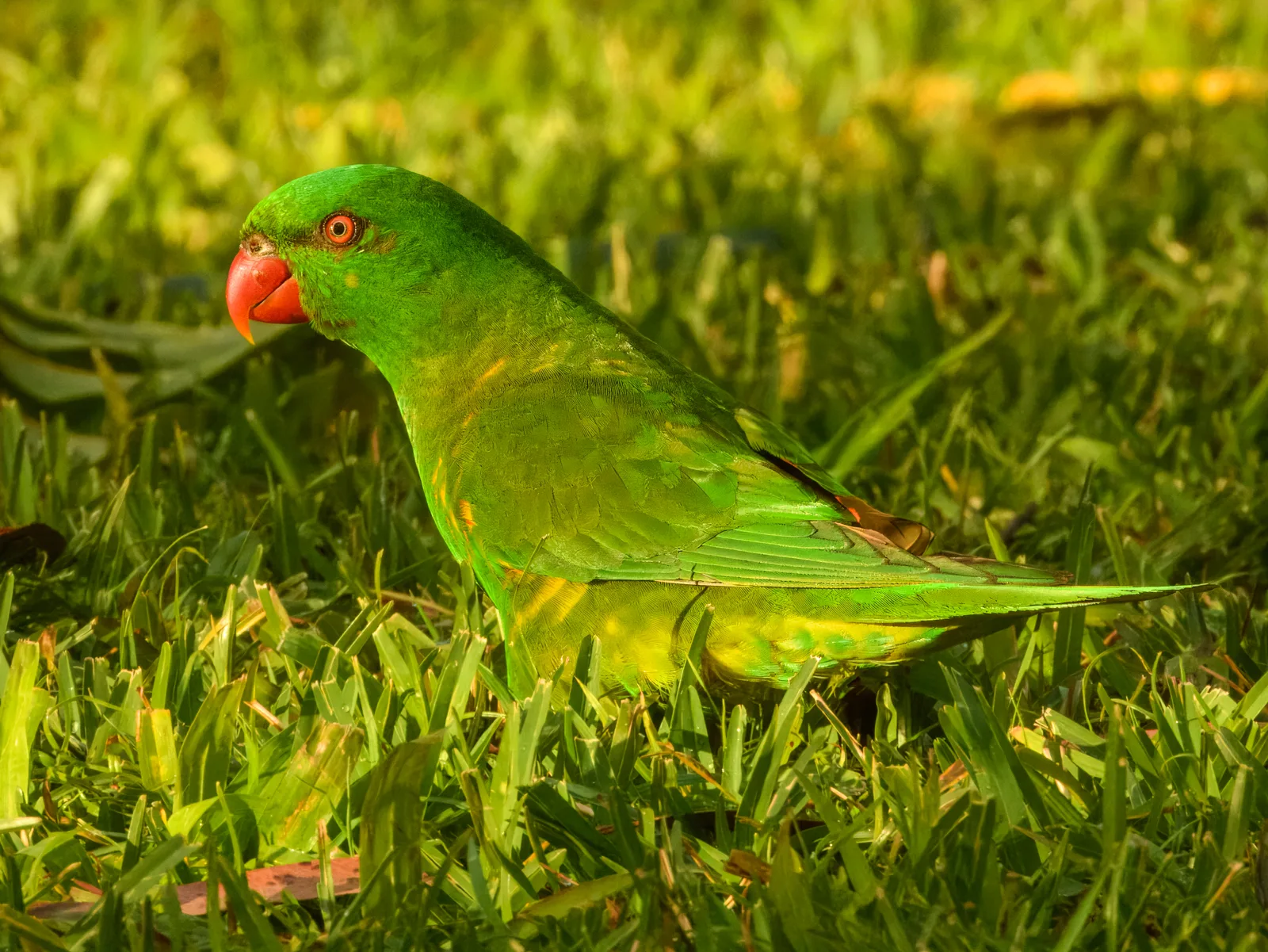
The color green, dominant in the world's most vibrant ecosystems—from misty cloud forests to dense rainforests—is a masterwork of natural camouflage and display. While many birds flaunt shades of blue, red, and yellow, the species that have adopted a brilliant, head-to-tail emerald hue often possess some of the most fascinating biological and ecological stories. These are the world's greenest birds, true living jewels of the avian world.
The Science of Green: Pigments vs. Structure
The mesmerizing green of a bird's plumage is achieved through one of two primary natural processes, a distinction that separates the truly pigmented birds from the structurally colored.
1. Structural Coloration: The Prism Effect
For the vast majority of green birds, including most parrots, tanagers, and hummingbirds, the color isn't a single pigment but an optical illusion. This process is called structural coloration and works by combining two colors:
- Blue Structure: The feather's barbules (tiny, microscopic filaments) contain highly organized keratin and air pockets, or nanostructures, which scatter incoming light. When white light hits these structures, they selectively reflect only the blue wavelengths.
- Yellow Pigment: A layer of carotenoid pigment (acquired through diet, such as from fruits and seeds) is deposited beneath the blue-reflecting nanostructures.
When blue light is reflected through the yellow pigment layer, the human eye perceives the color as green. This is why the green on a parrot's feather can appear to change subtly with the angle of the light—a hallmark of structural color.
2. Pigmentary Coloration: The Turaco Exception
Only one known group of birds in the world produces a true, genuine green pigment in its feathers: the Turacos of sub-Saharan Africa.
- Turacoverdin: This unique copper-based pigment, found in the turaco's feathers, is one of only two true copper pigments known in birds (the other being the red turacin). The presence of this pigment is rare in the animal kingdom and allows the birds to display a rich, non-iridescent, leafy green hue that isn't dependent on light refraction.
This remarkable biological feature highlights the turaco's status as a distinct evolutionary lineage.
Featured Avian Emeralds
To appreciate the diversity of green in the avian world, we must look at a selection of species, each a testament to nature's palette.
The Whitehead's Broadbill (Calyptomena whiteheadi)
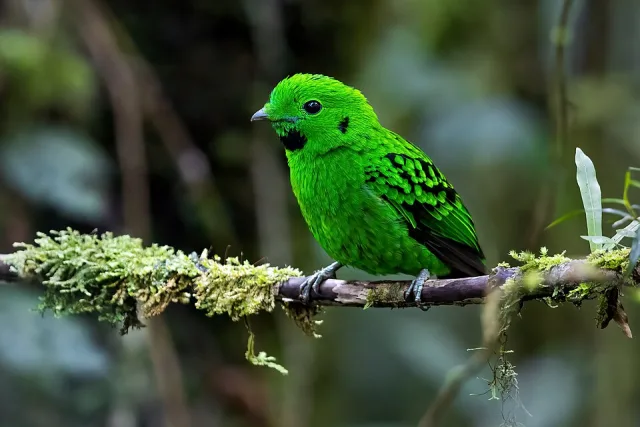
A magnificent and large songbird, the male Whitehead's Broadbill is a striking luminous emerald-green with a large, forward-pointing tuft of feathers that partially covers its bill. It is easily identified by its prominent black throat patch and other black markings on its ear-coverts, wings, and back.
- Habitat: Endemic to the montane forests of Borneo (Malaysia and Indonesia), typically found at elevations between 900 and 1,700 meters.
- Nesting: Builds an elaborate, hanging, purse-shaped nest suspended from a slender branch, typically made of fresh green moss, lichen, and leaves, with a long "tail" for camouflage.
- Behavior: A large, frugivorous species that feeds primarily on fruit but also includes insects in its diet. It is known for its raucous calls and elaborate bowing and peering displays during courtship.
The Scaly-breasted Lorikeet (Trichoglossus chlorolepidotus)
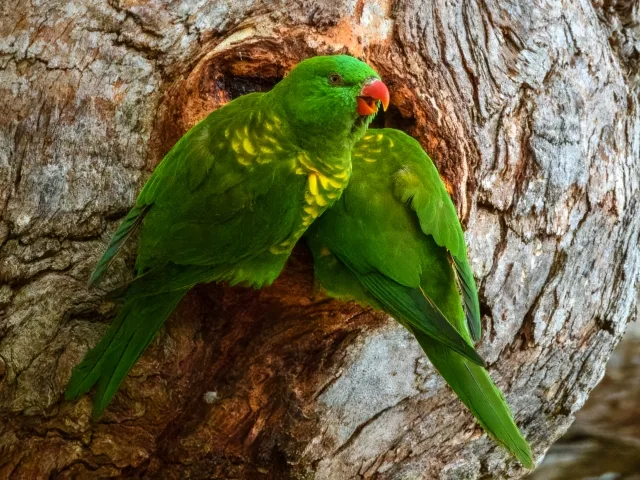
This vibrant Australian parrot is predominantly Emerald Green with a slight blue tinge on its crown. Its name comes from the unique pattern on its chest, where yellow feathers are broadly edged with green, creating a distinctive scaly appearance.
- Habitat: Native to eastern Australia, found in various timbered areas, including eucalypt forests, coastal plains, and is highly adaptable to urban parks and gardens.
- Nesting: Nests in hollows high up in trees, often lining the cavity with decayed wood. The female incubates the eggs while the male often shares the hollow.
- Behavior: Highly social, often seen in noisy, fast-flying flocks, sometimes mixing with other lorikeets. They are nectar and pollen specialists, using a brush-tipped tongue to feed from flowering trees.
The Kakapo (Strigops habroptilus)
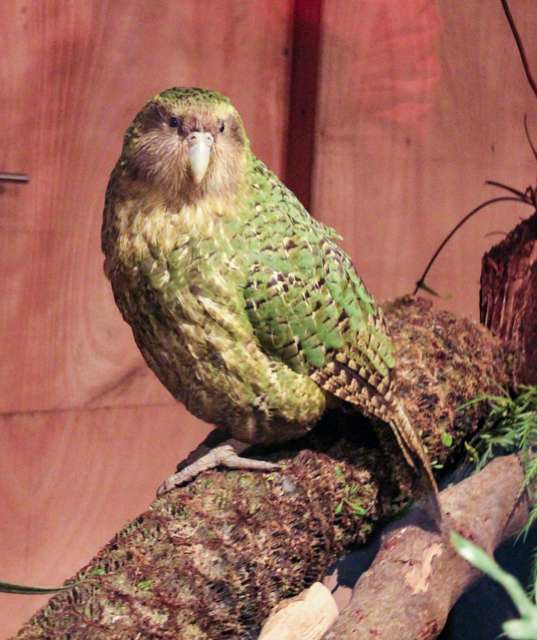
The Kakapo is the world's heaviest and only flightless parrot, known for its critically endangered status and nocturnal habits. Its plumage is a mottled Moss Green, perfectly designed for camouflage on the forest floor.
- Habitat: Once widespread across New Zealand, it is now confined to a few intensively managed predator-free islands to ensure its survival. It prefers forested areas and undergrowth.
- Nesting: Females nest in sheltered spots, such as under rocky outcroppings or in shallow burrows. They are lek breeders, where males gather in a cleared area to perform vocal displays to attract females.
- Behavior: It is the only nocturnal and flightless parrot. It's a solitary climber that uses its wings for balance and to "parachute" from trees, and its main defense against predators is to freeze in place and rely on its cryptic coloration.
The Golden-browed Chlorophonia (Chlorophonia callophrys)
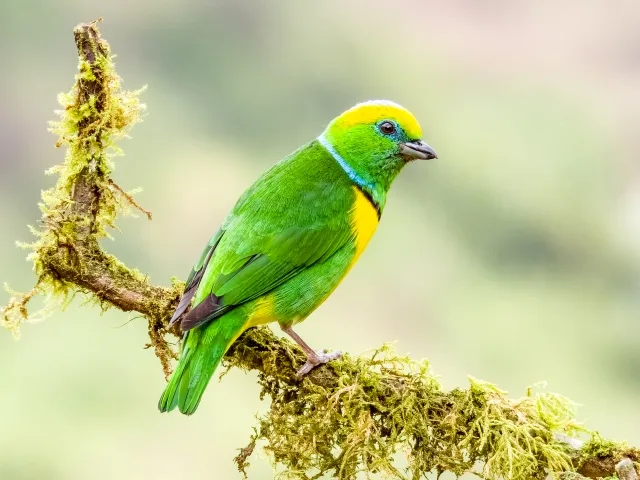
A stunningly colorful songbird from the mountains of Central America, the male Golden-browed Chlorophonia is vivid Bright Green with bold contrasting markings. Its key features include a dazzling golden-yellow eyebrow stripe, a violet-blue cap, and a bright blue patch on its lower back.
- Habitat: Found in the humid montane cloud forests of Costa Rica and western Panama, typically at high elevations between 1,200 and 3,000 meters.
- Nesting: Builds a spherical or cup-shaped nest, often well-concealed in dense vegetation or epiphytes (such as moss or ferns) high in the forest canopy.
- Behavior: A frugivorous species, often seen in small groups or mixed-species feeding flocks. It specializes in eating small fruits and mistletoe berries, which are a crucial food source.
The Green-crowned Brilliant (Heliodoxa jacula)
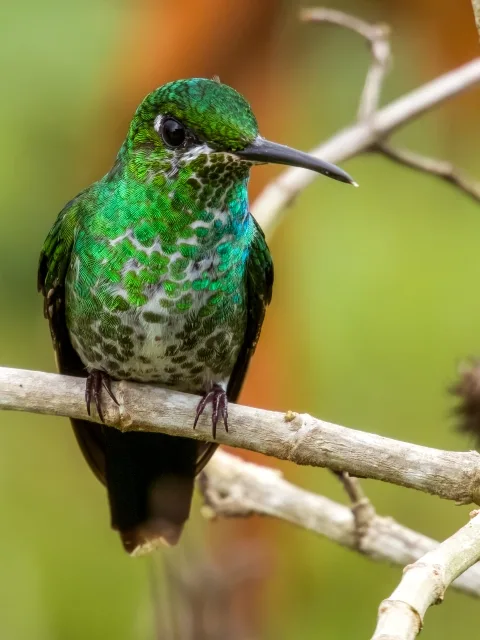
This robust, medium-sized hummingbird is a flash of Iridescent Green and bronze in the wet mountain forests of Central and South America. The adult male has a glittering green to blue-green crown and throat, with a small violet-blue throat patch and conspicuous white tufts on its thighs.
- Habitat: Inhabits wet sub-montane and montane forests (including edges and clearings) from Costa Rica to western Ecuador, typically found between 500 and 2,200 meters.
- Nesting: The female alone builds a bulky cup-nest of plant fibers and moss, often saddled onto a thin, down-sloping branch. She is also responsible for incubating the eggs.
- Behavior: Feeds on nectar from large, tubular flowers and also hawks small insects for protein. Males are highly territorial, aggressively defending their feeding grounds and nectar sources from rival hummingbirds.
The Emerald Toucanet (Aulacorhynchus prasinus)
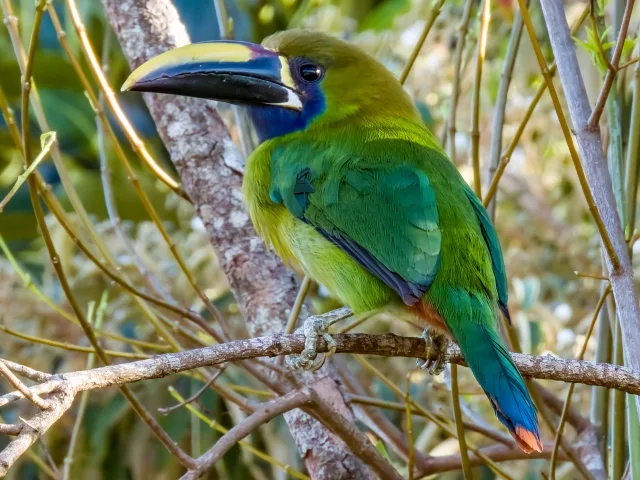
Residing in the montane cloud forests from Mexico to Nicaragua, the Emerald Toucanet is a stunning, smaller cousin of the large, iconic toucans.
- Plumage and Description: Its entire body is cloaked in a vivid, grass-green, contrasting sharply with its disproportionately large, striking bill, which is typically black with vibrant yellow or white markings. The bright green is an example of structural color, perfectly mimicking the tropical foliage.
- Behavior and Diet: Emerald Toucanets are omnivores, using their long, lightweight bill not just to reach fruit deep on branches, but also to hunt insects, small reptiles, and, notably, to prey on the eggs and nestlings of smaller birds. Social birds, they move through the canopy in small flocks, communicating with a distinctive, cheerful, whistling call.
- Ecological Role: The toucanet is a major seed disperser, consuming dozens of different plant species' seeds and passing them elsewhere in the forest, thereby ensuring the regeneration of their habitat.
The Resplendent Quetzal (Pharomachrus mocinno)
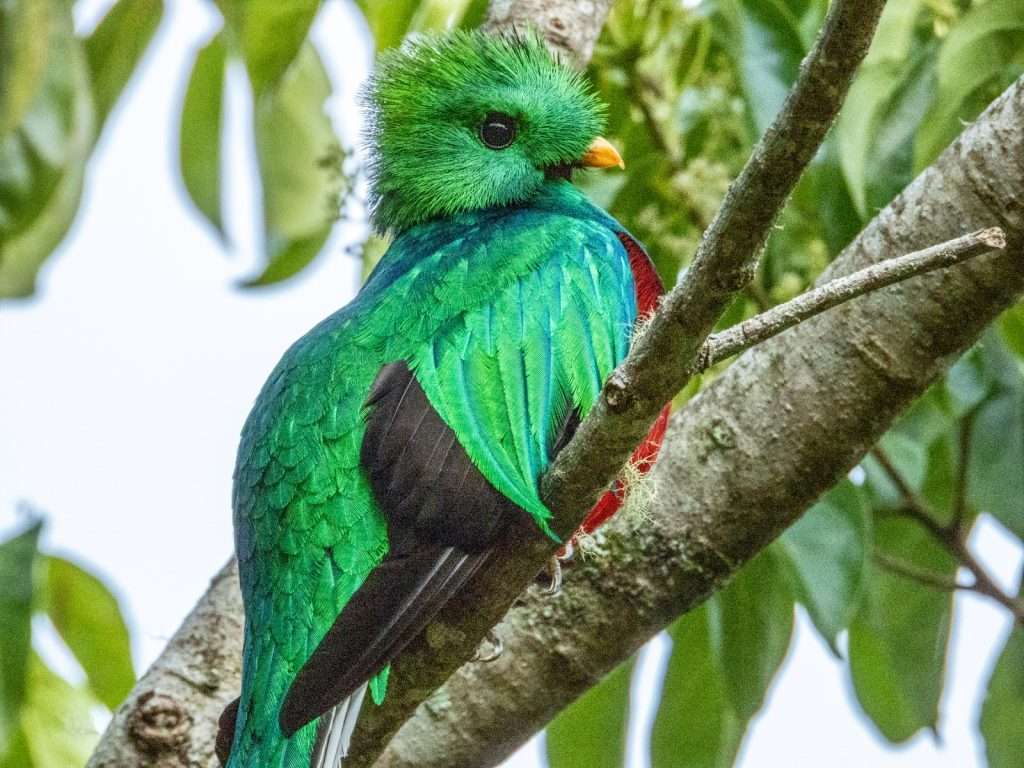
Revered by ancient Mesoamerican civilizations as the "feathered serpent" or a symbol of liberty, the Resplendent Quetzal is arguably the most famous green bird on Earth.
- Plumage and Description: The male boasts an incredible, shimmering, iridescent emerald-green body that can shift to golden-green or even blue-violet depending on the light angle—a perfect example of structural color. This green contrasts sharply with its crimson lower breast. The most distinguishing feature of the male is the enormous, sweeping upper tail coverts (plumes) which can extend up to a meter (three feet) long during breeding season.
- Habitat and Diet: It inhabits the incredibly wet, high-altitude montane cloud forests from southern Mexico to western Panama. Its diet is specialized, consisting mainly of fruits from the Lauraceae family, particularly wild avocados, which it swallows whole.
- Cultural Significance: Its feathers were historically prized by Mayan and Aztec royalty and priests. The Quetzal is Guatemala’s national bird and its currency is named after it, symbolizing freedom because it was believed the bird would die of a broken heart if caged.
The Glistening-green Tanager (Chlorochrysa phoenicotis)
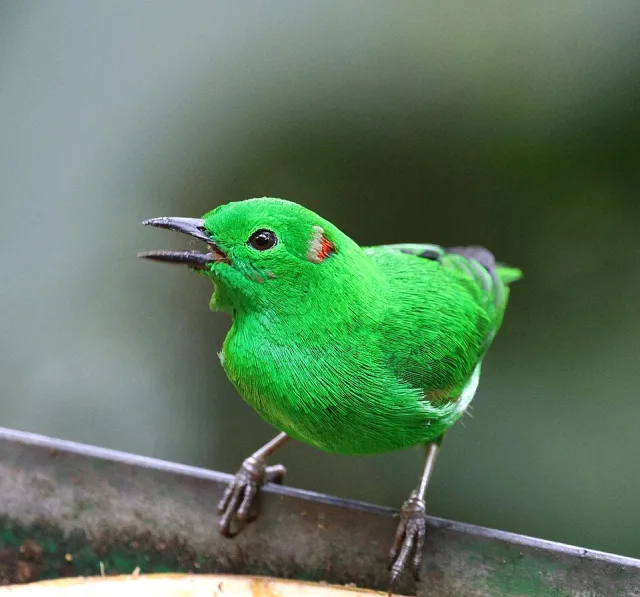
True to its name, this South American songbird is an explosion of concentrated, intense green that seems to glow in the humid forest understory.
- Plumage and Description: This small tanager is covered almost entirely in a breathtaking, uniform vivid emerald green that is so highly saturated it appears "glistening." This is another triumph of structural coloration. It has tiny, contrasting patches of orange and gray near its eyes and shoulders.
- Behavior and Habitat: It is an active, restless bird, often seen foraging high in the understory and canopy of the wet, mossy forests on the western slope of the Andes in Colombia and Ecuador. It is unique among many tanagers for being a heavier insectivore, actively probing mossy branches and epiphytes for small arthropods, though it also consumes fruit.
- Conservation: While currently listed as Least Concern, the Glistening-green Tanager has a highly restricted range and its population is suspected to be declining due to relentless deforestation for mining and agriculture in its narrow ribbon of Andean habitat.
The Eclectus Parrot (Eclectus roratus)
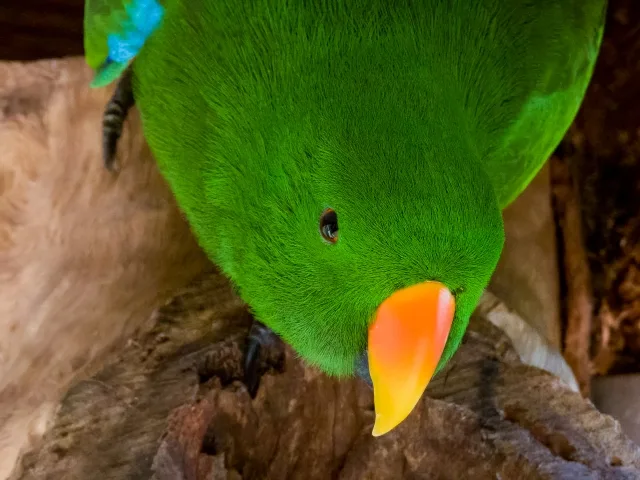
While many parrots are green, the male Eclectus Parrot achieves an electric, velvety emerald not just for camouflage, but as half of the world's most dramatic color dichotomy.
- Plumage and Description: The male is a vivid, striking neon green all over, with bright red patches under the wings. Its powerful green plumage is set against a yellow-orange bill. This coloration is a classic example of structural green used for camouflage in the dense canopy.
- Sexual Dimorphism: The female, in sharp contrast, is predominantly a rich crimson red and deep blue/purple, an extreme example of sexual dimorphism in the parrot family.
- Habitat and Behavior: Found in the rainforests of New Guinea, the Solomon Islands, and parts of Australia, it is a highly intelligent, largely frugivorous species. Its unique, saturated green plumage makes the male appear almost artificially colored, demonstrating how deeply nature can saturate a single hue.
The Green Challenge: Camouflage and Conservation
The vibrant green worn by these birds is a double-edged sword: it offers perfect camouflage from predators in the leafy, sun-dappled canopy, but it also makes them incredibly attractive—and thus vulnerable—to the pet trade.
For many species, like the numerous green parrot varieties, the primary threats are habitat loss due to agriculture and logging, and the illegal wildlife trade. When a bird's beauty makes it a target, conservation efforts must be multifaceted, focusing on protecting its natural environment while also combating illicit trafficking.
The world's greenest birds are more than just a feast for the eyes; they are indicators of forest health, vital components in the tropical ecosystem's seed dispersal and regeneration cycles, and a testament to the diverse ways nature has engineered color. Their emerald plumage serves as a reminder of the precious biodiversity that is at stake and the urgent need to protect these irreplaceable rainforest habitats.
If you like this post, read all about gray birds here.
