
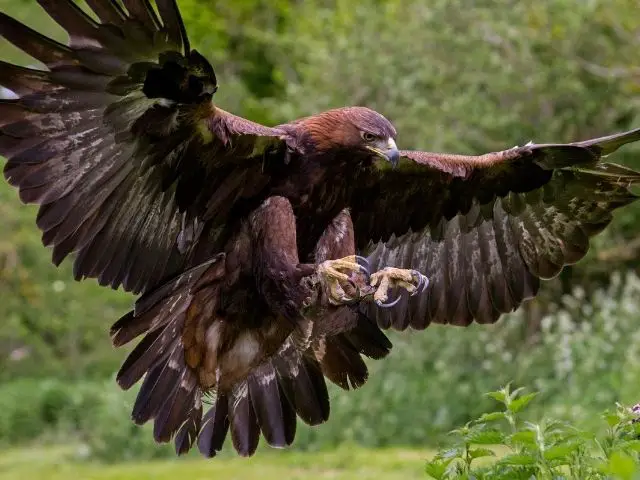
The Golden Eagle (Aquila chrysaetos) stands as a symbol of strength, agility, and wilderness across much of the Northern Hemisphere. Known for its stunning plumage, incredible hunting skills, and iconic presence in indigenous cultures and national symbolism, this bird is not just a top predator, but an emblem of the untamed wild.
In North America, the Golden Eagle is found primarily in the western half of the continent, where it reigns over mountainous landscapes, open plains, and deserts. Though less commonly seen than its more urban-adapted cousin, the Bald Eagle, the Golden Eagle is no less impressive—and in many ways, even more wild.
Physical Description
The Golden Eagle is one of the largest birds of prey in North America. Adults typically measure 26 to 40 inches in length, with a wingspan ranging from 6 to 7.5 feet. They can weigh between 6 and 15 pounds, with females significantly larger than males—a common trait among raptors.
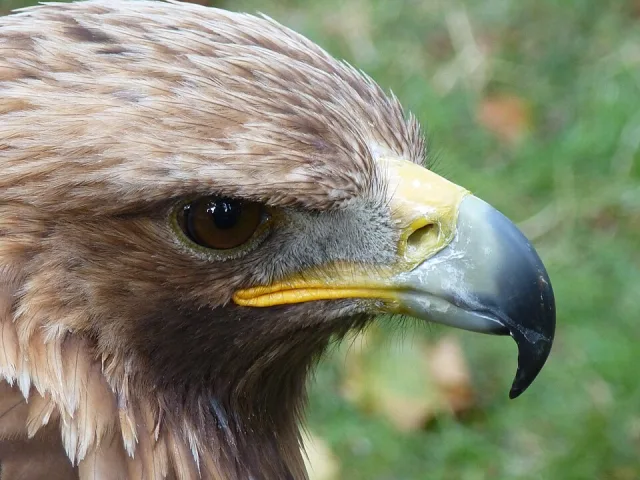
Key identifying features include:
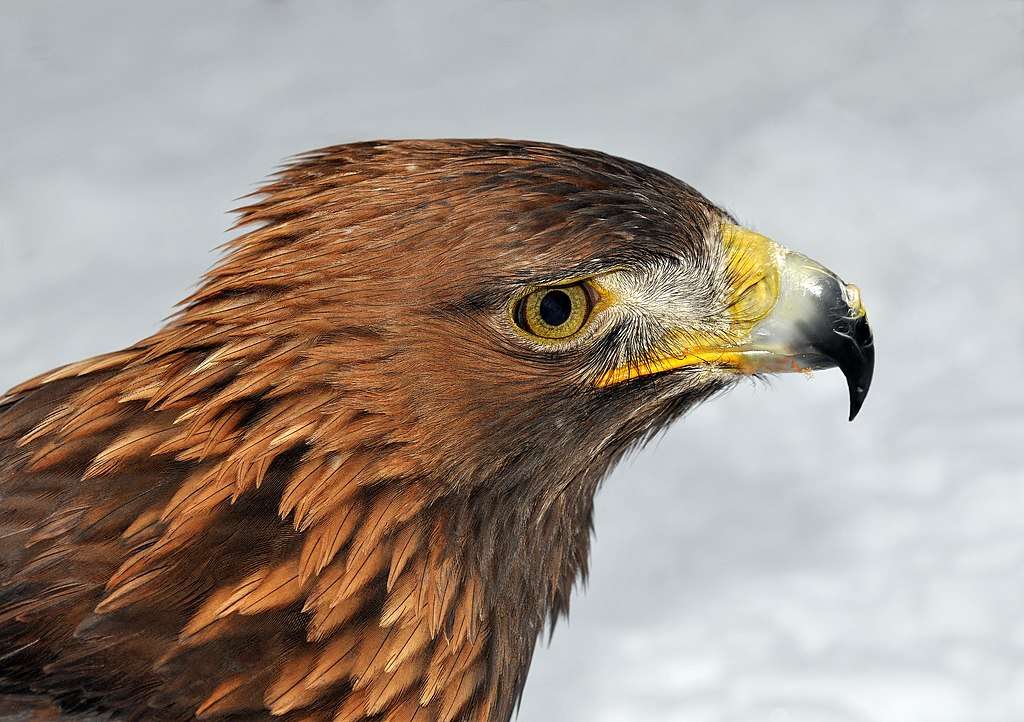
Dark brown plumage overall, with golden-buff feathers on the nape and crown, giving the bird its name.
Powerful beak with a hooked tip, ideal for tearing flesh.
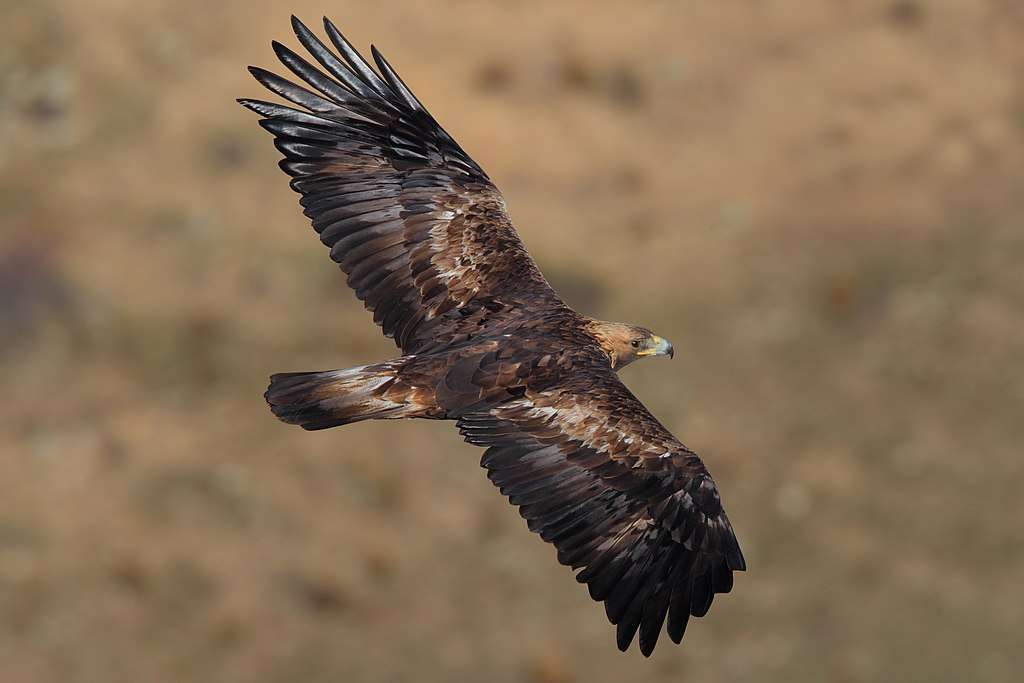
Broad wings and a long, slightly rounded tail that aid in soaring.
Feathered legs all the way down to the toes, an adaptation to cold climates.
Juveniles are often mistaken for Bald Eagles due to their dark coloration, but they lack the white head and tail of adult Bald Eagles and show white patches at the base of the tail and in the wings.
Range and Habitat
Golden Eagles are found across North America, Europe, Asia, and parts of northern Africa. In the United States, they are primarily seen in the western half of the country, from Alaska and Canada down through the Rocky Mountains and into the deserts of the Southwest.
Preferred habitats include:
Open and semi-open terrain, such as tundra, grasslands, shrublands, and deserts
Mountain cliffs and escarpments used for nesting
High elevations where thermals make soaring easier
Unlike Bald Eagles, which often stay near water, Golden Eagles thrive in arid, remote landscapes far from human activity.
Behavior and Hunting
Golden Eagles are diurnal raptors—active during the day—and are known for their incredible speed and agility in flight. They can reach diving speeds of over 150 miles per hour, rivaling the Peregrine Falcon.
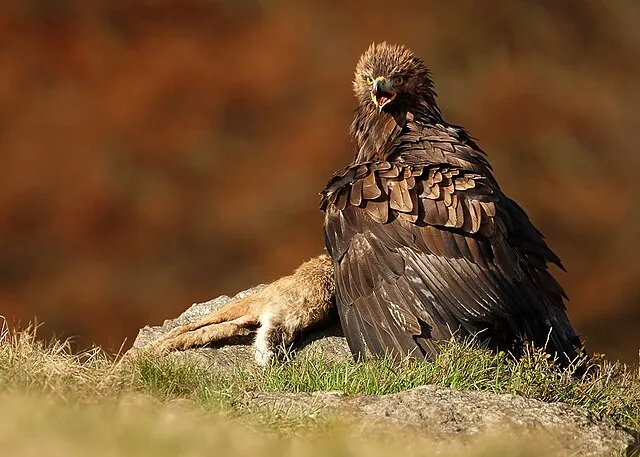
Their hunting style is a combination of patience, stealth, and raw power. They often soar high above the ground, using their keen eyesight to spot prey from great distances before swooping down in a fast, silent dive.
Their diet consists mostly of:
Mammals, such as rabbits, hares, ground squirrels, marmots, and prairie dogs
Occasionally larger prey like foxes, young deer, or mountain goats (especially if injured or weakened)
Carrion, particularly in winter when live prey is scarce
Birds and reptiles, though less commonly
Golden Eagles often hunt alone or in mated pairs. In cooperative hunting, one bird may flush out prey while the other ambushes.
Breeding and Nesting
Golden Eagles are monogamous, and many pairs mate for life. They are highly territorial and may use the same nesting site—known as an eyrie—for many years, even decades.
Nesting behavior includes:
Building large nests on cliffs, rocky outcrops, or sometimes in tall trees
Constructing nests out of sticks, bones, and plant material
Nests can be massive, measuring up to 6 feet wide and 3 feet tall
Breeding season begins as early as January or February in warmer regions and later in colder areas. The female lays 1 to 4 eggs, typically 2, which are incubated for about 40–45 days. The female does most of the incubation while the male provides food.
Young eagles fledge at around 10 weeks but may stay with their parents for several more months to learn hunting and survival skills.
Lifespan and Survival
In the wild, Golden Eagles can live up to 30 years, though most live around 15–20 years. In captivity, they’ve been known to live over 40 years.
Their mortality rate is highest during the first year of life, with many juveniles succumbing to starvation, disease, or predation. Once they reach adulthood, however, they have few natural enemies.
Conservation Status and Threats
The Golden Eagle is classified as Least Concern by the IUCN due to its large global population and wide range. However, U.S. populations face a number of threats, and in some regions the species is considered a species of concern or under watch.
Primary threats include:
Habitat loss and fragmentation due to energy development, agriculture, and urban expansion
Collisions with wind turbines, power lines, and vehicles
Poisoning, both accidental (from rodenticides and lead ammunition) and deliberate (illegal predator control)
Human disturbance near nesting areas
Electrocution on power poles
Golden Eagles are federally protected in the U.S. under the Bald and Golden Eagle Protection Act and the Migratory Bird Treaty Act, which make it illegal to harm or disturb the birds, their nests, or their eggs.
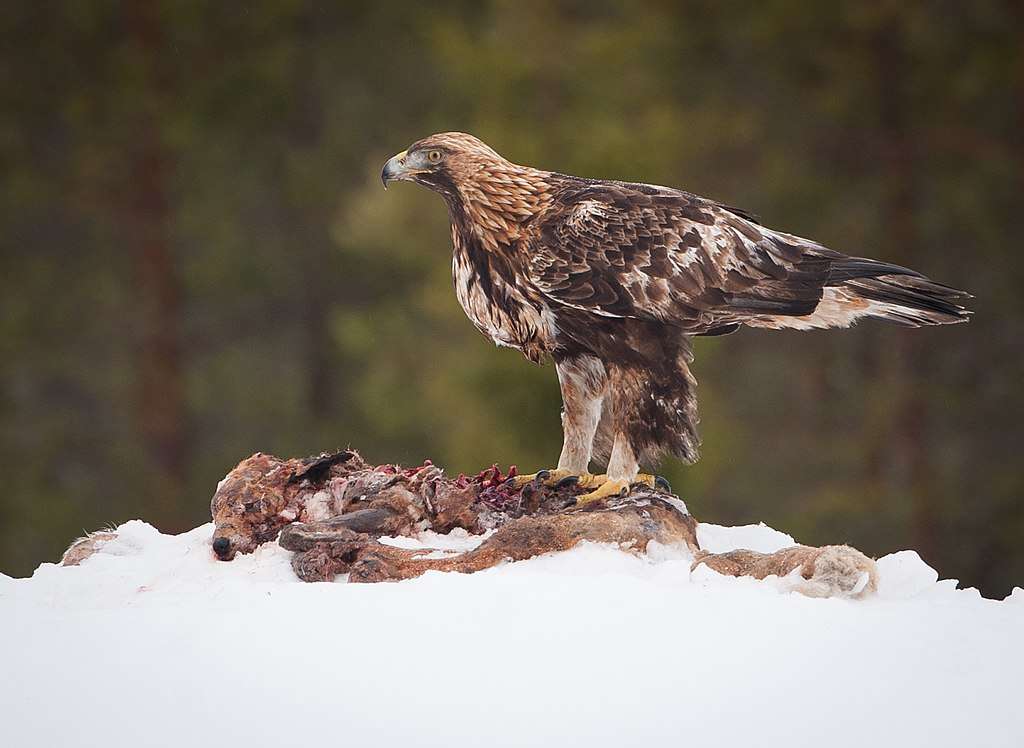
Conservation efforts focus on monitoring nesting sites, reducing turbine-related deaths, and promoting lead-free ammunition to prevent secondary poisoning from scavenged carcasses.
Cultural Significance
Golden Eagles have long held cultural and spiritual significance across many civilizations:
In Native American cultures, the Golden Eagle is a sacred bird, symbolizing strength, courage, and connection to the divine. Eagle feathers are used in important ceremonies and rituals.
In Europe and Asia, the eagle has been a symbol of kingship, war, and victory.
The Golden Eagle is the national bird of Mexico, depicted devouring a serpent on the country’s flag and coat of arms.
In Kazakhstan and Mongolia, trained Golden Eagles are used in the traditional art of eagle falconry to hunt foxes and hares in mountainous terrain.
Watching Golden Eagles in the Wild
Spotting a Golden Eagle requires patience and the right location. Some of the best places in the U.S. to observe them include:
The Rocky Mountains
The Great Basin and high deserts of Nevada, Utah, and Arizona
Alaska, where populations are strong
Open country in eastern Oregon, Montana, and Wyoming
Birders can look for their broad wings and long tail, soaring in wide circles high above the ground. Unlike the Bald Eagle, which often flaps its wings and stays near water, the Golden Eagle typically soars for long periods over hills, ridges, and open land.
Wrapping Up
The Golden Eagle is a breathtaking symbol of wildness and freedom. Fierce, loyal, and masterful in flight, it embodies the rugged beauty of the untamed landscapes it inhabits. Though still widespread, Golden Eagles face increasing challenges from human activity, habitat encroachment, and environmental toxins.
By protecting their nesting sites, reducing accidental deaths, and promoting coexistence, we can ensure that future generations will continue to see this magnificent bird soaring high above the mountains and plains. The Golden Eagle doesn’t just live in the wild—it defines it.
