
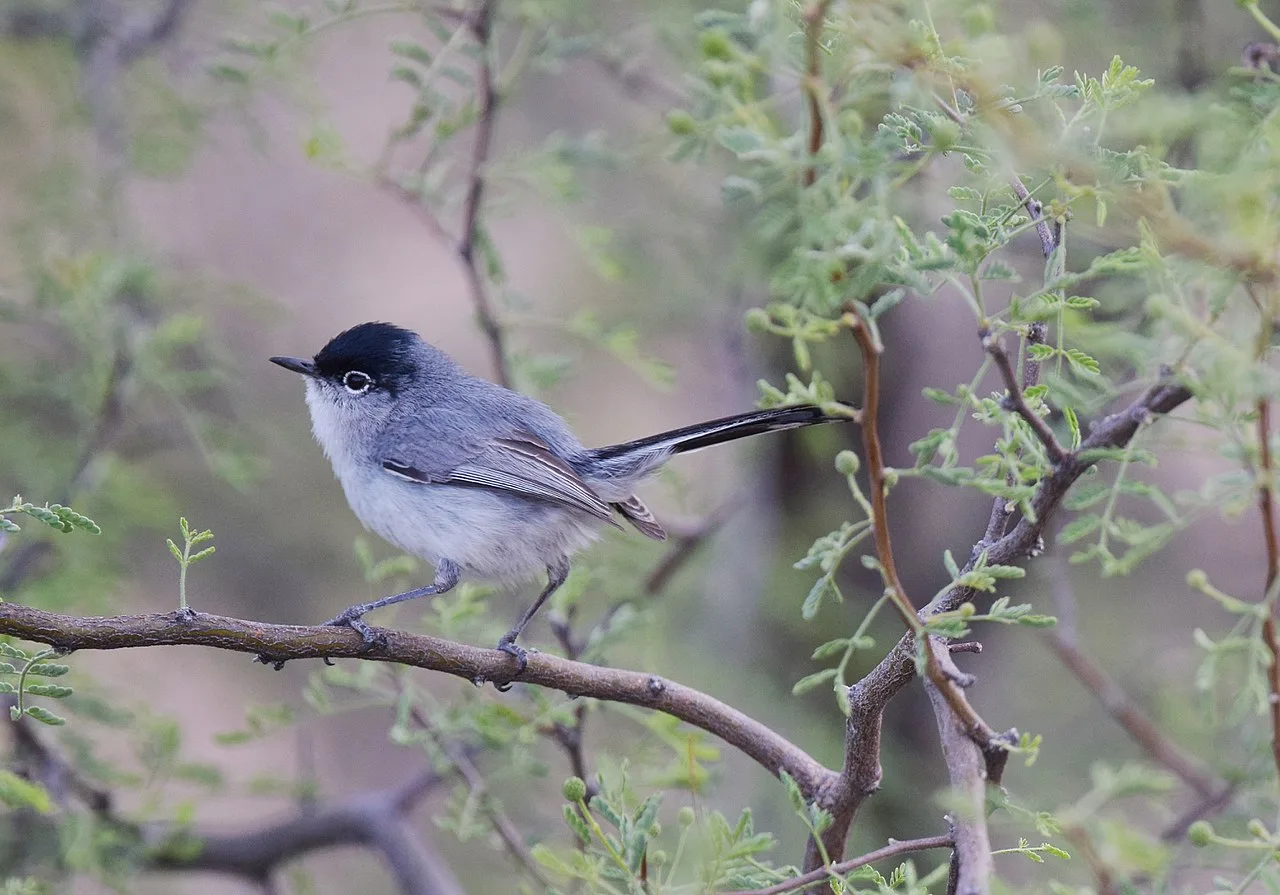
Among the smallest of North America’s songbirds, the Gnatcatchers are easily overlooked but possess a charm and feistiness disproportionate to their size. These diminutive, long-tailed insectivores belong to the genus Polioptila and the family Polioptilidae. In the United States, three species of gnatcatchers are regularly found, each occupying a distinct ecological niche, primarily in the arid and semi-arid regions of the West and South. Their names—the Blue-gray Gnatcatcher, the Black-tailed Gnatcatcher, and the California Gnatcatcher—reflect subtle but crucial differences in their appearance and distribution.
Blue-gray Gnatcatcher (Polioptila caerulea): The Widespread Nomad
The Blue-gray Gnatcatcher is by far the most widespread and familiar member of the genus in the United States. Its range extends across most of the lower 48 states, from the Pacific Coast eastward to the Atlantic and from the Canadian border south to Mexico.
Identification and Appearance
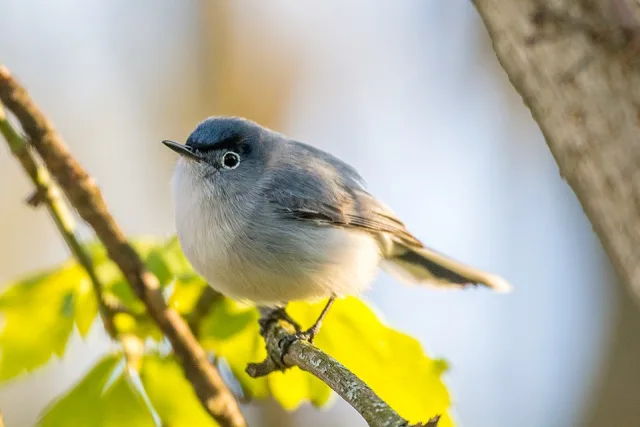
As its name suggests, this species is characterized by its slender build and a predominantly blue-gray plumage on its back, contrasting with a clean white underside. The most distinctive feature is its long, thin tail, which is black with prominent white outer tail feathers that flash conspicuously as the bird constantly flicks and wags its tail while foraging.
Breeding males sport a thin, black eyebrow line that runs above the eye and across the forehead, often making them look like they are wearing a tiny black headband.
Habitat and Behavior
The Blue-gray Gnatcatcher is highly adaptable, inhabiting a wide variety of wooded and shrubby habitats, including deciduous forests, riparian woodlands, and chaparral.
Its foraging behavior is a constant, almost frenetic activity. It is a tireless insect gleaner, moving quickly through the outer foliage of trees and shrubs, snatching small insects and spiders. It is often observed high up in the canopy, making its identification a challenge.
The Nesting Masterpiece
The Blue-gray Gnatcatcher is perhaps most famous for its incredible, perfectly crafted nest.
The cup-shaped nest is a miniature work of art, typically built on a horizontal limb high in a tree. It is constructed from fine plant fibers and spider silk, and crucially, its exterior is intricately decorated with tiny pieces of lichen and moss. This camouflage makes the nest look like a natural knot on the branch, effectively hiding it from predators.
Black-tailed Gnatcatcher (Polioptila melanura): The Desert Dweller
The Black-tailed Gnatcatcher is a true denizen of the American Southwest, found primarily in the arid deserts of Arizona, southeastern California, Nevada, New Mexico, and parts of Texas.
Identification and Appearance
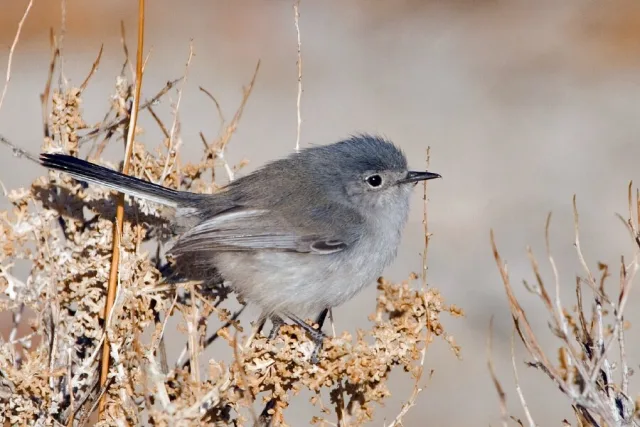
The Black-tailed Gnatcatcher is visually very similar to the Blue-gray, but with one key difference reflected in its name: its tail is solid black underneath, lacking the extensive white outer feathers of its cousin. This difference is a reliable field mark.
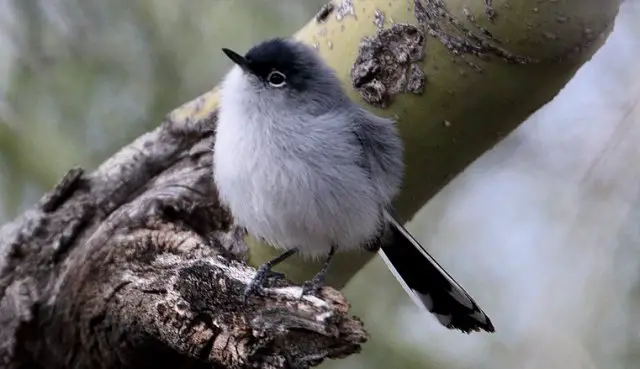
Like the Blue-gray, the breeding male develops a prominent black cap. However, on the Black-tailed Gnatcatcher, this black cap extends further down onto the nape, creating a much bolder, more solid-black head pattern.
Habitat and Status
This species is a specialist of the low-lying desert scrub, favoring habitats dominated by creosote bush and mesquite thickets. They rarely venture into riparian areas and are closely tied to the hot, dry landscape.
Unlike the migratory Blue-gray Gnatcatcher, the Black-tailed Gnatcatcher is largely resident throughout its range, reflecting its adaptation to a stable, albeit harsh, desert environment.
California Gnatcatcher (Polioptila californica): The Conservation Focus
The California Gnatcatcher is the most geographically restricted and, consequently, the most famous member of the U.S. trio from a conservation standpoint. Its range is confined almost entirely to the coastal sage scrub habitats of Southern California and northern Baja California.
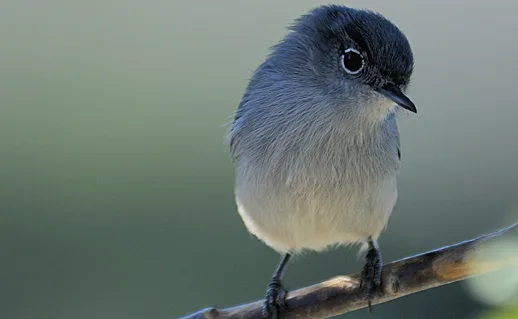
Identification and Conservation Status
Visually, the California Gnatcatcher is the darkest of the three species, with a sooty, gray-black appearance overall. Like the Black-tailed, it has a mostly black tail, but its most important distinction is its darker, less contrasting plumage compared to the brighter blue-gray or white undersides of its relatives.
Its fate is inextricably linked to the survival of its required habitat—the coastal sage scrub ecosystem. This specific habitat has been heavily impacted by development, especially in the densely populated areas of Orange and San Diego counties. As a result, the California Gnatcatcher has been listed as a Threatened Species under the U.S. Endangered Species Act. Its protection has become a major factor in land use planning and conservation efforts throughout Southern California.
Habitat Dependency
The California Gnatcatcher is strongly dependent on native coastal sage scrub, a drought-tolerant plant community characterized by aromatic, soft-leaved shrubs like sagebrush and California buckwheat. This specialized habitat provides the necessary cover and insect prey, making the bird a crucial indicator species for the health of one of California's most endangered ecosystems.
Vocalizations: The Defining "Pew"
Despite their visual similarities and often confusing field identification, Gnatcatchers are often easiest to distinguish by their calls. All three species have thin, high-pitched, almost insect-like calls, but each possesses a subtly unique signature sound:
Blue-gray Gnatcatcher: Utters a characteristic, wispy “spee-spee” or a persistent, whining “zing.”
Black-tailed Gnatcatcher: Its call is a louder, more nasal, and buzzing “pew” or “zee.”
California Gnatcatcher: Produces a distinctive, cat-like mewing or a rapid, scolding “pitz-pitz-pitz” sound.
The Gnatcatchers, though small, play a large role in the insect control of their respective ecosystems and are a remarkable group of birds whose stories reflect the diverse, often challenged, landscapes of the American West.
