

The transition from winter’s muted palette to the vibrant explosion of spring is marked by one of nature's greatest spectacles: the return of the Neotropical songbirds. Along the Atlantic Flyway, the barrier islands of Georgia—a chain of pristine, semi-tropical ecosystems—offer a critical refueling station for these tiny travelers. For birders, the coastal islands are more than just a destination; they are a thrilling intersection where the delicate lives of warblers, vireos, and tanagers meet the wild beauty of maritime forest and salt marsh.
From Cumberland Island to Tybee Island, the Georgia coast provides a precious lifeline of stopover habitat. After an arduous, non-stop flight across the Gulf of Mexico or along the Caribbean, the coastal woodlands are the first welcoming sight, providing the insects, water, and shelter these exhausted migrants desperately need to continue their journey northward to their breeding grounds.
The Warbler Wave: Jewels of the Maritime Forest
The true focus of the spring migration on the Georgia coast is the sheer diversity and brilliance of the Wood-Warblers (Parulidae). These small insectivores, often referred to as the "butterflies of the bird world" for their vibrant plumage, arrive in successive waves from late March through mid-May, with the peak occurring around mid-to-late April.
The birding challenge lies in locating these active, high-foraging birds within the dense canopy of the maritime forest, typically dominated by live oaks draped in Spanish moss and tough scrub thickets.
Early Arrivals (Late March - Early April)

The vanguard of the migration consists of hardy, earlier-nesting species. These birds are often the first splash of color after winter:
Northern Parula: An early and abundant arrival, often singing its buzzy, ascending trill from the Spanish moss that it favors for nesting material.
Yellow-throated Warbler: A sharp, black-and-white face contrasts with a striking yellow throat, often seen creeping along the limbs of pine and oak trees.
Black-and-white Warbler: Known as the "creeper warbler," it spirals down tree trunks much like a Nuthatch, searching for insects in the bark.
The Mid-April Peak

This is the sweet spot when the migration "breaks loose," bringing the highest concentration and diversity of species. Birders search diligently for flashes of color in the canopy and mid-story shrubs:
Cape May Warbler: With its distinctive chestnut cheek patch and bright yellow throat, this species is a prized sighting.
Black-throated Green Warbler: Identified by its striking black bib and rich yellow face.
Magnolia Warbler: Often feeding lower in the shrubs, making it easier to spot. The males feature bold black streaks on a yellow breast and a gray-blue head.
Hooded Warbler: A later arrival, often recognized by the male's striking yellow face framed by a black hood.
In total, approximately 35 species of warblers pass through Georgia during the spring migration, each contributing a unique note to the chorus.
Key Island Stopover Habitats
The Georgia coastline is part of the Colonial Coast Birding Trail, offering numerous accessible and protected sites that serve as migration hotspots.
Jekyll Island
Jekyll Island, particularly its maritime forest patches and the Causeway traversing the extensive salt marsh, is a renowned migration stopover. While the Jekyll Island Banding Station operates mainly in the fall, the spring presents opportunities to witness the same migratory traffic:
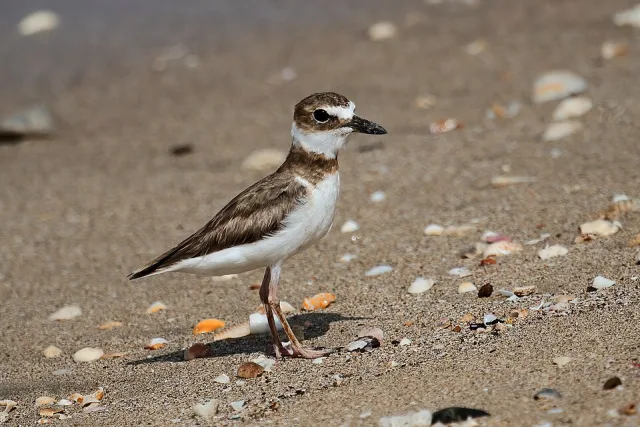
Driftwood Beach & South End: While famous for shorebirds and nesting Wilson's Plovers, the adjacent patches of woods and scrub near the South End offer excellent chances to find grounded songbirds seeking shelter and food.
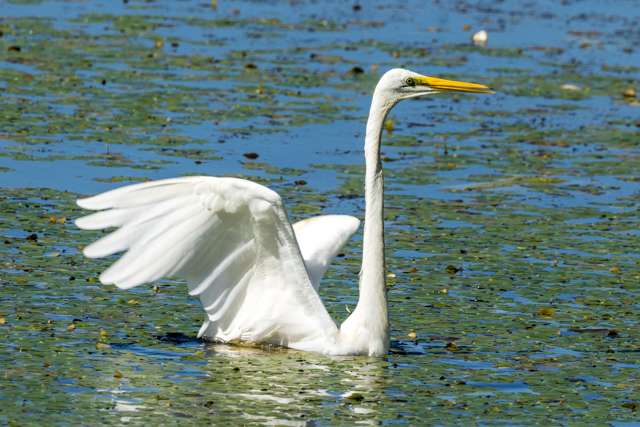
Causeway: The drive across the marsh offers incredible views of wading birds like White Ibis, Great Egrets, and Roseate Spoonbills, as well as marsh-dwelling sparrows and rails.
Little St. Simons Island
This private, undeveloped barrier island is a paradise for birders. With over 250 species regularly spotted, its mosaic of old-growth forests, freshwater ponds, and remote marshes is ideal for migrants. Guided naturalist excursions frequently target the dense woodlands during the peak season to find the highest concentrations of songbirds.
Cumberland Island National Seashore
As the largest and one of the wildest of the Georgia barrier islands, Cumberland provides expansive, protected habitat. The interior maritime forests and oak hammocks act as large, high-quality stopovers for warblers, vireos, and thrushes after their trans-oceanic flights. Birders must rely on hiking or biking to access the best woodland habitat, but the reward is often a less-disturbed, more intense birding experience.
Tybee Island
Located at the northern end of the chain, Tybee Island and the nearby Fort Pulaski National Monument offer accessible birding. The protected wooded areas and marsh fringes at Fort Pulaski act as an important funnel, catching migrants that follow the coast north.
The Importance of Fat Reserves: Refueling the Journey

For Neotropical migrants, the migration is an energy crisis. They rely on hyperphagia—periods of intense, rapid feeding—to build up fat reserves, which serve as their primary fuel source for the next leg of their journey.
The Georgia coastal habitats are critical because they provide:
High-Quality Foraging: The lush, warm spring climate leads to an abundance of insects, larvae, and spiders within the maritime woods—the high-octane fuel needed to replenish their energy stores.
Shelter: Dense vegetation, particularly the live oak and laurel oak stands, provides vital cover from predators and inclement weather, allowing the exhausted birds to rest safely.
The "Fallout" Phenomenon: Occasionally, a large front of migrating birds flying north encounters a severe headwind, rain, or a sudden change in weather, forcing them to "fall out" of the sky en masse and seek the first available cover. The Georgia islands are perfectly positioned for these events, sometimes resulting in hundreds of warblers, tanagers, and buntings crowding the same small patch of coastal woods, offering birders a truly unforgettable spectacle.
Beyond the Warblers: Other Migratory Gems
While the warblers dominate the songbird narrative, the spring migration brings a host of other colorful and sought-after species to the Georgia coast:
Vireos and Thrushes: Look for the Red-eyed Vireo and the secretive Wood Thrush, recognizable by its haunting, fluting song.
Tanagers: Both the bright red Summer Tanager and the striking red and black Scarlet Tanager pass through, often foraging high in the canopy.
Buntings and Grosbeaks: The coastal hammocks are a stronghold for the spectacular Painted Bunting, with its stunning kaleidoscope of colors (blue head, red underside, and green back). Blue Grosbeaks and Indigo Buntings are also common sightings.

Summer Tanager Hummingbirds: The tiny Ruby-throated Hummingbird is one of the first migrants to arrive, fueling up on nectar before pushing north.

Spring in the Georgia coastal islands is an affirmation of the biological fortitude of these small birds. It is a time when the traveler is rewarded not just with a list of lifers, but with a profound appreciation for the conservation needed to protect the fragile coastal sanctuaries that keep the Atlantic Flyway humming with life.
