
Florida, the Sunshine State, is synonymous with white-sand beaches, emerald waters, and a unique sub-tropical wilderness. Yet, its most captivating treasure might be the vibrant, elegant avian life that stalks the shallows of its vast wetlands. The state's extensive network of marshes, swamps, mangrove forests, and estuaries creates a rich ecosystem—a veritable paradise for wading birds. These long-legged, long-necked masters of the shallows are not merely beautiful; they are a defining characteristic of Florida’s wild heart, acting as key environmental indicators for the health of its water systems, particularly the legendary Everglades.
We explore the diverse world of Florida's waders, exploring the most prominent species, their fascinating hunting strategies, their critical role in the environment, and the best places for an admirer to witness their grace.
A Gallery of Waders: Herons, Egrets, and Ibises
The term "wading bird" encompasses a broad group, but in Florida, it primarily refers to members of the families Ardeidae (herons, egrets, and bitterns), Threskiornithidae (ibises and spoonbills), and Ciconiidae (storks).
The Elegant Herons and Egrets
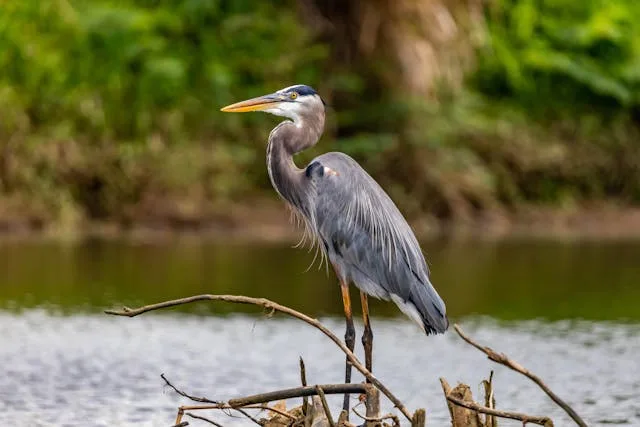
The Great Blue Heron (Ardea herodias) is arguably the most recognizable wader, a majestic figure standing nearly four feet tall. Its calm, solitary demeanor as it patiently waits for fish along a tidal creek is a signature sight of the Florida landscape.
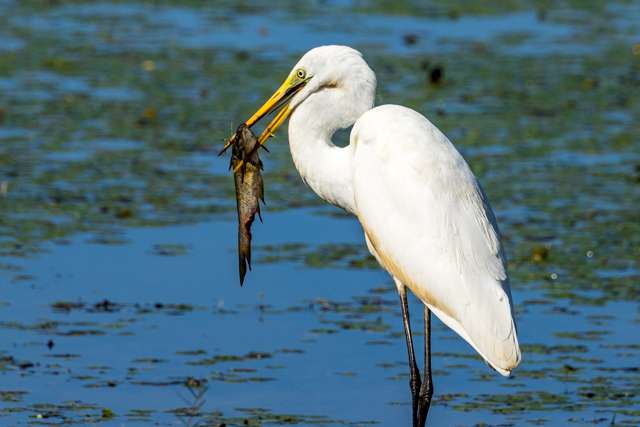
Sharing the waters are the stunning white egrets. The Great Egret (Ardea alba) is large and statuesque, characterized by a bright yellow bill and black legs. Its smaller, more dynamic cousin, the Snowy Egret (Egretta thula), is an avian dancer. The Snowy Egret uses its distinctive bright yellow feet to shuffle the water, stirring up prey—a brilliant hunting technique that distinguishes it from the Great Egret's motionless, patient stalk.
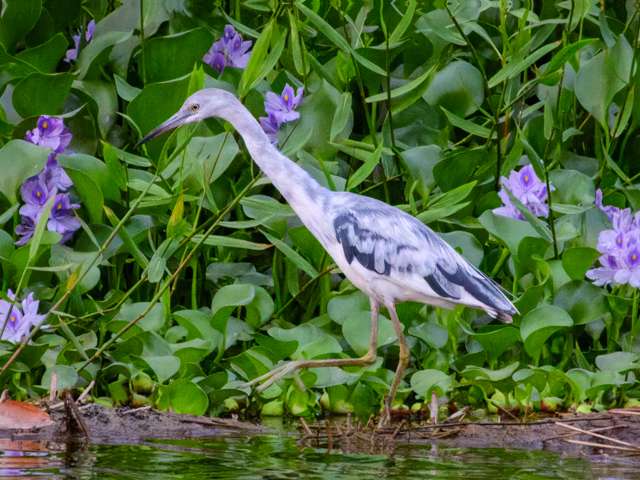
Florida is also home to a trio of smaller, blue-hued herons, each with unique plumage:
- The Little Blue Heron (Egretta caerulea): Juveniles are entirely white, often leading to misidentification with egrets. They transition into a deep, slate-blue body with a maroon neck as adults.

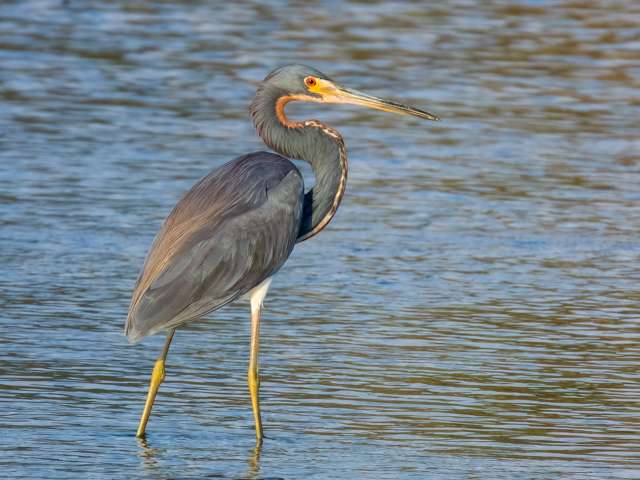
Little Blue Heron - The Tricolored Heron (Egretta tricolor), formerly known as the Louisiana Heron, is a striking combination of blue-gray, purple, and white. Its bold, energetic chase after fish is a spectacular sight.
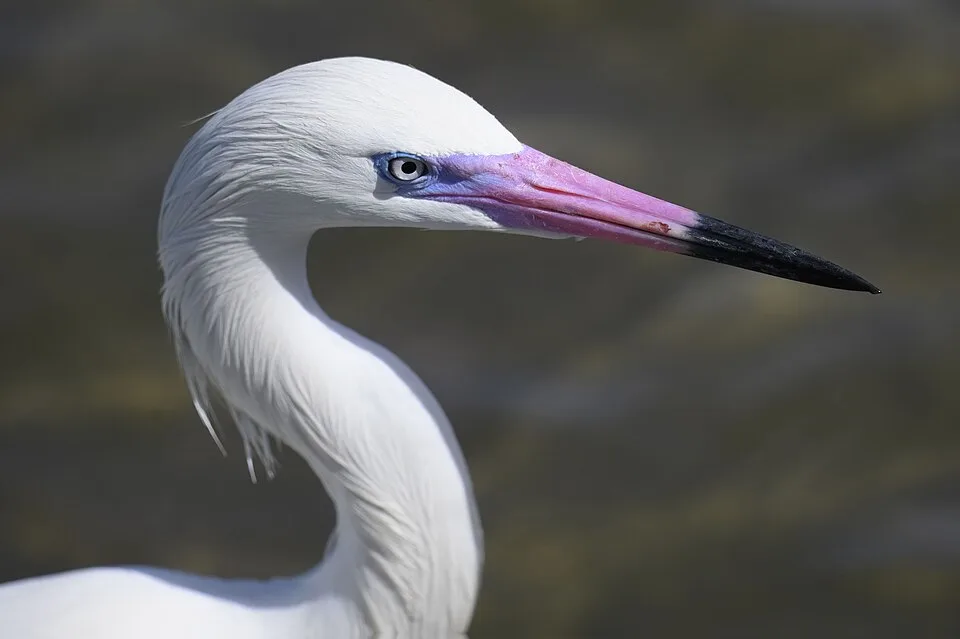
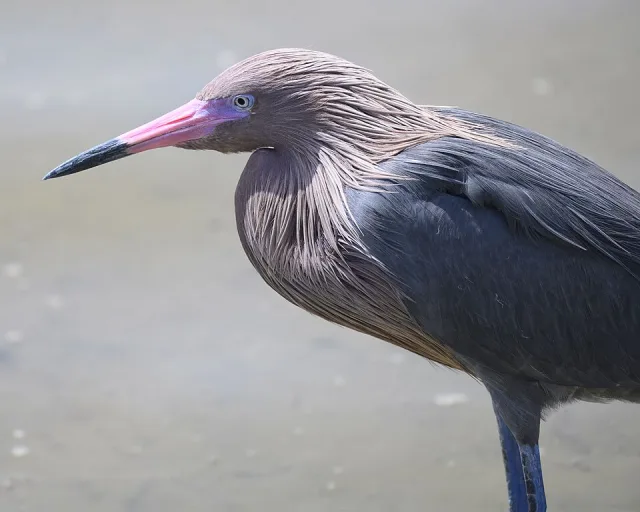
Tri-colored Heron - The Reddish Egret (Egretta rufescens), predominantly found in coastal, salty habitats, exhibits the most dramatic hunting behavior. It runs, leaps, and dances erratically across the water, often spreading its wings to create a shadow that either attracts or confuses fish before spearing them with its bill.

Reddish Egret
The Colorful and Distinctive Waterfowl
Beyond the herons, other wading birds bring bursts of color and unusual shapes to the Florida marsh.
The Roseate Spoonbill (Platalea ajaja) is perhaps the state's most visually arresting wader. Its vivid pink plumage, a result of pigments from the crustaceans it consumes, rivals the flamingo, and its namesake spatula-shaped bill is unmistakable. It sweeps this unique bill side-to-side through shallow water to filter out small fish, invertebrates, and insects.

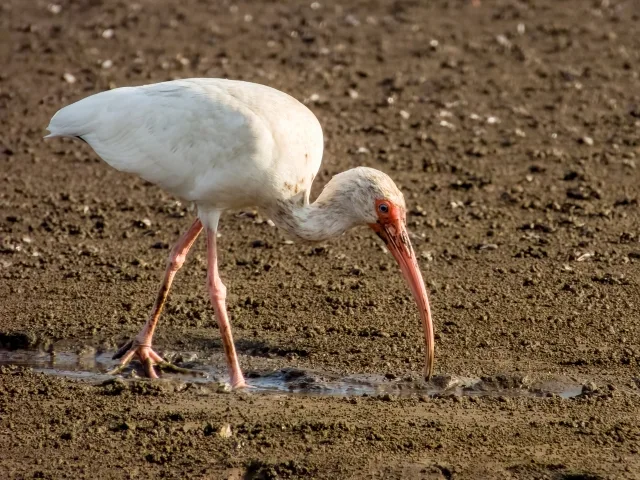
The White Ibis (Eudocimus albus) is one of the most numerous waders, seen in massive flocks across every type of wetland. The adults are bright white with black wingtips (visible in flight), a striking red face, and a long, curved red bill used to probe soft mud for crabs and worms. Its abundance makes it a signature species of Florida's wetlands. The less common Glossy Ibis (Plegadis falcinellus) is a dark bird with iridescent bronze, purple, and green feathers, often seen alongside the White Ibis.

Finally, the Wood Stork (Mycteria americana) is the only true stork native to North America. A large, bald-headed bird with a down-curved bill, its white body and black trailing flight feathers make it majestic in the air. The Wood Stork is a tactile feeder, fishing by wading with its bill submerged and snapping it shut the instant a prey item is touched—a feeding strategy perfectly adapted to the fluctuating water levels of the Everglades.

Ecology and Conservation: The Health of the Wetlands
Wading birds are a keystone component of Florida's aquatic food web. They consume a vast amount of fish, amphibians, and invertebrates, transferring energy up the food chain. More importantly, their nesting success and colony sizes are vital indicators of environmental health, particularly in the Everglades ecosystem.
Historically, waders were nearly wiped out in the late 19th and early 20th centuries due to the feather trade, where their brilliant plumes—especially those of the Great and Snowy Egrets—were sought after for women's hats. Conservation efforts and the creation of the National Audubon Society were spurred, in part, by the massacre of these birds, leading to the passage of landmark legislation like the Lacey Act and the Migratory Bird Treaty Act.
Today, while the Great Egret and White Ibis populations are generally robust, other species face new threats, primarily habitat loss and alterations to hydrology. The Comprehensive Everglades Restoration Plan (CERP) is a massive project specifically focused on restoring the natural flow of water, which is critical for the wading bird breeding cycle. Their nesting depends on water levels receding at the right time to concentrate fish into isolated pools, providing a predictable, abundant food source for chicks. When the natural cycle is disrupted by drainage and urban development, nesting attempts often fail.
The Wood Stork, once Federally Endangered, saw its status improve to Threatened due to successful conservation efforts, but constant monitoring is necessary. Smaller Egretta species like the Tricolored and Little Blue Herons have shown concerning long-term declines in nesting numbers, underscoring the fragile balance of the ecosystem.
Where to Witness the Spectacle
For bird enthusiasts, Florida is an unparalleled destination. The best locations offer easy access and protected habitats where these birds thrive.
- Everglades National Park: The ultimate destination. The Anhinga Trail and the coastal areas of Florida Bay are world-famous for up-close views of Great Blue Herons, Roseate Spoonbills, and a spectacular array of others.
- J.N. "Ding" Darling National Wildlife Refuge (Sanibel Island): This refuge features a four-mile wildlife drive where high concentrations of wading birds, especially Roseate Spoonbills and various egrets, are easily seen foraging during low tide.
- Corkscrew Swamp Sanctuary: Home to one of the largest remaining old-growth Bald Cypress forests in North America, this sanctuary is historically critical as a major nesting colony for the Wood Stork. Its boardwalk provides an immersive view into the swamp ecosystem.
- Merritt Island National Wildlife Refuge (Titusville): Known for its incredible biodiversity, the Black Point Wildlife Drive is an essential spot to see a dense assembly of herons, egrets, and ibises, especially during the winter migration months.
Observing Florida's wading birds is a meditative experience. Whether watching the elegant Great Egret stand sentinel, the playful antics of the Reddish Egret, or the sheer spectacle of an entire rookery erupting in a cacophony of life, one is instantly connected to the raw, untamed nature of the Sunshine State. These feathered jewels are a beautiful, necessary reminder that Florida’s fate is inextricably linked to the health of its shimmering, life-giving waters.
