
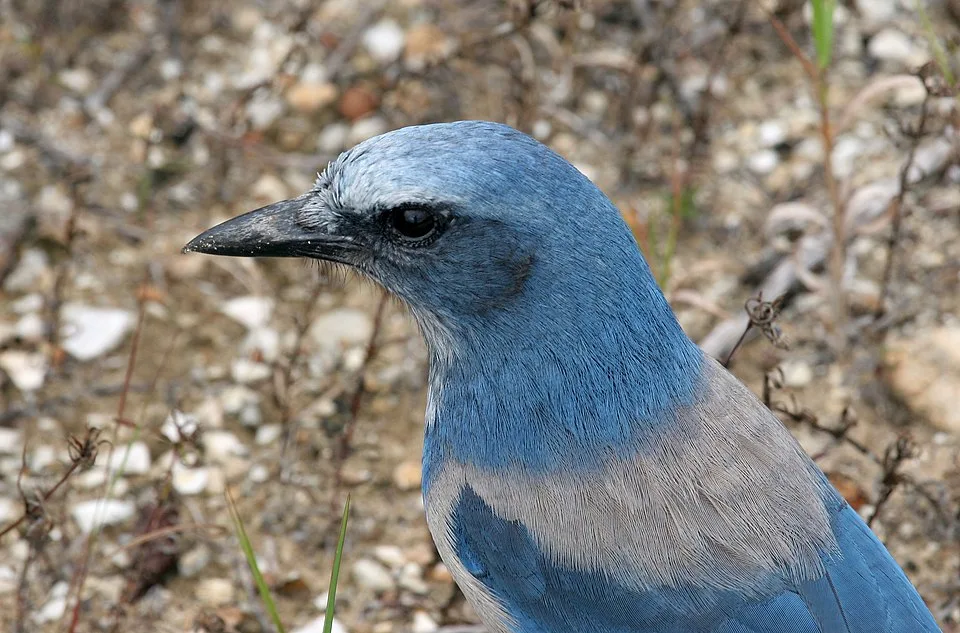
The Florida Scrub-Jay (Aphelocoma coerulescens) is arguably one of the most remarkable and ecologically significant bird species in North America. It is the only bird species found exclusively within the state of Florida, making it a true biological sentinel of its unique, endangered scrub habitat. More than just a striking blue and gray bird, the Scrub-Jay’s complex social life, unwavering fidelity to its territory, and precarious conservation status offer a compelling look into the delicate balance of Florida’s ancient ecosystems.
A Blue Enigma of the Ancient Dunes
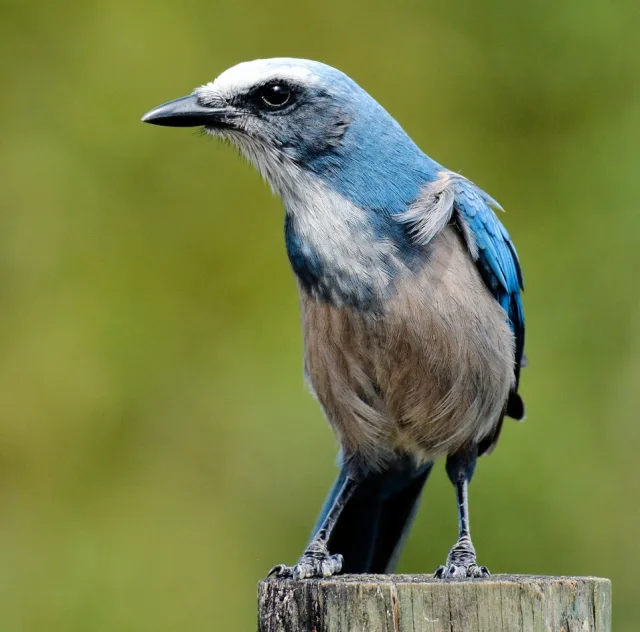
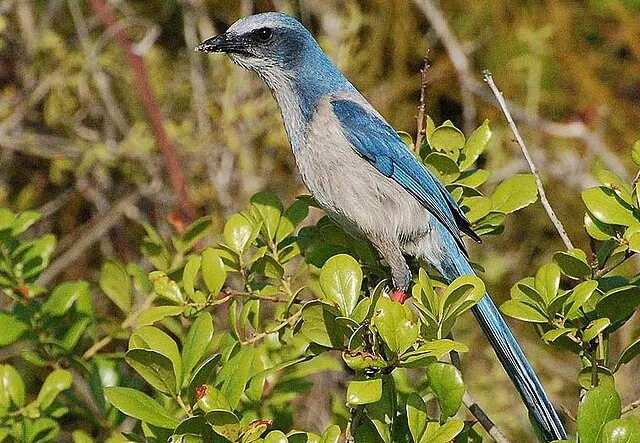
Physically, the Florida Scrub-Jay is a medium-sized songbird, instantly recognizable by its striking appearance. Its head, wings, and long tail are a brilliant azure blue, contrasting sharply with a pale gray chest and back. Unlike its western counterparts (which were once considered the same species), the Florida Scrub-Jay lacks the pronounced blue crown and nape, lending its head a rounder, smoother appearance. They are intelligent, curious, and famously bold, often becoming habituated to human presence—a trait that, while charming to observers, introduces unique challenges in a rapidly developing state.
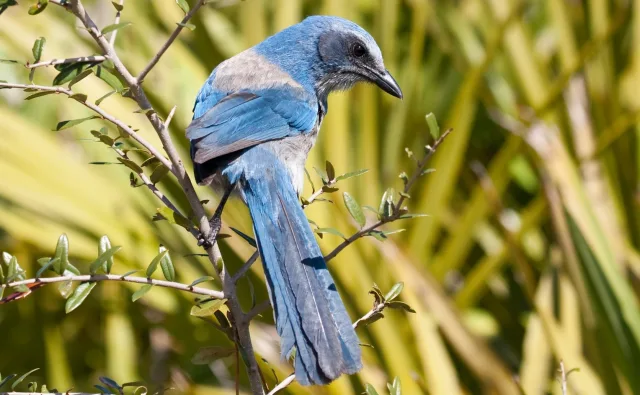
The jays are non-migratory and intensely sedentary. An individual rarely moves more than a few miles from where it was hatched, establishing a profound, lifelong connection to its small patch of scrub. This “homebody” nature, known as philopatry, is a defining characteristic of the species and is deeply tied to its unique social structure and its greatest threat: habitat fragmentation.
The Cooperative Life: Helpers at the Nest
The most extraordinary feature of the Florida Scrub-Jay is its cooperative breeding system, a rare trait among North American birds. Scrub-Jays live in extended, year-round family groups that typically consist of a monogamous breeding pair and one to six non-breeding birds, known as "helpers," who are usually the offspring from previous seasons.
While young jays are physiologically capable of breeding in their first year, the intense competition for suitable scrub territory—a phenomenon known as habitat saturation—forces them to delay dispersal. Instead of leaving the nest to find a territory they cannot establish, they remain with their parents, offering their assistance.
These helpers are anything but idle. They contribute significantly to the group's survival and reproductive success by:
- Defense and Vigilance: Helpers act as sentinels, perched high on shrubs or pine snags, keenly watching for predators such as snakes, bobcats, or aerial threats like the Short-tailed Hawk. Their alarm calls alert the entire family, dramatically reducing the risk of nest predation, which is a major cause of nest failure.
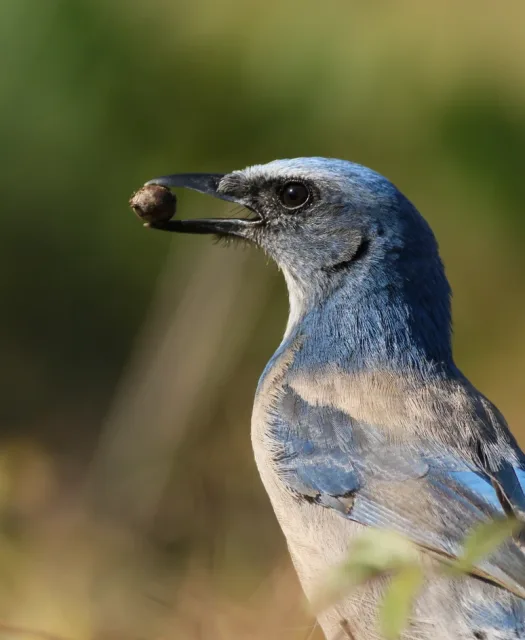
- Provisioning: Helpers assist in gathering and delivering food—mostly insects, acorns, and small vertebrates—to the incubating female and, later, the nestlings and newly fledged young.
- Territory Defense: They actively participate in defending the family's large, permanent territory (averaging 20–25 acres) from neighboring Scrub-Jays and competing species, ensuring a reliable food supply.
This cooperative system offers clear benefits. Pairs with at least one helper fledge significantly more young (up to 1.5 times more) than pairs without assistance. For the helpers, the seemingly altruistic act of caring for younger siblings is an investment in their own future fitness. By staying, they gain valuable experience, increase the overall survival of their lineage, and wait for the best opportunity to acquire a coveted territory through inheritance, taking over a vacancy, or "budding off" a portion of the family land.
The Scrub Habitat: A Landscape Defined by Sand and Fire
The Florida Scrub-Jay's very existence is inextricably linked to one of the state's most ancient and threatened ecosystems: the Florida scrub . This habitat is not the lush, swampy landscape many associate with Florida, but a relict community found on high, dry, excessively well-drained sandy soils—ancient dunes that were once coastal beaches when sea levels were higher.
The scrub is characterized by dense, low-growing oak species (like Myrtle Oak and Sand Live Oak) and palmettos, interspersed with patches of bare, white sand. These bare patches are critical, as the jays rely on them for foraging and, crucially, for caching acorns.
Diet and Acorn Caching: The Scrub-Jay is an omnivore, feeding heavily on insects, spiders, lizards, frogs, and occasionally the eggs of other birds. However, acorns, particularly those from scrub oaks, form the backbone of their diet, providing essential calories throughout the year. They are prolific casters, burying thousands of acorns annually—up to 8,000 per bird in the fall—in the sand. They rely on an astonishing spatial memory to retrieve these caches months later, a behavior that also makes the jays an effective dispersal agent for the scrub oak ecosystem.
The Role of Fire: The survival of the scrub habitat is dependent on natural, frequent, low-intensity wildfires. Fire prevents the vegetation from growing too tall and dense, maintaining the short, open structure that the jays require for effective foraging and predator vigilance. When fire is suppressed, the scrub becomes overgrown, pines encroach, and the habitat quickly becomes unsuitable, leading to the local extinction of jay populations.
A Species in Peril: Conservation Status
The Florida Scrub-Jay is federally listed as a Threatened species, a status reflecting its dire conservation crisis. Its population has experienced a catastrophic decline, estimated at over 90% in the last century.
The primary threats are two-fold:
- Habitat Loss and Fragmentation: The high, dry sand ridges that the Scrub-Jays inhabit are also prime locations for human development, particularly in central Florida. Residential and commercial growth have destroyed vast tracts of scrub and divided the remaining habitat into small, isolated patches. Because the jays are reluctant to fly over non-scrub areas, these fragmented patches prevent genetic exchange and make populations highly vulnerable to local extinction.
- Fire Suppression: Decades of aggressive fire suppression efforts have allowed existing scrub habitat to become overgrown, or succeed into dense pine forests, rendering it unusable for the jays.
Conservation efforts are intensely focused on actively managing and restoring remaining scrublands, primarily through prescribed burning and mechanical clearing to maintain the necessary low-stature canopy and open sandy areas. Protecting existing scrub and ensuring connectivity between fragmented populations is the single most important factor for the long-term survival of this unique and charming Florida endemic.
