
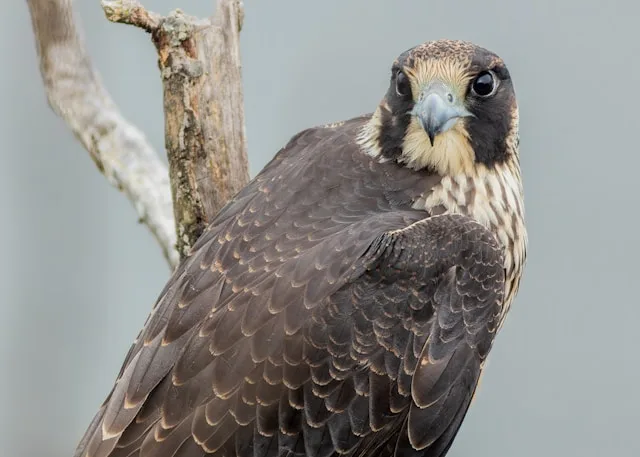
From the Arctic tundra of Alaska to the bustling city skyscrapers, a handful of avian predators embody speed, precision, and raw aerial power in the American landscape: the falcons of the genus Falco. These birds of prey, characterized by their sleek build, long pointed wings, and notched beaks, are the fastest animals on the planet, with the most famous among them capable of diving at over 200 miles per hour. The United States is home to a diverse group of these magnificent raptors, each uniquely adapted to its particular niche across the country.
The primary falcon species regularly found in the U.S. include the Peregrine Falcon, the American Kestrel, the Merlin, the Prairie Falcon, and the majestic Gyrfalcon. Two others, the Aplomado Falcon and the Caracaras, also make their home in the southern regions. Together, they represent a fascinating study in predatory adaptation and conservation resilience.
The Return of the Speed King: The Peregrine Falcon (Falco peregrinus)
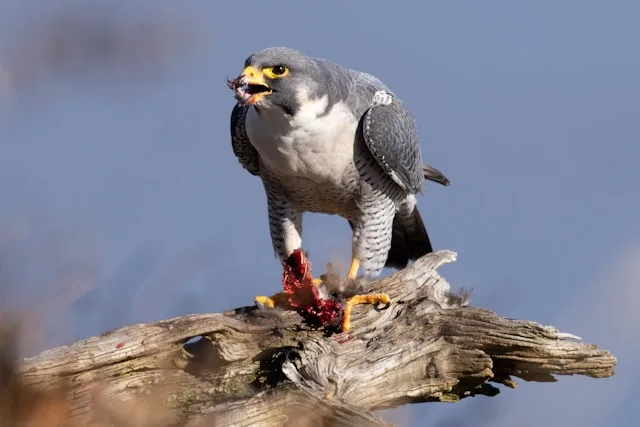
The undisputed monarch of speed is the Peregrine Falcon. Its name, meaning "wanderer," is apt, as it is one of the most widespread bird species in the world, found on every continent except Antarctica. In the United States, three subspecies are recognized: the American or continental peregrine falcon (F. p. anatum), the tundra peregrine falcon (F. p. tundrius), and Peale's falcon (F. p. pealei).
Habitat and Hunting: Peregrines are generalists, thriving in an astonishing variety of habitats, from coastal shorelines and mountain ranges to river valleys. Crucially, they require high vantage points for nesting—historically towering cliffs—though they have adapted brilliantly to the modern urban landscape, nesting on tall buildings and bridges. Their diet consists almost exclusively of other birds, caught in a spectacular, high-speed dive called a "stoop" that is the stuff of legend.
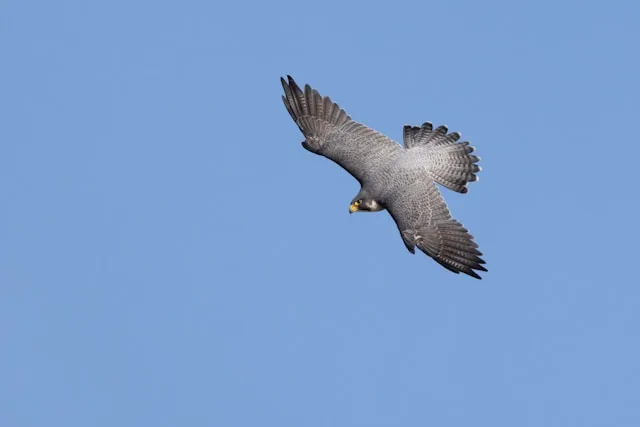
A Conservation Triumph: The story of the Peregrine Falcon is a celebrated victory for American conservation. In the mid-20th century, the U.S. population faced a catastrophic collapse, particularly in the eastern states, due to the widespread use of the pesticide DDT. The chemical caused eggshell thinning, leading to mass reproductive failure. After being listed as federally endangered in 1970 and the subsequent ban of DDT in 1972, an intensive recovery effort—including captive breeding and reintroduction programs spearheaded by organizations like The Peregrine Fund—led to a remarkable rebound. The American Peregrine Falcon was officially removed from the federal Endangered Species List in 1999, a testament to the power of environmental policy and dedicated human effort. Today, seeing a Peregrine perched atop a skyscraper in a major city is a sign of ecological recovery.
The Pocket-Sized Hunter: The American Kestrel (Falco sparverius)
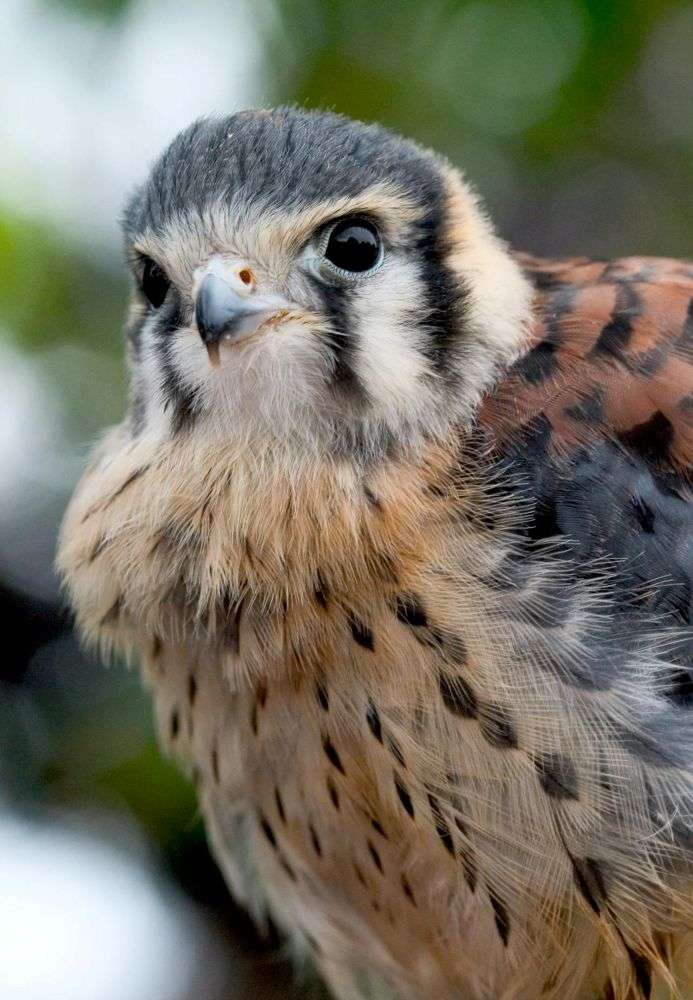
At the opposite end of the size spectrum is the American Kestrel, the smallest and most colorful falcon in North America. Weighing a mere 3 to 6 ounces (85 to 170 grams), this little raptor is a familiar sight across the country, often seen perched on utility wires or fence posts overlooking open grasslands and fields.
Identification and Diet: The kestrel is instantly recognizable due to its bright coloration and conspicuous head markings, including two dark vertical stripes on its face. The sexes exhibit striking plumage dimorphism: the male sports beautiful blue-gray wings and a rufous back, while the female has reddish-brown wings with dark barring. Their diet is incredibly varied, making them a friend to farmers. In the summer, their main prey consists of large invertebrates like grasshoppers, crickets, and beetles. In the colder months, they switch to small mammals such as mice and voles, which they hunt by either patiently "sit-and-scanning" from a perch or executing their signature hovering technique, using rapid wingbeats to hold a static position mid-air as they eye their prey below. The American Kestrel is the most widespread falcon in the Americas, found from Alaska all the way to South America.

Falcons of the West, North, and South
Beyond the two most common species, the U.S. is home to several other noteworthy falcons that occupy distinct geographical ranges:
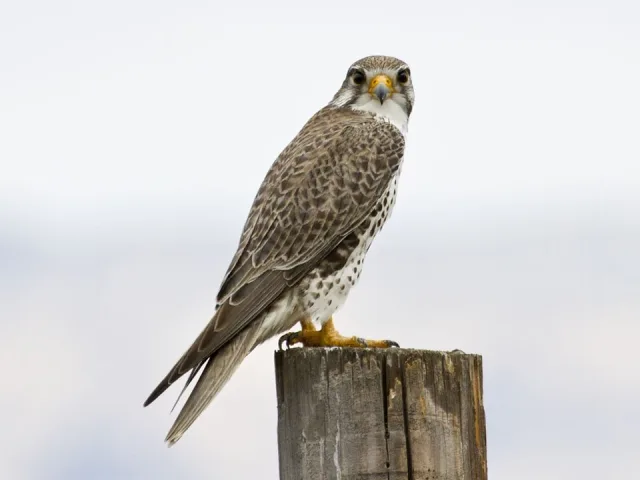
- The Prairie Falcon (Falco mexicanus): A bird of the open American West, the Prairie Falcon is found from the Rocky Mountains westward to the Pacific coast. It is a large, powerful falcon adapted to the arid and semi-arid landscapes of the desert, steppe, and prairie. Unlike the Peregrine, its primary prey includes ground-dwelling creatures like ground squirrels, marmots, and other rodents, though it will also hunt birds. It typically nests in cliff crevices in canyons or along rimrock.

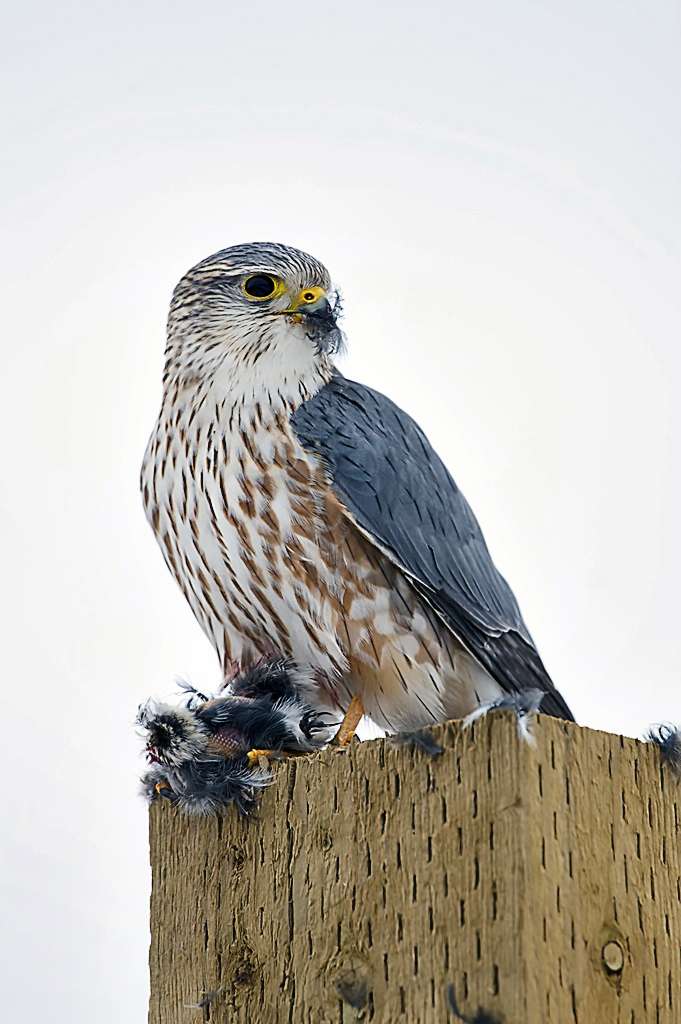
Prairie Falcon - The Merlin (Falco columbarius): Once popularly known as the "pigeon hawk," the Merlin is larger than the American Kestrel but smaller than the Peregrine. It is a fast, agile hunter of small birds, which it chases down with fierce determination, often near coastal areas, open forests, and increasingly in city parks. Various subspecies of the Merlin are distributed across North America, with northern populations migrating south for the winter.

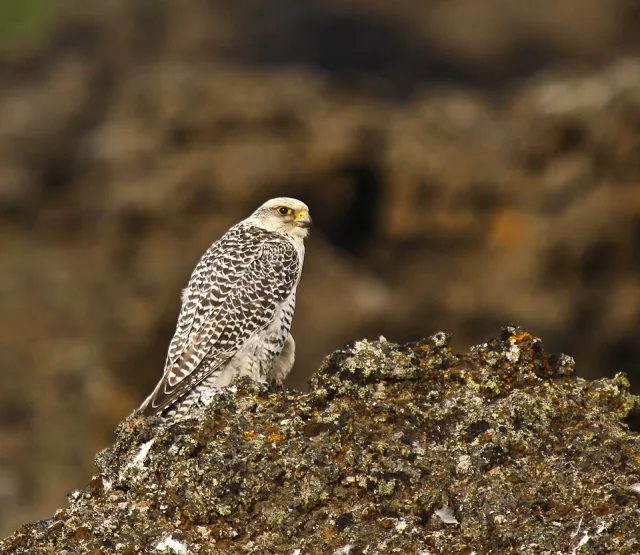
Merlin - The Gyrfalcon (Falco rusticolus): The largest falcon species in the world, the Gyrfalcon is a massive, formidable raptor of the high Arctic. It is primarily found in the tundra of Alaska and northern Canada, with some individuals occasionally dispersing south into the northern continental U.S. during the winter months. Its plumage is highly polymorphic, ranging from pure white to a dark brown or "black" morph. The Gyrfalcon is a symbol of wild, untamed wilderness.

Gyrfalcon
A Southern Specialist
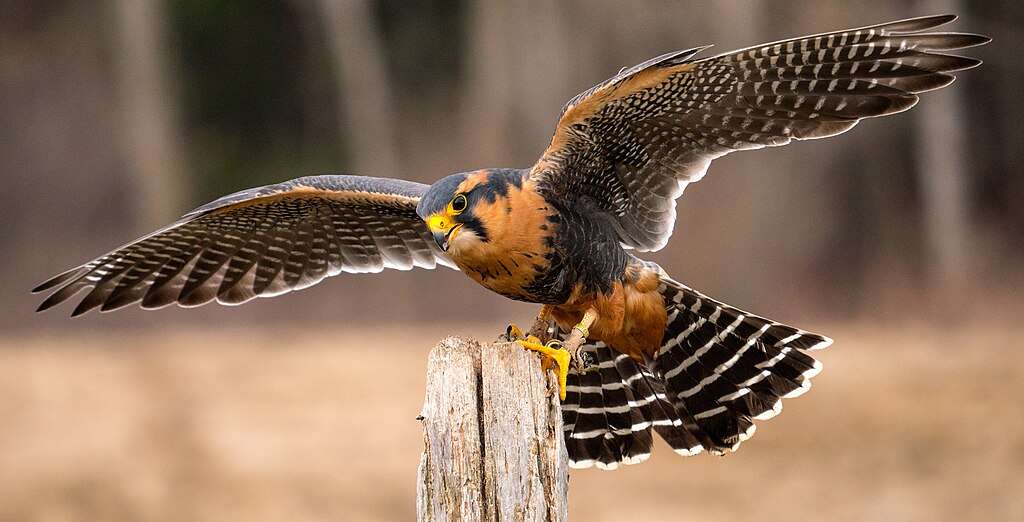
Finally, the Aplomado Falcon (Falco femoralis) deserves mention. This slim, long-tailed falcon is a striking resident of the American Southwest, historically ranging across parts of Texas, New Mexico, and Arizona. Due to habitat loss, it was nearly extirpated from the U.S. but has been the subject of reintroduction efforts and is slowly making a comeback in its former grassland and savannah habitats.
Wrapping Up
The falcons of the United States represent a crucial component of the country's biodiversity, playing vital roles as aerial apex predators that help maintain the balance of various ecosystems. Their presence—from the tiny, jewel-toned kestrel hovering over a cornfield to the powerful Peregrine dominating a city skyline—is a constant reminder of nature’s incredible engineering and the enduring power of conservation efforts. To witness one of these birds in action is to gain an unforgettable glimpse of untrammeled speed and grace in the American sky.
