

The United States, a land of vast geographical and climatic diversity, is a natural laboratory for evolution. While the human population clusters in temperate zones, a remarkable array of bird species have not only adapted to but thrived in the nation's most extreme environments.
These avian pioneers face a gauntlet of challenges, from scorching desert heat to soul-crushing Arctic cold and the violent swings of the Great Plains. Their survival is a testament to ingenious physiological and behavioral adaptations that allow them to push the boundaries of what is possible.
We explore the U.S. birds that call the most extreme climates home, showcasing their incredible resilience.
Masters of the Frozen North
When one thinks of a bird in an extreme climate, the immediate image is often of a species braving the brutal cold. The northern reaches of the U.S., particularly Alaska and the upper Midwest, are home to birds that have developed astonishing strategies to endure sub-zero temperatures.
The Common Raven (Corvus corax) is a quintessential winter bird, thriving where many others would perish. Its large size is a key advantage, as a larger body retains heat more effectively than a small one. Ravens are also highly intelligent and resourceful. They are known for their ability to find and consume carrion, a reliable food source in a landscape of frozen ground and scarce prey. Their dense plumage acts as an excellent insulator, and they can fluff their feathers to trap layers of warm air, creating a natural down coat.

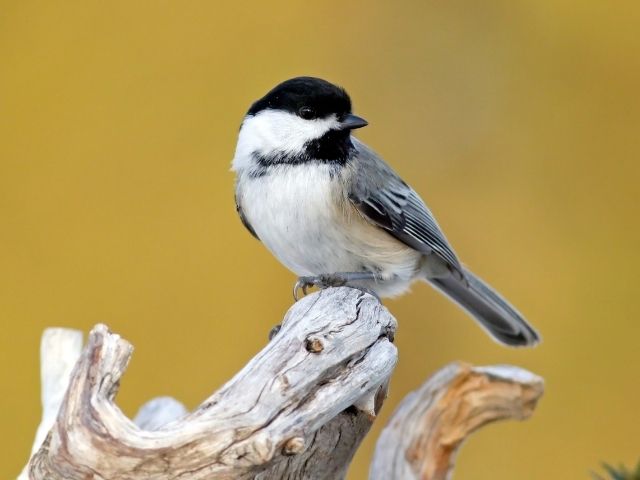
Another champion of the cold is the Black-capped Chickadee (Poecile atricapillus). This tiny bird, weighing less than half an ounce, can survive temperatures that plunge far below zero. Their secret lies in a remarkable physiological ability: they can enter a state of regulated hypothermia, dropping their body temperature at night to conserve energy. They also have an exceptionally high metabolic rate, burning through calories at an incredible rate to generate heat. To fuel this furnace, chickadees are expert food cachers, stashing seeds in a multitude of locations to be retrieved throughout the long winter.
In the high-altitude, wind-whipped regions of the Rockies, the Gray-crowned Rosy-Finch (Leucosticte tephrocotis) endures extreme cold. These birds are often found in areas that would give humans altitude sickness, and they survive by taking refuge in narrow rock crevices and feeding on windblown seeds. Their ability to find and exploit these micro-habitats is crucial for their survival in one of the most demanding environments in the contiguous U.S.
Thriving in the Scorching Desert
On the opposite end of the spectrum, the American Southwest is home to birds that have evolved to survive in some of the hottest and driest climates on Earth, particularly in California's Death Valley and the Sonoran Desert.
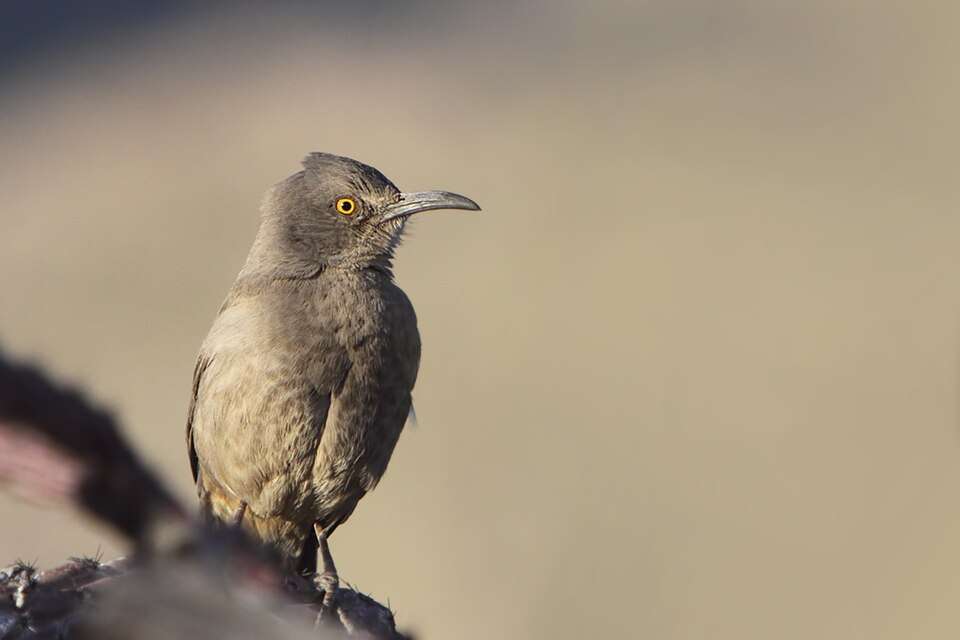
The Curve-billed Thrasher (Toxostoma curvirostre) is a classic desert specialist. These birds have a distinctive long, curved bill that they use to dig for insects and grubs in the unforgiving desert soil. They have also adapted to a limited water supply, getting most of their hydration from the food they eat. When temperatures become unbearable, they seek shelter in the dense shade of desert plants like saguaro cacti, a behavior critical for avoiding lethal heat stress.
Another desert resident, the House Finch (Haemorhous mexicanus), is a testament to a species that has successfully adapted to human-altered environments within these extreme climates. While they are not restricted to the desert, their prevalence in hot, arid regions is due to their ability to find food and water sources, often near human habitation. However, studies show that during extreme heat waves, even these resilient birds are pushed to their limits, with smaller species being particularly vulnerable to dehydration and mass die-offs.
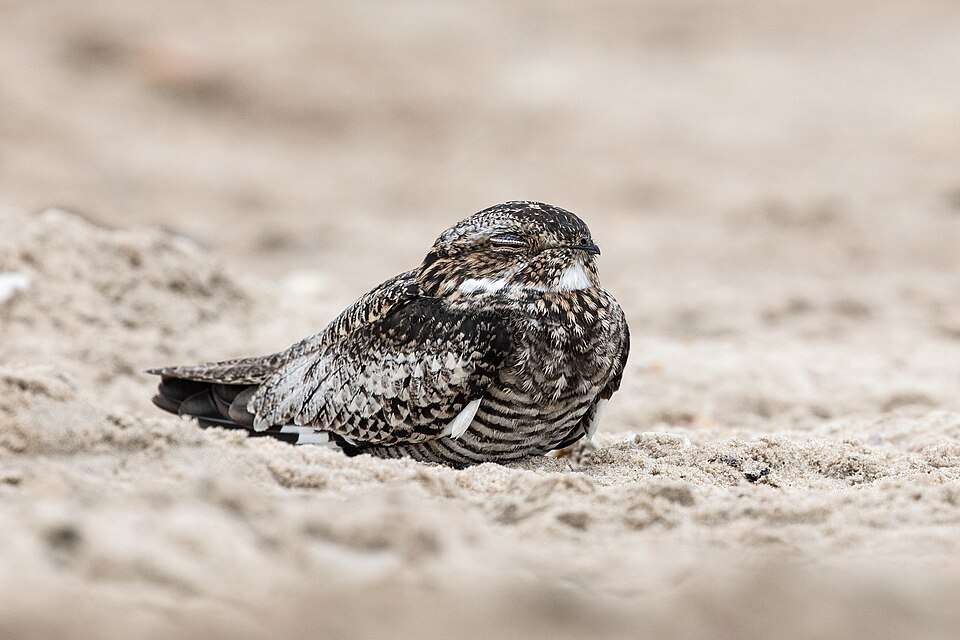
A unique and highly adapted desert bird is the Lesser Nighthawk (Chordeiles acutipennis). Like other birds of the desert, it hunts for insects, but it employs a cooling mechanism known as "gular fluttering." By rapidly vibrating the moist membranes of its throat, the nighthawk causes evaporative cooling, much like panting in a dog, to shed excess heat. This behavior is a key survival tactic during the hottest parts of the day.
The Volatility of the Heartland
Beyond the static extremes of hot and cold, some birds must contend with the dramatic, unpredictable volatility of climates found in the Great Plains. The sudden, violent swings from blizzards to tornadoes to sweltering heat require a different kind of resilience.
The Horned Lark (Eremophila alpestris) is a species that thrives in these open, often treeless environments. They are well-equipped to handle the cold, with their dense plumage and a tendency to burrow into the snow to find shelter. What makes them particularly adapted to a volatile climate is their flexible nesting strategy. They can adjust the length of their breeding cycle, from laying eggs to fledging, to coincide with favorable weather windows. This adaptability is crucial in a place where a warm spring day can be followed by a sudden, life-threatening snowstorm.

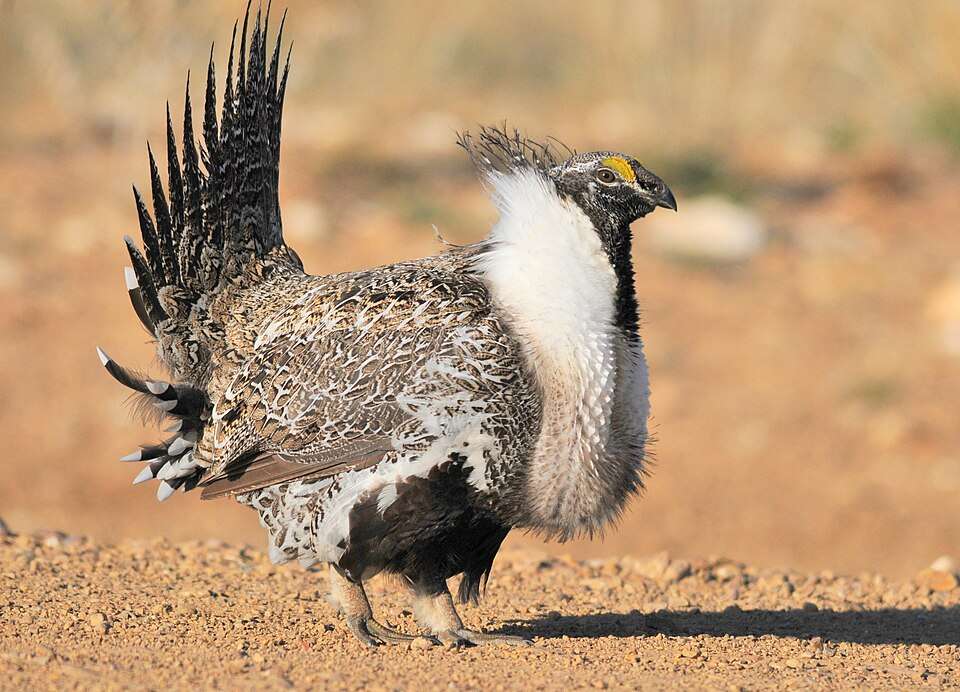
The Greater Sage-Grouse (Centrocercus urophasianus), while not a classic migratory bird, is a year-round resident of the harsh, semi-arid sagebrush steppe of the American West. These birds must endure both brutally cold winters and hot, dry summers. Their survival depends on their almost exclusive diet of sagebrush leaves, which provides them with both food and water throughout the year. The sagebrush provides them with shelter from predators and the elements, making their survival deeply intertwined with the health of this unique ecosystem.
Wrapping Up
The U.S. is home to a spectacular range of avian survivors, each with its own story of adaptation to a challenging world. From the chickadee's metabolic furnace to the nighthawk's gular fluttering and the sage-grouse's specialized diet, these birds demonstrate that there is no one-size-fits-all solution to surviving in an extreme climate. They are living proof that nature's ingenuity knows no bounds, and their continued survival is a powerful reminder of the importance of protecting the diverse habitats that allow them to endure on the very edge of climatic possibility.
Find out more interesting facts about bird names.
