
When discussions turn to the ecological problems posed by non-native birds in the United States, the names European Starling, House Sparrow, and Rock Pigeon immediately dominate the conversation. However, these common urban pests mask a far more complex and growing issue: a suite of less-obvious, often highly colorful, and sometimes aggressive avian species that have established self-sustaining feral populations across the country. Escaping from the pet trade, zoos, and private aviaries, these unexpected invaders are silently colonizing new territories, impacting local ecosystems, and challenging wildlife managers.
These species, ranging from parrots and parakeets to doves and waterfowl, demonstrate the ease with which non-native birds can exploit specialized niches in the U.S. landscape, often with unforeseen ecological consequences.
The Raucous Colonizers: Feral Parrots and Parakeets
Parrots, known for their intelligence and vibrant plumage, are among the most visually striking feral invaders. They present unique challenges due to their loud, social nature and their ability to thrive in urban and suburban environments.
Monk Parakeet (Myiopsitta monachus)
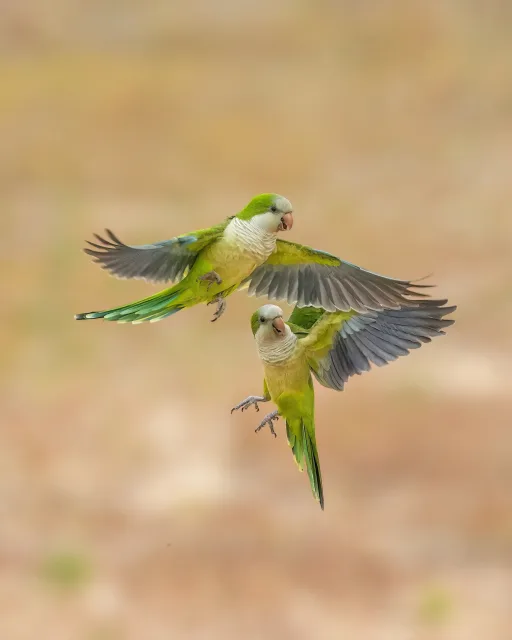
The Monk Parakeet, often erroneously called the Quaker Parrot, is perhaps the most widespread and ecologically concerning of the feral parrots. Originating from South America, these bright green birds gained a foothold in the U.S. after shipping crates were accidentally opened or deliberately released in the 1960s.
Range and Habitat: Feral colonies are now established in at least 15 states, with major populations thriving in New York (especially Brooklyn and Queens), Chicago, Florida, and Texas. They are highly adapted to urban parks and utility lines.
The Nesting Problem: Monk Parakeets are the only parrot species that builds large, communal stick nests rather than nesting in tree cavities. These massive structures, often weighing hundreds of pounds, are frequently built on utility poles, radio towers, and transformers. This leads to significant economic damage from power outages, fire hazards, and the necessity of costly removal by utility companies.
Agricultural Threat: In Texas and Florida, they are known to raid citrus groves and cornfields, posing a potential threat to specialized crops.
Rose-ringed Parakeet (Psittacula krameri)

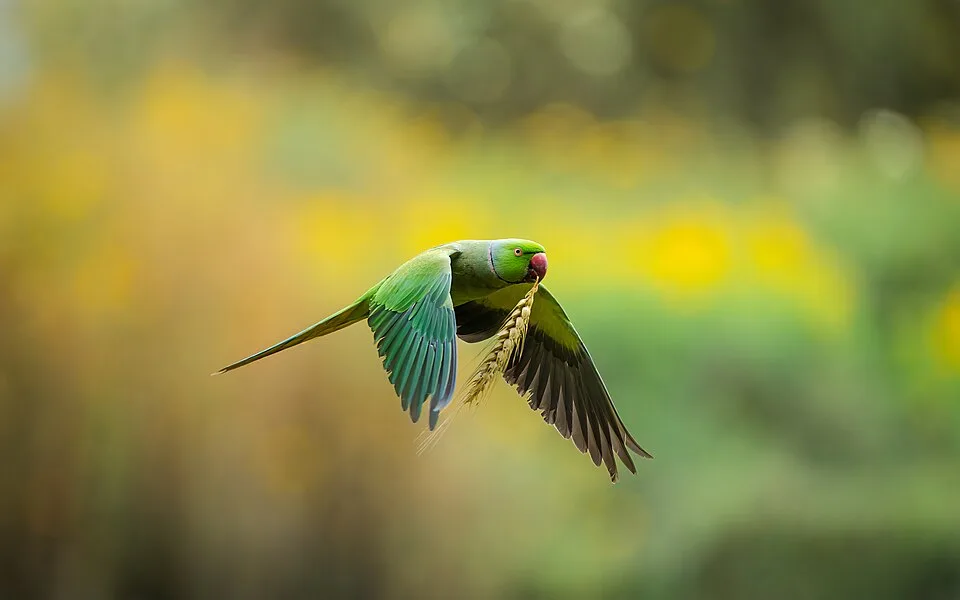
Though less numerous than the Monk Parakeet, colonies of the Rose-ringed Parakeet (native to Africa and India) have established themselves in several U.S. cities, including pockets in Florida and California. Known for their distinct pink neck ring and long, pointed tail, these birds pose a similar competitive threat to native cavity-nesting species, utilizing the same limited tree holes as woodpeckers and owls.
Quiet Invasions: The Doves and Pigeons
While the Rock Pigeon is the most notorious feral columbiform, two other introduced species have quietly spread throughout specific regions, sometimes becoming the dominant bird in their niche.
Eurasian Collared-Dove (Streptopelia decaocto)

The rise of the Eurasian Collared-Dove (ECD) is one of the most remarkable examples of avian expansion in recent history. The species was introduced to the Bahamas in the 1970s, jumped to Florida in the 1980s, and has since spread explosively, colonizing every state in the contiguous U.S. in just three decades.
Range and Spread: The ECD is now common throughout the entire country, including remote Alaska, favored by its adaptability to human environments and its non-migratory nature.
Competition: The ECD is significantly larger than the native Mourning Dove. Research suggests that the two species compete directly for backyard feeders and, potentially, for nesting sites and food resources, although the full extent of this ecological impact is still being studied. The ECD’s quick, year-round breeding cycle allows it to rapidly saturate a territory, creating intense local pressure.
Spotted Dove (Streptopelia chinensis)
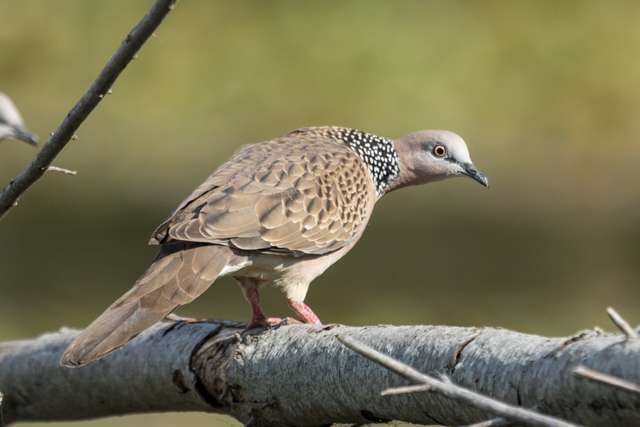
The Spotted Dove (also known as the Spotted Turtle-Dove), native to Asia, is a less aggressive but well-established feral resident, primarily confined to urban and suburban areas of Southern California (especially around Los Angeles) and Hawaii. It thrives in parks and residential neighborhoods where it often outcompetes the native Common Ground-Dove for foraging space.
Feral Waterfowl: The Unruly Geese
Waterfowl are often among the first to be domesticated or introduced, leading to highly visible and sometimes problematic feral populations that disrupt native wetland ecosystems.
Mute Swan (Cygnus olor)
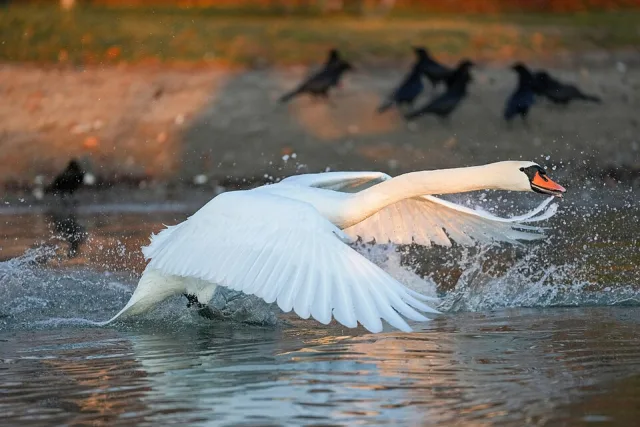
The majestic Mute Swan, native to Europe and Asia, was introduced to the U.S. for aesthetic purposes in parks and estates. These swans are not migratory and have established large, feral populations, especially along the mid-Atlantic coast and in parts of the Great Lakes region.
Ecological Damage: Mute Swans are highly aggressive and territorial, particularly during the breeding season. They frequently drive out native waterfowl, including the native Trumpeter Swan and various duck species, from prime nesting and feeding areas.
Habitat Consumption: They are voracious eaters of aquatic vegetation, consuming significantly more pondweed and submerged plants than native swans or geese. This can severely degrade shallow-water habitats, destroying the food base needed by many native ducks, fish, and invertebrates. States like Maryland have implemented controversial but necessary management plans to control feral swan populations.
Egyptian Goose (Alopochen aegyptiaca)

Though technically a shelduck and not a true goose, the Egyptian Goose has feral populations thriving in Florida, Southern California, and parts of Texas. Escaping from exotic waterfowl collections, these birds are now common fixtures in canals, golf courses, and urban ponds. Their rapid breeding and highly territorial nature create conflicts with native bird species, particularly around water sources.
The Management Challenge
The challenge of managing these unexpected feral species is compounded by several factors:
Public Appeal: Species like the Monk Parakeet and Mute Swan are often visually appealing to the public, leading to sentimental opposition to control or removal efforts.
Legal Status: Unlike native birds protected under the Migratory Bird Treaty Act, feral birds typically have little or no legal protection, simplifying control measures but complicating public relations.
Rapid Spread: The rapid, almost unnoticeable spread of species like the Eurasian Collared-Dove demonstrates how quickly an adaptable invader can saturate an environment before effective management plans are established.
The ongoing presence of these diverse, unexpected feral bird species highlights the complex interplay between human activity, the pet trade, and ecosystem health. They serve as a constant reminder that the health of native U.S. avian populations depends not only on protecting habitats but also on vigilance against the colorful, determined invaders that continue to arrive on our shores.
