
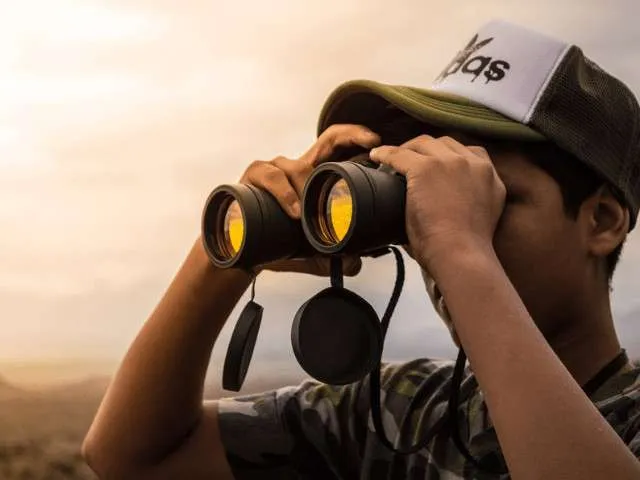
For the beginner birder, binoculars are the single most important piece of equipment. They are the gateway to the avian world, transforming a confusing blur of feathers in a distant tree into a discernible species with distinct field marks. Yet, many new birders struggle with their first pair of "bins," fumbling with focus, missing fleeting moments, and leaving the field frustrated.
Using binoculars effectively isn't just about owning a quality pair; it's about mastering a few fundamental techniques that professional birders use instinctively. Stop guessing and start seeing. Here are five essential binocular tips every beginner needs to know to accelerate their birding experience in the U.S.
Tip 1: Nail the "Power Trio" (Magnification, Objective, and Field of View)
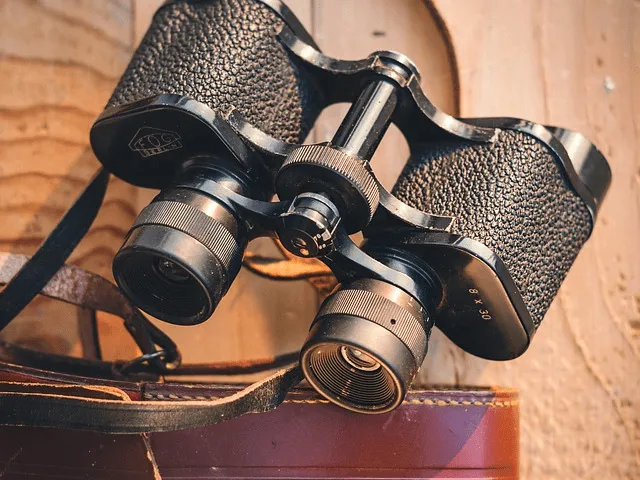
When you look at a pair of binoculars, you'll see a number like 8x42. Understanding this designation is crucial, as it dictates what you see and how easily you can use the optics.
The Numbers Explained
8x (Magnification): This means the object you are looking at appears eight times (8x) closer than it does with the naked eye. For most birders, 8x or 10x is the ideal power. A higher magnification (like 12x) makes it harder to hold the image steady, leading to a shaky view. Stick with 8x for comfort and a wide view.
42 (Objective Lens Diameter): This is the diameter (in millimeters) of the large lens at the end of the binoculars. The larger this number, the more light the binoculars gather, resulting in a brighter, clearer image, especially in low-light conditions like dawn or dusk. A 42mm objective is the most popular choice, offering a great balance between brightness and portability.
Field of View (FoV): This number isn't in the standard designation but is often listed in the specs. It tells you how wide the image is, usually measured in feet at 1,000 yards. A wider FoV is critical for finding fast-moving birds. For a beginner, a generous FoV (e.g., 400 feet at 1,000 yards) makes it far easier to locate a subject.
Tip 2: Master the "Focal Flashlight" Technique
The most common mistake beginners make is trying to search for the bird through the binoculars. By the time they bring the bins up to their eyes, the bird is gone. The trick is to use your binoculars like a "focal flashlight"—aim first with your eyes, then bring the bins up to illuminate the target.
The Four-Step Method
Locate with Naked Eye: Spot the bird using your natural peripheral vision. Note a specific landmark right next to the bird (e.g., the bright red cluster of berries, the V-shape in the main branch, or the junction of two twigs).
Lock onto the Landmark: Keep your eye fixed on that specific landmark. Do not look away.
Lift the Bins: Without moving your head or eyes, smoothly lift the binoculars directly to your eyes. Because your eyes are already aiming at the landmark, the bird should instantly appear in your field of view.
Fine-Tune Focus: Once the bird is in view, quickly adjust the central focus wheel to sharpen the image.
This technique is essential for capturing warblers flitting through leaves or a raptor briefly perched on a distant pole. It turns searching into precise, instant viewing.
Tip 3: Calibrate Your Diopter

If you've found that your binoculars never seem to focus perfectly for both eyes, you need to adjust the diopter. The diopter compensates for the difference in strength between your left and right eyes, ensuring the image is clear for both. This only needs to be set once for your eyes.
Setting the Diopter
Cover the Right Lens: Close your right eye or cover the right objective lens (the large front lens).
Focus with Left Eye: Use the central focus wheel to bring a stationary object (like a distant street sign or a brick wall) into sharp focus using only your left eye.
Uncover and Adjust Diopter: Now, open your right eye, close your left, and use the diopter ring (usually a small, knurled wheel located near the right eyepiece) to bring the image into sharp focus for your right eye. Do not use the central focus wheel.
Check: When you look through the bins with both eyes open, the image should be perfectly crisp. Now, you will only ever need to use the central focus wheel.
Tip 4: Adjust the Interpupillary Distance (IPD)
The interpupillary distance (IPD) is the space between the centers of your eyes. For comfortable viewing without eye strain, the distance between the binoculars' eyepieces must match your IPD.
To adjust, simply flex the hinge (bend the binoculars) until you see a single, perfectly round field of view through both eyes. If you see two overlapping circles, your IPD is wrong, and you'll experience eye fatigue quickly. This is often the first step to checking when picking up a new pair of binoculars.
Tip 5: Harness the Power of the Stay-Put Strap
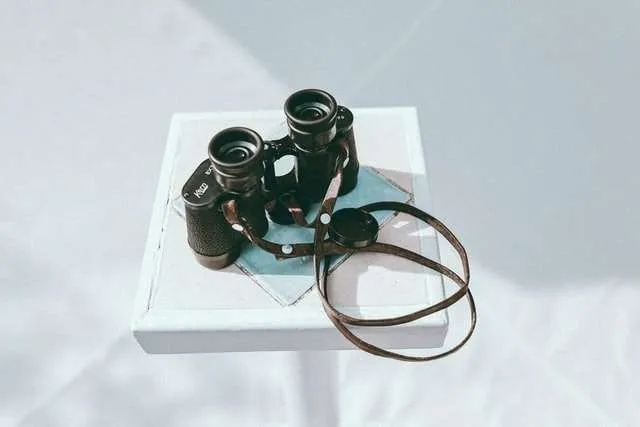
The binocular strap is not just for carrying; it's a vital tool for stability and quick access. The common straps that hang straight down are prone to swinging and make finding the bins quickly difficult.
The Optimal Strap Setup
Binocular Harness: The best option is a binocular harness, which distributes the weight across your shoulders and back, keeping the binoculars tight against your chest. This reduces neck strain and, crucially, holds the bins steady and prevents them from swinging while you walk.
Quick Access: When a bird pops up, the harness allows you to lift the binoculars straight up to your face in a single, fluid motion, preventing you from fumbling or having to look down at your chest. This maximizes the critical split-second you have to identify a fleeting bird.
Mastering these five tips—understanding the specifications, using the focal flashlight technique, properly setting the diopter and IPD, and using a stabilizing strap—will transform your birding from a frustrating guessing game into a clear, focused, and rewarding experience.
