

Hawaii, a chain of volcanic islands isolated in the middle of the Pacific Ocean, is a land of unparalleled biodiversity. This isolation, combined with a remarkable range of ecosystems, has led to the evolution of a unique flora and fauna found nowhere else on Earth. The most iconic example of this evolutionary history is the islands' endemic birdlife.
However, this unique heritage is in a state of crisis, with many species on the brink of extinction due to a perfect storm of threats. This article will delve into the world of some of Hawaii's most fascinating endemic birds, the challenges they face, and the critical conservation efforts underway to save them.
A Legacy of Adaptation: The Hawaiian Honeycreepers
The Hawaiian honeycreepers are the most famous example of adaptive radiation in the bird world. From a single ancestral finch species that arrived millions of years ago, more than 60 species of honeycreepers evolved, each with a specialized beak for a particular food source. This incredible diversification produced birds that are thin-billed nectar-feeders, finch-billed seed-eaters, and even woodpecker-like insectivores. Today, however, many honeycreeper species are extinct, and the surviving ones are among the most endangered birds on the planet.
ʻIʻiwi (Vestiaria coccinea)

One of the most vibrant and well-known honeycreepers is the ʻIʻiwi. With its brilliant scarlet plumage, black wings, and long, curved, salmon-colored bill, the ʻIʻiwi is a spectacular sight. It uses its specialized beak to sip nectar from native flowers like the ʻōhiʻa lehua. Historically, its feathers were highly prized by Native Hawaiians for creating intricate cloaks and helmets for aliʻi (royalty). While still found on several islands, its populations have been decimated, primarily by avian malaria, and it's now listed as a threatened species.
ʻApapane (Himatione sanguinea)
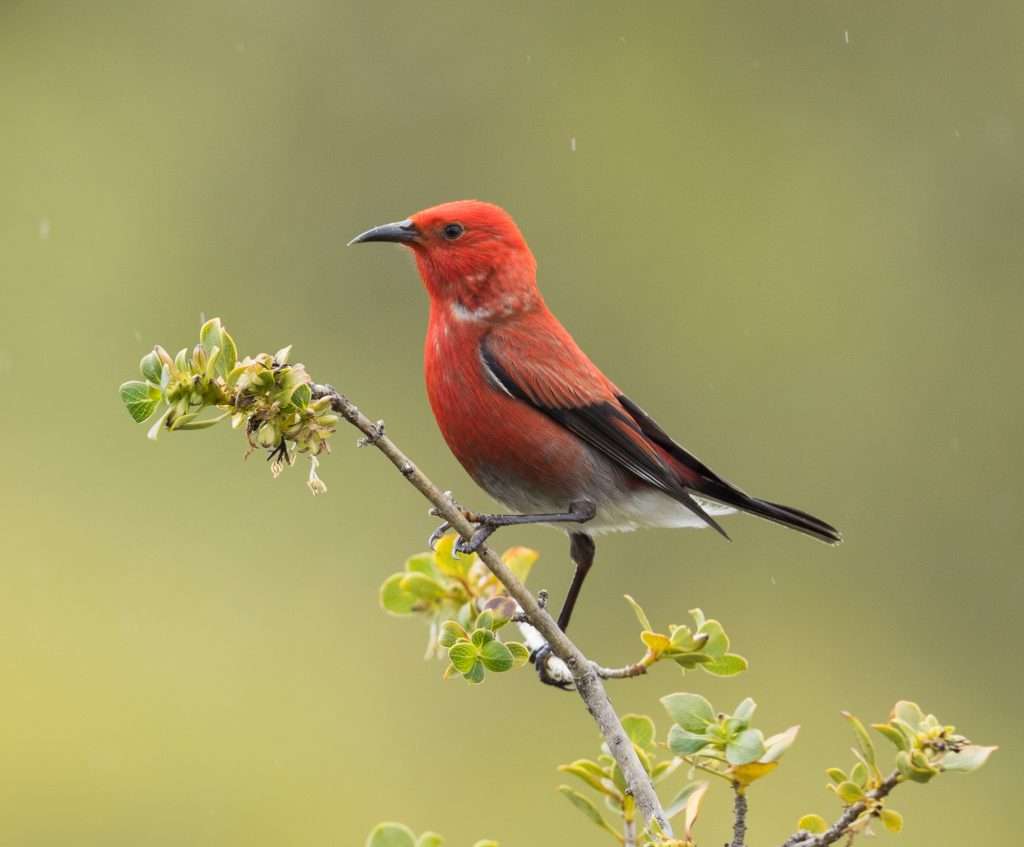
The ʻApapane is another common honeycreeper, and the most abundant of the surviving species. This small, crimson bird with black wings and a decurved bill is a vital pollinator of the ʻōhiʻa tree. Unlike the ʻiʻiwi, the ʻapapane has shown some resistance to avian malaria, allowing it to persist in some lower-elevation forests. Its diverse array of songs and calls are a defining sound of the Hawaiian rainforest.
ʻAkiapōlāʻau (Hemignathus wilsoni)

A testament to the bizarre evolutionary paths of honeycreepers is the ʻAkiapōlāʻau . Endemic to the island of Hawaiʻi, this endangered bird has a unique "Swiss Army knife" beak. The lower mandible is stout and straight, used for tapping on wood like a woodpecker to locate insects, while the upper mandible is long and curved, used for prying open bark and probing for its prey. Its specialized feeding behavior makes it a keystone species in its ecosystem.
Palila (Loxioides bailleui)

The Palila is a critically endangered honeycreeper found only on the slopes of Mauna Kea on Hawaiʻi Island. This finch-billed bird has a golden-yellow head, a gray back, and a white belly. It has a crucial symbiotic relationship with the māmane tree; the palila's beak is perfectly adapted to crack the tree's tough pods to eat the seeds, which are its primary food source. Conservation efforts for the palila often focus on protecting and restoring the māmane forests.
Maui ʻAlauahio

The Maui ʻAlauahio is a small, energetic honeycreeper endemic to the island of Maui. This olive-green and yellow bird forages actively for insects on the trunks and branches of trees. Also known as the Maui creeper, it is another species heavily impacted by avian diseases and habitat loss.
Beyond the Honeycreepers: Other Unique Endemics
While honeycreepers are the most numerous group, other endemic Hawaiian birds also hold important ecological and cultural significance.
Nēnē (Branta sandvicensis)
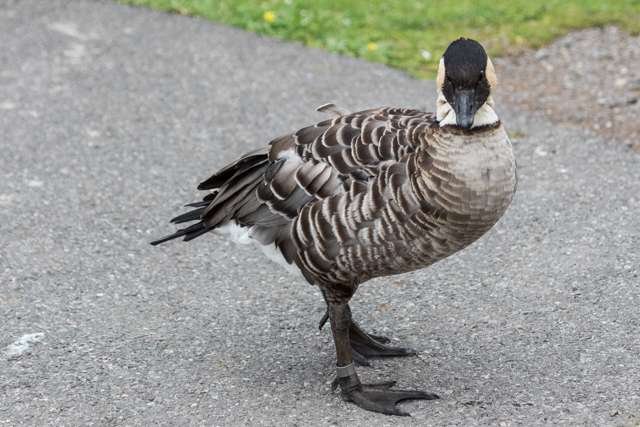
The Nēnē, or Hawaiian goose, is the official state bird of Hawaiʻi. It's believed to have evolved from the Canada goose, but over millions of years, its feet adapted to walking on rough volcanic terrain, with reduced webbing and strong, padded toes. The nēnē was pushed to the brink of extinction by the mid-20th century, with only about 30 birds left in the wild. Thanks to intensive captive breeding programs and reintroduction efforts, its population has grown, though it remains a federally endangered species.
ʻŌmaʻo (Myadestes obscurus)

The ʻŌmaʻo is a native thrush endemic to Hawaiʻi Island. Also known as the Hawaiian thrush, this robin-like bird is a key seed disperser in the montane rainforests, where it feeds on native fruits and insects. Its melodious song is a familiar sound in its high-elevation habitat.
ʻElepaio (Chasiempis sandwichensis)

The ʻElepaio is a charismatic and active monarch flycatcher with three subspecies found on Hawaiʻi Island, Oʻahu, and Kauaʻi. They have long held cultural significance, with Native Hawaiians believing the 'Elepaio to be the 'aumakua, or guiding spirit, of canoe makers. The species is known for its curious nature and its distinctive vocalization, which sounds like its name. While the Oʻahu and Kauaʻi subspecies are endangered, the Hawaiʻi Island ʻElepaio is more stable, inhabiting a wide range of habitats.
A Precarious Future: Threats and Conservation
The conservation crisis for Hawaiʻi's endemic birds is a complex and urgent issue. The main threats they face are a combination of factors:
- Avian Malaria and Mosquitoes: This is arguably the most devastating threat. Native birds evolved without immunity to diseases like avian malaria and pox, which are carried by introduced mosquitoes. As climate change warms high-elevation forests—the last refuge for many species—mosquitoes are moving further upslope, spreading the disease to the remaining bird populations.
- Introduced Predators: Mammals like cats, rats, and mongooses, which were brought to the islands by humans, prey on eggs, nestlings, and adult birds that evolved without ground predators.
- Habitat Loss and Degradation: The conversion of native forests for agriculture and development, as well as the impact of invasive plants and animals like pigs and goats, has severely reduced the amount of suitable habitat for native birds.
- Invasive Plants: Non-native plants can outcompete native flora, disrupting the delicate food webs that many endemic birds rely on.
Despite these immense challenges, a wide range of conservation efforts are underway. These include:
- Predator Control: Fencing off key habitat areas and removing invasive predators like rats and mongooses.
- Captive Breeding Programs: Organizations like the San Diego Zoo Wildlife Alliance are working with government agencies to maintain captive populations of critically endangered species like the ʻalalā (Hawaiian crow), which is now extinct in the wild.
- Mosquito Control: Innovative research and strategies are being developed to reduce mosquito populations on a landscape level, giving native birds a fighting chance against avian diseases.
- Habitat Restoration: Projects focus on replanting native trees and removing invasive plants to restore the native forest ecosystems that birds need to survive.
The story of Hawaiʻi's endemic birds is a profound lesson in the fragility of island ecosystems and the devastating impact of human activity. While many species have been lost forever, the remaining ones represent a unique and irreplaceable part of our planet's natural history. The fight to save them is a race against time, but with continued dedication, science, and community support, there's hope that these winged jewels of the Pacific will continue to grace the Hawaiian skies for generations to come.
