
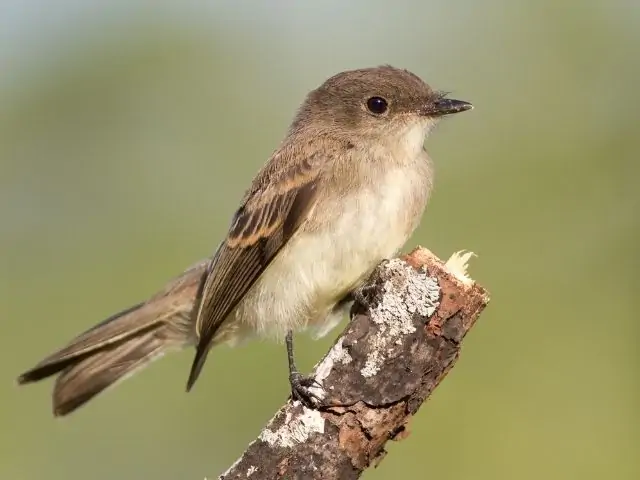
Among the first birds to return in spring, the Eastern Phoebe (Sayornis phoebe) is a small flycatcher with a gentle demeanor and a distinctive song that gives it its name: "fee-bee... fee-bee." While not as flashy as some other songbirds, the Eastern Phoebe is a reliable, resilient, and often overlooked bird that charms naturalists and backyard birdwatchers alike with its calm presence, rhythmic tail-wagging, and insect-catching prowess.
This article takes an in-depth look at the life, habits, and ecological importance of this subtle but significant species.
Identification
The Eastern Phoebe is a small to medium-sized passerine bird in the tyrant flycatcher family (Tyrannidae). Measuring about 5.5 to 6.7 inches in length with a wingspan of 10 to 11 inches, it has a modest and unassuming appearance.
Key field marks include:
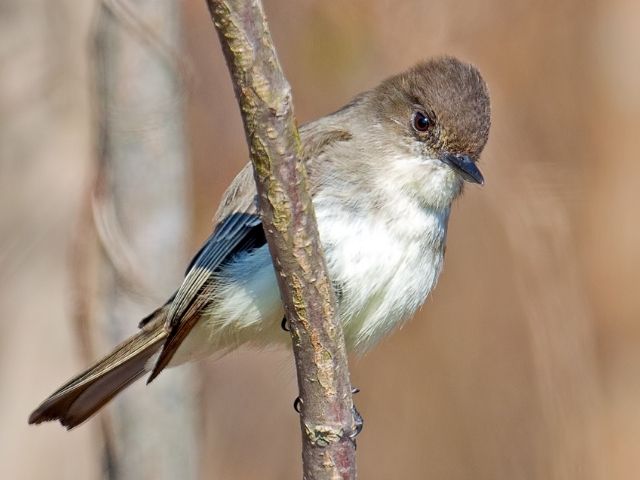
Grayish-brown upperparts
Off-white underparts that can show a yellowish or buffy tint
Darker head that sometimes looks slightly crested
No eye ring or wing bars, setting it apart from similar flycatchers
Constant tail bobbing, a signature behavior when perched
While not brightly colored, the Eastern Phoebe’s subtle plumage blends well with its woodland and rural surroundings.

Vocalizations
The Eastern Phoebe is best known for its simple, repetitive song, often transliterated as “fee-bee” or “fee-b-be-bee.” Males sing throughout the breeding season, starting early in the morning and continuing into the day. The call is sharp and slightly buzzy, not as melodic as a thrush or warbler, but endearing in its own way.
Unlike many songbirds, the Eastern Phoebe’s song is relatively easy to identify, even for novice birders. Hearing its song in early spring is a comforting sign that the seasons are changing.
Range and Migration
The Eastern Phoebe is found throughout eastern and central North America. Its breeding range spans from southeastern Canada across the northeastern, midwestern, and southeastern United States.
During winter, it migrates to the southeastern U.S., Mexico, and Central America. However, in recent decades, more Eastern Phoebes have been overwintering in the southern U.S., likely due to milder winters and increased access to food sources.
Phoebes are among the first migratory songbirds to return in spring—sometimes as early as late February in southern states and March in the northern parts of their range.
Habitat
Eastern Phoebes prefer open woodlands, forest edges, farms, and suburban areas near water sources. Their habitat is typically a mix of trees for perching and open space for foraging.

Unlike some flycatchers that demand pristine environments, Eastern Phoebes are highly adaptable and often nest close to human structures. This has made them a common sight in barns, under bridges, and on building ledges.
They seem to prefer:
Quiet, semi-open areas near water
Structures that provide ledges or niches for nesting
Access to insects, especially flying insects like flies, beetles, and moths
Behavior and Diet
Eastern Phoebes are flycatchers, and their foraging behavior is a classic example of this group. They sit on low to medium perches—like fences, branches, or wires—and sally out to snatch insects in mid-air, returning to the same perch again and again.
Their diet consists mainly of:
Flies
Beetles
Wasps
Grasshoppers
Spiders
Occasional berries and small fruits (especially in fall and winter)
Their patient hunting style, along with their tail-wagging and upright posture, makes them easy to observe once spotted.

Nesting and Reproduction
Eastern Phoebes are known for their close relationship with humans, especially when it comes to nesting. Before human-made structures were common, they nested on cliff ledges and overhangs. Today, they’re just as likely to nest:
Under eaves of houses
In garages or sheds
On beams under bridges
Inside culverts or drainpipes
They build a cup-shaped nest out of mud, moss, grass, and lined with animal hair or fine plant material. The female does most of the construction, often returning to the same nesting site year after year.
Breeding facts:
Clutch size: 3–6 eggs (white, sometimes speckled)
Incubation: ~16 days (by the female)
Fledging: ~15–20 days after hatching
Two broods per season are common
Their ability to reuse old nests or nesting sites contributes to their reproductive success.
Adaptability and Coexistence with Humans
One of the Eastern Phoebe’s most notable traits is its tolerance of human activity. Many bird species avoid nesting near people, but phoebes embrace it. In fact, human structures may have expanded their range by providing more nesting options.
Birdwatchers can support phoebes by:
Providing ledges or nesting shelves
Avoiding disturbing active nests
Planting native shrubs and reducing pesticide use
Offering clean water sources
Their adaptable nature, combined with a relatively quiet temperament, makes them excellent neighbors.
Threats and Conservation Status
The Eastern Phoebe is currently listed as a species of Least Concern by the IUCN. Populations have remained stable or increasing across much of its range, thanks to its flexibility in habitat use and nesting.
Potential threats include:
Loss of insect prey due to pesticide use
Predation of nests by cats, raccoons, and snakes
Habitat destruction or fragmentation
Climate change impacts on migration timing and food availability
Fortunately, their ability to use human structures and their generalist feeding habits give them an advantage over more specialized species.
Role in Ecosystems
Eastern Phoebes play a valuable ecological role:
Insect control: They help reduce populations of pest insects.
Food source: They are prey for raptors, snakes, and mammals.
Indicator species: Their health and behavior can reflect broader environmental conditions, especially regarding insect availability.
Their presence often indicates a healthy, insect-rich environment.
Cultural Significance
Though not as well-known as the robin or bluebird, the Eastern Phoebe has long been appreciated by naturalists and bird enthusiasts. One of the earliest recorded banded birds in North America was an Eastern Phoebe—John James Audubon famously tied a silver thread around the leg of a young phoebe in 1804 to study its return the following year.
Their early return in spring and gentle song have made them a symbol of seasonal change and nature’s subtle rhythms.
Wrapping Up
The Eastern Phoebe may not dazzle with vibrant plumage or elaborate courtship displays, but its value lies in its simplicity, resilience, and quiet charm. As a dependable herald of spring and a welcome garden guest, it offers joy to birdwatchers and plays a vital role in controlling insects and supporting healthy ecosystems.
In an age of rapid environmental change, birds like the Eastern Phoebe—adaptable, persistent, and connected to human landscapes—remind us of the delicate balance between nature and civilization. By appreciating and protecting even the most modest songbirds, we safeguard the rich tapestry of life that surrounds us every day.
The Phoenix of the Pines: The Enduring Saga of the Kirtland's Warbler
