
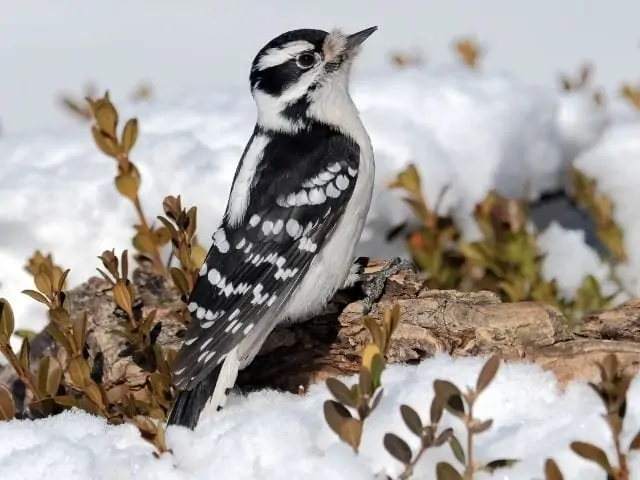
The Downy Woodpecker (Dryobates pubescens) is the smallest and arguably one of the most familiar woodpeckers in North America. Despite its petite size, this little bird is a powerhouse of activity, playing a vital role in forest ecosystems and endearing itself to birdwatchers across the continent.
Appearance and Identification
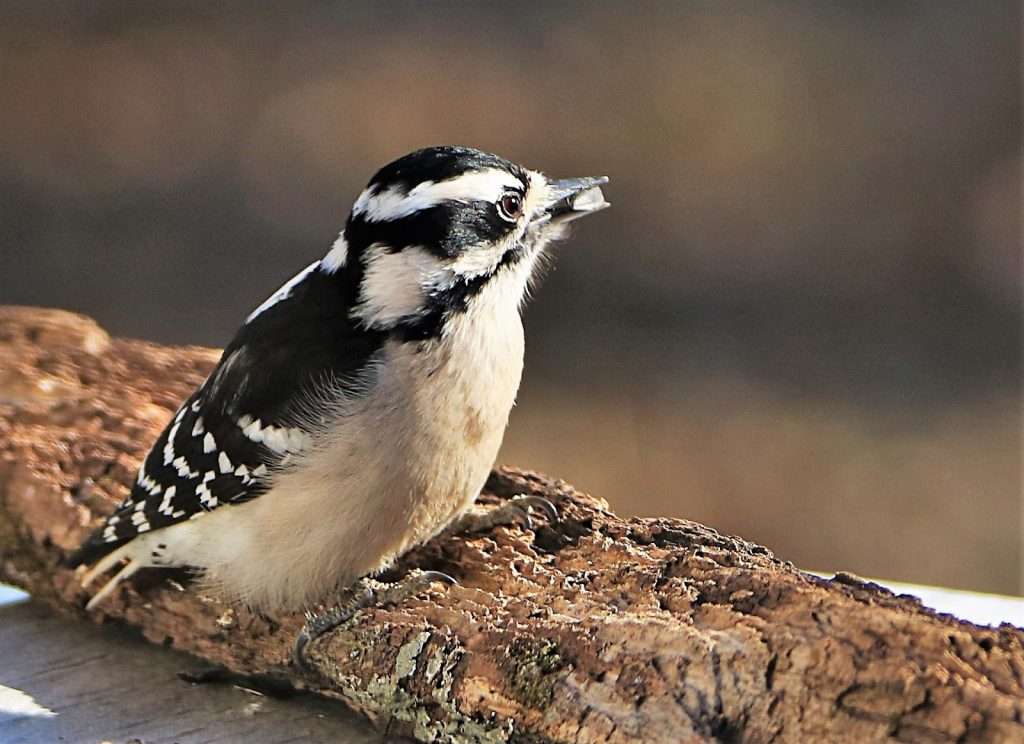
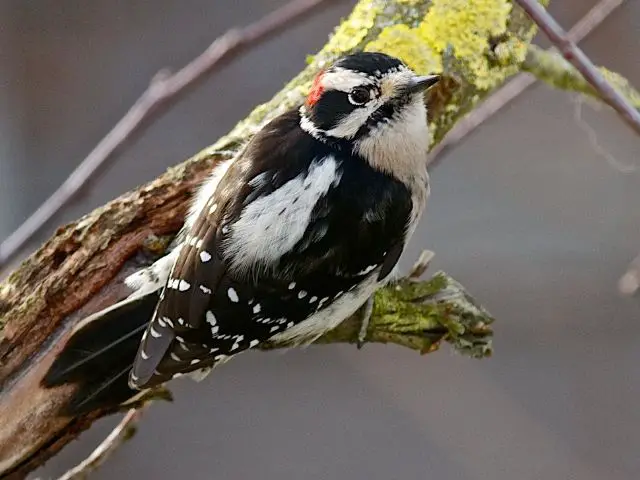
The Downy Woodpecker is easily recognized by its classic black and white plumage.
Size: Measuring only about 6 inches (15 cm) in length with a wingspan of around 10 inches (25 cm), it's no bigger than a House Sparrow.
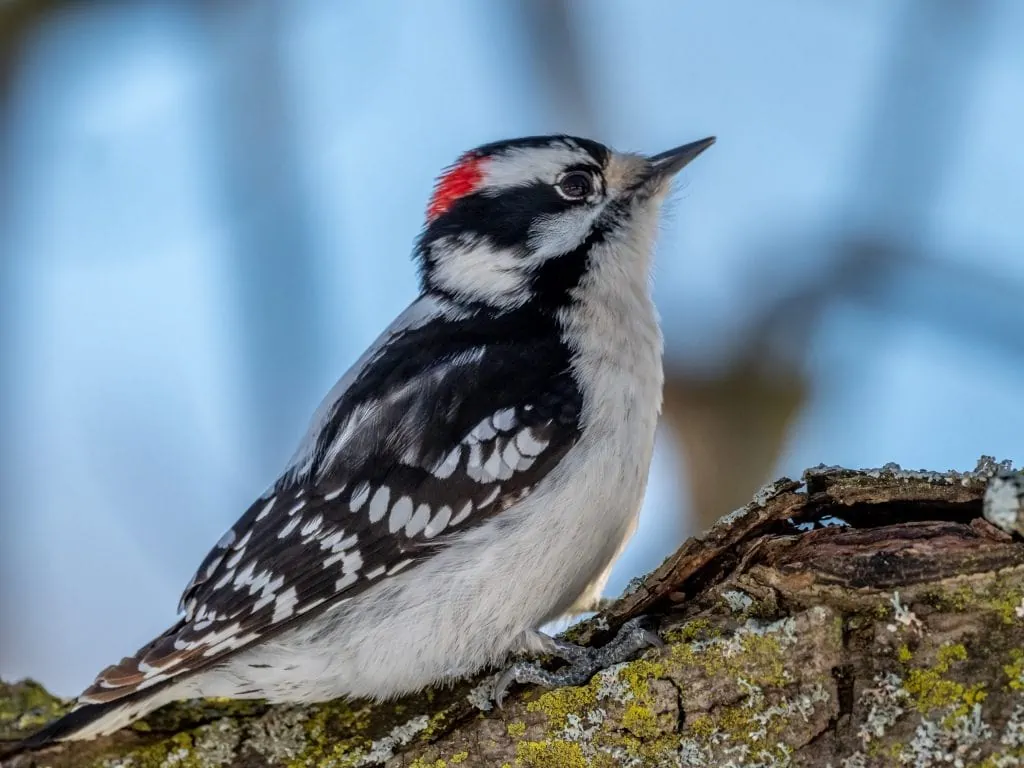
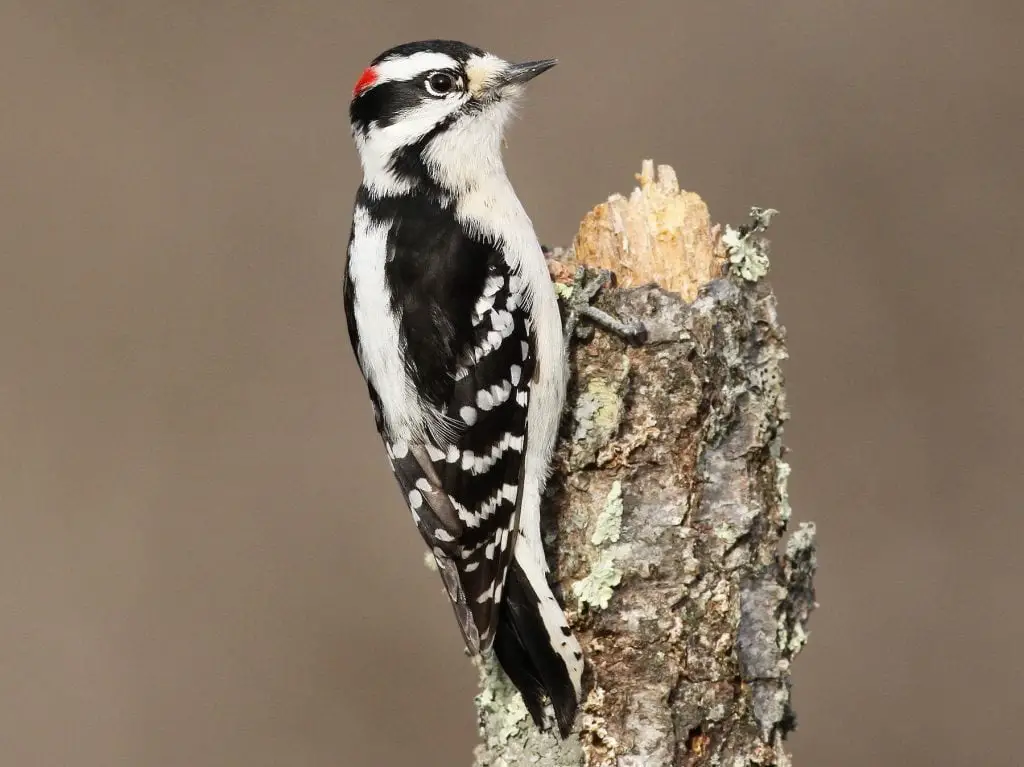
Coloration: It has a ladder of black and white bars across its back and wings, a black tail, and white underparts. The face is striped with black and white.
Sexual Dimorphism: The sexes are almost identical, but the male sports a small red patch on the back of its head (the nape), which the female lacks.
Bill: Its bill is short, straight, and chisel-like—perfect for drilling—but appears noticeably smaller and less massive compared to its larger relative, the Hairy Woodpecker.
Habitat and Range
This adaptable species is a common sight across most of the United States and Canada, extending down into Mexico. It is not restricted to deep forests; its comfort level with human presence makes it a frequent visitor to:
Deciduous and mixed forests
Wooded parks
Suburban yards
Orchards
Unlike many migratory species, the Downy Woodpecker is generally a year-round resident throughout its range, toughing out cold winters by relying on stored fat reserves and available food sources.
Diet and Foraging Habits
The Downy Woodpecker is a crucial player in natural pest control, primarily feeding on insects and their larvae.
Main Diet: It consumes a wide variety of insects, including beetle larvae, ants, caterpillars, and even spiders and plant lice (aphids), often extracting them from beneath the bark of trees.
Non-Insect Food: During winter, they rely more on seeds, berries, and nuts. They are also regular visitors to suet feeders in backyards, which provide a high-energy fat source vital for survival in cold weather.
Foraging Style: Their small size and bill allow them to forage on smaller, thinner branches and even tall weeds, where larger woodpeckers can't go. They move quickly, hitching their way up tree trunks and branches, often stopping to tap lightly to locate prey.
Communication and Drumming
Like all woodpeckers, the Downy uses a rapid-fire drumming against resonant wood (or even metal/plastic structures) not just to find food, but primarily for communication.
Purpose: Drumming serves as a territorial display and a way for males and females to signal to each other, especially during the spring breeding season. The sound is a rapid burst that is higher in pitch and less sustained than that of the Hairy Woodpecker.
Vocalizations: Their calls include a high-pitched, sharp pik note and a short, descending whinny call.
Nesting and Life Cycle
Downy Woodpeckers are cavity nesters.
Nest: Both the male and female take turns excavating a nest hole in a dead tree, a dead part of a living tree, or a utility pole. The hole is usually around 3–4 inches wide and lined only with wood chips.
Eggs: The female lays 3–8 white eggs, which are incubated by both parents for about 12 days.
Young: The young fledge about three weeks after hatching and are attended to by the parents for several weeks before becoming independent.
With its hardy nature, acrobatic foraging, and charming presence, the Downy Woodpecker stands as a beloved symbol of woodland life and a fantastic introduction to the fascinating world of birds.
