

The story of the Red Knot (Calidris canutus rufa) and the Delaware Bay is one of the most compelling and dramatic conservation battles in the United States. It is a story of a global migrant, the ancient horseshoe crab, and the legislative efforts by Delaware and its neighbors to save an entire ecosystem from the brink of collapse. Central to this fight has been a continuous need for legislation and regulatory action to protect the knot's primary food source.
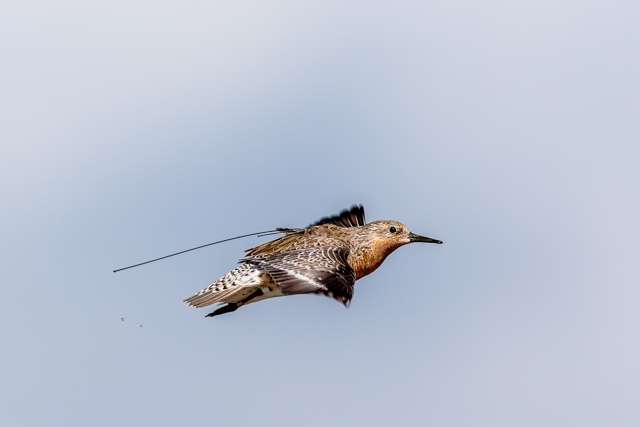
The knot is a phenomenal creature, a stocky shorebird that undertakes one of the longest annual migrations of any animal: a nearly 19,000-mile round trip from the Arctic breeding grounds to the southern tip of South America. It is the need to complete this marathon that makes the Delaware Bay, and the policy choices made there, a matter of life or death.
The Crisis: A Vanishing Food Source
Every May, as the Red Knot arrives at the Delaware Bay—its single most critical refueling stop on its northward journey—it encounters one of the world's most impressive spawning events: the mass arrival of Horseshoe Crabs (Limulus polyphemus). The crabs lay billions of small, green, energy-rich eggs along the sandy beaches. The Red Knot, having flown thousands of miles, is utterly reliant on this dense protein source to quickly double its body weight, a feat essential for successful breeding in the Arctic.
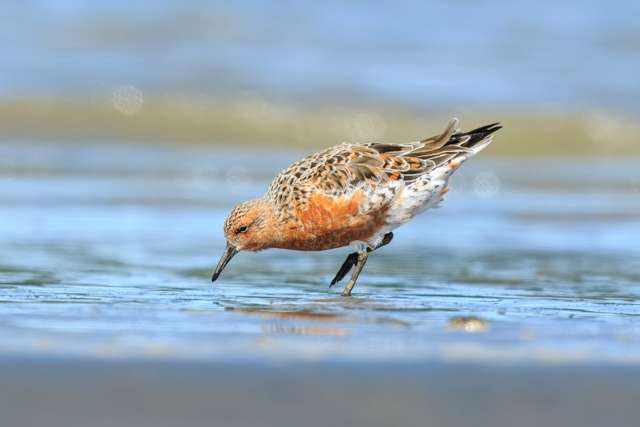
The crisis began in the 1990s when commercial fishermen realized the high value of horseshoe crabs for bait in the eel and whelk fisheries. An unregulated "gold rush" ensued, leading to a massive overharvest of the crabs. The consequence was catastrophic for the knot. Between the late 1990s and the early 2000s, the Red Knot population counted at the Delaware Bay plummeted from approximately 50,000 to as low as 13,000. Half of all adult knots died in a two-year period, as they arrived too late or too depleted to successfully breed and survive.
The Legislative and Regulatory Response
Recognizing the imminent threat of extinction to the rufa subspecies of the Red Knot (which is listed as Threatened under the Endangered Species Act), conservationists and state agencies were forced to act. The legislative and regulatory response has been multifaceted, complex, and constantly under review:
Horseshoe Crab Harvest Bans/Moratoria: The most direct regulatory action has focused on limiting the harvest of horseshoe crabs. While the Atlantic States Marine Fisheries Commission (ASMFC) manages the species regionally, individual states like Delaware and New Jersey have often used their own legislation to enforce stricter measures. New Jersey, for instance, has a longstanding moratorium on the harvest of horseshoe crabs (with exemptions for biomedical use). Delaware, while generally following the ASMFC, has been under constant pressure to maintain protections. Crucially, regulators have largely maintained a ban on the bait harvest of female horseshoe crabs in the Delaware Bay since 2013, as the females are the primary egg-layers.

Red Knot Adaptive Resource Management (ARM): Since 2012, the ASMFC has managed the horseshoe crab population using an ARM framework. This framework explicitly incorporates shorebird recovery objectives into crab harvest recommendations. The theory is to constrain the harvest so that the number of spawning crabs will not limit the number of knots stopping in the bay. This system relies on annual surveys of both the knot and crab populations to inform yearly harvest quotas, primarily of male crabs.
Symbolic and Supportive Legislation (2025 Bill): In a recent move highlighting the state's long-term commitment, the Delaware Legislature introduced and passed House Bill 189 in 2025, designating the Red Knot as the Official State Migratory Bird. While largely symbolic, this law acknowledges the bird's importance to the state's identity and conservation goals, providing additional political impetus for protective regulations.
Ongoing Challenges and Future Threats
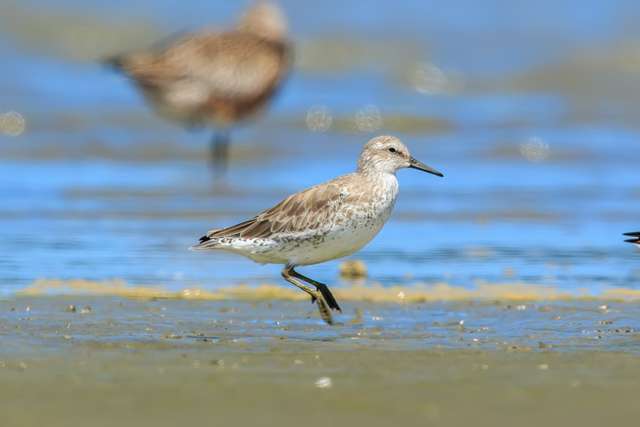
Despite these measures, the fight for the Red Knot is far from over. Population estimates, while fluctuating, suggest the knot population is currently stable but remains well below historic levels, generally hovering between 39,000 and 46,000 birds annually.
The ARM Model Controversy: Conservation groups continually voice concerns that the underlying computer model used in the ARM framework is flawed and periodically recommends substantial female crab harvests, forcing regulators to repeatedly reject risky proposals, often with short-term (one or two-year) reprieves.
Climate Change: Perhaps the most dire threat is climate change. Alterations to the Gulf Stream and ocean temperatures have, in recent years, interrupted horseshoe crab spawning, leading to a mismatch between the knots' arrival and the eggs' availability. Furthermore, rising sea levels and coastal erosion threaten to eliminate the very beaches where the crabs spawn and the knots feed.
The Biomedical Harvest: Horseshoe crabs are also harvested for their blood, which contains a unique clotting agent essential for testing medical equipment and vaccines (including the COVID-19 vaccine). While the crabs are typically released after bleeding, this practice still adds stress to the population and is a subject of intense debate, particularly as synthetic alternatives become available.
The legislative efforts in Delaware and the ASMFC's continued regulation of the harvest represent a fragile equilibrium. The ongoing success of the Red Knot depends entirely on maintaining stringent protections for the horseshoe crab, proving that this tiny, rusty-colored bird requires constant human intervention to continue its monumental journey.
Birds of Delaware: Common, Migratory, and Rare Birds of the First State
