

The word cuckoo conjures images of a whimsical clock or, to the initiated birder, the distinct, resonant call echoing from a dense thicket. In the United States, we are fortunate to host a handful of these intriguing birds, but it’s their life history, rather than their appearance, that defines their reputation. U.S. cuckoos—chiefly the Yellow-billed Cuckoo and the Black-billed Cuckoo—are renowned for their slender beauty, shy nature, and, most famously, a breeding strategy that strays dramatically from the avian norm.
Unlike their infamous European counterparts, the cuckoos of North America generally do not engage in obligate brood parasitism. However, they retain a subtle, fascinating, and sometimes shocking flexibility in their reproductive behavior, especially when food is abundant. They are masters of the hidden life, making them one of the most enigmatic summer residents in the American landscape.
The Cuckoo Crew: Species of the U.S.
Only a few cuckoo species regularly grace the continental U.S., but they are highly sought after by birders.
1. The Yellow-billed Cuckoo (Coccyzus americanus)

The Yellow-billed Cuckoo is the most widespread and recognized cuckoo in the U.S. Often called the "Rain Crow" due to its habit of calling persistently before a storm, it is a shy, fast-moving bird whose presence is usually detected by its unique call: a slow, rhythmic series of kwa-kwa-kwa-kowlp-kowlp-kowlp.
- Identification: A slender bird with grayish-brown upperparts and bright white underparts. The key feature is the long, black tail with brilliant, contrasting white spots on the undertail tips. The lower mandible of the bill is a diagnostic bright yellow.
- Distribution: Breeds widely across the eastern and central U.S. and parts of the West. It is a long-distance migrant, wintering entirely in South America.
2. The Black-billed Cuckoo (Coccyzus erythropthalmus)
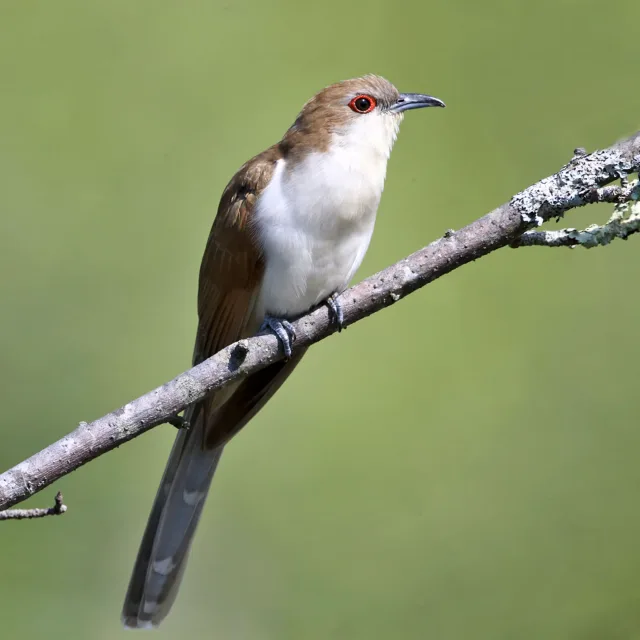
A close cousin to the Yellow-billed, the Black-billed Cuckoo is generally found further north and east, preferring dense eastern deciduous forests. It is arguably even more retiring than the Yellow-billed, making it a true challenge to observe.
- Identification: Shares the slender body and gray-brown plumage, but lacks the bold white tail spots (having only faint markings). The entire bill is black or very dark. A subtle but helpful field mark is a thin, red orbital ring around the eye.
- Distribution: Mostly breeds in the northeastern U.S. and southern Canada, migrating to South America for the winter.
3. The Roadrunners and Anis (The Exotic Cousins)
While the Yellow-billed and Black-billed cuckoos are the typical "tree cuckoos," the family Cuculidae also includes two charismatic U.S. residents:
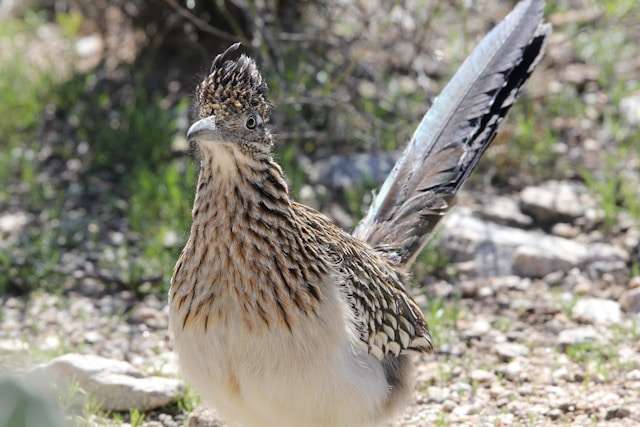
- Greater Roadrunner (Geococcyx californianus): Found in the arid Southwest, the roadrunner is a large, terrestrial bird famous for its speed, long tail, and crested head. It builds its own nest and practices monogamy.
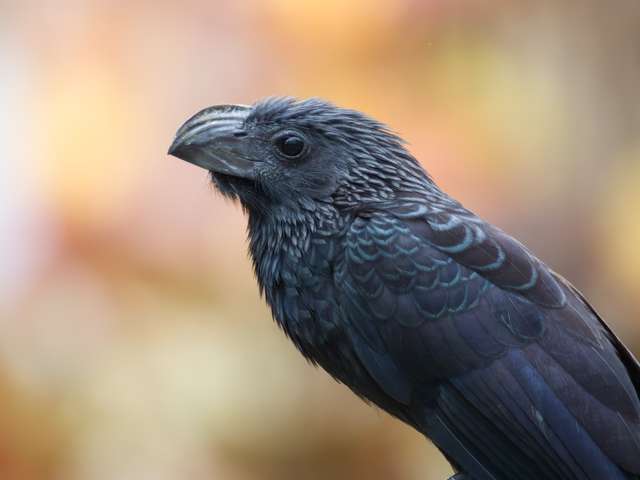
- Groove-billed Ani (Crotophaga sulcirostris): An uncommon resident of extreme South Texas, this glossy black cuckoo is known for its strange, grooved bill and highly social, cooperative breeding where multiple females lay eggs in a single nest.
The Crazy Way of Reproduction: Facultative Brood Parasitism
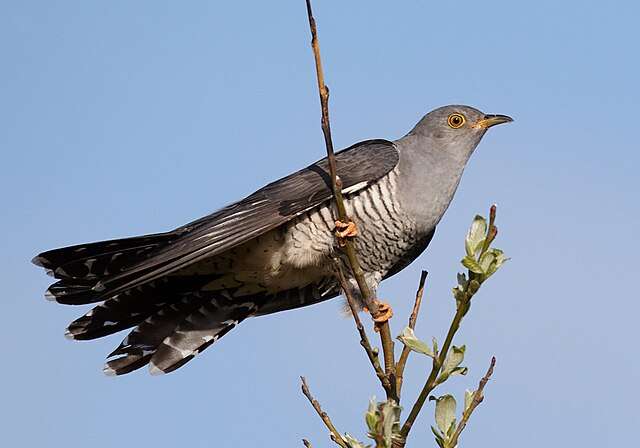
When most people think of cuckoos and reproduction, they think of the European Cuckoo (Cuculus canorus), a notorious obligate brood parasite that never builds a nest but always lays its eggs in the nests of other species.
The American cuckoos, however, employ a subtler, more flexible strategy known as facultative brood parasitism. They can and usually do build their own flimsy nests and raise their own young. But when the opportunity arises, or environmental conditions dictate, they become stealthy egg-layers.
The Ecological Trigger: Caterpillars and Chaos
The key to understanding American cuckoo's reproductive flexibility lies in their diet. Cuckoos are caterpillar specialists, particularly fond of large, hairy species like the gypsy moth and the tent caterpillar, which most other birds avoid.
When a localized outbreak of these caterpillars occurs (a common event in the U.S. forests), cuckoos enter a reproductive frenzy:
- Rapid Nesting: Cuckoos have one of the fastest nesting cycles of any bird. From egg-laying to the chick leaving the nest can take as little as 17 days. This hyper-accelerated timeline allows them to capitalize on the brief, abundant food source.
- Increased Clutch Size: Instead of laying the usual 2–3 eggs, a female might lay 5 or 6 eggs to exploit the temporary food abundance.
- The Parasitic Leap: If a female has already laid a full clutch, or if the food supply is so enormous that it encourages more reproduction than she can manage, she may resort to parasitism. She will sneak into the nest of another bird—often a robin, jay, vireo, or even another Yellow-billed Cuckoo—and lay one or two eggs.
The Black-billed Cuckoo's Boldest Move
While both species practice this facultative strategy, the Black-billed Cuckoo takes the internal parasitism a step further. When food is extremely abundant, a single Black-billed Cuckoo female may lay eggs in the nests of multiple pairs of her own species in the same immediate area. This results in:
- Super-Clutches: Cuckoo nests sometimes contain seven or eight eggs, far more than a single pair can incubate or feed, confirming that multiple females have contributed eggs to the same nest.
- Shared Responsibility: The "host" parents essentially adopt the extra young, driven by the instinctive pressure to feed all chicks in the nest, especially when the massive caterpillar food source makes feeding the extra mouths possible.
The Benefit of the Brood Parasitism
This flexible strategy offers two significant benefits:
- Risk Mitigation: If a cuckoo's own nest fails early in the season, she can still contribute to the gene pool by laying a late egg in a host's nest.
- Resource Maximization: During peak food booms (caterpillar outbreaks), she maximizes her reproductive output without the time and energy cost of building and defending a new nest for every clutch. The eggs are essentially outsourced to others, ensuring her genes are passed on while the food supply lasts.
The Cuckoo Nest and the Chicks
The cuckoo’s reproductive process is visually strange, even when they build their own nests.
Cuckoo nests are notoriously flimsy, often described as a shallow, sparse platform of twigs, barely sturdy enough to hold the eggs. The eggs themselves are blue-green and unmarked.
The chicks are born with an almost frightening speed. Within 6–9 days of hatching, they are ready to leave the nest. They are unique in that they hatch covered in a strange, needle-like coating that quickly bursts to reveal a full suit of pin feathers.
If disturbed, a young cuckoo chick has a remarkable defense mechanism: it will explosively pop out of the nest and cling to nearby branches, often resembling a bizarre, furry arachnid more than a bird. This strategy allows them to quickly vacate a compromised nest site long before other bird species are capable of flight.
The American cuckoos, whether quietly building their own rickety nests or subtly dropping an egg into a neighbor's clutch, embody the wild, flexible side of avian evolution. Their reproductive choices are not driven by malice but by a deeply ingrained instinct to maximize their success in the unpredictable, feast-or-famine ecosystem of the U.S. forest.
