

While the general trend for North American birds has been a sobering decline in population over the past 50 years, certain groups—most notably Raptors (Birds of Prey) and Waterfowl (Ducks, Geese, and Swans)—represent powerful conservation success stories. Their recovery is not a product of natural resurgence but a direct result of focused human intervention, robust legal protection, and dedicated, long-term funding.
The Triumphant Return of Raptors

The primary driver of the raptor crisis in the mid-20th century was the widespread use of the pesticide DDT (Dichlorodiphenyltrichloroethane). Raptors like eagles, falcons, and ospreys were high on the food chain, causing DDT concentrations to build up in their systems (a process called bioaccumulation). This didn't kill the adults outright, but it caused the eggshells of their clutches to become dangerously thin, leading to catastrophic reproductive failure.
The turnaround began with two critical actions:
1. The Ban on DDT
The single most important factor was the 1972 ban on DDT in the U.S. Once the pesticide was removed from the environment, raptors were able to produce healthy, thick-shelled eggs again, and reproductive success soared.
2. Legal Protections and Direct Intervention
The recovery was accelerated by robust legal measures and intensive breeding programs:
- Bald Eagle (Haliaeetus leucocephalus): The national symbol was on the brink of extinction, with fewer than 500 nesting pairs remaining in the contiguous U.S. in the 1960s. Listed under the Endangered Species Act (ESA), the recovery involved nest protection, habitat restoration, and aggressive hacking (releasing captive-bred young into the wild). Today, the population is estimated at over 300,000 birds, leading to its successful delisting from the ESA in 2007.

Bald Eagle - Peregrine Falcon (Falco peregrinus): This globally distributed falcon vanished entirely from the eastern U.S. The recovery involved one of the most successful captive breeding and release programs ever conducted. Thousands of captive-raised young were released, often in urban areas where tall buildings mimicked their natural cliff habitats. The population recovered so well that the species was delisted from the ESA in 1999.
- Osprey (Pandion haliaetus): Similar to the eagle, the Osprey suffered eggshell thinning. Their recovery was boosted by citizen science and management programs that involved installing artificial nesting platforms—often large wooden poles topped with platforms—in marshes and along waterways, giving the birds a safe, predator-free place to nest.
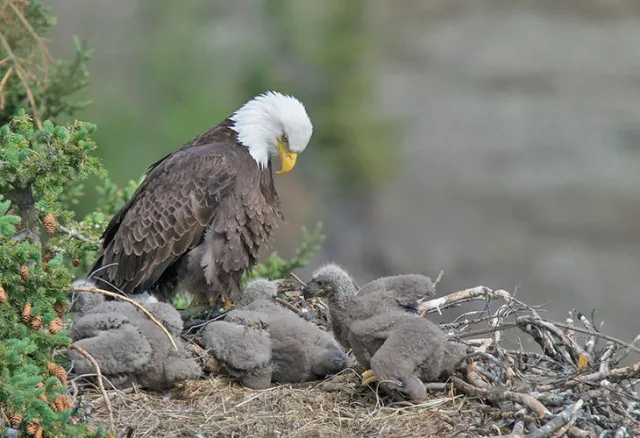
Raptor numbers remain naturally small compared to songbirds due to their position at the top of the food chain, but their populations are now healthy and stable across most of their historical ranges.
The Resurgence of Waterfowl
Unlike raptors, which were saved primarily by regulation, waterfowl populations were primarily restored through a unique, self-funded conservation funding model and extensive habitat management.
1. The Migratory Bird Treaty Act (MBTA)
The MBTA of 1918 established federal protection for migratory birds and regulated hunting, effectively stopping the uncontrolled market hunting that decimated flocks of ducks, geese, and wading birds in the late 19th and early 20th centuries. This set the legal stage for organized conservation.

2. The Duck Stamp and Dedicated Funding
The economic engine for waterfowl recovery is the Migratory Bird Hunting and Conservation Stamp Act (1934), commonly known as the Duck Stamp Act.
- The Model: Every hunter aged 16 or older who pursues migratory waterfowl must purchase a federal Duck Stamp. 98% of the proceeds from these sales go directly toward the National Wildlife Refuge System (NWRS)—specifically, to acquire and preserve wetland habitat.
- The Impact: Since 1934, the Duck Stamp program has protected or restored over 6 million acres of vital wetland habitat across the U.S. . These acquisitions become protected breeding, migration, and wintering grounds for countless species, with the Mallard and Canada Goose benefiting most dramatically.
3. Habitat Management and Organizations
Management efforts led by government agencies and non-profit organizations have been central to the success:
- Wetland Restoration: Organizations like Ducks Unlimited and the U.S. Fish and Wildlife Service (USFWS) actively manage habitat, including constructing dikes, controlling water levels, and planting specific vegetation to optimize food and cover for breeding and migrating flocks.
- Canada Goose Management: The Canada Goose (Branta canadensis), once threatened, is now so successful that it is considered a pest in many urban areas. Thanks to managed hunting seasons and habitat protection, its continental population has soared to over 5 million birds.
- Sandhill Crane: This large, conspicuous wading bird suffered massive losses due to hunting and wetland drainage. Through strict regulation and wetland preservation, its populations have recovered dramatically, allowing the famous annual spectacle of its migration across the Central Flyway to continue.

Sandhill Crane

Wrapping Up
The recovery of raptors and waterfowl demonstrates that human actions—both harmful (DDT) and protective (ESA, Duck Stamp)—can determine the fate of entire bird groups. These success stories serve as a powerful reminder that dedicated legal protection, scientific intervention (captive breeding), and stable, innovative funding (Duck Stamp) are the critical components necessary to reverse population declines and sustain biodiversity across North America.
