A Dapper Appearance and Modest Size
The Common Yellowthroat is a small, chunky songbird, typically measuring between 4.3 to 5.1 inches (11–13 cm) in length and weighing about a third of an ounce (about grams).

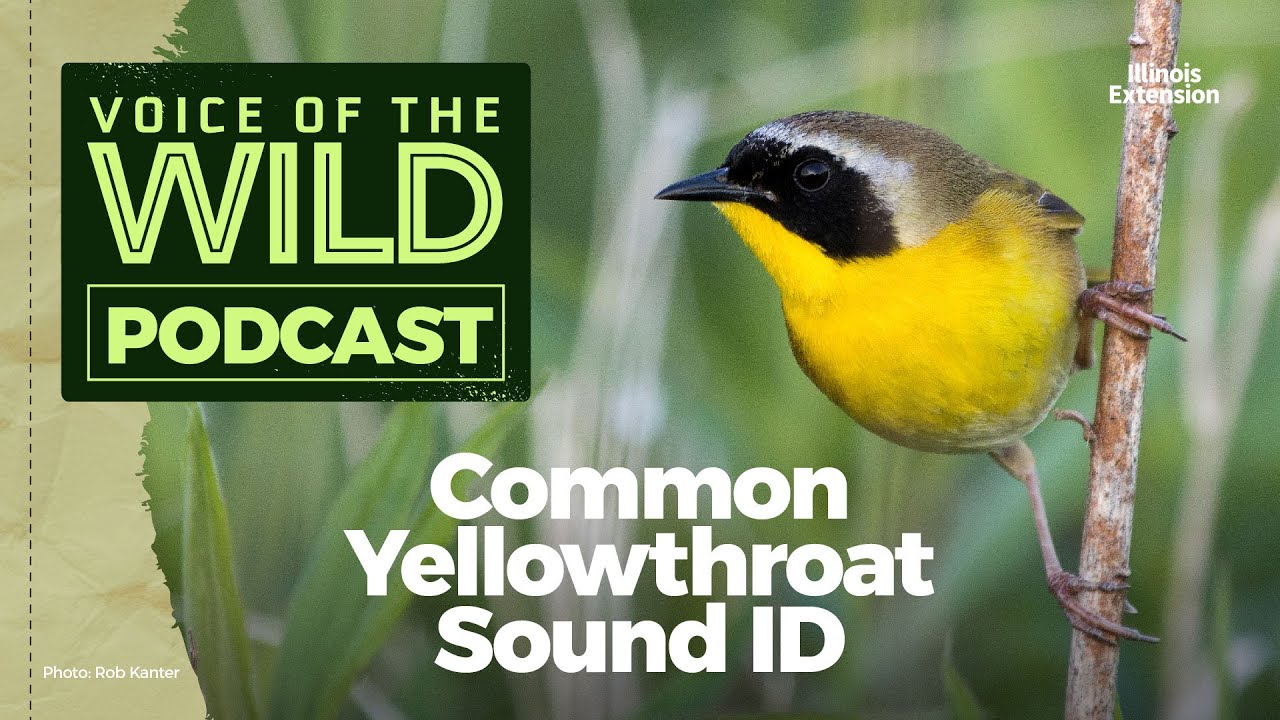
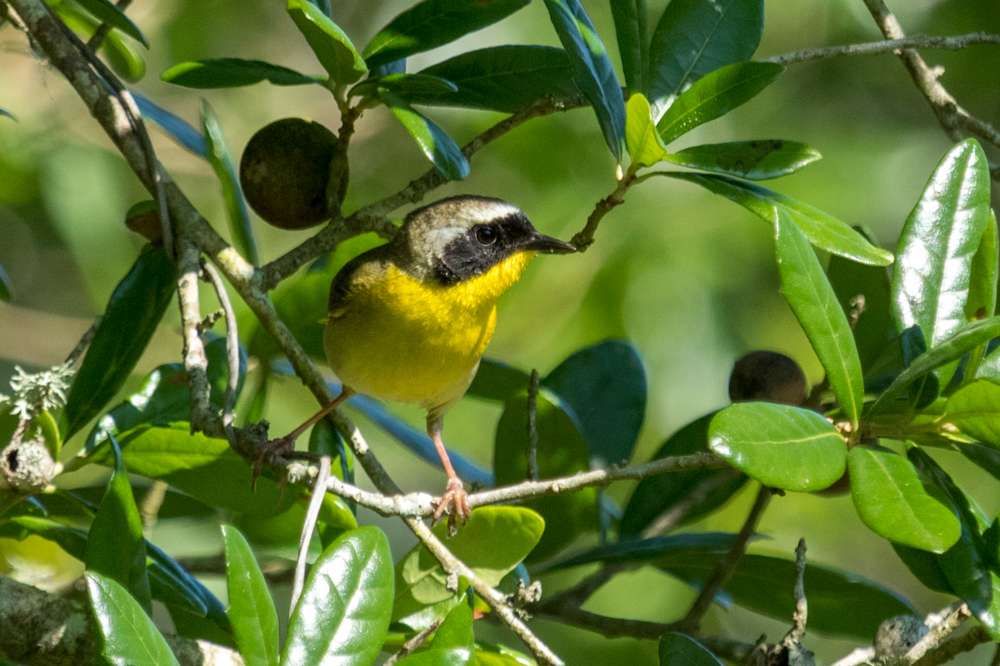
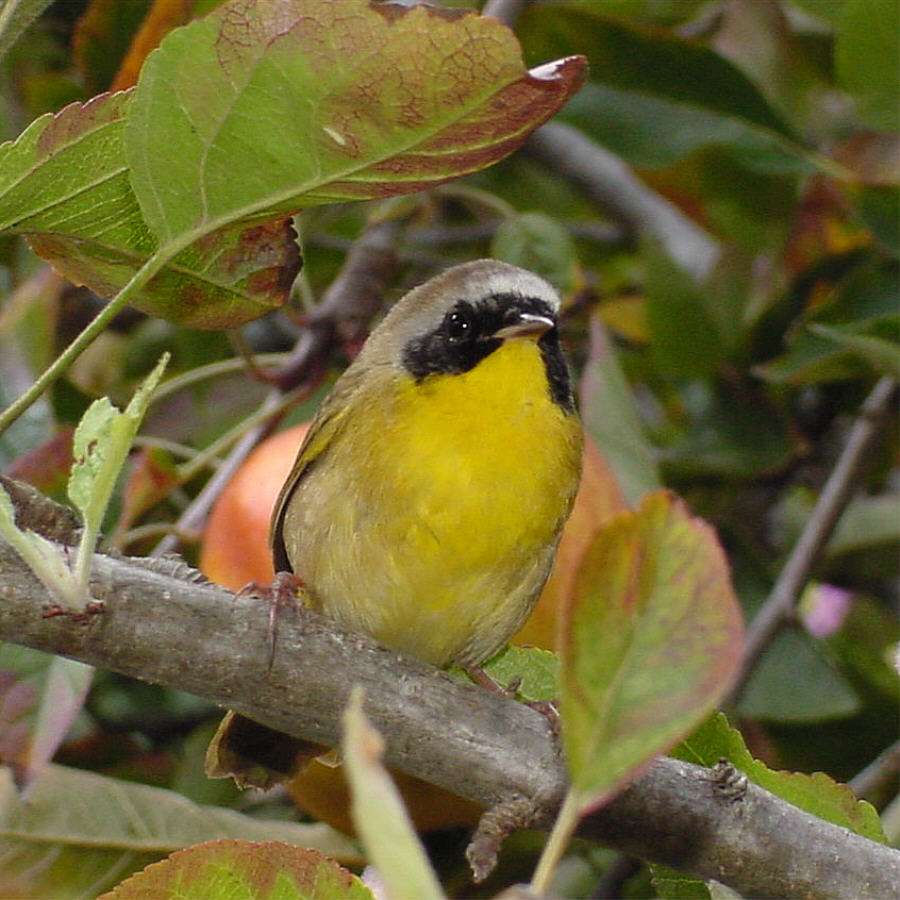
The adult male is instantly identifiable, possessing one of the most distinctive plumages of any North American warbler. He sports a broad black mask that covers the forehead, eyes, and cheeks, giving him his bandit-like appearance. This mask is sharply bordered above by a white or grayish stripe. The rest of his upperparts are a plain olive-brown, contrasting sharply with the bright yellow throat and breast. His sides are typically tan, with a whitish belly.
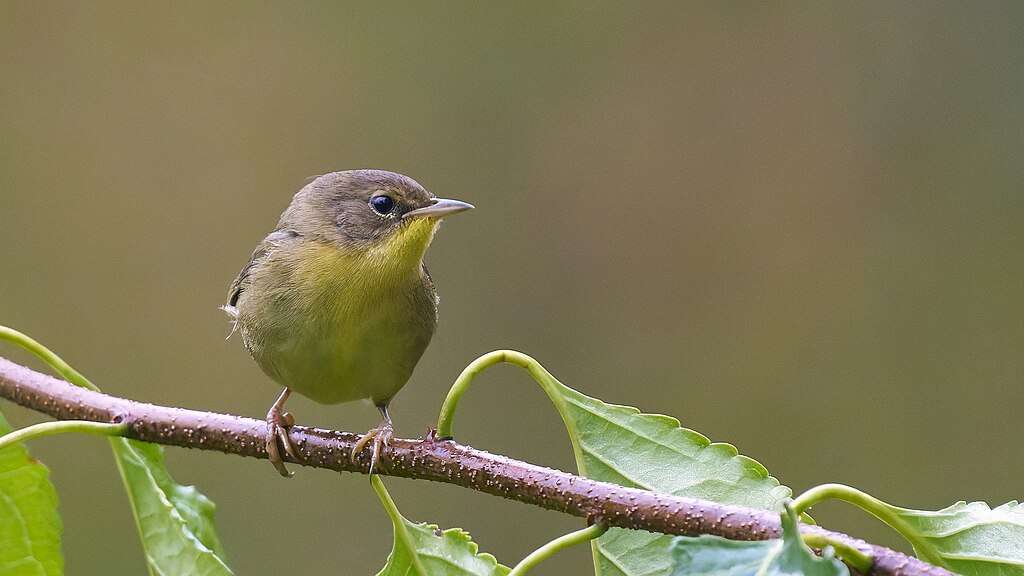
The female, however, lacks the dramatic black mask, making her a greater identification challenge. Her upperparts are olive-brown, and while her throat usually retains a yellow cast, her face is brown with a subtle whitish eye ring and pale eye line. This difference in plumage highlights a common pattern in the bird world, where the male’s bright colors serve a crucial role in attracting a mate and defending his territory. The black mask in particular is an important visual signal during territorial disputes, as experiments have shown that males will attack stuffed birds with an artificially added mask as if they were a rival male.

Wetland Living and Nocturnal Flights
The Yellowthroat’s preferred dwelling is defined by dense, low-lying vegetation, particularly near water. It is "almost synonymous" with habitats like marshes (especially those with cattails), swamps, wet prairies, bogs, and dense thickets along streams and rivers. This preference for low, thick cover allows the bird to easily skulk and forage low to the ground, offering protection from predators and an ideal structure for nest building.
While most numerous in wet habitats, the Yellowthroat shows remarkable versatility, also occupying drier sites like old fields, hedgerows, and brushy pastures. This broad habitat tolerance is likely a key to its extensive range, which stretches across most of the United States and Canada, and down into Mexico.
The Common Yellowthroat is a migratory bird, with northern populations moving south for the winter. These nocturnal migrants travel to warmer climes in the southern United States, Mexico, Central America, and the Caribbean. Males are tenacious, arriving on the breeding grounds a week or two earlier than females to establish and vigorously defend their breeding territories. This seasonal migration is a crucial part of its life cycle, though it exposes the bird to threats like collisions with tall structures during its nighttime flights.
The Soundtrack of the Shrubbery: Song and Communication
Despite its habit of staying hidden low to the ground, the Common Yellowthroat is a highly vocal bird, and its calls are often the first, or only, sign of its presence.
The male's breeding song is one of the most recognizable sounds of the North American summer. It’s a repetitive, whistled phrase often transcribed as "witchety-witchety-witchety" or "wichety-wichety-wich." This song serves the dual purpose of announcing his presence to rival males and attracting a potential mate. During the breeding season, males sing frequently, often perching on a slightly taller stalk to deliver their tune.
Beyond the song, Yellowthroats have distinctive call notes. The most common call is a husky, low "chuck" or "chek," used in communication and sometimes mistaken for the call of a Marsh Wren. They also possess a scolding rattle call used when agitated or confronting a threat. This constant chatter makes the Yellowthroat one of the more easily detectable warblers for birders who learn its distinctive vocalizations.
Profile of the Upside-down Bird : The White-breasted Nuthatch
A Life of Skulking and Snatching: Diet and Foraging
The Common Yellowthroat is an invertivore, with its diet consisting almost exclusively of insects and spiders during the breeding season. It forages primarily low to the ground within dense cover, a behavior that is directly tied to its preferred habitat.
Its primary foraging method is gleaning: moving through low vegetation, searching leaves, bark, and stems for prey like bugs, beetles, ants, caterpillars, grasshoppers, and small spiders. It will also occasionally sally (fly out from a perch) to snatch flying insects from the air. In the winter and during migration, its diet may be supplemented with small seeds and fruit. The low-level foraging behavior is so characteristic that the bird is sometimes called a "Black-masked Ground Warbler." The sheer volume of insects consumed by the Common Yellowthroat and its relatives provides a significant ecological service in controlling insect populations.
Nesting and the Threat of the Cowbird

Breeding for the Yellowthroat begins shortly after the females arrive on the breeding grounds. While they are considered primarily monogamous, females are known to secretly mate with other males outside of the pair bond, a complex behavior seen in many bird species.
The female takes the lead in selecting the nest site and building the nest. Nests are usually incredibly well-concealed, placed on or very near the ground, supported by thick grasses, sedges, reeds, or a low shrub, often in tussocks or dense thickets. In marshy areas, the nest may be placed slightly higher to avoid flooding. The nest itself is a bulky, cup-shaped structure made of coarse grasses and plant materials, lined with finer materials like hair and rootlets. The female incubates a clutch of 3–6 eggs for about 12 days, and both parents share the duty of feeding the nestlings until they fledge after 8–10 days. Many pairs raise two broods in a season.
A significant threat to the Yellowthroat’s reproductive success is nest parasitism by the Brown-headed Cowbird. Cowbirds lay their eggs in the nests of other species, and their large young often out-compete the host’s chicks for food. Yellowthroats show a defensive behavior against this: they have been known to abandon a parasitized nest or, remarkably, to build a second, or even a third, nest on top of the first to bury the parasitic egg.
Conservation: The Fight for the Wet and Wild
While the Common Yellowthroat remains a widespread and common species throughout its range, with the global population considered of Least Concern, it is not without conservation challenges. The biggest threat is habitat loss and degradation. Because the bird is so reliant on dense, low vegetation, particularly wetlands, it is negatively impacted when these areas are drained for agriculture, filled for urban development, or degraded by pollution.
Local populations, such as the subspecies in the San Francisco Bay region, have experienced sharp, severe declines due to wetland loss, making them a special conservation concern. As an insectivore living in wet areas, the Yellowthroat is also particularly susceptible to the effects of pesticides and poor water quality. Conservation efforts that protect and restore large wetlands, often originally intended for species like waterfowl, indirectly benefit this vibrant warbler, securing a future for the yellow bandit and its distinctive song.
To learn more about the calls of this vibrant warbler, check out Episode 7: Common Yellowthroat – Voice of the Wild. This video discusses the Common Yellowthroat's characteristic song and call notes.