
The Common Grackle (Quiscalus quiscula) is a ubiquitous, intelligent songbird found across much of eastern and central North America. Although often overlooked or dismissed as a plain, black "nuisance" bird, a closer look reveals a startling iridescence in its plumage that challenges its reputation. This dichotomy—the bird’s dazzling, subtle beauty versus its loud, opportunistic, and sometimes frustrating urban habits—defines its complex relationship with humans.
The Beauty in Black: Plumage and Appearance
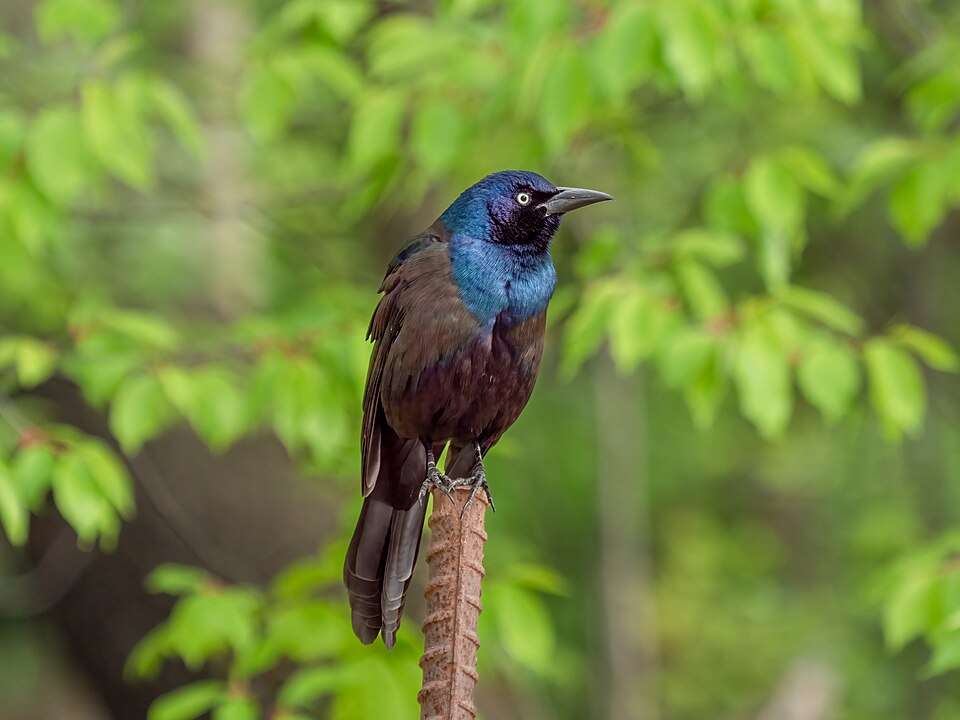
At first glance, the Common Grackle appears entirely black. However, when viewed in bright sunlight, its true splendor is revealed. Its plumage is a mosaic of iridescent colors created by the way light refracts off its structured feathers.
Head and Neck: The head and neck flash with brilliant blue, purple, and greenish-blue hues, shifting color with every slight turn of the bird's head.
Body and Tail: The rest of the body often shows subtle bronze or coppery-purple sheens, especially on the back and breast.
Eyes: Adding to the striking effect is the pale yellow or gold iris in its eye, which stands out starkly against the dark feathers, giving it a piercing gaze.
Shape: Grackles are characterized by their long tails, which often appear keel-shaped (V-shaped in cross-section) during flight, a unique identifier among the icterids (blackbirds and allies).
These features combine to make the Common Grackle an arguably spectacular bird, proving that "black" can encompass a full spectrum of color.

Habitat, Diet, and Behavior
The Common Grackle is a highly adaptable, generalist species that thrives in human-altered landscapes, making its home in open woodlands, agricultural fields, suburban parks, and urban centers.
Diet: The grackle is an omnivorous opportunist. It forages tirelessly on the ground for insects, spiders, and seeds. In the spring and summer, it raids nests for eggs and nestlings, and in the fall and winter, it feasts on berries, cultivated grains (earning the annoyance of farmers), and, most frequently, human garbage and discarded food.
Nesting: They typically nest in colonies, choosing dense shrubs, evergreens, or cavities in trees. They are known for their loud, social chatter within these colonies.
Roosting: During the non-breeding season, grackles form immense, often mixed-species winter roosts that can contain thousands, even millions, of individuals. These impressive gatherings are a defining feature of the species' winter ecology.

Range and Expansion
The Common Grackle's extensive breeding range covers the central and eastern two-thirds of the United States and extends north into southern Canada. It is migratory in the northern parts of its range, moving south to the central and southern US for the winter, though many populations in the mid-Atlantic and southern states are year-round residents. Historically, the grackle's range has increased significantly due to two main factors: deforestation and the spread of agriculture. By clearing vast tracts of continuous forest for farming and subsequent suburban development, humans inadvertently created the open, fragmented woodland and agricultural fields that are ideal grackle habitat. This expansion was especially notable during the 19th and early 20th centuries, allowing the grackle to colonize new areas, particularly westward along river systems and across the Great Plains, where trees and water sources were introduced.
The Annoyance Factor: Why They Are Seen as Pests
Despite their beauty, grackles frequently provoke annoyance due to their tendency to aggregate in large numbers in places where humans congregate. This is the source of their negative public image:
Noise: Their calls are not melodic songs but rather a harsh, squeaky, and often described as "rusty gate" sound. When thousands of birds gather in a single roost, the combined racket can be overwhelming and disruptive to residential or commercial areas.
Droppings (Fecal Load): Large flocks leave behind significant amounts of excrement, which fouls urban trees, cars, walkways, and seating areas, leading to sanitation concerns and property damage.
Agricultural Damage: In rural settings, grackles pose a significant problem to farmers, consuming large quantities of newly planted seeds and ripe grain crops.
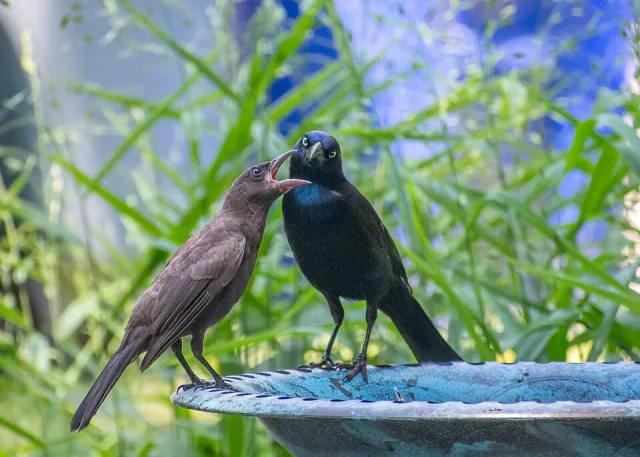
Feeder Dominance: At backyard feeders, they are often aggressive and dominant, quickly emptying feeders of expensive seed while intimidating smaller songbirds.
In summary, the Common Grackle is a creature of dual identity: a stunning example of avian iridescence that is often ignored, and an intelligent, highly successful urban survivor that is frequently treated as an unwelcome pest. Its story is a classic case of conflict arising from the successful overlap of a resilient wild species with human development.
The Jewel’s Journey: Tracking the Ruby-throated Hummingbird’s Spring Arrival

I love birds, but I don’t like Grackles. They over run my bird feeders, they drop bags of poop in my pool and pool deck they are not what I would call a songbird. They are like a bunch of chickens flying around in the trees making their annoying cackling.