

Tiny, acrobatic, and utterly charming, the chickadees of North America are among the most beloved birds on the continent. These sprightly members of the family Paridae (which also includes titmice and tits) are instantly recognizable by their bold black caps and bibs, offset by crisp white cheeks. Their name itself is onomatopoeic, derived from their characteristic, chattering call: "chick-a-dee-dee-dee."
While they share a similar basic pattern, North America is home to seven distinct species, each perfectly adapted to its unique environment, from the cold boreal forests of Alaska to the sunny pine highlands of Mexico. Identifying them often comes down to minute differences in plumage, song, and—most reliably—geographical range.
1. The Widespread and Familiar: The Black-capped Chickadee

The Black-capped Chickadee (Poecile atricapillus) is arguably the most common and widespread of the North American species. Found across Canada and the northern two-thirds of the United States, this is the quintessential chickadee, known for its fearless demeanor and willingness to approach backyard feeders.
2. The Southern Counterpart: The Carolina Chickadee

The Carolina Chickadee (Poecile carolinensis) is the southern sibling to the Black-capped. The two species look so similar that they were once considered the same, but their ranges only slightly overlap in a narrow hybrid zone stretching from New Jersey west to Kansas.
3. The Mountain Dweller: The Mountain Chickadee

The Mountain Chickadee (Poecile gambeli) is a bird of the high-altitude evergreen forests of Western North America, primarily found throughout the Rocky, Cascade, and Sierra Nevada ranges.
4. The Coastal Russet: The Chestnut-backed Chickadee

The Chestnut-backed Chickadee (Poecile rufescens) stands out as the most colorful North American species. This chickadee is confined to the moist coniferous forests along the Pacific Coast, ranging from central California to southeastern Alaska.
5. The Northern Hermit: The Boreal Chickadee

The Boreal Chickadee (Poecile hudsonicus) is a bird of the frozen north, exclusively inhabiting the boreal forests of Canada and Alaska, farther north than any other North American chickadee species. Its coloration is perfectly suited for blending into the spruce and fir trees of its harsh environment.
6. The Rare Southerner: The Mexican Chickadee
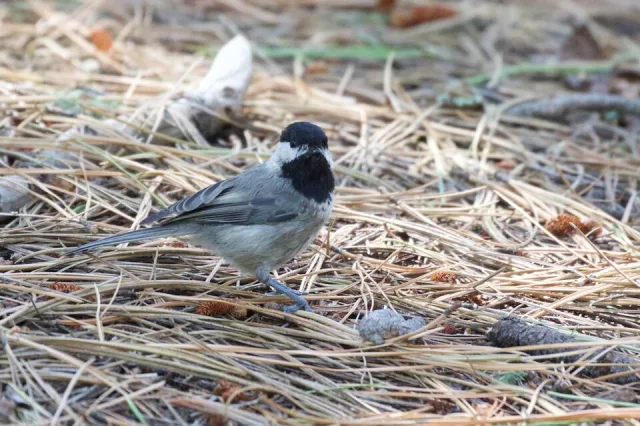
The Mexican Chickadee (Poecile sclateri) is the southernmost chickadee in the world, with its main range in the high-altitude pine forests of Mexico. Its presence in the United States is limited to the mountainous "sky islands" of extreme southeastern Arizona and southwestern New Mexico.
7. The Arctic Enigma: The Gray-headed Chickadee
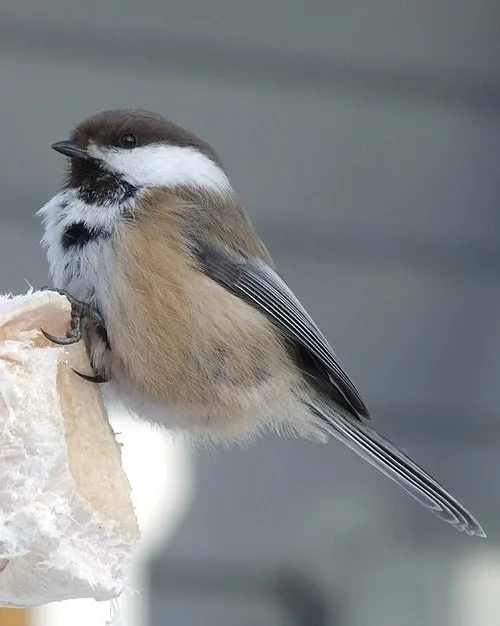
The Gray-headed Chickadee (Poecile cinctus) is the least known and arguably the rarest of the North American chickadees. It has a tiny, remote range in North America, found only in the stunted spruce forests of northern Alaska and northwestern Canada. It is more widely known in Eurasia, where it's called the Siberian Tit.
A Family of Adaptable Survivors
Despite their differences in color and range, all chickadees share a set of remarkable survival traits. They are non-migratory and highly adapted to cold weather, capable of storing food in hundreds of different caches for winter foraging—a strategy known as "scatter-hoarding." They also have incredible navigational and memory skills to retrieve these buried treasures.
All species are cavity nesters, typically using natural holes in trees, abandoned woodpecker holes, or even excavating their own nests in soft, rotting wood. The female builds a cozy nest lined with materials like moss, hair, and animal fur, which provides critical insulation. Their omnivorous diet, consisting of insects, spiders, seeds, and berries, allows them to thrive year-round, filling an important ecological niche as acrobatic gleaners of insects from bark and foliage.
Whether you're enjoying the familiar fee-bee whistle of a Black-capped in a suburban park or tracking the elusive, richly-colored Chestnut-backed in a foggy Pacific forest, the tiny chickadee offers a reminder that the most delightful characters often come in the smallest, most resilient packages. They are a testament to adaptation, thriving across the most diverse and demanding landscapes North America has to offer
