
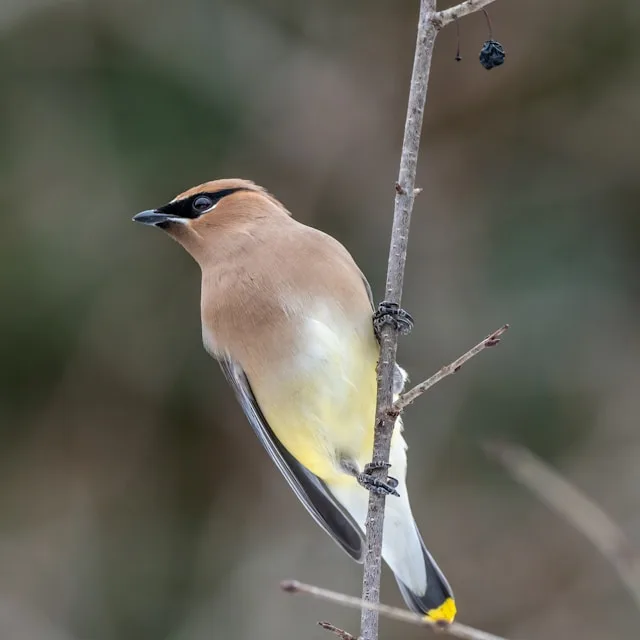
The Cedar Waxwing (Bombycilla cedrorum) is arguably one of the most elegant and dapper birds in North America. Possessing a sleek, smooth plumage that looks painted rather than feathered, this highly social songbird is instantly recognizable by its striking black mask, crest, and the peculiar red, wax-like droplets that give it its name.
Unlike most songbirds, which are insectivores during the breeding season, the Cedar Waxwing is primarily a frugivore, an adaptation that profoundly shapes its nomadic lifestyle, social structure, and unique breeding schedule. It is a bird that lives by the availability of ripe fruit, often appearing suddenly in flocks to "raid" an ornamental tree before moving on just as quickly, earning it the affectionate nickname, the "velvet bandit."
Identification: A Study in Sophistication
The Cedar Waxwing is a medium-sized songbird, measuring about 6 to 7 inches in length. Its visual appeal lies in its exceptionally refined and subtle coloration, devoid of the harsh streaks or bright patches common to other songbirds.

- Plumage and Color: The body is covered in soft, velvety feathers of a warm, sandy-brown color on the head and breast, which gradually fades to a silvery gray on the back and wings. The lower belly is often a pale yellow. The smoothness of the feathers is a defining trait, giving the bird a uniquely polished appearance.
- The Crest and Mask: A slender, pointed crest (a tuft of feathers on the head) gives the bird a perpetual look of alertness. This is dramatically complemented by a sharp black mask that extends from the base of the bill, across the eyes, and tapers to a point at the back of the head. The mask is often outlined by a faint white border.
- The "Wax" Tips: The most diagnostic and namesake feature is found on the secondary wing feathers. The tips of these feathers bear tiny, bright red, tear-drop shaped structures that look exactly like drops of sealing wax. The function of these tips is unknown, but their size often increases with the bird's age, signaling maturity and health.
- Tail Band: The tail is a gray-black color, sharply tipped with a distinctive bright yellow band, giving it a dipped-in-paint look.
Habitat and Range: The Nomadic Lifestyle
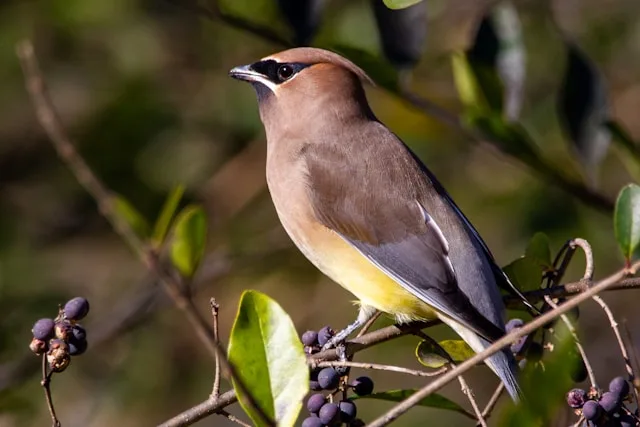
The Cedar Waxwing is a widespread bird, breeding across southern Canada and the northern half of the contiguous United States. Its movement is highly dependent on fruit availability, making it one of North America's most nomadic species outside of true migration.
- Breeding Range: During the summer, it favors open woodlands, forest edges, riparian areas (stream borders), and partially open, scrubby habitats. Importantly, it is one of the few species that has successfully integrated into suburban and urban environments, thriving wherever fruit-bearing ornamental trees and shrubs are planted.
- Winter Range: Unlike many songbirds that stick to fixed migration routes, the waxwing is an irruptive migrant. Instead of flying to a set location, flocks simply move south or coastally—sometimes just a short distance, other times hundreds of miles—until they locate a large, stable source of winter fruit. A population that winters in New England one year might be found in Florida or Louisiana the next. They often gather in huge, spectacular flocks during the non-breeding season.
- Water Dependence: Due to their highly fructivorous diet, waxwings require frequent access to water to wash down sticky fruit and maintain hydration. They are therefore almost always found near a water source, be it a pond, stream, or backyard birdbath.
Diet and Foraging: Frugivore First
The Cedar Waxwing is unique among North American songbirds for its dietary focus on fruit, making it a critical seed disperser in many ecosystems.
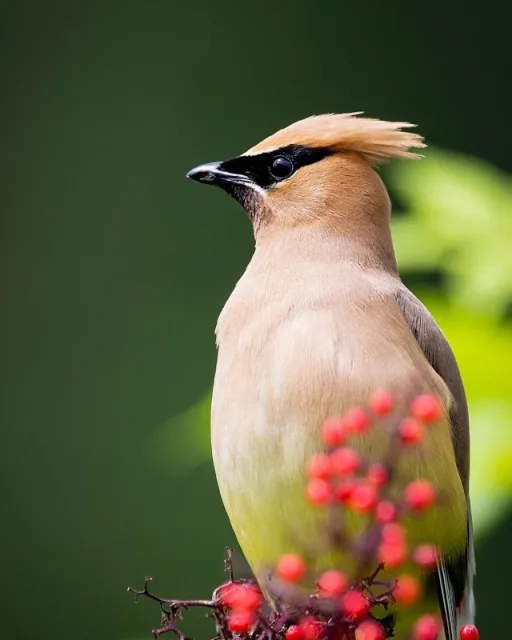
- The Fruit Specialist (Frugivory): For up to nine months of the year, fruit makes up the vast majority (often 90% or more) of their diet. They are fond of small, fleshy fruits, particularly those available in late summer and winter: cedar berries (hence the name), juniper berries, honeysuckle, serviceberries, and the fruits of ornamental trees like cotoneaster. They swallow small berries whole.
- Insect Supplement: During the late spring and early summer nesting season, the birds shift to a more insect-heavy diet to provide the high protein needed for their rapidly growing nestlings. They become proficient at sallying (darting out from a perch to catch insects in mid-air) or gleaning insects from foliage.
- Fickle Feeders: Waxwings are famous for their feast-or-famine approach to foraging. A flock will descend upon a single tree loaded with ripe berries and meticulously strip it bare within minutes or hours before silently moving on. They often eat so much fruit that they can become temporarily intoxicated when eating overripe, fermenting berries.
Unique Social Behavior and Breeding Schedule
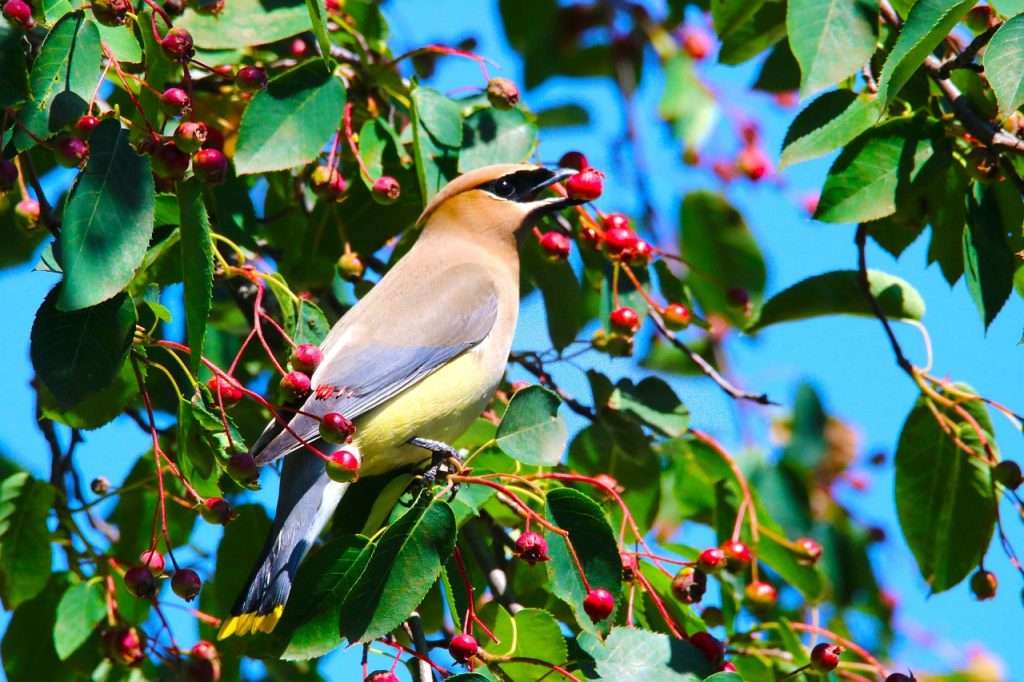
The social life and breeding calendar of the Cedar Waxwing reflect its reliance on fruit, setting it apart from other songbirds.
- Social Flocking: Waxwings are exceptionally gregarious, rarely found alone. They form large, tight-knit flocks that can number in the dozens or hundreds, especially in winter.
- The Chain-Feeding Ritual: Perhaps their most endearing social behavior is the "passing" or "chain-feeding" ritual. When perched in a line, one bird will pass a berry to its neighbor, which passes it to the next, and so on, until the last bird eats the fruit. This behavior reinforces social bonds and is part of their courtship.
- Delayed Breeding: Most North American songbirds breed in early spring when insect populations peak. Waxwings, however, have one of the latest breeding seasons, often not nesting until July or even August. This delay is entirely dictated by food availability: they wait until the peak of the late-summer fruit harvest to ensure there is an abundance of food for the demanding process of raising young.
- Nesting: The nest is a bulky, open cup made of grasses, twigs, and moss, often lined with soft material. It is typically built high in a broad-leaved or coniferous tree.
Vocalization and Conservation

- Vocalization: Despite their loud appearance in large flocks, their vocalizations are surprisingly quiet and high-pitched. They lack a complex song. Their most common call is a high-pitched, whispered “seeeeee” or a short, trilled "bzzeee" note, often described as a soft, ringing buzz. These calls are the only way to confirm a flock's presence overhead.
- Conservation Status: The Cedar Waxwing is one of the most successful and abundant birds on the continent, with an estimated population well into the tens of millions. Its adaptability to suburban environments and its ability to feed on a wide variety of native and non-native fruits ensure its continued success. It is currently classified as a species of Least Concern by the IUCN.
The Cedar Waxwing is a bird that rewards quiet observation. Its movements are fluid, its appearance is impeccable, and its life is an elegant dance dictated by the simple, sweet necessity of ripe fruit. It remains a sophisticated, nomadic jewel of the North American avian world.
