
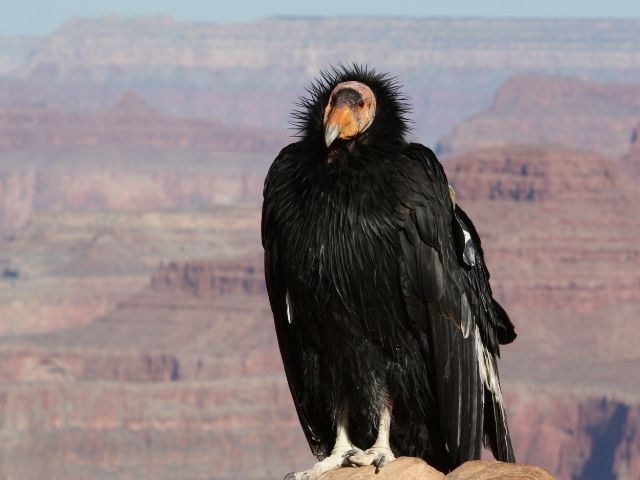
The California Condor (Gymnogyps californianus) is more than just the largest flying bird in North America; it is a living symbol of the continent's deep past and a testament to one of the most intense and dramatic conservation efforts ever undertaken. With a staggering 9.5-foot wingspan and an estimated lifespan of over 60 years, these magnificent vultures are architects of the sky, capable of soaring on thermal currents for hours and traveling up to 200 miles in a single day. Their story, however, is one that descended to the brink of extinction before achieving a miraculous return.
A Descent to the Brink
Historically, the California Condor's range was vast, stretching from British Columbia down through Baja California. During the Pleistocene Era, their ancestors soared over much of North America, scavenging on the carcasses of megafauna.

The condor’s decline began with the arrival of European settlers. Human activities, particularly in the 19th and 20th centuries, delivered a series of devastating blows:
- Lead Poisoning: This is the single biggest hurdle to the species’ recovery. Condors, being obligate scavengers, feed exclusively on carrion. When they consume carcasses, particularly "gut piles" left by hunters, they inadvertently ingest tiny fragments of lead ammunition, which shatters upon impact. Lead is then absorbed into the bloodstream, causing neurological and gastrointestinal failure, leading to a slow and agonizing death.
- Habitat Loss and Disturbance: Ranching and urban development fragmented their vast foraging grounds and disturbed critical nesting sites in remote caves and rock crevices.
- Poaching and Egg Collecting: Although less prevalent today, these historical pressures took a severe toll on the small population.
- DDT and Other Pesticides: Like other raptors, condors suffered from eggshell thinning caused by chemical contaminants, which reduced reproductive success.
By the mid-20th century, the population had dropped dramatically. The species was federally listed as endangered in 1967. The situation grew so dire that in 1982, only 22 condors remained in the wild.
Operation Phoenix: The Captive Breeding Rescue

In a move that remains controversial to this day—capturing the entire wild population—biologists and conservationists made the difficult decision to pull all remaining condors from the wild to initiate an intensive captive breeding program. The last free-flying condor, designated AC-9, was captured on Easter Sunday in 1987. The entire species was officially extinct in the wild.
The recovery effort, led by the U.S. Fish and Wildlife Service, and partnering institutions like the San Diego Zoo and the Los Angeles Zoo, faced an immense challenge due to the condor's exceptionally slow reproductive rate:
- Condors mate for life and do not reach sexual maturity until they are 6–8 years old.
- They typically lay only one egg every two years.
- The chick requires nearly six months of parental care in the nest and remains dependent on its parents for up to a year after fledging (learning to fly).
Biologists overcame the slow breeding rate by utilizing a technique called "double clutching," where the first egg is removed and incubated artificially, prompting the pair to lay a second egg. Chicks in captivity were often fed by handlers using condor-head puppets to prevent them from imprinting on humans.
The Return to the Wild
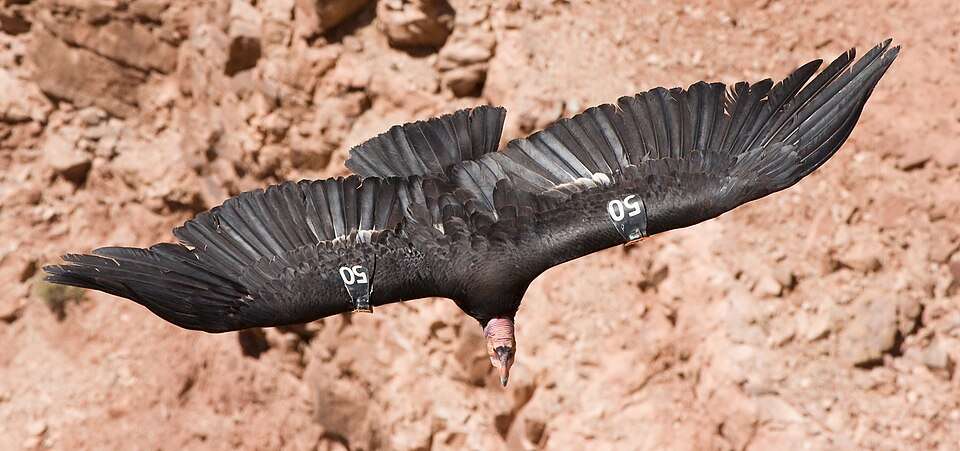
The painstaking effort paid off. In 1992, the first captive-bred condors were reintroduced to the wild in California. The recovery program has since established several geographically distinct populations across their former range:
- Central California: Centered around the Big Sur coast and Pinnacles National Park.
- Southern California: Located north of the Los Angeles Basin in the rugged mountains of the Los Padres National Forest.
- Arizona/Utah: Released near the Grand Canyon (an effort that began in 1996).
- Baja California, Mexico.
As of 2024, the total world population has grown to over 560 birds, with more than half of those flying free in the wild. This milestone—surpassing the captive population—is a triumph of collaborative conservation.
Biology: The Vulture's Imperative
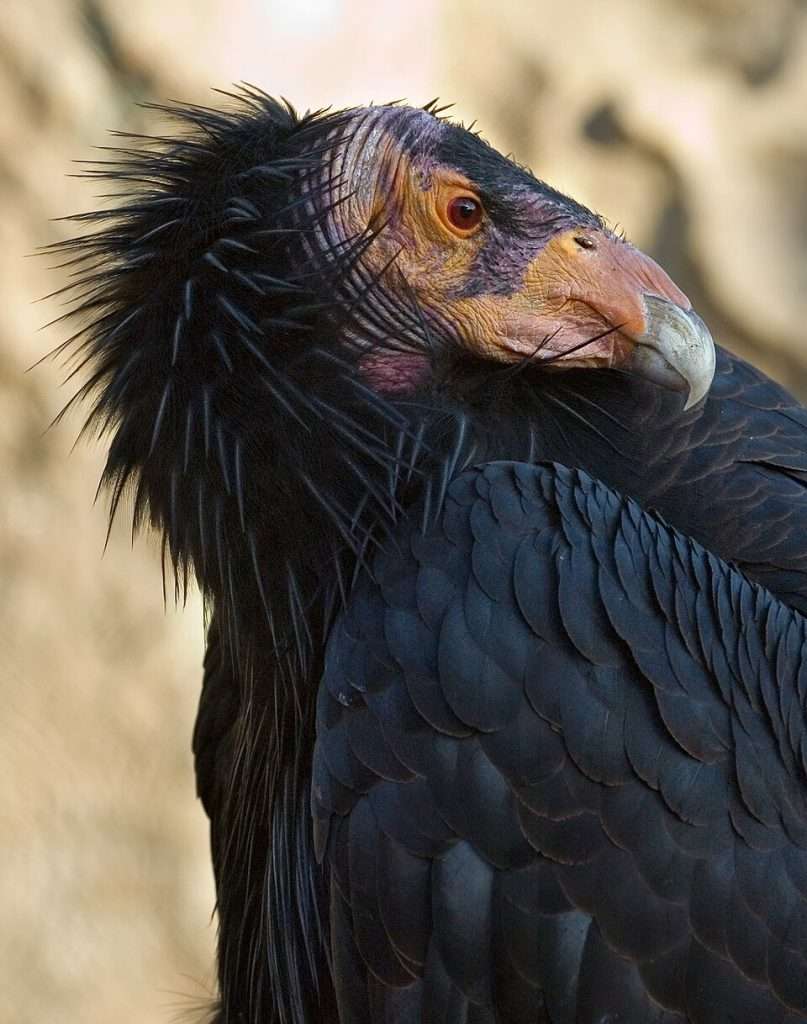
Condors are perfectly adapted for their ecological niche as natural recyclers.
- Appearance: Adults are characterized by a striking, bald head and neck, which is typically pink, red, or orange. This bare skin is an adaptation that helps them stay clean while feeding deep inside carcasses, with the colors intensifying during mating season. The body is a drab black, contrasted by large, triangular patches of white visible on the underside of their wings when soaring.
- Foraging: Condors rely solely on sight to find their food, often spotting the gathering of other smaller scavengers like ravens and eagles. They are non-migratory but are highly nomadic, using rocky cliffs or giant old-growth trees for roosting and nesting.
- Reproduction: Nests are minimal, usually just a scraped depression on the floor of a cave or a cavity in a large redwood or sequoia tree. Both parents share the long two-month incubation and the nearly year-long commitment to raising the single chick.
The Fight for Sustainability
Despite the progress, the California Condor remains Critically Endangered, and its survival in the wild is still dependent on intensive management. The two primary threats are persistent:
- Lead Ammunition: Regular trapping of wild condors is required to administer chelation therapy to birds suffering from lead poisoning. This expensive process treats the symptoms but does not solve the underlying problem. While California passed a ban on lead ammunition for all hunting in 2019, compliance remains the ultimate key to a self-sustaining population.
- Microtrash Ingestion: Condor parents, likely mistaking small items for bone fragments (a necessary calcium source for chicks), sometimes feed their young small pieces of human litter—bottle caps, glass shards, or pull tabs. This "microtrash" can cause impaction, leading to the starvation and death of nestlings.
The goal of the Recovery Program is to establish two wild, geographically distinct populations, each with 150 free-flying birds and at least 15 breeding pairs. The condor’s future, therefore, rests on the collective actions of the human population—hunters, ranchers, and everyday citizens—to ensure the majestic architects of the California sky can soar free, unburdened by the poisons of our past.
