
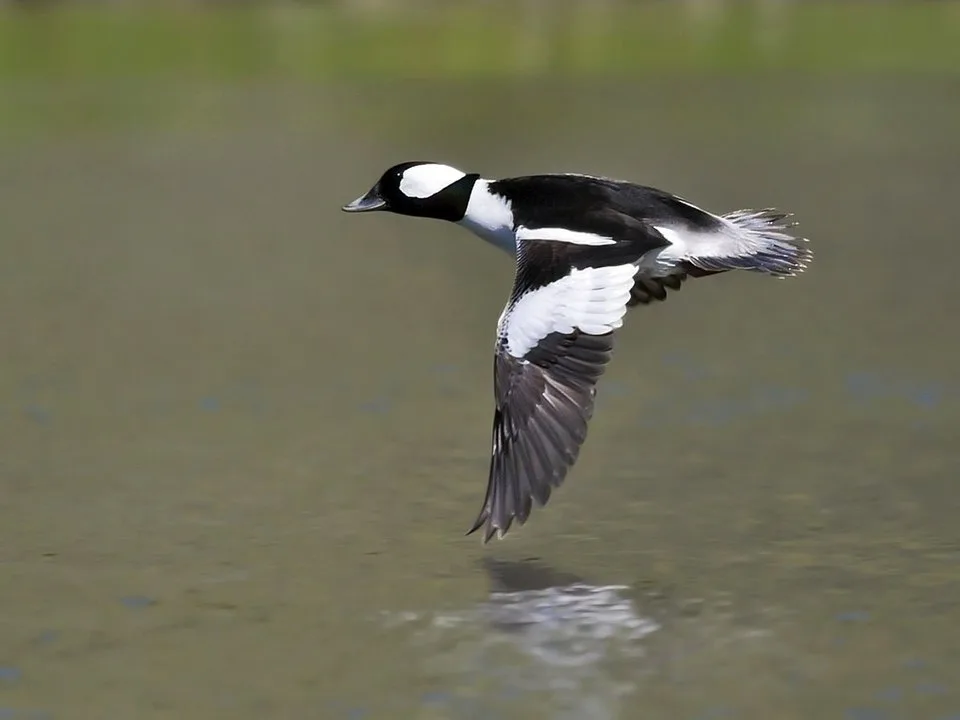
The Bufflehead is a charismatic and highly energetic sea duck, instantly recognizable by its compact size and the male's striking, puffy head. Often called the "Buffalo Head" (from which its name is derived) or "Butterball" due to its rotund, small stature, this species is the smallest diving duck in North America. Its dramatic black-and-white plumage and active, bobbing behavior make it a favourite among birders across the continent, particularly during winter.
Identification and Appearance
The Bufflehead exhibits marked sexual dimorphism in both size and plumage, particularly in the male's non-breeding months.

| Feature | Male (Drake) | Female (Hen) |
| Size | Slightly larger, about 450 g (16 oz) | Smaller, about 325 g (11 oz) |
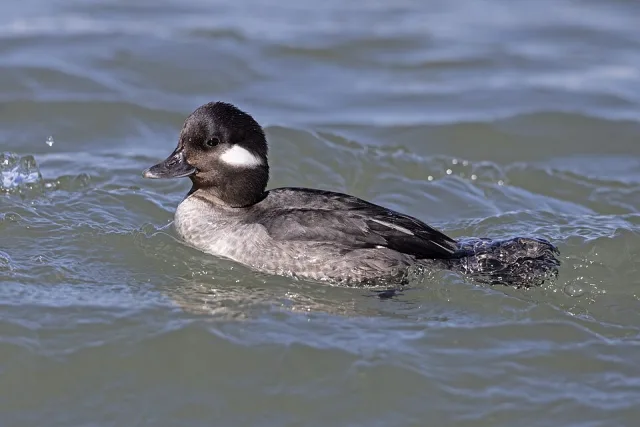
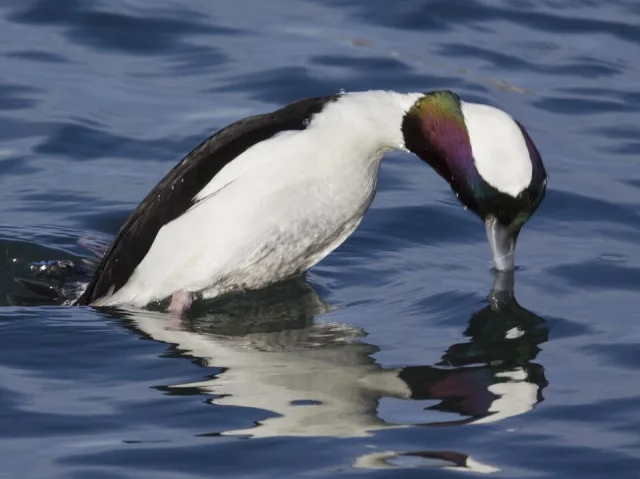
| Head | Large, iridescent black head with a prominent, wedge-shaped white patch that extends from behind the eye to the back of the head. The black shows a glossy purple and green sheen in good light. | Dark brown/grayish-black head with a single, neat white cheek patch or smudge. |
| Body | Boldly patterned with a black back and bright white neck and underparts. | Mostly dusky gray-brown on the back and wings, with pale gray underparts. |
| Wings | A large, distinct white patch is visible on the inner wing, especially in flight. | A much smaller, less distinct white patch on the inner wing. |
Buffleheads are compact, buoyant ducks, often bobbing like a cork on the water. Their legs are set far back on their bodies, which makes them excellent divers but causes them to appear clumsy and awkward on land.
Habitat and Migration
The Bufflehead is a medium-distance migrant that spans the North American continent.
Breeding Range: They breed primarily in the boreal forests and aspen parklands of central Alaska and Canada, extending south to parts of the northwestern United States. They choose small lakes and ponds surrounded by trees.
Wintering Range: They migrate south relatively late, often being the last waterfowl to leave their breeding grounds. They are found along both the Pacific and Atlantic coasts from Alaska and the Maritime provinces south to Mexico and Florida. Inland, they winter on large reservoirs, the Great Lakes, and open stretches of rivers.
Habitat: While wintering, they prefer shallow, sheltered coastal waters—coves, harbours, estuaries, and protected bays—over exposed coastlines.
Diet and Diving Behavior
Buffleheads are highly active diving ducks, spending up to half their day foraging underwater. Their small size necessitates a high metabolism and frequent feeding.
Hunting: They dive with a quick leap and powerful kick, propelling themselves with their large, webbed feet while holding their wings tight to their bodies. Dives are typically short, lasting about 12 to 25 seconds. They often swallow their food while still submerged.
Diet: Their diet shifts based on habitat:
Freshwater (Summer): They primarily consume aquatic insects and their larvae (like dragonflies, caddisflies, and midges), freshwater snails, and some aquatic plant seeds.
Saltwater (Winter): Their diet shifts to crustaceans (shrimp, crabs, amphipods) and mollusks (snails, clams, mussels).
Unique Nesting and Social Habits
Unlike most ducks, the Bufflehead has a unique, almost symbiotic relationship with its nesting habitat.
Cavity Nesters: Buffleheads are obligate cavity nesters, relying entirely on holes in trees for their nests. Critically, their small size evolved to fit perfectly into cavities created by the Northern Flicker (a type of woodpecker), which are too small for larger ducks like goldeneyes or mergansers. The female lines the cavity with down.
Monogamy: Unusually for a duck, Buffleheads are often monogamous, maintaining the same pair bond for several consecutive years.
Brood Departure: About a day after hatching, the female encourages her ducklings to leap from the high tree cavity to the ground or water below—a dramatic event. The mother then leads the brood to open water, where she protects them until they fledge (fly) at about 50–55 days old.
Conservation Status
The Bufflehead population is currently listed as Least Concern by the IUCN. Their population numbers have been stable or increasing since the mid-20th century due to conservation measures and habitat management, though the availability of suitable nesting cavities remains a limiting factor in some areas.
The Phantom of the Canopy: Profiling the Blue-gray Gnatcatcher
