
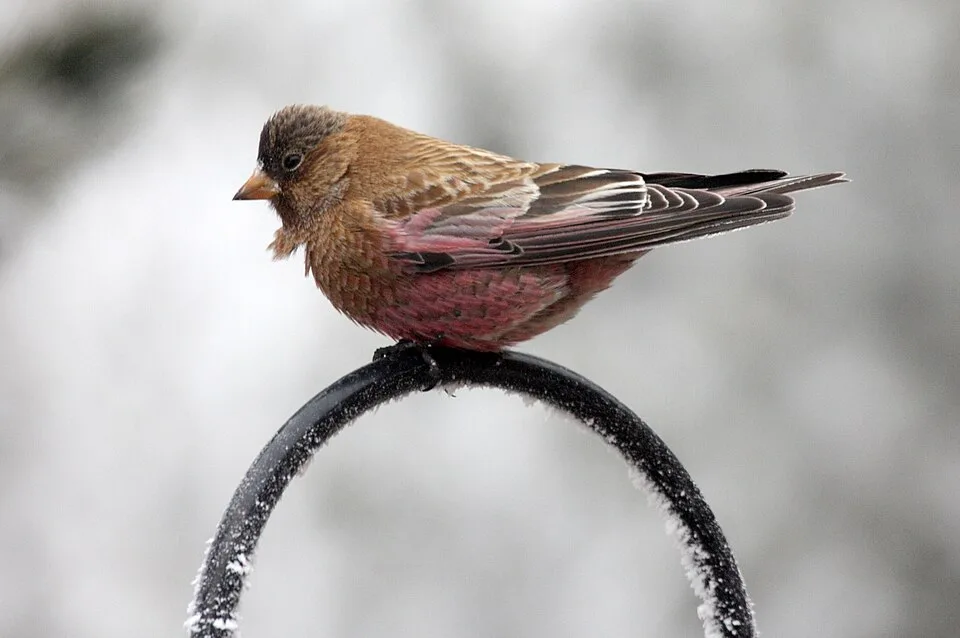
For serious North American birders, finding a rosy-finch is a pilgrimage. These stocky, resilient finches, comprising three distinct North American species (Gray-crowned, Black, and Brown-capped), are true specialists of the alpine tundra—a harsh, treeless environment that few other passerines dare to call home. Among them, the Brown-capped Rosy-Finch (Leucosticte australis) is perhaps the most highly sought after, as it is a genuine Rocky Mountain endemic.
This stunning bird, with its soft brown cap, pinkish-red plumage on its flanks and wings, and bold black forehead, breeds exclusively in the highest peaks of the central and southern Rockies, making it a challenging but deeply rewarding find. For anyone planning a western birding trip, knowing when and where to look for this elusive high-altitude gem is the key to success.
The Summer Quest: Breeding High in the Alpine
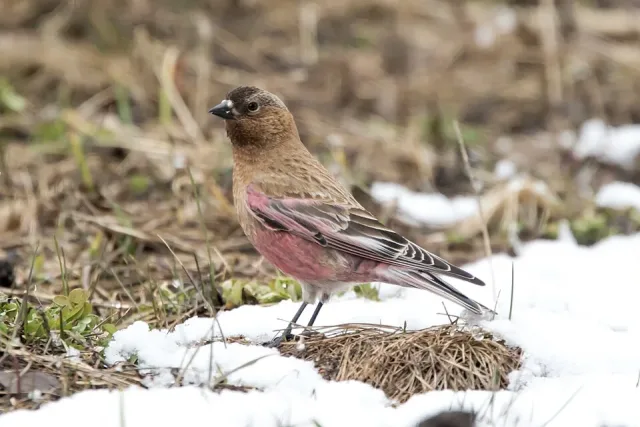
The most reliable way to find the Brown-capped Rosy-Finch is to seek it out during its breeding season, from late May through early September. The catch? You must be willing to hike or drive to the absolute limit of the timberline and beyond.
The Habitat: Rock and Snow
The Brown-capped Rosy-Finch is entirely dependent on the alpine tundra. It nests exclusively in rock crevices, beneath boulders, or in abandoned mine shafts above 11,000 feet (3,350 meters). Its habitat is characterized by permanent snowfields, scree slopes, and cushion-plant meadows. These birds feed on seeds and high-altitude insects, often foraging right at the edge of melting snowbanks, which act as natural insect traps.
Prime Colorado Locations
Colorado is the epicenter of the Brown-capped Rosy-Finch’s breeding range, with a few key, accessible locations offering the best chance of observation:
Mount Evans (Colorado): This is arguably the most famous and reliable spot. The Mount Evans Scenic Byway (usually open late May/early June through Labor Day) drives you directly into prime habitat. Rosy-finches are frequently seen near the summit parking lot and the old stone building, often scavenging dropped food or drinking from puddles. This site requires minimal hiking but maximum vigilance for weather changes.
Rocky Mountain National Park (RMNP): The Trail Ridge Road (open seasonally) provides excellent viewing opportunities. Look for them on the sheer, rocky slopes and near the Alpine Visitor Center. A short hike on the Tundra Communities Trail often yields sightings.
Independence Pass (Colorado): Located between Aspen and Leadville, this high mountain pass offers habitat accessible right from the road.

Crucial Summer Birding Tip: The best time to find the finches during summer is early morning (shortly after sunrise) or late afternoon. During the midday heat, they often retreat to shady rock crevices or distant snowfields.
The Winter Gamble: Finding the Flock Down Low
While it’s more comfortable to bird in the valleys, the winter behavior of the Brown-capped Rosy-Finch is much more unpredictable. As the snows deepen, they descend from the high tundra, joining large, mixed flocks—often numbering in the hundreds—with Black and Gray-crowned Rosy-Finches.
The Rosy-Finch Hotspot: Feeders
The most reliable winter strategy is locating a well-established feeding station in a high-elevation town. Rosy-finches are notoriously tough birds and don't migrate far, preferring to simply drop down to the protection of the mountain valleys where food is more available.
Towns to Target: Look for feeders in towns nestled within the mountains, such as Leadville, CO, Alma, CO, or Crested Butte, CO. Birders often share reliable feeder locations on local birding listservs or through eBird sightings.
Feeder Preferences: They prefer ground feeding and often congregate beneath hanging feeders, sifting through the spilled seed. They are particularly fond of black oil sunflower seeds and thistle (nyjer).
Winter Challenges
While you don't have to hike to 14,000 feet, winter birding presents different challenges:
Identification: Distinguishing the Brown-capped (australis) from the Gray-crowned (tephrocotis) and the Black (atrata) Rosy-Finches within a fast-moving, mixed flock can be tricky. Look carefully for the absence of the gray patch on the cheek/nape (which the Gray-crowned has) and the overall rich pink coloring on the belly and wings. The Brown-capped Rosy-Finch's head is largely a solid brown.
- Timing: Flocks move constantly in winter, making a site reliable one day and empty the next. It requires patience and persistence.

Field Identification: What to Look For
Identifying the Brown-capped Rosy-Finch requires a sharp eye, especially when comparing it to its two cousins.
| Feature | Brown-capped Rosy-Finch (L. australis) | Key Differentiating Mark |
| Head | Uniform brown cap and cheek, black forehead/throat patch. | Lacks the gray cheek/nape of the Gray-crowned. |
| Body | Prominent pinkish-red wing patches and flanks. | Richer pink overall than the Black Rosy-Finch. |
| Habitat | Breeds only in central and southern Rockies (CO, NM). | The most restricted range of the three species. |
Successfully locating the Brown-capped Rosy-Finch is a testament to dedicated birding and an appreciation for the most isolated environments in North America. Whether you endure the wind and cold of the alpine tundra in summer or patiently wait at a snowy mountain feeder in winter, encountering this stunning bird is a truly unforgettable Western birding experience.
