

Along the sun-drenched coastlines of the United States, from the shores of Southern California to the barrier islands of the Gulf of Mexico and the beaches of the Carolinas, few sights are as iconic as the Brown Pelican (Pelecanus occidentalis). With its enormous bill, graceful flight, and dramatic plunge-diving fishing technique, this bird is more than just a ubiquitous coastal resident; it is a living symbol of environmental resilience and a testament to the power of conservation.
The Brown Pelican, one of only three pelican species found in the Americas and the sole dark-plumaged pelican worldwide, is a species deeply woven into the fabric of American coastal culture. Its image adorns everything from state flags to commercial brands, yet its natural history—marked by a near-catastrophic decline and a stunning recovery—is perhaps its most compelling trait.
Natural History: A Study in Adaptation

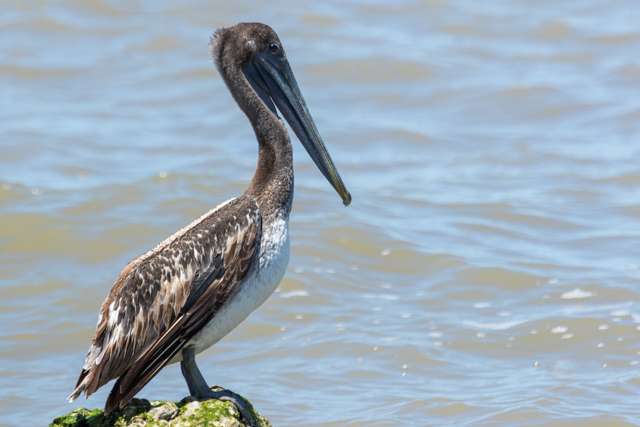
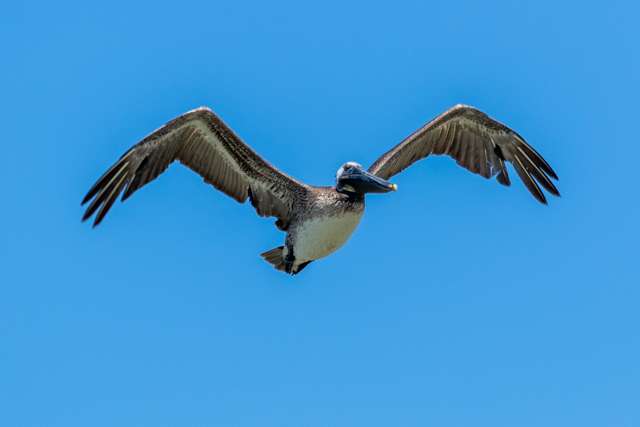
The Brown Pelican is a master of the air and the sea. Weighing up to 8 pounds with a wingspan that can stretch over 6.5 feet, it possesses an ungainly, almost prehistoric appearance when perched, which instantly transforms into a picture of effortless grace in flight.
The Diving Fisherman
Unlike its inland cousin, the American White Pelican, which fishes cooperatively by herding fish, the Brown Pelican is a solitary, aerial hunter. Its fishing method is a spectacle unique among pelicans and one of the most exciting behaviors to observe on the coast:
- The High Vantage: The pelican circles high above the water, its keen eyesight scanning for schools of small fish—primarily menhaden, herring, and anchovies—near the surface.
- The Plunge: Once a target is spotted, it performs a dramatic, steep dive, often from heights of 60 feet or more, tucking its head and twisting its body just before impact to protect its neck.
- The Scoop: The bird hits the water with a splash, using its large, distendable throat pouch to scoop up fish and several gallons of water.
- The Drain: It then surfaces, tilts its head down to drain the water from the pouch, and swallows the fish whole. This entire sequence showcases a powerful adaptation to a marine lifestyle, relying on internal air sacs to cushion the impact and help it pop back to the surface.

Physical and Behavioral Traits
The pelican’s magnificent bill and pouch are its most distinctive features. The bill can measure up to 18 inches long, and the pouch, while not used for carrying food for long distances, can hold three times the capacity of its stomach.
- Plumage: Adults are dark gray-brown on the body. During the breeding season, their head and neck display a striking palette: the neck turns a rich, deep maroon or rusty brown, and the head crown is bright yellow. This seasonal shift makes them particularly photogenic.
- Nesting: Brown Pelicans are colonial nesters, forming large, noisy rookeries on isolated islands or mangroves, safe from land predators. They build their nests on the ground, in low trees, or in shrubs, typically laying two or three chalky-white eggs.
The Environmental Catastrophe and the Road to Recovery

The most compelling chapter of the Brown Pelican’s history in the United States is its dramatic brush with extinction in the mid-20th century.
The DDT Crisis
In the 1950s and 1960s, scientists and concerned citizens began noticing a severe decline in pelican populations, particularly in the Gulf Coast and California. In Louisiana, the state bird vanished completely. The cause was eventually traced to DDT (dichlorodiphenyltrichloroethane), a powerful insecticide widely used in agriculture.
DDT is an organochlorine, which means it is persistent in the environment and accumulates as it moves up the food chain—a process known as biomagnification. The small fish ingested minute amounts of the toxin, which were then concentrated to lethal levels in the bodies of their predators, including the pelicans.
The primary effect of the concentrated DDT was not direct poisoning, but rather interference with the pelicans' ability to metabolize calcium. This resulted in the females laying eggs with extremely thin, brittle shells that often cracked under the weight of the incubating parent. Reproduction plummeted, pushing the species to the brink.
Listing and Ban
In 1970, recognizing the dire situation, the U.S. government listed the Brown Pelican as an endangered species under the newly established Endangered Species Act. A key turning point came in 1972, when the U.S. Environmental Protection Agency (EPA) issued a nationwide ban on DDT use.
The Conservation Success Story
The ban on DDT initiated one of America’s most significant conservation victories. State and federal agencies, along with conservation groups, launched intensive recovery programs:
- Translocation: Birds from healthy populations in Florida were successfully moved and reintroduced to Louisiana, establishing a new breeding colony.
- Protection: Critical nesting habitats were protected from development and disturbance.
By the early 21st century, the recovery was clear and profound. Population numbers rebounded across all U.S. states. In a triumphant acknowledgement of this success, the Brown Pelican was officially removed from the federal list of endangered and threatened species in 2009, becoming a shining example of what the Endangered Species Act and decisive government action can accomplish.
The Brown Pelican Across the American Landscape
Today, the Brown Pelican is a fixture in diverse coastal ecosystems, facing new challenges but thriving nonetheless.
The California Coast
Along the Pacific Flyway, the California Brown Pelican (P. o. californicus) is often seen gliding just above the waves in formation, utilizing the aerodynamic energy of ground effect flight. Its primary U.S. nesting sites are on the Channel Islands. Here, its life is closely monitored as an important indicator species—a canary in the coal mine—whose health reflects the overall health of the marine ecosystem, especially the availability of its preferred forage fish.
The Gulf of Mexico and Southeast
In the Gulf, the pelican, affectionately known as the "Louisiana State Bird," has proven particularly resilient, though its recovery has been tested by oil spills (like the Deepwater Horizon disaster), hurricanes, and coastal erosion. Its presence in this region underscores the importance of marsh and barrier island habitats for colonial waterbirds.
The pelican’s large size and prominent nature have made it an invaluable educational tool for coastal conservation efforts, helping to raise awareness about everything from plastic pollution (which can lead to entanglement and injury) to the sustainable management of fisheries.
A Coastal Sentinel
The Brown Pelican’s daily routine is a familiar sight to millions: the quiet glide along the beach, the sudden, violent splash, and the slow, heavy climb back into the sky. It is a sentinel of the sea, a bird that has been the subject of art, poetry, and rigorous scientific study.
Its journey from the brink of extinction due to human-made toxins to its current status as a fully recovered, common species is an ongoing narrative of hope. The Brown Pelican stands not just as a creature of beauty and unique biology, but as a perpetual reminder that ecological restoration is possible when science, policy, and public will align. It is, truly, the symbol of survival on the American coast.
