
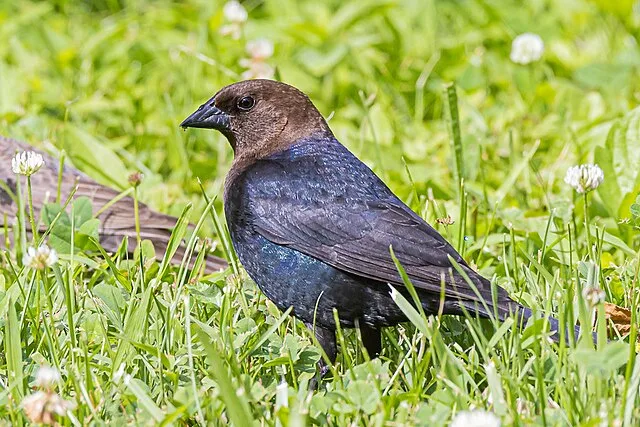
The Brown-headed Cowbird (Molothrus ater) is a small, stocky blackbird found across much of North America. While its appearance might not be extraordinary at first glance, its unusual reproductive strategy sets it apart from nearly every other songbird on the continent.
Unlike most birds, cowbirds don’t build nests or raise their own young. Instead, they lay their eggs in the nests of other birds, leaving the host species to incubate and raise the cowbird chick—often at the expense of their own offspring. This behavior, known as brood parasitism, has made the Brown-headed Cowbird both a subject of scientific fascination and a challenge for bird conservationists.
Physical Description
Brown-headed Cowbirds are medium-sized blackbirds, measuring about 6.5 to 8.5 inches long, with a wingspan of 12 to 15 inches. Males and females are easy to distinguish:
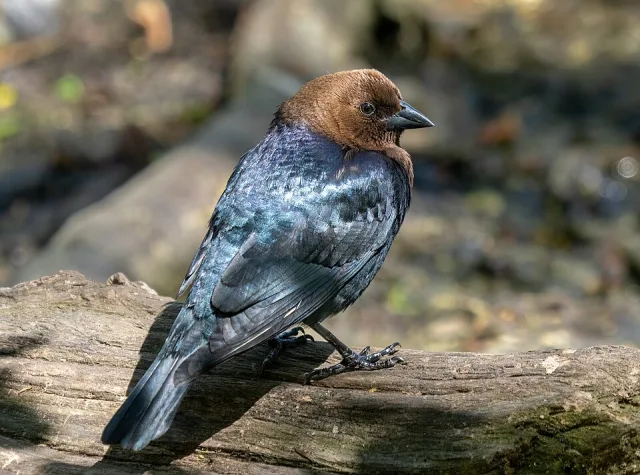
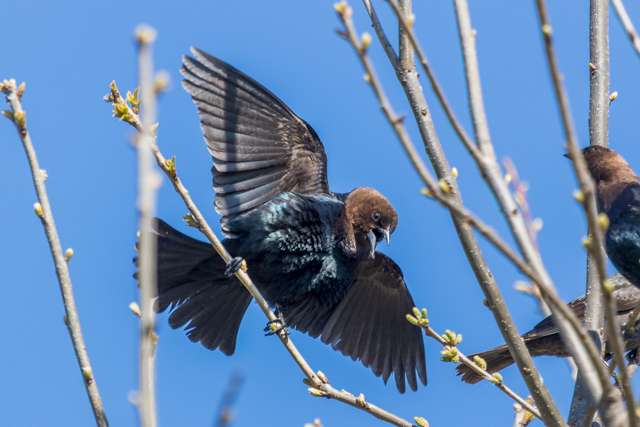
Adult males have a glossy black body and a distinctive chocolate-brown head.
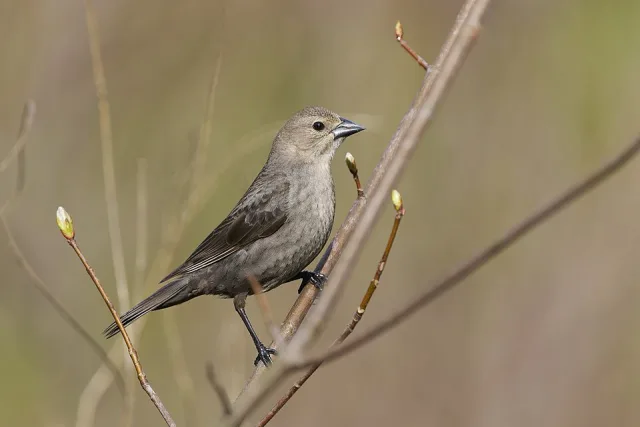
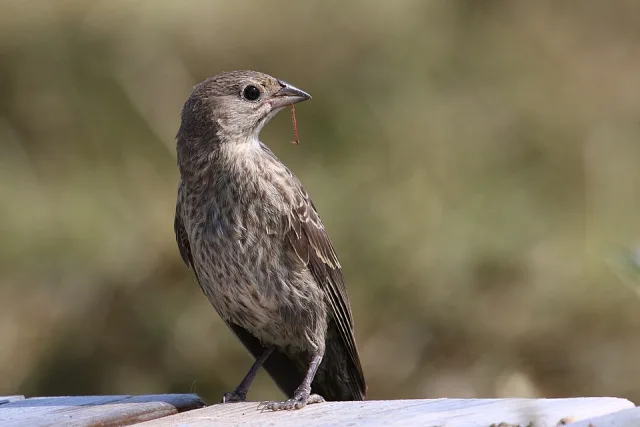
Adult females are a dull gray-brown overall with faint streaking on the underparts and a slightly lighter throat.
Both sexes have a short, conical bill typical of blackbirds and finches, suited for seed and insect eating.
Though not flashy compared to some songbirds, the male’s contrasting brown head and black body make it stand out, particularly when singing or displaying.
Range and Habitat
Brown-headed Cowbirds are native to North America, and their range spans southern Canada through the United States and into northern Mexico. They are highly adaptable and found in a variety of open and semi-open habitats, including:
Grasslands and agricultural fields
Forest edges and clearings
Suburban lawns and parks
Roadsides and pastures
Originally, cowbirds followed bison herds across the Great Plains, feeding on insects stirred up by the grazing animals. This nomadic lifestyle didn’t lend itself to staying in one place to raise young, likely contributing to the evolution of their parasitic nesting strategy. With the arrival of cattle and the clearing of forests by European settlers, cowbirds rapidly expanded eastward.
Today, they are year-round residents in much of the U.S., though northern populations migrate south for the winter.
Vocalizations
Brown-headed Cowbirds are relatively quiet compared to some songbirds, but they do have a distinctive voice. The male's song is a series of liquid gurgles and whistles, sometimes described as a "bubbling" sound, often accompanied by a bowing or puffed-up display.
Females produce a variety of chatters and high-pitched calls, particularly when communicating with males during courtship or defending a territory.
Diet and Feeding Behavior
Cowbirds are omnivorous, feeding mainly on:
Seeds and grains
Insects, including grasshoppers, caterpillars, beetles, and ants
Occasionally fruit and other plant material
They forage on the ground, often in mixed flocks with other blackbirds, starlings, or grackles. During breeding season, females may follow potential host species to locate nests for egg-laying.
Reproduction: The Parasitic Strategy
The Brown-headed Cowbird is best known—and most controversial—for its brood parasitism. A single female may lay 30 to 40 eggs per season, one egg per host nest, and never incubates or feeds her young.
How it works:
The female locates an active nest of a host species (often during construction or early egg-laying).
She returns when the host is absent and lays a single egg, usually removing one of the host’s eggs in the process.
The host parents incubate and feed the cowbird chick as if it were their own.
Cowbird chicks hatch earlier and grow faster, often outcompeting the host chicks for food.
In some cases, the cowbird chick pushes host eggs or young out of the nest.
Cowbirds have been recorded parasitizing over 220 bird species, with about 140 successfully raising cowbird chicks. Common hosts include:
Song sparrows
Chipping sparrows
Warblers (e.g., Yellow Warbler, Kirtland's Warbler)
Eastern Phoebe
Red-eyed Vireo
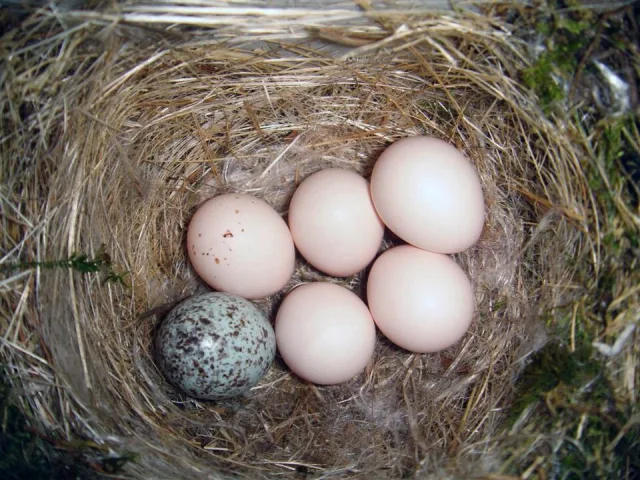
Many host species have not evolved defenses against this parasitism, especially those with limited evolutionary exposure to cowbirds. Others, like the Yellow Warbler, may recognize foreign eggs and bury them by building a new nest layer on top.
Impact on Native Bird Populations
The expansion of Brown-headed Cowbirds into eastern and western North America has had serious consequences for some native songbirds, particularly:
Kirtland’s Warbler (federally endangered)
Black-capped Vireo
Least Bell’s Vireo
Golden-cheeked Warbler
These species have suffered steep declines in part due to high levels of parasitism, which drastically reduce their reproductive success. In response, land managers and conservationists have implemented cowbird trapping programs and nest protection measures in critical habitats.
While cowbirds are a natural part of the ecosystem, their human-assisted range expansion has created ecological imbalances that threaten more specialized, less adaptable birds.
Conservation Status
Despite their controversial behavior, Brown-headed Cowbirds are protected under the Migratory Bird Treaty Act, like all native North American birds. Their global population is estimated at 120 million, and they are listed as a species of Least Concern by the IUCN.
However, management efforts may include controlled trapping and removal in areas where cowbirds pose a threat to endangered species. These efforts are typically carefully regulated and justified by broader conservation goals.
Ethical and Ecological Perspectives
The cowbird’s parasitic strategy often evokes strong emotional responses from humans. Watching a warbler struggle to feed a demanding cowbird chick several times its size can feel unfair or even cruel. But it’s important to remember that this behavior is an evolved survival strategy, honed over thousands of years.
In ecological terms, the cowbird’s parasitism adds complexity to ecosystems and can influence host species' behavior, nest success, and evolution. It also raises important questions about the role of human-induced habitat changes in shifting species interactions.
How to Help Native Birds
If you're concerned about the impact of cowbirds on vulnerable songbirds, there are a few things you can do:
Preserve large tracts of native habitat – cowbirds thrive in fragmented landscapes.
Avoid clearing forest edges or creating narrow corridors that expose nesting birds.
Support conservation groups working to protect endangered host species.
Never disturb nests or remove eggs unless under expert guidance and legal approval.
Wrapping Up
The Brown-headed Cowbird is a bird of paradox: an unassuming blackbird that employs a reproductive strategy as fascinating as it is controversial. As a brood parasite, it represents one of nature’s most unusual life histories — a strategy that works incredibly well for the cowbird, but sometimes spells disaster for its hosts.
By understanding the cowbird’s behavior in the broader context of habitat change, migration, and ecosystem dynamics, we gain a deeper appreciation for the delicate and sometimes dramatic balance that defines the natural world.
Whether admired for its adaptability or managed for its ecological impact, the Brown-headed Cowbird remains one of North America’s most compelling—and debated—avian species.
