
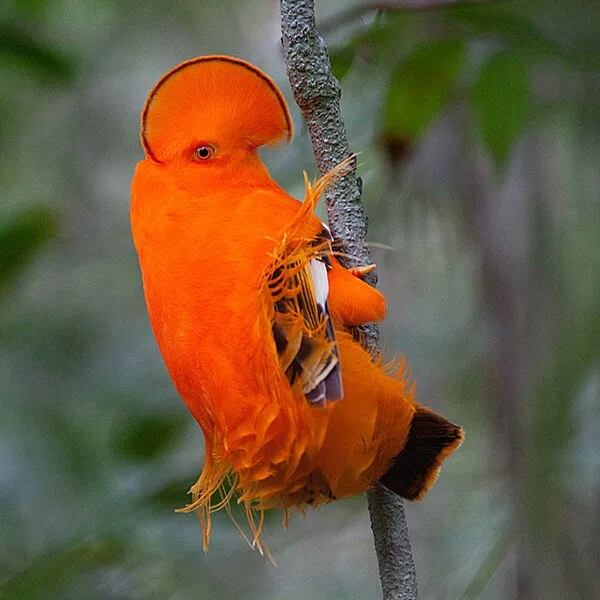
The color red in nature is an unmistakable declaration—a signal of warning, attraction, or dominance. In the avian world, red plumage is perhaps the most striking visual display, commanding attention across the forest canopy and desert scrub. From the fiery crest of a cardinal to the deep, wine-red of a cock-of-the-rock, this color is a vibrant statement of health and genetic quality. Like yellow, the brilliant reds seen in birds are overwhelmingly achieved through pigments, but the process is chemically more complex than simply absorbing what they eat.
The Science of Red: Carotenoids and the Metabolic Key
The red, orange, and yellow colours in birds are all part of the same chemical family: carotenoids. These are organic pigments produced by plants, algae, and some fungi, and they are essential components of a bird's diet. A bird's red plumage is not just a matter of eating red food; it is a metabolic feat.
From Yellow to Red: The Process of Conversion
Birds cannot manufacture carotenoids from scratch, but many species possess the enzymes necessary to chemically transform the yellow carotenoids they consume into more intensely red pigments. This process, known as metabolic conversion, is the key to avian crimson:
- Ingestion of Yellow Pigments: A bird feeds on seeds, fruits, or insects that contain yellow carotenoids (like lutein or zeaxanthin).
- Chemical Modification: Within the bird's liver and other tissues, specialized enzymes modify the structure of these yellow molecules by adding oxygen atoms. This process is called oxidation.
- Creation of Ketocarotenoids: This oxidation results in the creation of ketocarotenoids, such as canthaxanthin and astaxanthin. These are the true red pigments.
- Deposition: These newly synthesized red pigments are then deposited into the keratin structure of the growing feathers.
Red as an "Honest Signal"
Because the production of red feathers requires not only a high-carotenoid diet but also the metabolic machinery and energy to convert the pigments, bright red is considered an "honest signal" of mate quality.
- Foraging Ability: Only a bird adept at finding high-quality food can acquire enough raw carotenoids.
- Health and Immunity: The enzymes and energy needed for pigment conversion are the same ones used to fight off parasites and disease. If a bird is ill or stressed, it will divert resources away from feather coloration, resulting in duller plumage.
Therefore, the reddest male birds are generally the healthiest, most vigorous, and most attractive mates, leading to stronger reproductive success. The intensity of red directly correlates with a male's dominance and testosterone levels.
Top 10 Blood-Red Beauties: The World's Most Crimson Birds
These ten species exemplify the brilliance of avian red, from deep scarlet to fiery vermilion, showcasing the remarkable power of metabolic artistry.
1. Scarlet Macaw (Ara macao)
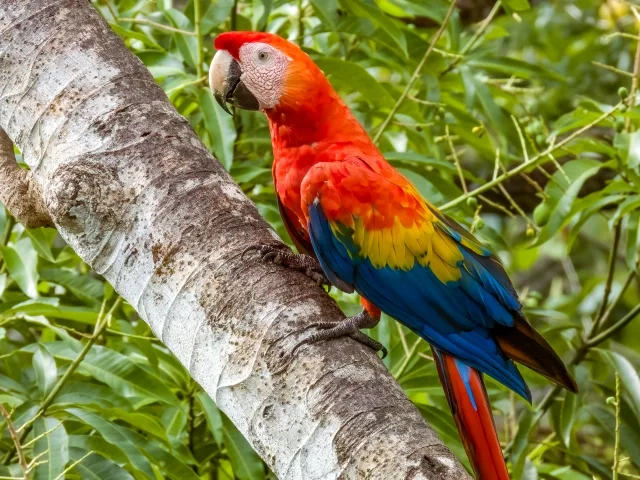
The iconic, unmistakable parrot of the Central and South American rainforests.
- Plumage and Description: The majority of the body, head, and lesser wing coverts are a stunning, intense fire-engine red. This vibrant red transitions to yellow and blue on its broad wing feathers, creating a spectacular tri-color display.
- Habitat: Found in the humid evergreen forests of Central and South America.
- Behavior: Highly intelligent and social, often seen flying in pairs or large, noisy flocks. Their strong beaks are used to crack large, tough seeds and nuts.
2. Northern Cardinal (Cardinalis cardinalis)
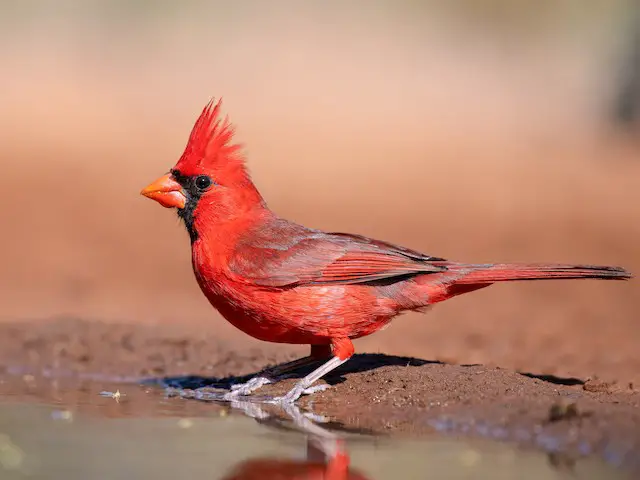
A familiar and beloved bird across North America, the male is a sight of pure, velvety red.
- Plumage and Description: The male is almost entirely covered in a striking, deep vermilion-red, often described as having a slight orange tint, intensified by a prominent crest and a distinctive black mask around its bright red, thick bill. The female is a duller reddish-brown, often with hints of red on the wings and crest.
- Habitat: Highly adaptable, found in woodlands, gardens, shrubbery, and suburban areas throughout the eastern and southwestern United United States.
- Behavior: Unlike many songbirds, the male and female both sing, often communicating with a sharp, metallic "chip" call. They are non-migratory and often visit winter feeders.
3. Scarlet Tanager (Piranga olivacea)
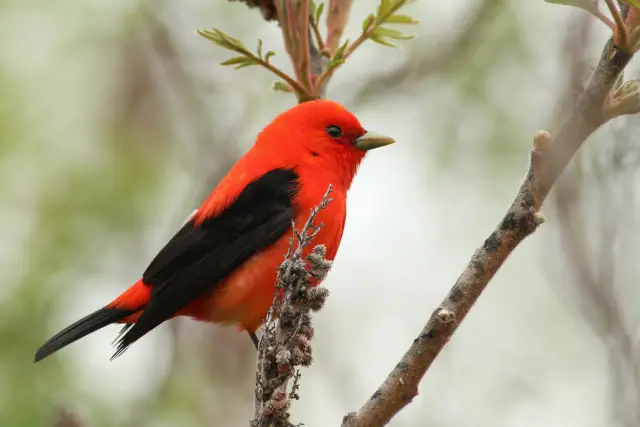
A spectacular Neotropical migrant that breeds across eastern North America.
- Plumage and Description: The breeding male is an absolute splash of deep scarlet-red across his entire body, providing a breathtaking contrast to his jet-black wings and tail. This brilliant red plumage is only present during the breeding season; in winter, the male molts into a yellow-green color.
- Habitat: Prefers mature deciduous forests and oak-hickory woodlands during the breeding season.
- Behavior: They forage mainly in the forest canopy, often eating insects and occasionally fruit. The contrast of the brilliant red against the green leaves makes them a favourite sight for birdwatchers.
4. Vermilion Flycatcher (Pyrocephalus rubinus)
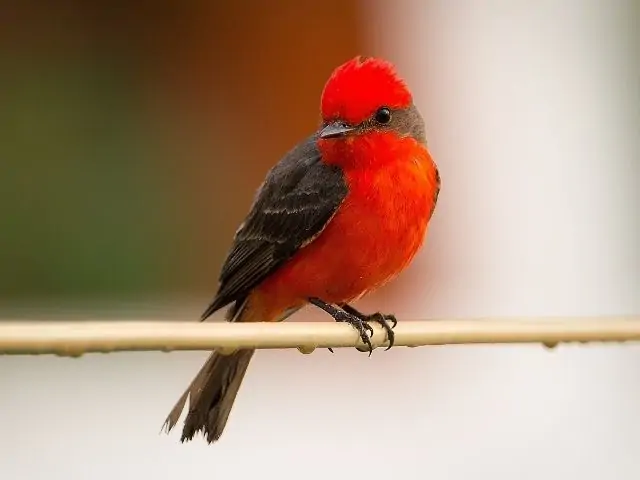
A tiny tyrant flycatcher known for the male's explosive, almost unreal red coloration.
- Plumage and Description: The male is instantly striking, with a solid brilliant, glowing vermilion-red on its entire head, crest, and underparts (chest and belly). This intense red is set off by a sharp black mask, back, and wings. The intensity of the red makes it look like a floating ember.
- Habitat: Found in open, semi-arid scrub, mesquite thickets, and riparian areas, particularly in the southwestern United States, Mexico, and Central and South America.
- Behavior: A classic "sallying" flycatcher, it perches conspicuously on a low branch or fence line, darts out to snatch insects in mid-air, and returns to its perch.
5. Pine Grosbeak (Pinicola enucleator)
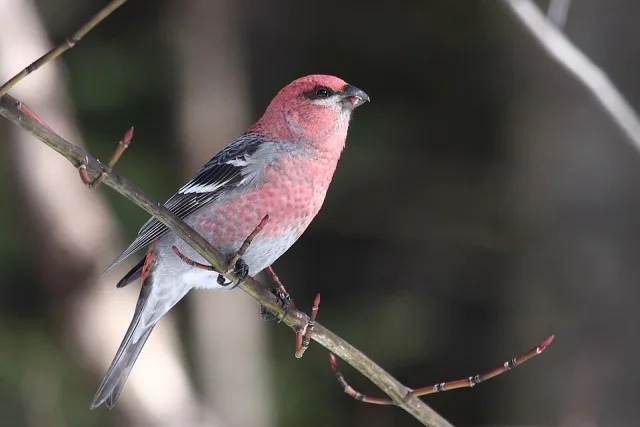
A large, robust finch of the northern coniferous forests.
- Plumage and Description: The mature male is cloaked in a soft yet deep rosy-red or raspberry-red wash, particularly concentrated on its head, back, and rump, contrasting with gray underparts and dark wings with white wing bars. The red is often described as a soft, powdered shade. Females and young birds are yellow-green/orange.
- Habitat: Found year-round in the boreal and subalpine coniferous forests across the northern hemisphere (North America and Eurasia).
- Behavior: Known for its large, rounded bill, adapted for crushing seeds and eating buds and fruit. They are often quite tame, allowing close approach.
6. Cock-of-the-rock (Rupicola spp.)
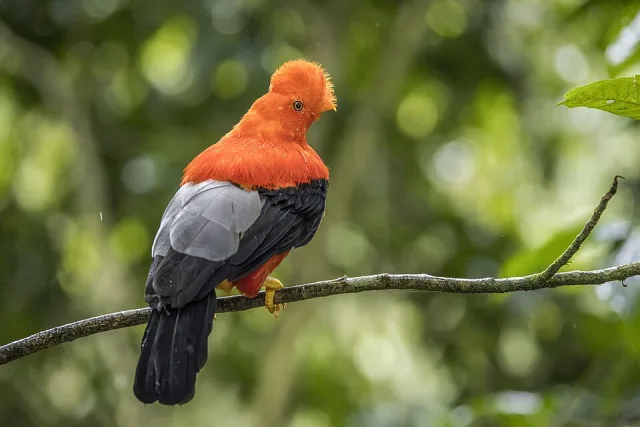
The genus contains two species, the Andean and Guianan, both famous for their incredible scarlet plumage.
- Plumage and Description: The Guianan Cock-of-the-rock (R. rupicola) male is an intense, uniform fiery orange-red to vermilion-red over its entire body. The most distinctive feature is a huge, fan-like, flattened crest that covers its entire bill.
- Habitat: Restricted to remote, humid rainforests near rocky outcrops and gorges in the Amazonian basin, often nesting on cliffs or large boulders.
- Behavior: Famous for its elaborate communal courtship rituals, called leks, where males gather to perform noisy, vigorous dances to display their plumage to the females.
7. Common Redpoll (Acanthis flammea)

A tiny, hardy finch of the far northern climes, sporting a distinct red badge.
- Plumage and Description: The male has a vibrant rosy-red flush on its breast and sides, which can vary in intensity. All individuals, both male and female, are characterized by a small, unmistakable crimson-red patch, or cap, on the forehead. The rest of the bird is streaky brown and white.
- Habitat: Found in birch and alder woodlands, tundra edges, and scrub across the subarctic regions of the Northern Hemisphere.
- Behavior: Extremely social and nomadic, often traveling in large, acrobatic flocks, frequently feeding upside down on cones and seed catkins. Their movements south in winter (irruptions) are often linked to poor food crops in the north.
8. Summer Tanager (Piranga rubra)
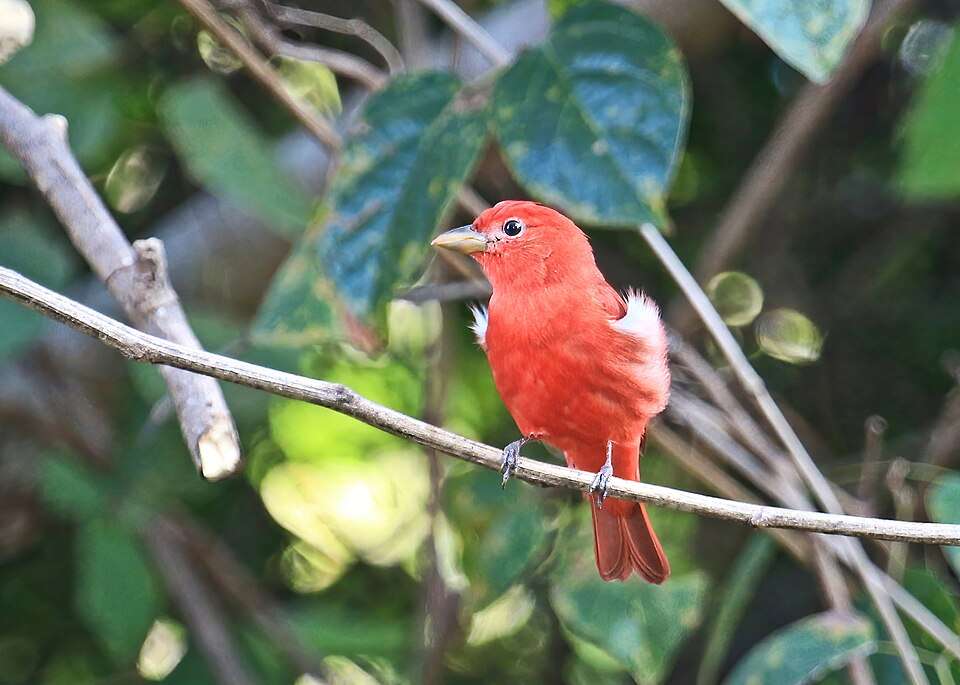
A neotropical migrant and the only entirely red bird in North America.
- Plumage and Description: The male is a rare bird in that it is an almost completely uniform bright rose-red with no black markings, unlike the Scarlet Tanager. The red is often described as a soft, but vibrant, rosy shade. Females are a clean mustard-yellow.
- Habitat: Prefers open oak woodlands and pine forests, particularly in the southern and eastern United States.
- Behavior: They specialize in eating bees and wasps, which they catch in flight, stunning the insects against a branch before removing the stinger.
9. Scarlet Honeyeater (Myzomela sanguinolenta)
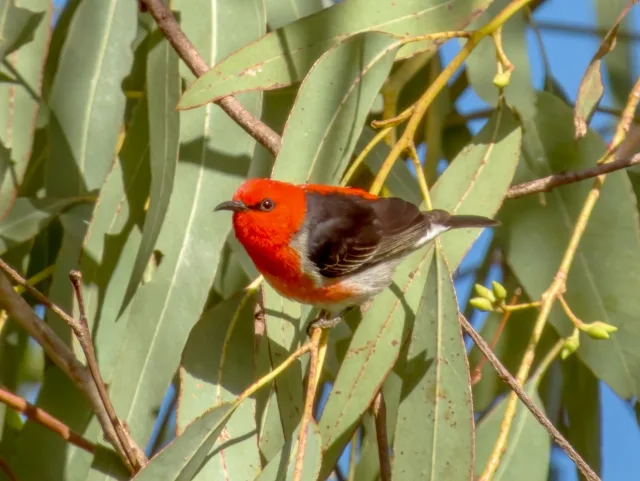
A tiny, active honeyeater of Australia and New Guinea known for the male's intense color.
- Plumage and Description: The male is small, delicate, and covered in a magnificent pattern of intense scarlet-red on its head, breast, and back, which contrasts dramatically with its black wings and underparts. The red is extremely vibrant and concentrated.
- Habitat: Found in subtropical and tropical forests, woodlands, and gardens, especially near flowering trees.
- Behavior: Highly nomadic, following the seasonal flowering of nectar-rich plants. They are extremely active, constantly flitting between flowers and rarely staying still.
10. Red Siskin (Spinus cucullatus)
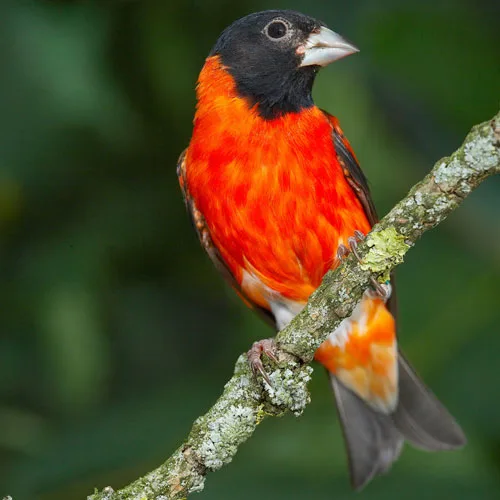
A small finch native to the mountains of Venezuela and Colombia, sadly endangered due to its beauty.
- Plumage and Description: The adult male is characterized by a stunning, deep crimson-red or scarlet body, starkly contrasted by a black hood (cap, throat, and nape) and black wings. This small bird packs one of the most saturated red colors in the finch family.
- Habitat: Originally found in humid, mountainous scrub and foothills, but now extremely restricted due to habitat loss and trapping.
- Behavior: Sought after for the caged bird trade, historically even used to breed red coloration into domestic canaries, which contributed significantly to its endangered status.
The crimson plumage of these birds is a profound biochemical testament to their health and environment. They are living chemical canvases, turning the mundane yellow pigments of their food into the dazzling, high-energy hue of red, making them some of the most spectacular and sought-after sights in the world.
