
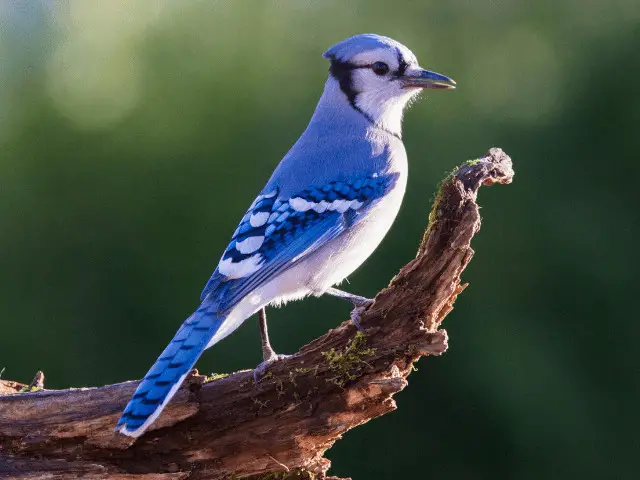
The air is split by a raucous, piercing call—a harsh “jay! jay!”—announcing the presence of one of Eastern North America’s most recognizable and engaging birds: the Blue Jay (Cyanocitta cristata). Far more than just a flash of sapphire, black, and white at the bird feeder, the Blue Jay is a highly intelligent corvid—a member of the same family as crows and ravens—possessing a complex social structure, remarkable adaptability, and an ecological importance often overlooked. From its dazzling, structurally colored feathers to its secretive nesting habits and vital role in forest regeneration, the Blue Jay embodies a bold intersection of beauty and brains in the avian world.
Physical Majesty: The Illusory Blue
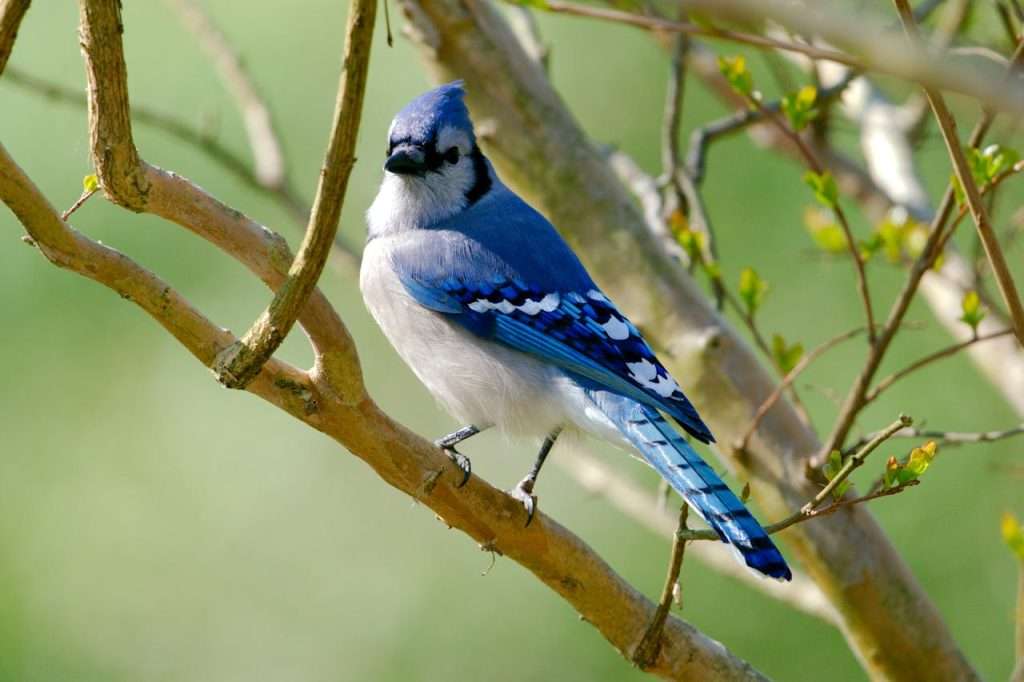
The Blue Jay is a large songbird, measuring about 9 to 12 inches long with a wingspan of 13 to 17 inches. Its appearance is dominated by a perky, expressive crest that can be raised high when the bird is alarmed or aggressive, bristled outward when frightened, or flattened against the head when it is relaxed and feeding.
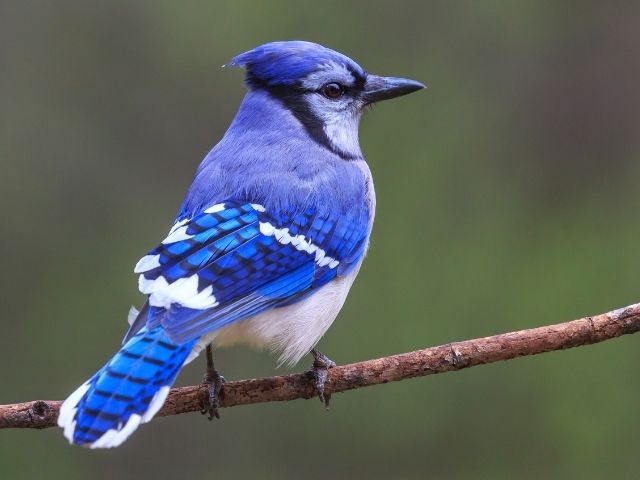
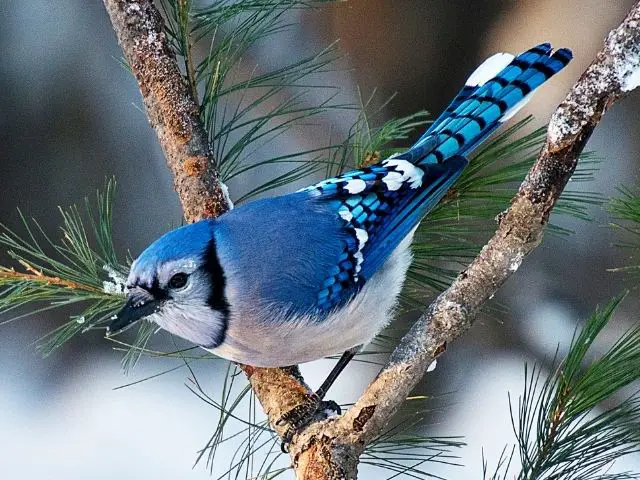
The striking coloration of the Blue Jay is its defining feature, yet the blue of its plumage is an optical illusion. The feathers themselves contain no blue pigment. Instead, the color is structural, caused by the way light interacts with modified cells and small air pockets in the feather barbs. When white sunlight hits these structures, all wavelengths are absorbed except for blue, which is scattered and refracted, giving the appearance of brilliant blue. If a Blue Jay feather is crushed, the internal structure is destroyed, and the color vanishes, leaving only the dark, melanin-based pigment.
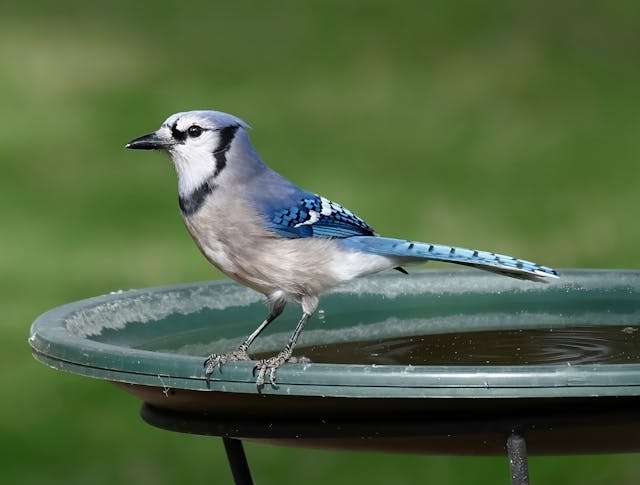
This structural color is most prominent on the bird's back, wings, and long, rounded tail, which are beautifully barred with black and tipped with white. The jay’s underside is a whitish-gray, contrasted sharply by a distinctive black “necklace” or bridle that wraps around the throat and the back of the head, a pattern that varies slightly among individuals and may help jays recognize one another. Males and females look virtually identical, though the male is often slightly larger.
Habitat and Range: A Tree-Planting Omnivore

The range of the Blue Jay extends across the entire eastern half of North America, from southern Canada down to Florida and west to the edge of the Great Plains, roughly bounded by the Rocky Mountains. They are highly adaptable birds, thriving in diverse environments ranging from extensive deciduous and mixed-wood forests to suburban backyards, city parks, and agricultural areas, so long as there are trees for cover and nesting. They show a particular affinity for habitats rich in oak and beech trees, a preference directly linked to their dietary habits.
Blue Jays are classic omnivores and opportunistic feeders. Their diet is incredibly varied, roughly composed of 75% plant matter and 25% animal matter over the course of the year. Their vegetable diet centers on nuts and seeds, with acorns being a clear favorite. They also consume grains, berries, and cultivated fruits. Their animal consumption includes a wide array of insects, such as caterpillars, beetles, and grasshoppers, as well as spiders, snails, and, occasionally, small vertebrates like mice or frogs.
However, the Blue Jay is often criticized for a darker side to its omnivorous nature: the occasional raiding of other birds' nests to consume eggs or nestlings. While this behavior does occur, extensive studies suggest that it forms a very small percentage of their overall diet, though its notoriety has earned the Blue Jay a reputation as a backyard bully, especially at feeders where its aggressive posture can intimidate smaller species.
Behavioral Complexity and Intelligence
The Blue Jay’s membership in the Corvidae family means it is endowed with remarkable intelligence. Corvids are noted for having the largest brains relative to body size of all bird families, and the Blue Jay is no exception, exhibiting complex problem-solving skills, excellent spatial memory, and social depth.
One of the most essential behaviors linked to their intelligence is caching. During the fall, Blue Jays will harvest thousands of acorns, beechnuts, and other mast, stuffing several nuts at a time into a special throat pouch (the gular pouch) and carrying them great distances—often several hundred meters—to bury them in the ground for later consumption. A single jay can cache between 3,000 and 5,000 nuts in a single season. The thousands of forgotten caches play a critical ecological role, effectively planting oak forests and aiding in the massive reforestation of the continent following the last glacial period. This habit makes the Blue Jay a major engine of tree dispersal.
Vocalization is another area where the Blue Jay’s complexity shines. While famous for the loud, often grating “jay! jay!” alarm call, they possess a vast vocabulary that includes soft, musical warbles, rattles, and bell-like sounds used in close family communication. Perhaps most famously, the Blue Jay is an exceptional mimic, frequently imitating the piercing cry of predatory hawks, particularly the Red-shouldered and Red-tailed Hawks. Scientists speculate this behavior serves either as an alarm to warn other jays or, more cunningly, as a way to trick other birds into fleeing a feeder or a food source, allowing the jay to claim the prize.
Social Structure and Nesting
Blue Jays are highly social birds that often travel in family units and loose flocks, especially outside the breeding season. They form strong, monogamous pair bonds that typically last for life, with pairs remaining together year-round.
The breeding season runs from March through July. The pair selects a nesting site, usually in a tree crotch or on a horizontal limb of a deciduous or coniferous tree, typically 8 to 30 feet off the ground. Both the male and female cooperate to build a bulky, open cup nest made of twigs, grass, bark strips, and moss, sometimes cemented with mud or even decorated with found objects like paper or rags.
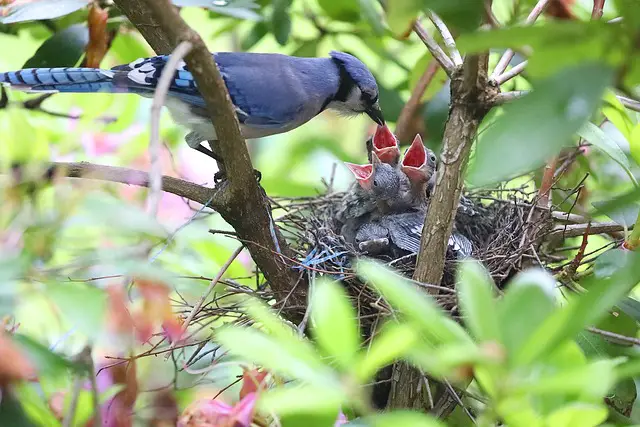
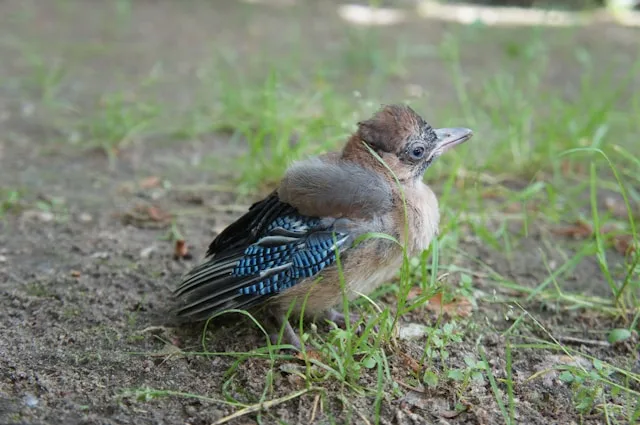
The female usually lays a clutch of three to seven eggs, which are greenish, buff, or light blue and speckled with brown. She handles most of the incubation, a period lasting about 16 to 18 days, while the male diligently brings her food. Once the young hatch, both parents share the duties of feeding the nestlings. The young birds fledge (leave the nest) between 17 and 21 days but often remain dependent on their parents for food for up to two months, forging the tight family unit that defines their sociality. Blue Jays are highly aggressive and territorial around their nests, vigorously mobbing and chasing away potential predators, including squirrels, cats, snakes, and even humans.
Migration: An Enduring Mystery
The Blue Jay population presents a peculiar mystery to ornithologists: their migration patterns are erratic and poorly understood. While most Blue Jays are year-round residents throughout much of their extensive range, birds from the northern populations engage in partial, irregular southward migrations.
In the fall, thousands of jays can be seen migrating in loose, diurnal flocks along shorelines and coastal routes, sometimes flying south for hundreds of miles. The perplexing aspect is the variability: some individuals migrate one year but stay north the next; adults and juveniles participate seemingly at random; and migration often occurs regardless of weather or food supply. The precise factors that trigger the southward movement in any given year or individual remain an enduring puzzle, solidifying the Blue Jay’s reputation as a creature full of behavioral quirks and unsolved complexity.
Wrapping Up
The Blue Jay is far more than a loud, colorful passerine. It is an intelligent, complex, and vital component of the eastern North American ecosystem. Its dazzling, illusory blue is matched only by its cunning mimicry, its strategic caching, and its dedication to its family unit, making the Blue Jay an essential and endlessly fascinating subject for both the casual observer and the dedicated ornithologist.
