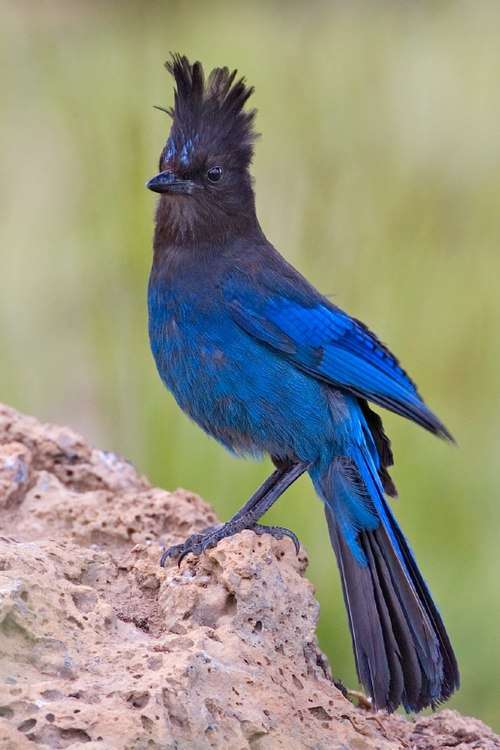
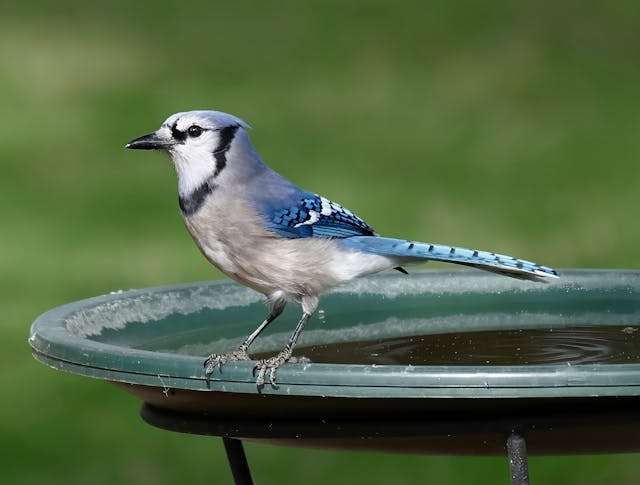
If you look at a Northern Cardinal, its feathers are packed with red pigments called carotenoids. If you look at a Goldfinch, it's fueled by yellow pigments. But if you look at a Blue Jay? You’re looking at a lie.
In the world of birds, the color blue does not exist as a pigment. There is no "blue bird food" that turns feathers sapphire. Instead, blue is a masterpiece of biological engineering and physics.
The Chemistry (or Lack Thereof)
Unlike reds, oranges, and yellows, which are derived from chemicals and dyes in a bird's diet, blue is a structural color.
If you were to grind up a blue feather, the resulting powder would be a dull, dark gray or brown. This is because the "color" is created by the physical shape of the feather itself rather than a chemical compound.
How it Works: Light Refraction and Scattering
The magic happens within the barbs of the feather. Each barb is made of keratin (the same stuff as your fingernails), but inside blue feathers, that keratin is arranged in a specific, porous structure filled with tiny air pockets.
The Scattering: When white light hits the feather, these microscopic air structures act like tiny prisms. They are sized perfectly to scatter the shorter wavelengths of light—specifically blue.
The Absorption: Beneath this "sponge layer" of keratin and air is a layer of melanin (dark pigment). This melanin absorbs all the longer wavelengths (reds and yellows) that didn't get scattered.
The result? The blue light bounces back to your eyes, while everything else is swallowed up by the dark background. This phenomenon is known as Tyndall scattering, and it's the same reason the sky looks blue.
Why Do Birds Have Blue Feathers?

Evolution rarely does anything just for show. Blue feathers serve several vital purposes:
Sexual Selection: For many species, the brightness of the blue indicates the health and "fitness" of the male. A more vibrant blue suggests a bird has high-quality keratin structures, making him a more attractive mate.
Species Recognition: In dense forests, a flash of blue is a high-contrast signal that helps birds find members of their own kind.
Territorial Displays: A bright blue wing-patch can be a "keep out" sign to rivals.
Can Other Birds See the Blue?
Not only can they see it, but they see it better than we do.
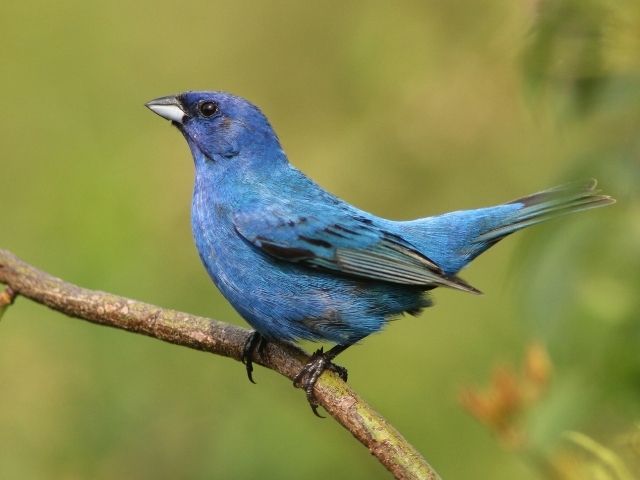
Humans have three types of color-detecting cones in our eyes (red, green, blue). Most birds have a fourth cone that allows them to see into the ultraviolet (UV) spectrum. Many feathers that look "just blue" to us actually have intense UV patterns that glow like neon to another bird. To an Indigo Bunting, his peer looks far more brilliant than he does to a human observer.
Why Are There Different Shades?
From the pale sky-blue of a Mountain Bluebird to the deep navy of an Indigo Bunting, the shade is determined by the geometry of the air pockets.
Larger air pockets scatter light differently than smaller ones, shifting the hue.
Density of Melanin: If the melanin layer underneath is thicker or darker, the blue appears deeper.
Skin Color: Interestingly, the color of a bird's skin does not affect the shade of the feathers. Because the light is scattered and absorbed entirely within the feather structure itself, the skin underneath is irrelevant to the visual output.
American Icons of Blue
North America is home to some of the most stunning examples of structural blue in the world:
| Bird | Shade of Blue | Where to Find Them |
| Mountain Bluebird | Cerulean/Sky Blue | Western U.S. open country |
| Indigo Bunting | Deep Electric Blue | Eastern U.S. brushy edges |
| Blue Grosbeak | Rich Ultramarine | Southern U.S. thickets |
| Steller’s Jay | Iridescent Midnight Blue | Western pine forests |
Fun Fact: The "Flashlight Test"
If you find a blue feather on the ground, try this: hold it up so the light shines through it from behind. The feather will turn a dull brown or gray. Because the color relies on reflected/scattered light, once you remove the "bounce," the blue disappears!