
Talks of an exquisite Blue Cardinal are widespread amongst birdwatchers everywhere, often leading to passionate debates as to its sightings.
Actually...
There are red, yellow, grey and even white cardinals but blue? Let's find out!
According to scientific research, there is NO evidence to prove the existence of a blue Northern Cardinal...at least not yet.
Fortunately, there are tons of other magnificent Northern Cardinals you can discover!
Cardinals – Your Favorite Garden Visitor

The Northern Cardinal (Cardinalis cardinalis) is a gorgeous bird that is typically a bright red shade of color – hence being given the clever name Northern Cardinal, alluding to the infamous red of the Roman Catholic clergy. Actually, it is the male that is bright red. The female is still attractive but she is a brown color with red accents.
Cardinals are found largely in the North and South American regions. They have strong, rigid beaks and both males and females are colored distinctly.
They are typically non-migrating birds, even during the winter, and prefer to live close to their birthplaces because of familiarity within the vicinity and good food sources.
Different Colored Cardinals
The Cardinal family, known as the Cardinalidae is incredibly colorful. No matter where you live in the States, chances are you have seen a beautiful sub-species and appreciated the symbolism of the Northern Cardinals.
Here are some prominent Cardinal birds to attract you should watch out for:
Red-Crested Cardinal

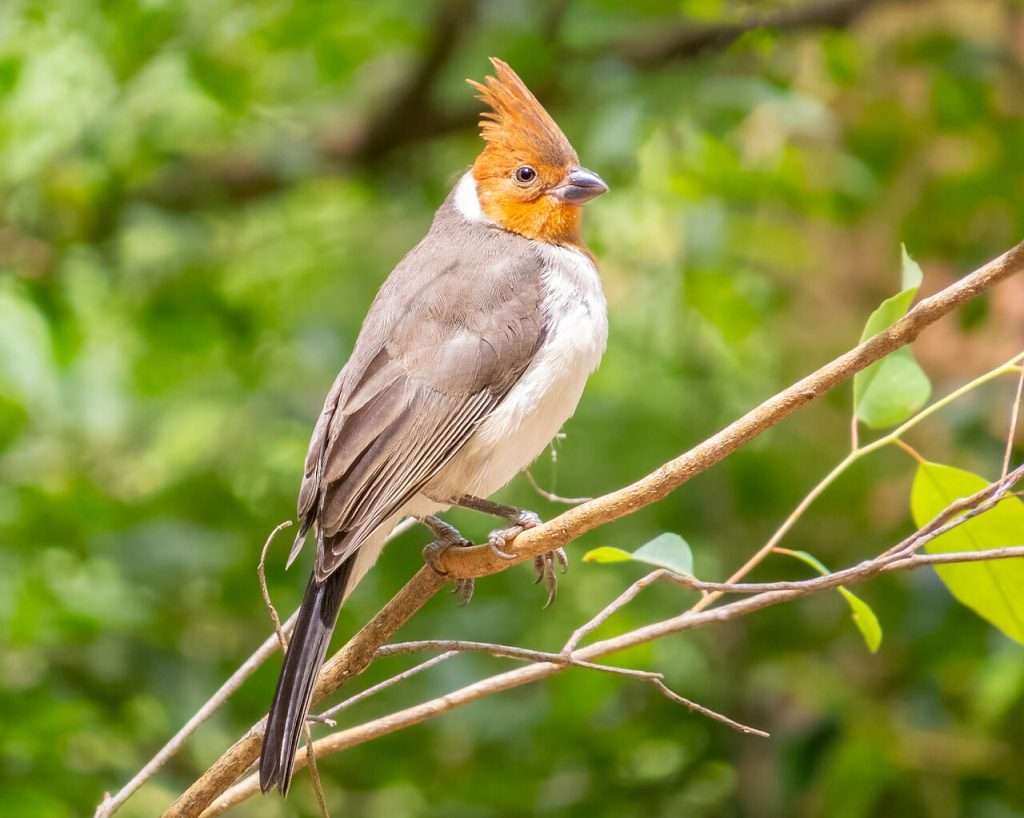
The Red-crested Cardinal (Paroaria coronata) is native to the southernmost region of South America. You may be surprised to learn that although they look like the Northern Cardinal and have the same family name, they are not related to them. Don't ask me how that works!
Pyrrhuloxia

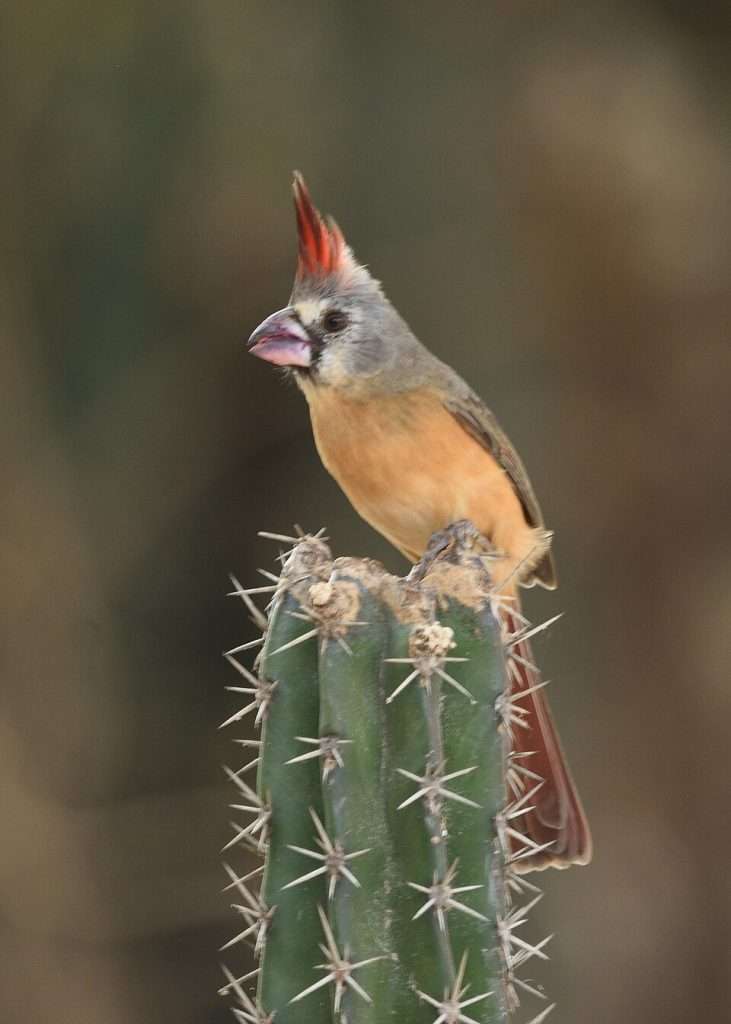
Also known as the Desert Northern Cardinal, the Pyrrhuloxia is a brownish-grey shade with a bright red breast. They have short beaks that help them crack on dried seeds. This Cardinal is a true member of the genus Cardinalis and sits proudly at 8 inches long.
It is commonly found around the southwestern area of North America and northern Mexico, where the weather conditions are usually arid and dry.
Northern Cardinal

The Northern Cardinal is the most common type of cardinal. If you're a keen birdwatcher, you have probably spotted many of these throughout the year along with gardens and shrublands. Their range is throughout eastern America and south round to California.
They immediately catch the eye, owing to their distinct, eye-catching red tones that make them hard to miss. However, female northern Northern Cardinals are a little easier to overlook.
Vermilion Cardinal

Found in dry, desert areas, the Vermilion Cardinal (Cardinalis phoeniceus) is native to the northern coast of South America. They are similar to Northern Cardinals in the northern areas where the males sing similar songs at dawn and mark their territory.
Yellow Cardinal
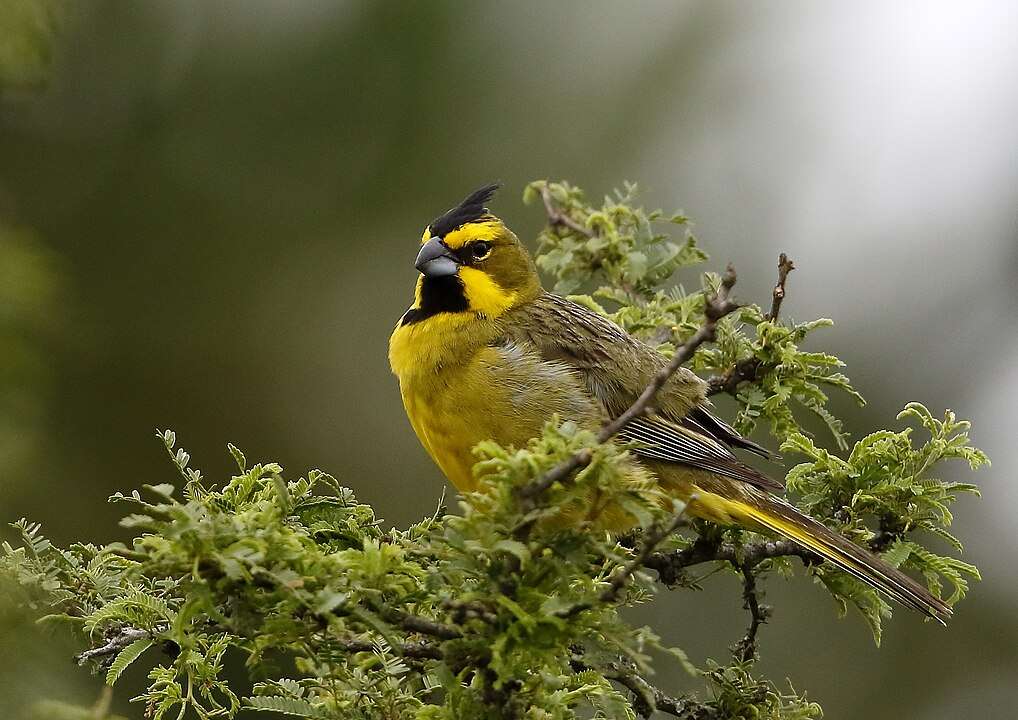
There are actually 2 types of Yellow Cardinal. The first is a very rare species of Yellow Cardinal (Gubernatrix cristata) found in the depths of South America. As you can see it looks a little similar to the other species but has very different markings. There is ongoing debate about whether it should be in the same family as the Red-crested Cardinal or is related to birds like the Yellowhammer.
The second Yellow Cardinal is also incredibly rare bird and is a genetic variation of the Northern Cardinal. Its unique yellow pigmentation comes about as a result of a particular genetic condition known as Xanthochroism.
The yellow color of these birds is due to their inability to turn the yellow pigments in their food into red plumage.
If you’re hoping to spot one, wear your most comfortable sneakers and grab your best pair of binoculars. According to experts, there is a one-in-a-million chance of spotting one!

White Cardinal
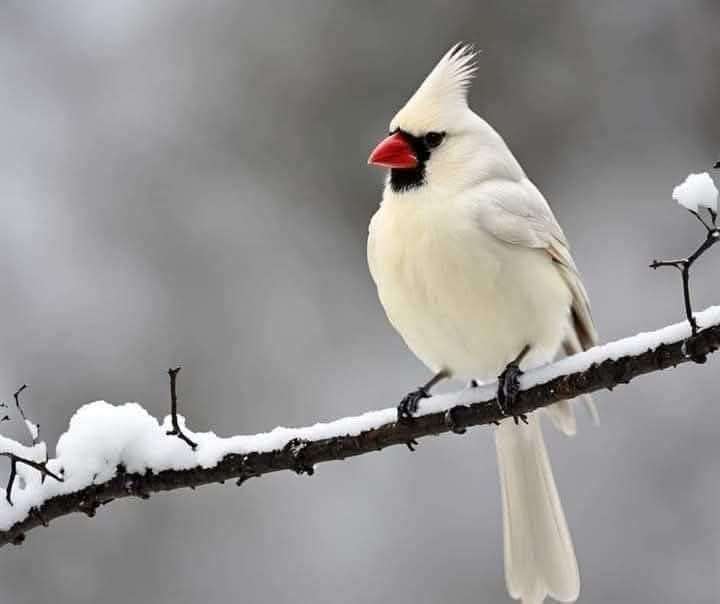
Another rare Northern Cardinal that is reported from time to time is the white form. It is actually the Northern Cardinal but doesn't have the red plumage. It is not albino, however.
The white plumage is due to the lack of a melanin-producing enzyme, resulting in non-bright feathers, a condition commonly known as leucism.
The Blue Cardinal Myth
You might wonder, given the wide variety of colorful Northern Cardinals that exist if there are also Blue Cardinals out there?"
Turns out, the answer is no. However, there are many keen bird enthusiasts out there who have claimed time and time again, that they spotted a gorgeous Blue Cardinal.
Research shows that several bluebirds belonging to other species are often mistaken for the blue Northern Cardinal. However, you must look deeper into birds that look similar, especially from afar, to identify which species they belong to.
Some birds go through major transformations through their life cycle. They might look a certain way when they are young and may completely evolve physically as they enter into adult life. Just this phenomenon tells us why some people might mistake the existence of a blue Northern Cardinal bird.
Have a look at these birds. They have unusual coloring but that may just be to juvenile birds growing adult feathers, a post breeding molt or eating some funky berries!
The Effect Of Lighting On Cardinals
While most Northern Cardinals are red with a strong beak, grey and white Northern Cardinals are also common. Often, Northern Cardinals also have different colors in their feathers, resulting in a duotone.
Chances are, if these same birds are seen after a while in a different shade of light through a different angle, they would seem to be a whole different color!
Blue Birds Most Commonly Mistaken For Blue Cardinals
There are quite a few blue birds that look like a Cardinal. While some might be from the same family, the Cardinalidae, others belong to completely different subspecies.
Here are a few birds that are commonly mistaken to be the mythical Blue Cardinal:
The Blue Grosbeak
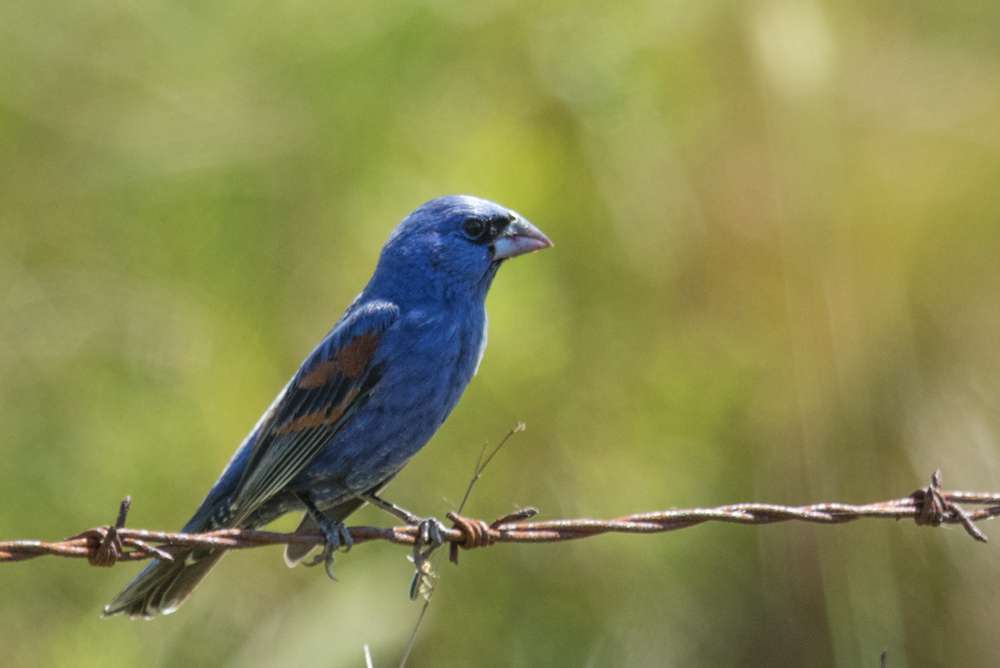
This bird is most frequently confused by enthusiastic birdwatchers as being the infamous blue Northern Cardinal, lending fire to the myth’s flame. The blue grosbeak and the Northern Cardinals share the same family; Cardinalidae.
However, this North American passerine is entirely different, with the males a deep blue shade with brown markings on their feathers, and the females primarily brown with blue tails. Like the Northern Cardinals, they are enthusiastic eaters, and much on a wide variety of seeds and insects.
Blue Jays
Blue jays are aggressive birds, but their intelligent nature keeps them from falling prey to bigger birds and other predators. They belong to the family Corvidae, commonly known as the family of crows.
They are beautiful creatures with a large appetite which includes sunflower seeds, peanuts, fruit, bread, and pretty much everything you put out in a Cardinal birdfeeder. They are also found in the North American region particularly in the Eastern and Central United States and South-central and Southeast Canada.

Wrapping Up
The Blue Cardinal might be a hot topic around avid birdwatcher blogs and groups. However, there is no concrete scientific evidence that proves its existence.
As discussed above, most sightings are either those affected by lightning or those wrongly identified due to similar-looking birds.
So, do blue Northern Cardinals exist? The science says no.
But, keep your eyes open! Nature is remarkable, and there’s so much we are yet to discover.

I have photos of a blue Northern Cardinal that was in my backyard in Ohio.
We have a blue Northern Cardinal, it is gorgeous. Has the Northern Cardinal face but is a sapphire blue. I live in Smyrna, Tennessee. It is NOT a bluebird.
Jamie Winnett
I’m in central Texas and I have been seeing these blue Northern Cardinals. They are Dallas Cowboy colors… I have been trying to get video of them to double check. We have the red Northern Cardinals here