
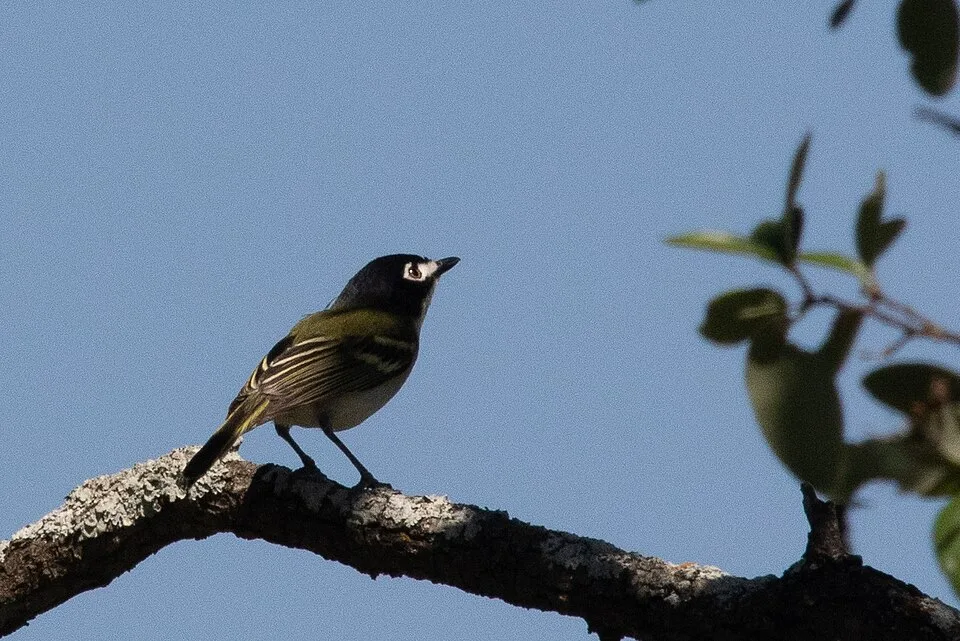
The Black-capped Vireo (Vireo atricapilla) is a small, migratory songbird native to the southwestern United States and Mexico, celebrated not only for its distinctive appearance and tenacious song but also as a striking example of successful species recovery under the Endangered Species Act. It is one of the smallest members of the Vireo family and a habitat specialist, relying on a very specific, patchy shrubland environment for breeding.
Identification and Appearance
The Black-capped Vireo is the only vireo species that exhibits sexual dimorphism (males and females look different) in its adult plumage, making it relatively easy to distinguish from its cousins.
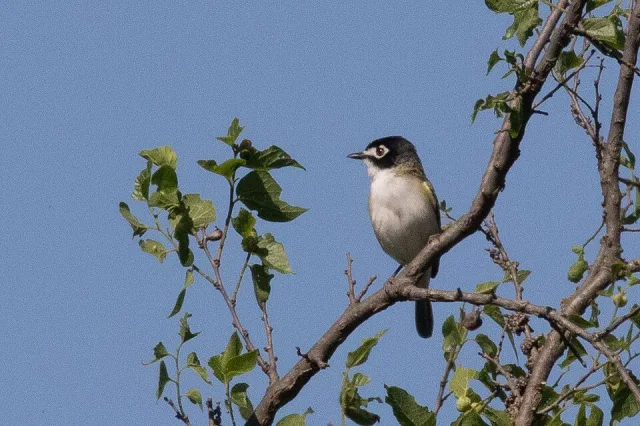
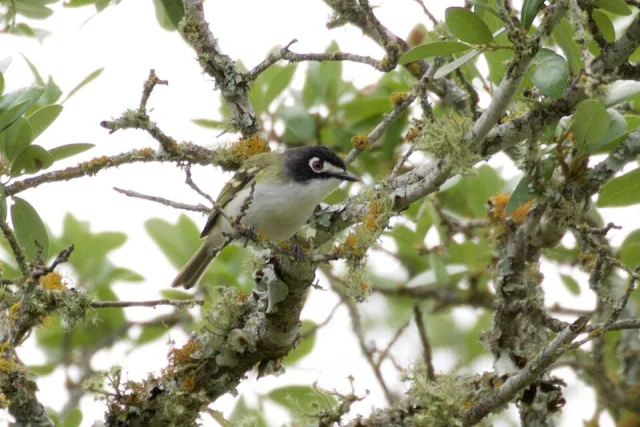
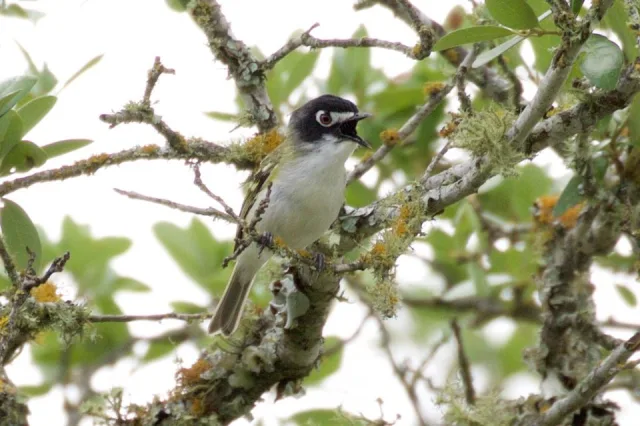
Male: The breeding male is instantly recognizable by its glossy jet-black cap contrasting sharply with bold white "spectacles" (eye-ring and lores) and a bright red iris. Its back and wings are olive-green, and its underparts are white with greenish-yellow flanks.
Female: The female is generally duller, possessing a slate-gray cap instead of black, and a less intense red iris.
Size: It's a small songbird, typically measuring only about 11–12 cm (4.3–4.7 inches) in length.
The male's song is a long, varied sequence of unique phrases and syllables, making it one of the most vocally complex songbirds in its range, often singing persistently even during the midday heat.
Range and Habitat
The Black-capped Vireo is a neotropical migrant that splits its year between two distinct regions:
Breeding Grounds (Spring/Summer): They breed primarily in the Edwards Plateau region of central Texas and in isolated pockets in Oklahoma. They historically ranged as far north as Kansas but are now extirpated there. They arrive in the US from mid-March to mid-April.
Habitat: They are strictly tied to specific, early-successional shrubland and open woodlands, typically dominated by deciduous oaks (like Spanish, Vasey, and shin oak). This habitat is characterized by dense, low-growing shrub thickets, often 1–3 meters (3–10 feet) high, interspersed with open grassy areas. This patchy structure is often maintained by natural disturbances like fire or drought.
Wintering Grounds (Fall/Winter): They migrate south to winter in the foothills and coastal scrub along the Pacific coast of Mexico, from Sonora south to Oaxaca, leaving the US around August or September.
Threats and Conservation Success
The Black-capped Vireo was historically much more widespread but experienced a severe population crash, leading to its listing as a federally Endangered Species in 1987. The two primary threats were:
Habitat Loss and Degradation: Their specialized breeding habitat was rapidly lost due to urbanization, agricultural conversion, fire suppression (which allowed habitat to mature beyond the preferred shrub stage), and overbrowsing by livestock (especially goats and sheep), which destroyed the low-level shrub cover critical for nesting.
Brown-headed Cowbird Brood Parasitism: This was the most immediate threat to their reproductive success. The Brown-headed Cowbird (Molothrus ater) is a generalist species whose expansion was facilitated by human activity (clearing forests, livestock). Cowbirds lay their eggs in the nests of vireos. The larger, faster-hatching cowbird chick outcompetes the vireo young for food, often resulting in the starvation or expulsion of the host's own chicks. In some areas, up to 100% of vireo nests were parasitized.
Recovery and Delisting
The vireo's recovery is a major success story of conservation partnership. Active management strategies focused on mitigating the two main threats:
Cowbird Control: Large-scale, successful Cowbird trapping and removal programs were implemented across public lands (like Fort Cavazos (formerly Fort Hood), Fort Sill, and Balcones Canyonlands National Wildlife Refuge), significantly reducing nest parasitism rates to sustainable levels.
Habitat Restoration: Land management included the use of prescribed fire and brush control to restore the preferred patchy, early-successional scrubland environment, in addition to establishing conservation easements on private land.
These efforts successfully reversed the population decline. By 2018, the estimated population had risen dramatically, allowing the U.S. Fish and Wildlife Service (USFWS) to remove the Black-capped Vireo from the Endangered Species List due to recovery. It is now monitored under a post-delisting plan to ensure populations remain healthy and resilient against future threats.
Against the Tide: Conservation Success Stories for Raptors and Waterfowl
