
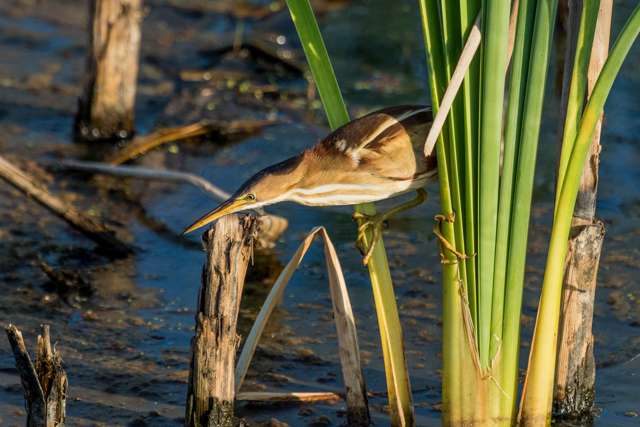
Bitterns are elusive, secretive birds most often heard before they are seen. Belonging to the heron family (Ardeidae), these stocky, well-camouflaged birds are masters of stealth, inhabiting dense wetlands across the United States. While globally there are several bittern species, only two are native and regularly found in the U.S.: the American Bittern (Botaurus lentiginosus) and the Least Bittern (Ixobrychus exilis). Both species are remarkable for their cryptic plumage, reclusive behavior, and distinctive vocalizations.
American Bittern (Botaurus lentiginosus)

Identification
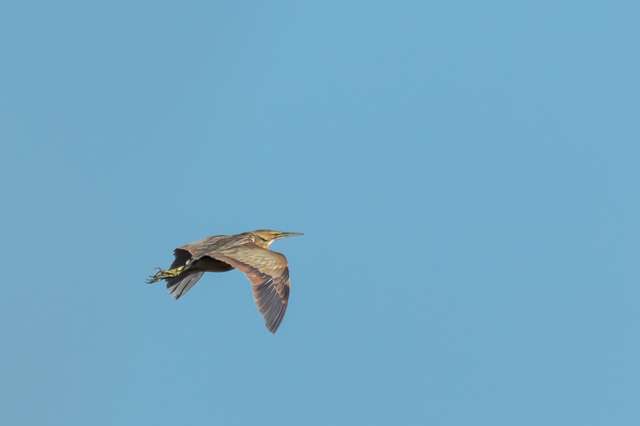
The American Bittern is a medium-sized heron, measuring around 23 to 34 inches in length, with a wingspan of up to 50 inches. Its plumage is mottled brown, tan, and white, which allows it to blend seamlessly into cattails and reeds. The streaked pattern on its chest aids in camouflage, particularly when the bird adopts its signature “freeze” pose—stretching its neck skyward and swaying with the surrounding vegetation.
Habitat and Range
American Bitterns breed in freshwater marshes across much of North America, from southern Canada to the northern United States. In winter, they migrate to the southern U.S., Mexico, and parts of Central America. Key breeding habitats include cattail marshes, wet meadows, and lake margins with dense emergent vegetation. They prefer shallow wetlands rich in invertebrates, fish, and amphibians.
Behavior
Despite their size, American Bitterns are notoriously difficult to spot. They forage slowly and methodically, stalking prey or standing motionless at the water’s edge. Their diet includes frogs, fish, insects, small mammals, and crustaceans.
During the breeding season, males produce one of the most unusual bird calls in North America—a deep, booming "oonk-a-loonk" sound that echoes across marshes. This vocalization, created using a modified esophagus and throat sac, helps attract mates and establish territory.
Conservation Status
American Bitterns are listed as Least Concern globally, but their populations are declining due to wetland loss, degradation, and fragmentation. Urban development, agricultural expansion, and water pollution have reduced their breeding habitat significantly. In some U.S. states, they are considered a species of conservation concern.
Least Bittern (Ixobrychus exilis)

Identification
The Least Bittern is North America's smallest heron, measuring only 11 to 14 inches in length, with a wingspan of about 16 to 18 inches. Unlike the larger and stockier American Bittern, the Least Bittern is slim and agile, with chestnut and buff plumage, black crown and back, and striking yellow eyes. Males are slightly more vibrant than females.
Habitat and Range
The Least Bittern inhabits similar environments as its larger cousin but is more tolerant of deeper water. It is widespread during the breeding season across the eastern and central U.S., parts of the West Coast, and into Mexico and the Caribbean. The bird winters in southern Florida, the Gulf Coast, and Central America.
This species relies heavily on dense emergent vegetation—particularly cattails, bulrushes, and sedges—where it nests and forages. The Least Bittern is especially adapted to clambering through reeds using its long toes and claws to grip stems.

Behavior
True to its name, the Least Bittern is shy and elusive, more often heard than seen. It spends most of its life hidden in tall vegetation. Its soft, cooing calls—especially the "coo-coo-coo" breeding call—can be heard at dawn and dusk during spring and summer.
The bird’s diet is made up of insects, small fish, and amphibians. It hunts by perching on reeds and striking quickly at prey in the water. Its ability to straddle vegetation allows it to hunt in areas inaccessible to larger wading birds.
Conservation Status
Least Bitterns are also listed as Least Concern, but like the American Bittern, they are affected by the destruction of wetland habitats. Their small size and secretive behavior make them difficult to monitor, which complicates conservation efforts. Nonetheless, ongoing habitat preservation and wetland restoration projects are essential for the survival of this species.
Threats and Conservation Challenges
Both bittern species face similar challenges in the U.S., primarily related to habitat loss. Since the early 20th century, the U.S. has lost over half of its original wetlands. Conversion of wetlands for agriculture, urban development, pollution from pesticides and fertilizers, and climate change all pose significant threats.
Bitterns are sensitive indicators of wetland health. Their decline often signals broader ecosystem degradation, making them key targets for conservation. Fortunately, many wetland restoration projects across the country—from the Everglades to the Prairie Pothole Region—aim to recover bittern habitat and bolster their populations.

Watching Bitterns: Tips for Birders
Catching a glimpse of a bittern requires patience and a bit of luck. Here are a few tips for spotting these secretive birds:
Time it right: Dawn and dusk are the most active periods.
Listen for their calls: Familiarize yourself with their vocalizations, especially during the breeding season.
Use binoculars and scopes: Scan wetland edges and tall grasses slowly and thoroughly.
Be still and silent: Movement and noise can startle them into hiding.
Visit protected wetlands: National wildlife refuges like Horicon Marsh (Wisconsin), Anahuac (Texas), and Montezuma (New York) are great places to search.
Photographers and birders alike treasure encounters with bitterns for their rarity and beauty. Documenting these sightings also contributes to citizen science efforts, providing valuable data for researchers and conservationists.
Cultural and Ecological Significance
Bitterns have long held a place in folklore and nature writing due to their ghostly calls and hidden lifestyles. In literature, their eerie booming is often likened to the sounds of haunted marshes. Ecologically, bitterns play an important role in marsh ecosystems by controlling insect and amphibian populations and serving as prey for larger predators like hawks and owls.
Their presence in a wetland is a good sign—it means the habitat is healthy and diverse enough to support a top wetland predator.
Wrapping Up
Though rarely seen, bitterns are among the most fascinating avian residents of America’s wetlands. The American Bittern and Least Bittern, with their expert camouflage and unique behaviors, remind us of the quiet complexity of marsh ecosystems. Protecting their habitats not only ensures their survival but also helps maintain biodiversity in some of the most threatened landscapes in North America.
As wetlands continue to face pressure from human development and climate change, the fate of these elusive birds depends on sustained conservation efforts. By preserving wetlands and advocating for smart land use policies, we can help ensure that the haunting call of the bittern continues to echo through our marshes for generations to come.
