
The earth is a tapestry of life, and its avian population is no exception, boasting nearly 11,000 known species. Yet, for all the recognition the majestic Bald Eagle or the vibrant European Robin receive, an entire universe of birds thrives in obscurity, known only to dedicated ornithologists, local communities, and the occasional intrepid traveler. These are the birds of remote islands, deep jungles, and unique ecological niches—species whose names rarely cross international borders.
This article pulls back the curtain on the "hidden flock," introducing some of the world's most fascinating, yet little-known, avian treasures, including the requested list of species endemic to small, distant ranges. Their stories remind us that the natural world still holds countless secrets, often residing in the most vulnerable habitats.
The Parrots and Waxbills of the African Bush
Africa, a continent synonymous with spectacular megafauna, also harbors an incredible diversity of lesser-known birds, particularly those tucked away in its fragmented woodlands and savannas.
1. Niam Niam Parrot (Poicephalus crassus)
The Niam Niam Parrot is a small, heavy-billed parrot of the genus Poicephalus, which includes several other little-known African parrots. This bird is a puzzle to ornithologists, remaining largely unstudied in the wild. Its native range is a relatively narrow belt of wooded savanna and forest-savanna mosaic stretching from the south of Chad and possibly eastern Cameroon, east into the northern Democratic Republic of the Congo and the southwestern corner of Sudan. This region is often politically unstable or extremely remote, contributing to the parrot's reclusive nature and the scarcity of information about its life history.
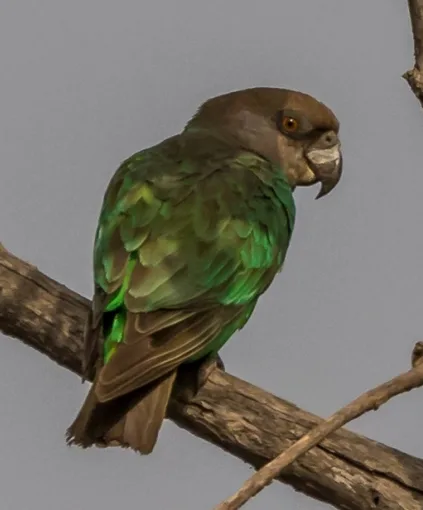
Physically, the Niam Niam Parrot is a small, mostly green bird with a distinctive thick, heavy bill—a trait that gives it its specific name, crassus, meaning 'thick' or 'stout'. It is also notable for the black-tipped primary wing feathers and a tendency to be wary, making it difficult for researchers to approach. Its diet is presumed to be primarily seeds, grain, and other vegetable matter gathered from the canopy. The species is thought to be uncommon throughout its range, and its population is tentatively suspected to be in decline due to the degradation of its woodland habitat. It remains one of the more enigmatic parrots of the African continent.
2. Black-lored Waxbill (Estrilda nigriloris)
The Black-lored Waxbill is a delicate little finch known only from a tiny, specific region of the Democratic Republic of the Congo, making it one of the most restricted-range birds in Africa. This estrildid finch is primarily associated with tall grasses, dense scrub, and marshy habitats within this small area.
Like many waxbills, it possesses beautiful, subtle coloring, though its distinctiveness lies in its facial markings. It is a small bird with a pale bill, a grey-brown body, and a conspicuous black band or 'lore' extending from the bill to the eye, giving it its descriptive name. Their lifestyle is typical of waxbills, foraging for small grass seeds on the ground or within the low vegetation. Due to its very restricted range and dependence on specific grassland ecosystems, it is particularly vulnerable to habitat loss and degradation from agricultural expansion, highlighting the conservation fragility of many obscure species.
The Endemics of Remote Oceania
Island endemics—species found nowhere else on Earth—are often the least-known and most endangered, having evolved unique traits in isolation before being exposed to outside threats.
3. Rotuma Myzomela (Myzomela chermesina)
The Rotuma Myzomela is a species of honeyeater found only on the island of Rotuma, a Polynesian outlier administered by Fiji. Myzomelas are generally small, active nectar-feeding birds, and the Rotuma Myzomela is a brilliant example. The male is particularly striking, sporting a deep crimson-red plumage across its head, breast, and back, contrasting sharply with its black wings and tail. This fiery coloring gives it its specific name, chermesina, which relates to a deep red or crimson color.

Its island habitat, though small, provides all it needs: native forests, coastal vegetation, and scattered gardens, where it busily forages for nectar and small insects. As is the case with all island endemics, its entire global population is confined to a single, small landmass, making it perpetually susceptible to devastating natural events or the introduction of invasive predators.
4. Tagula White-eye (Zosterops meeki)
Found only on the island of Tagula (Sudest Island) in the Louisiade Archipelago of Papua New Guinea, the Tagula White-eye is a member of the diverse Zosteropidae family—the 'white-eyes'—known for the prominent white ring of feathers surrounding their eyes. However, the Tagula White-eye is an exception among its relatives; it lacks the conspicuous white eye-ring that defines the genus, a fact often noted by researchers.
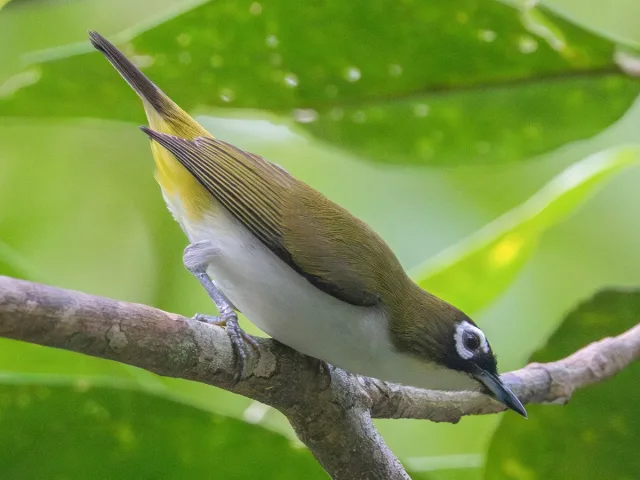
A small bird of montane forests and lowlands, it is generally yellowish-green above and paler below. Its diet consists of insects, fruit, and nectar, and it moves in small, active foraging flocks. The species is relatively common within its confined range, but like the Rotuma Myzomela, its endemic status on a single island means it faces a permanent, elevated risk of extinction should a predator or catastrophic change arrive.
5. Bougainville Thicketbird (Cichlornis grosvenori)
The Bougainville Thicketbird is a secretive songbird endemic to the rugged, forested slopes of the island of Bougainville (part of Papua New Guinea). Until recently, the genus Cichlornis included just a few highly elusive and geographically restricted species. True to its name, this bird is a creature of the undergrowth, living within dense thickets and lower vegetation of montane forests, making it incredibly difficult to observe and study.
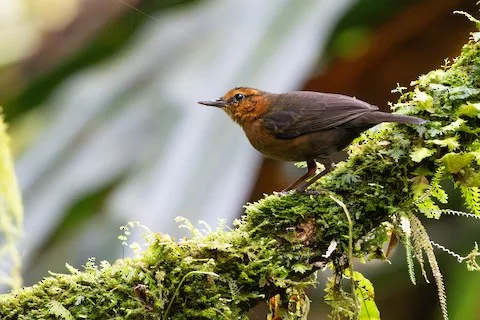
It's a medium-sized, drab brown bird, relying on its cryptic coloration to remain hidden. Its primary method of detection is often its distinct song or call, which helps researchers track its movements. Limited to the specific, high-altitude rainforests of Bougainville, the little that is known about its ecology comes from sporadic sightings and acoustic data. Its status underscores the challenges of studying species that inhabit dense, remote, and often cloud-shrouded tropical mountains.
South American Secrets and Australasian Anomalies
The vast rainforests of South America and the unique ecosystems of the Australian region conceal birds with equally curious stories.
6. White-throated Antbird (Poliocrania exsul)
The White-throated Antbird is a small passerine found in Central and South America, particularly in the understory of moist tropical and subtropical forests from Honduras to Ecuador. This species is not strictly rare but is highly inconspicuous and often overlooked because it is a professional follower of army ant swarms.
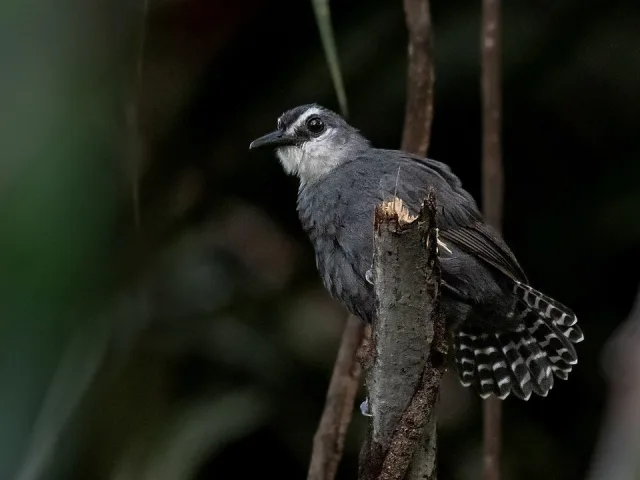
Antbirds, as a group, have an intriguing ecological relationship with the ants: they do not eat the ants themselves, but rather feed on the insects and other invertebrates flushed out by the massive, moving columns of predatory ants. The White-throated Antbird exhibits a distinct sexual dimorphism: the male is largely black with a visible white throat patch, while the female is a rich chestnut-brown. Its reliance on active ant swarms for food makes it an indicator species for a healthy, undisturbed forest floor ecosystem.
7. Ocellated Poorwill (Nyctiphrynus ocellatus)
A member of the nightjar family, the Ocellated Poorwill is a nocturnal bird with an enormous range across the lowlands of Central and South America, yet it remains remarkably little-known. It inhabits the humid tropical rainforest understory from Costa Rica south to Paraguay and northern Argentina. Like all nightjars, it is a master of camouflage, with mottled brown, grey, and buff plumage that makes it look exactly like a pile of dead leaves on the forest floor during the day.
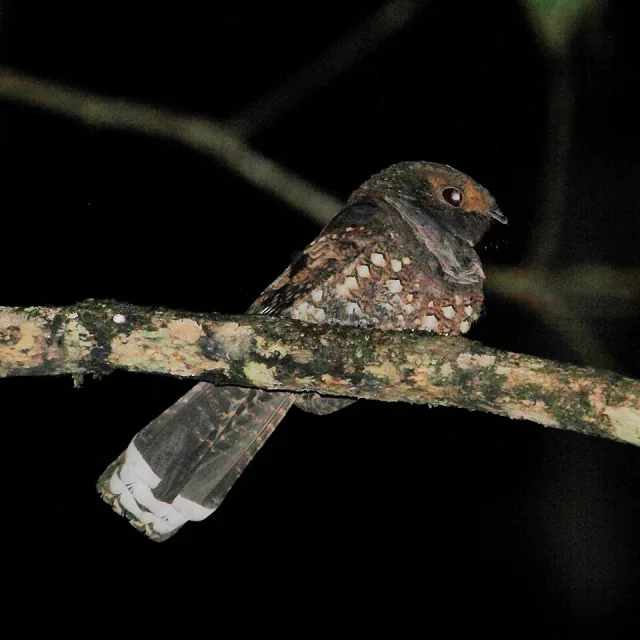
Its name comes from the prominent ocelli, or small eye-like spots, on its wings, and the distinctive call that gives it the "poorwill" common name. It is insectivorous, catching its prey in flight, often with short, quick sallies from its camouflaged resting spot. The bird’s nocturnal habits and perfect camouflage contribute to its obscurity, with many local people being unaware of its existence despite its wide distribution.
8. Black-hooded Coucal (Centropus steerii)
Endemic to the Philippine island of Mindoro, the Black-hooded Coucal is one of the world's most critically endangered birds. It is a large, terrestrial cuckoo species—though coucals are not brood parasites like most cuckoos. It is a striking bird with a black head and wings, a rufous-brown back, and a large, clumsy appearance.
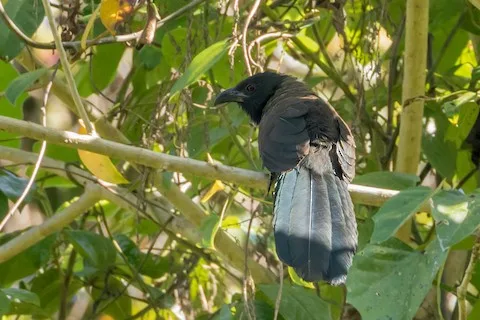
It is restricted to a few isolated patches of forest on Mindoro, mostly in lowland areas that have been heavily cleared for agriculture and logging. Its limited, fragmented habitat is the primary threat to its survival, pushing it to the brink of extinction. Efforts to protect the remaining forest fragments on Mindoro are crucial for this species.
9. New Caledonian Owlet-nightjar (Aegotheles savesi)
If the Ocellated Poorwill is hard to find, the New Caledonian Owlet-nightjar is nearly mythical. It is an endemic of New Caledonia, known from a single specimen collected in 1880 and a handful of unconfirmed sightings in the late 20th century, suggesting it may be functionally extinct.
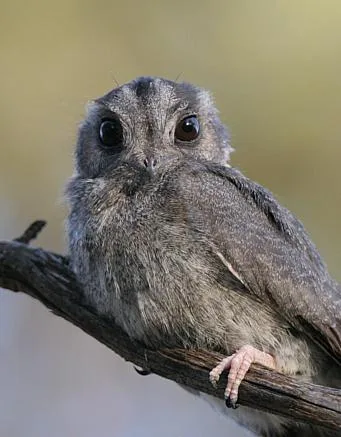
Owlet-nightjars are small, nocturnal insect-eaters with large eyes and a broad mouth. The New Caledonian species would have inhabited the dense, unique forests of the island. The complete lack of concrete evidence of its survival for decades has made it a symbol of the biodiversity crisis in the Pacific, where island endemics have been devastated by habitat loss and invasive species. It is a ghost bird whose entire life history remains a mystery.
The Final Four: From the Himalayas to the Amazon
10. Stresemann's Bristlefront (Merulaxis stresemanni)
This bird is a critically endangered star of the ornithological world, yet remains unknown to the general public. It is endemic to a single mountain range in the state of Bahia, Brazil, with an estimated population of possibly fewer than 15 individuals. It belongs to the tapaculo family, birds known for their skulking behavior and complex songs.
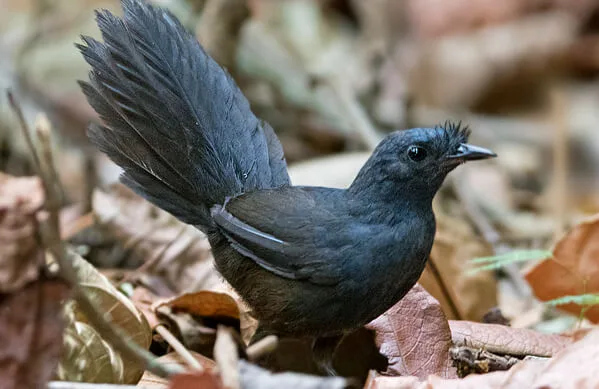
The male is largely sooty-black, but the female is a striking dark rufous. Both sexes have the unique feature that gives the bird its name: stiff, forward-pointing bristles at the base of the bill. It lives in dense, high-altitude Atlantic Forest, and its extreme rarity is a direct consequence of the massive deforestation of that biome.
11. Plains-wanderer (Pedionomus torquatus)
The Plains-wanderer is an enigmatic, small, quail-like bird endemic to the semi-arid grasslands of southeastern Australia. It is so unusual that it is placed in its own family, Pedionomidae, a testament to its unique evolutionary path.
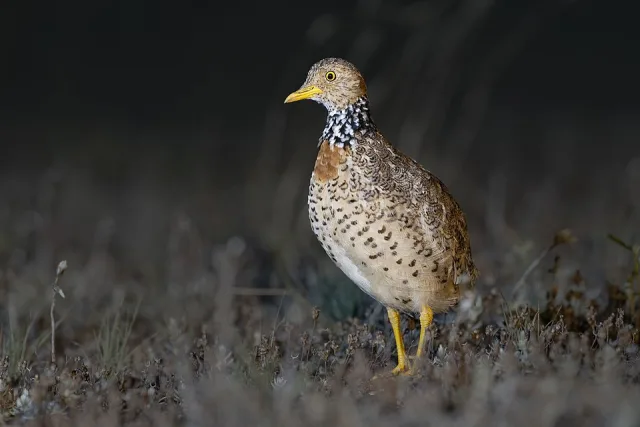
It is a slender, long-legged bird that relies on camouflage in sparsely vegetated, native grasslands. Females are the more brightly colored sex and initiate courtship—a sex-role reversal that is rare in birds. Its population has crashed due to the conversion of its grassland habitat to croplands and pastures, making it another critically endangered species dependent on small, protected reserves for its survival.
A Call for Recognition and Conservation
The Niam Niam Parrot, the Tagula White-eye, the Black-lored Waxbill, and the ten others mentioned here are more than just obscure names; they are crucial threads in the global web of life. Their restricted ranges, unique ecologies, and often critically endangered statuses make them silent indicators of the health of the world’s most vulnerable ecosystems.
From the dense, humid thickets of the Bougainville Thicketbird to the remote volcanic beaches of the Rotuma Myzomela, these species underscore a fundamental truth in conservation: to save the best-known animals, we must protect the homes of the least-known. Their continuing anonymity should serve as a powerful motivation to support the global efforts protecting the final, fragile havens of the world's hidden flock.
