

Seems like orange is today's favorite color! In this article, we'll look at all kinds of orange-breasted birds. You'll be able to recognize these blazing flyers because they each have distinguishable plumages that set them apart from one another. If you want to know more about these birds, then continue reading on.
1. American Robin

An American Robin is a common migratory bird and garden visitor; they love earthworms more than anything. They have black heads and backs, but their breasts are either painted in crimson or orange.
During the winter, they prefer to be on trees, which is why you may notice more of them in the spring.
These birds reach a length of 7.9 to 11 inches, a weight of 77 to 85 grams, and a wingspan of 12.2 to 15.8 inches.
They're found in every state in the US and Canada. Those from Canada and Alaska, on the other hand, migrate to South America during the winter. They live in a variety of settings including woodlands, forests, mountains, fields, parks, and backyards.
Aside from earthworms, they also take interest in insect and snail mix, fruits, seeds, and nuts. Serve these on a ground feeder instead of a commonly hung bird feeder to attract them quicker.
But be careful, there are a lot more species of birds that look like robins but aren't!
Fun Fact: American Robins are fond of native plants like juniper, sumac, hawthorn, and dogwood, these never fail to attract them. Additionally, this species is referred to as the black and orange bird.
2. Western Bluebird
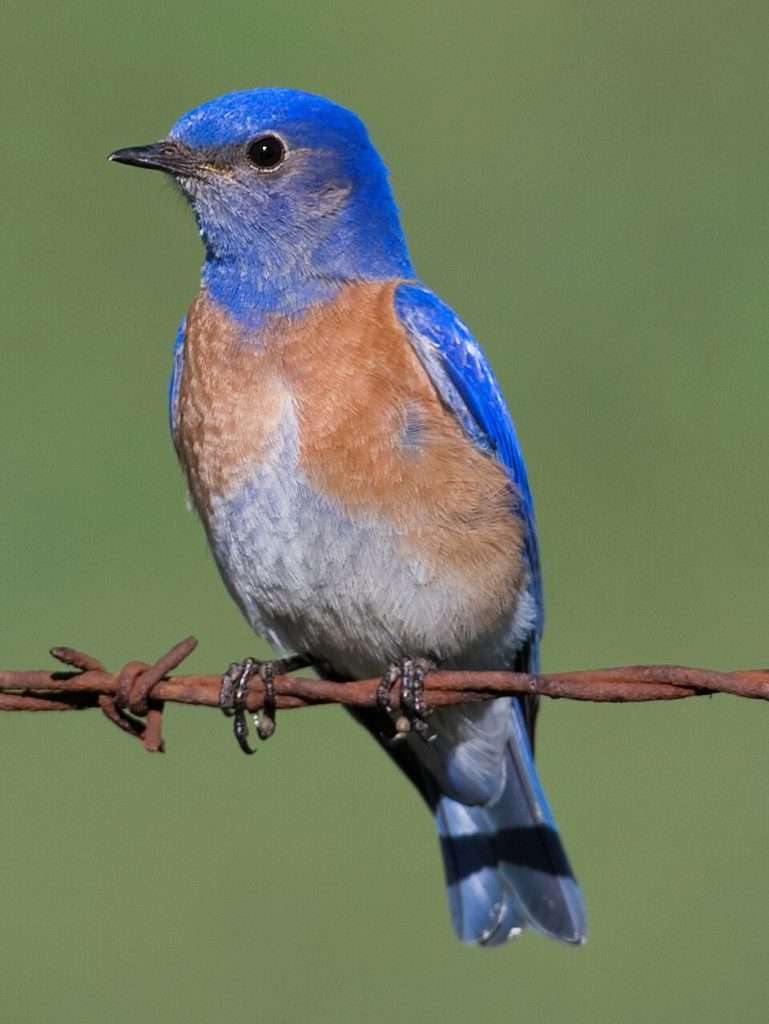
Western Bluebirds are common birds with an orange chest and belly. It is their blue backs and rumps that allow them to be distinguishable.
These birds are small, stocky, and round. Females are a dull buff-gray with mild orange on the breast and blue tints to the wings and tail, rather than being as vivid as males.
They prefer wooded places to open spaces, and they can be found in locations with dead trees, such as burned forests and logged areas.
In the summer, Western Bluebirds eat mostly insects, whereas, in the winter, they eat mostly fruit and seeds.
Summer food includes caterpillars, beetles, and ants, as well as spiders, snails, and other ground-dwelling insects. Their winter diet includes elderberries, grapes, mistletoe, raspberries, blackberries, sumac, juniper, and other plants.
Fun Fact: Although Western Bluebirds are native to the western United States and sadly do not migrate, some birds in the far northwest may migrate south or to lower elevations.
3. Eastern Bluebird

The Eastern Bluebird is a mixture of blue and orange plumage, they have broad, rounded heads, enormous eyes, and large bellies.
Males have a deep blue back and a crimson underbelly. Females have a grayer appearance on the top, with blue in the wing and tail and a less vibrant orange-brown breast.
The species of this bird can grow up to 6.3 to 8.3 inches in length, 28 to 32 grams in weight, and 9.8 to 12.6 inches of wingspan.
Most of the time, these birds spend time in the Eastern United States but migrate from the north to the south during winter.
If your yard is reasonably wide and roomy, you can attract more Eastern Bluebirds by providing mealworms and nest boxes.
Fun Fact: Meadows are their favorite places to inhabit and look for insects. You could also do a bird feeder setup to attract this species to your backyard!
4. Baltimore Oriole

In Eastern North America, the Baltimore Oriole represents a bright symbol of spring.
A male bird has an orange chest and belly and black head and back. A female would have a yellowish underbelly, grayish-brown wings, and a brownish-yellow back.
They are members of the blackbird family and are roughly the size of a robin but more slender. They can grow up to 6.7 to 7.5 inches in length, 30 to 40 grams in weight, and 9.1 to 11.8 inches of wingspan.
A Baltimore Oriole can be seen foraging for insects and fruit in open woodland, riverbanks, and forest margins, and they frequently visit parks and backyards.
To attract more Baltimore Orioles to your yard, cut oranges in half and set them on a platform feeder or hang them from trees. Sugar water feeders for orioles are also available.
Plant raspberries, crab apples, trumpet vines, and other fruit and nectar plants along with other fruit and nectar plants.
Fun Fact: Baltimore Orioles weave nests out of fibers that look like hanging bags.
5. Allen’s Hummingbird

Allen's Hummingbirds are known for their impeccable similarity to Rufous Hummingbirds. The best way to distinguish them is to remember that they have narrower outer tails.
Male Allen's Hummingbirds are orange hummingbirds with long straight bills and coppery-green backs. Female Allen's Hummingbirds lack brilliant throat coloring.
The birds measure up to 3.5 inches in terms of length, 2 to 4 grams of weight, and wingspans of 4.3 inches.
Allen's Hummingbirds spend the winter in Mexico and move up the Pacific Coast of California and Oregon as early as January, though they are most numerous between March and July. Few birds stay in Central Mexico and Los Angeles.
Fun Fact: Allen's Hummingbirds have up to THREE broods each year and have the habit of building their nests on different heights along shaded streams.
6. Rufous Hummingbird

Rufous Hummingbirds are the most prominent year-round inhabiters of California.
Males have an orange-red neck and a white patch on their upper breasts. Females have orange stripes on their skin and speckled necks.
In the spring, Rufous Hummingbirds migrate north through California, spending the summer in Oregon, Washington, and Canada before returning to the Rockies in the fall.
Rufous Hummingbirds can reach lengths of 2.8 to 3.5 inches, weights of 2 to 5 grams, and wingspans of 4.3 inches. They prefer nectar from flowers, but they will eat insects if they are available.
Fun Fact: Rufous Hummingbirds are known for being "feisty" when it comes to sharing feeders and chasing away other hummingbirds.
7. Varied Thrush
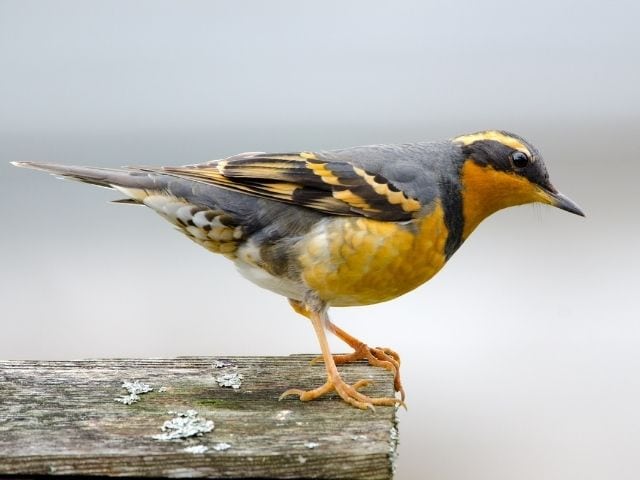
Varied Thrushes are stocky songbirds with large, rounded heads, long and straight bills, and legs.
Male Varied Thrushes have orange breasts and throats, black backs, and a black 'necklace' around the neck. The males' wings feature orange bars, and the sides of their blackheads have orange stripes. Females' backs are lighter and have more brown tones.
The Varied Thrush can grow up to 7.5 to 10.2 inches in length, 65 to 100 grams in weight, and wingspans of 13.5 to 15 inches.
These birds breed in Alaska and Northwestern Canada and can be found along the Pacific Coast. Some stay in British Columbia and the Northwestern United States for the entire year, along the coast.
In the summer, the Varied Thrush looks for insects in the forest, while in the winter, it hunts for berries and seeds.
Fun Fact: These birds have simple ringing songs that are known to be the voice of the forests in the Pacific Northwest.
8. Barn Swallow
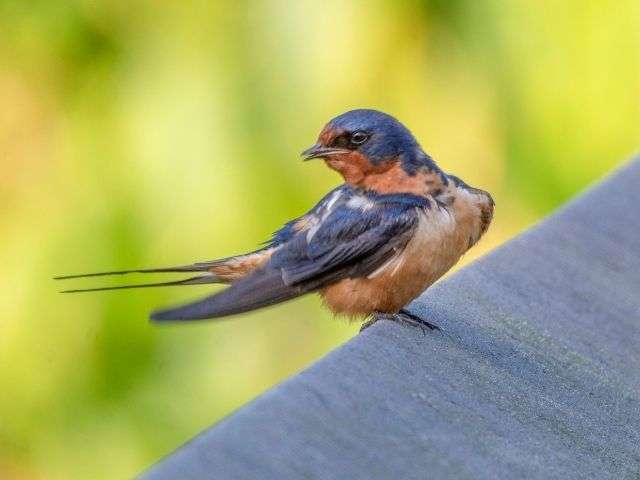
This shimmering blue and burnt orange breasted bird is the most abundant species from the swallow family.
Barn Swallows can be found on farms, prairies, and meadows all over North America.
They will breed in the Northern Hemisphere and then migrate to the Southern Hemisphere for the winter. They build their nests out of the mud and tuck them under bridges, barn eaves, and stables.
Fun Fact: Unmated Barn Swallows kill nestlings of mated couples to break them up and get a chance to mate with the female bird.
9. Orchard Oriole

Orchard Orioles are slim but medium-sized songbirds.
Black heads and backs, reddish-orange chests, and reddish-orange bellies distinguish male Orchard Orioles. Females have a greenish-yellow overall appearance with lighter undersides and darker backs, as well as darker wings with white wing bars.
These birds can measure up to 5.9 to 7.1 inches in length, 16 to 28 grams in weight, and wingspans of 9.8 inches.
In the summer, Orchard Orioles breed in the Midwest and East before traveling south to Mexico and Costa Rica, Central America.
Orchard Orioles prefer open woods, but they can also be seen near riversides, open shrubland, farms, and backyards.
Ants, caterpillars, beetles, grasshoppers, and spiders make up the majority of their diet. They'll also consume mulberries and chokeberries, as well as drink nectar from flowers.
Use nectar feeders or platform feeders with cut oranges or mango to attract Orchard Orioles to your yard. It is recommended for you to plant native berry plants like mulberries or chokeberries.
Fun Fact: Although Orchard Orioles are fairly common, they still have the ability to remain inconspicuous.
10. Altamira Oriole
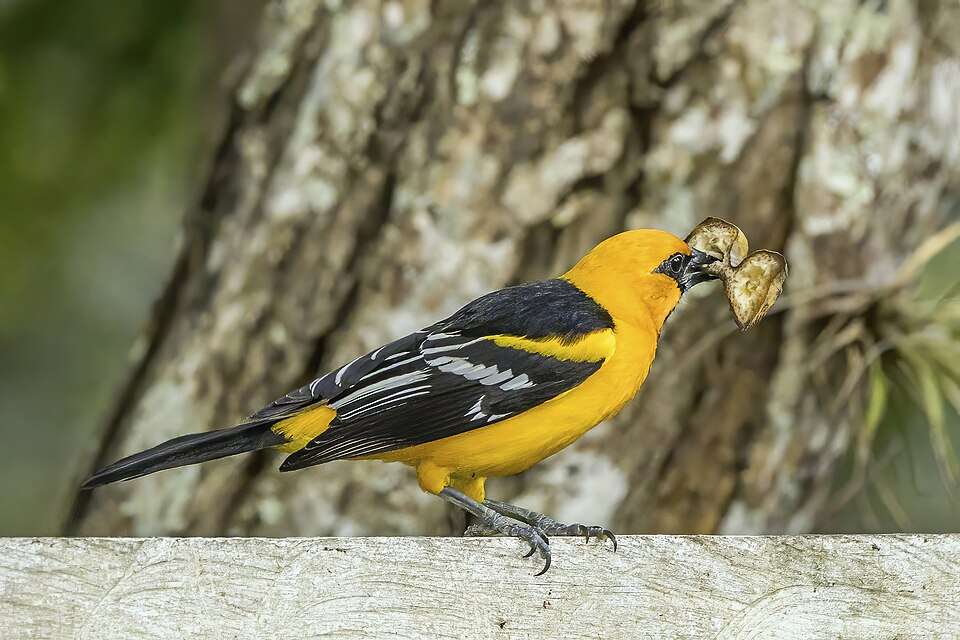
The heads, chests, and bellies of Altamira Orioles are vivid yellowish-orange, with black backs, wings, and tails.
The black around the eyes and down the throat of these orange-headed birds. The backs of juveniles are olive rather than black, and they are more yellow.
This species can grow up to 8.3 to 9.8 inches in length, 47 to 64 grams in weight, and wingspans of 14.2 inches.
Altamira Orioles are only found in the Rio Grande Valley of Texas, where they can be seen all year.
In southeastern Texas and throughout the Gulf Coast of Central America, look for them in backyards at sunflower or nectar feeders or in wildlife refuges. They prefer to be in open woods.
Fun Fact: The Altamira Orioles remain in pairs all year.
11. Blackburnian Warbler
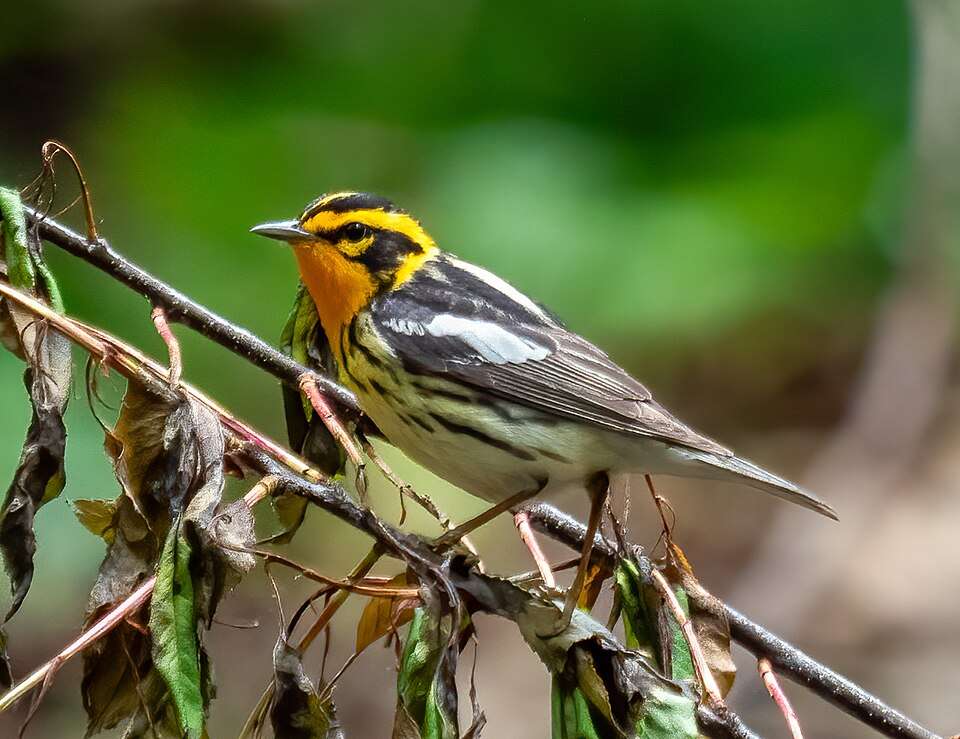
Blackburnian Warblers are known to have unmistakable dark triangles on each side of their faces.
Male Blackburnian Warblers have orange chests, throats, face markings, black backs and wings, and a white belly with black stripes. Females are more yellow than males.
This species can measure up to 4.3 to 4.7 inches in length, 8.9 to 12.6 grams in weight, and wingspans of 7.9 to 9.1 inches.
During migration, Blackburnian Warblers can be found in eastern US states. They breed throughout Canada and the northeastern states of the United States, with some breeding as far south as Virginia or North Carolina. Winters are spent in South America.
Fun Fact: These birds are difficult to spot because they are often camouflaged by foliage at the tops of trees.
12. American Woodcock
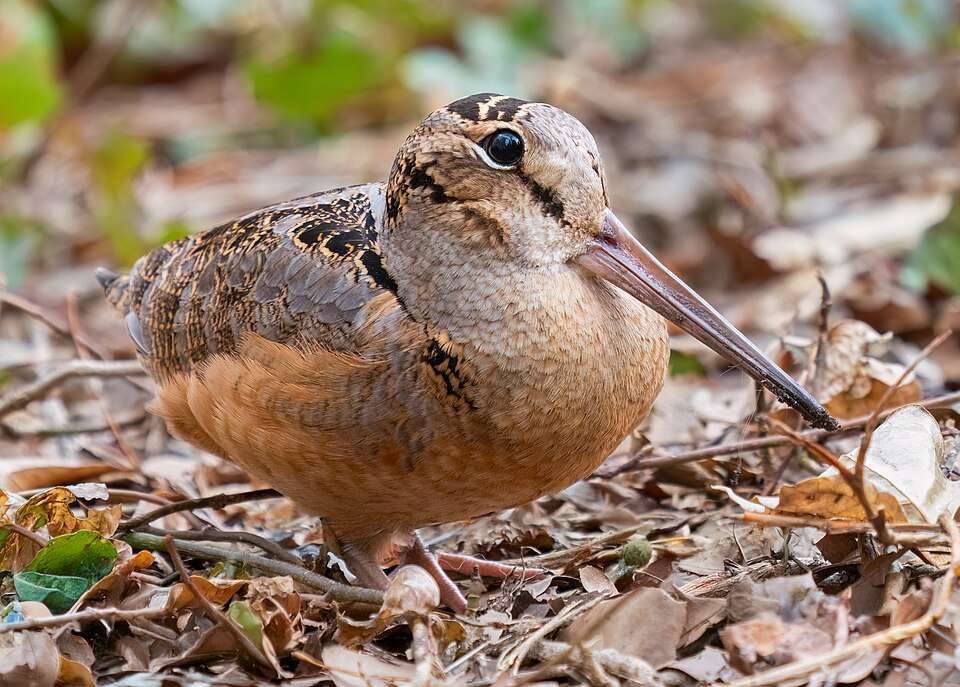
Their bulging form is due to their huge heads and lack of any resemblance to a neck.
They have great camouflage on their backs, which are mottled black and brown with grey stripes. The color of their breasts and bellies varies from pale tawny to orange.
This allows them to camouflage so well to the point that they are rarely noticed unless a male performs his stunning aerial corkscrew dance and song.
Their eyes are positioned on the head because they are frequently face down on the ground, helping them to keep an eye out for predators. They are located at the back of the head and are higher on the skull.
The species of this orange belly bird can be found in the lands and skies of eastern North America.
Fun Fact: Whenever these obese birds rest their bodies, their necks disappear and they form a mango-shaped physique.
Frequently Asked Questions
What is the most common orange chested bird?
The most common orange-chested bird in the United States is the American Robin.
It's a familiar sight on lawns, in parks, and in suburban backyards across the country, where you can often see it hopping and pausing to listen for earthworms.1 Its warm orange-red breast, contrasting with its gray-brown back and dark head, makes it one of the most easily recognizable birds in North America.2 The robin's cheerful song is often one of the first signs of spring for many people.3
What is the rarest orange breasted bird?
Finding the single rarest orange-breasted bird is difficult because "rarity" can be measured in different ways (total population size, limited range, or being functionally extinct in the wild). However, two strong candidates stand out, each from a different part of the world and with different conservation challenges.
1. Orange-bellied Parrot (Neophema chrysogaster)
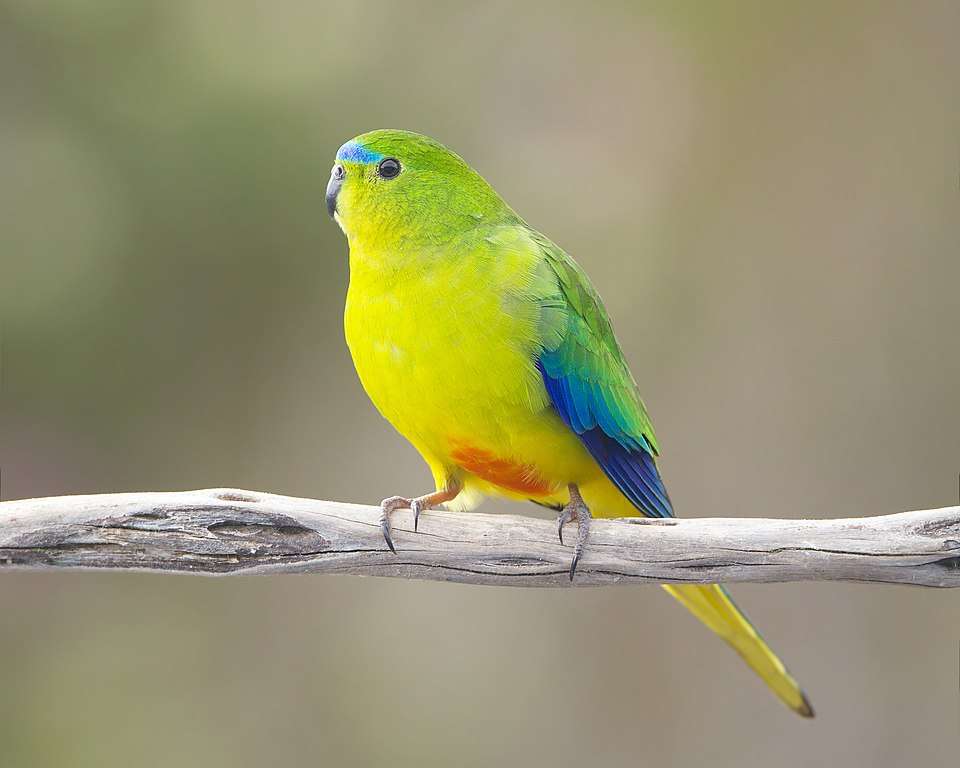
This is arguably one of the rarest birds in the world with an orange patch, though it's more of an orange-bellied parrot than a true orange-breasted bird. It is a critically endangered species native to Australia. The population is incredibly small, with fewer than 50 individuals estimated to exist in the wild.
The Orange-bellied Parrot breeds exclusively in a small part of Tasmania and then migrates to the coastal areas of southern Australia for the winter. Its rarity is primarily due to habitat loss, as its specific coastal saltmarsh habitats are being degraded or destroyed. Conservation efforts, including a captive breeding program and habitat restoration, are ongoing to save this species from extinction.
2. Orange-breasted Falcon (Falco deiroleucus)
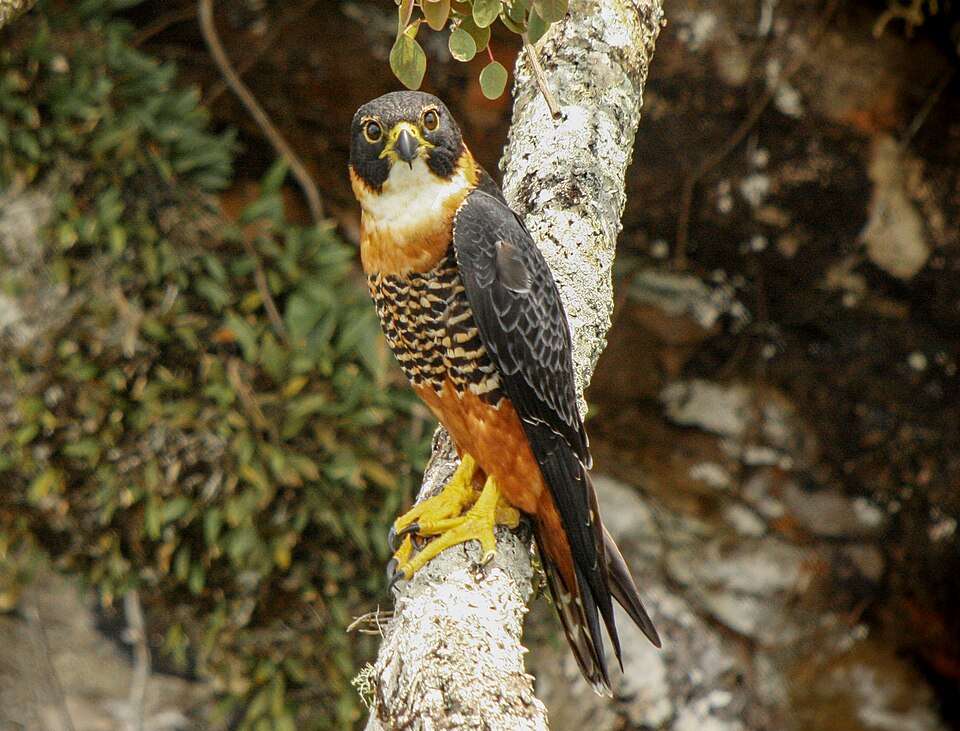
This bird of prey is another contender for the title of rarest orange-breasted bird, particularly in its northern range. The Orange-breasted Falcon is a Near Threatened species, but its population in Central America has been in steep decline. In some areas, fewer than 20 territorial pairs are believed to remain, isolated from other populations.
The falcon is known for its preference for remote and rugged mountain habitats, where it nests on towering cliffs. Threats to this species include habitat loss and human persecution. The Peregrine Fund has been working on a captive breeding and release program to bolster the falcons' population in Belize, where the species' future is most at risk.
In summary, while the American Robin is a common sight with its orange chest, the rarest birds with a similar coloration are far less fortunate. The Orange-bellied Parrot is a critically endangered species with a tiny global population, making it a strong candidate for the title. The Orange-breasted Falcon is also exceptionally rare in its Central American range, highlighting the challenges faced by unique and specialized raptors.
What kind of trees do Orioles like?
Orioles are attracted to a variety of trees for food, shelter, and nesting.1 They are primarily birds of open woodlands, forest edges, and areas with scattered deciduous trees.2 When looking to attract them to your yard, think about providing a mix of trees that offer both high perches and food sources.
For Nesting and Shelter
Orioles are famous for their unique, pouch-like hanging nests. They prefer to build these nests in the high, slender branches of deciduous trees. The branches of these trees are flexible and provide excellent cover, making the nests difficult for predators to reach.
American Elm: Historically, elms were a favorite nesting tree for Baltimore Orioles.
Maples: Various maple species, including sugar maples and red maples, are excellent choices.
Cottonwoods: These trees provide the height and structure that orioles seek for their nests.
Oaks, Willows, and Sycamores: These trees are also commonly used for nesting.
For Food (Nectar and Fruit)
Orioles have a sweet tooth and are drawn to trees that provide a source of nectar or fruit, especially during their spring arrival and fall migration.
Flowering Trees: They will visit trees with tubular flowers to sip nectar, similar to hummingbirds.
Fruit Trees: Orioles love ripe, dark-colored fruits. They will readily eat fruit from trees and shrubs like:
Black Cherry
Chokecherry
Serviceberry
Mulberry
Raspberry and other berry bushes
Apple Trees: Both domestic and crabapple trees can be a great food source.
By planting a combination of these trees and shrubs, you can create a habitat that not only provides food but also the ideal location for orioles to build their remarkable nests.
Wrapping Up
We hope you've enjoyed our brief journey into the world of these orange birds and, hopefully, discovered a species or two to keep an eye out for. As you can see, the color is found on a variety of birds in a variety of habitats.
Thrushes, songbirds, and other birds seem to believe that orange is the new black.
We hope we've given you all the information you needed. We wish you and your feathered friends a wonderful time birdwatching.
